
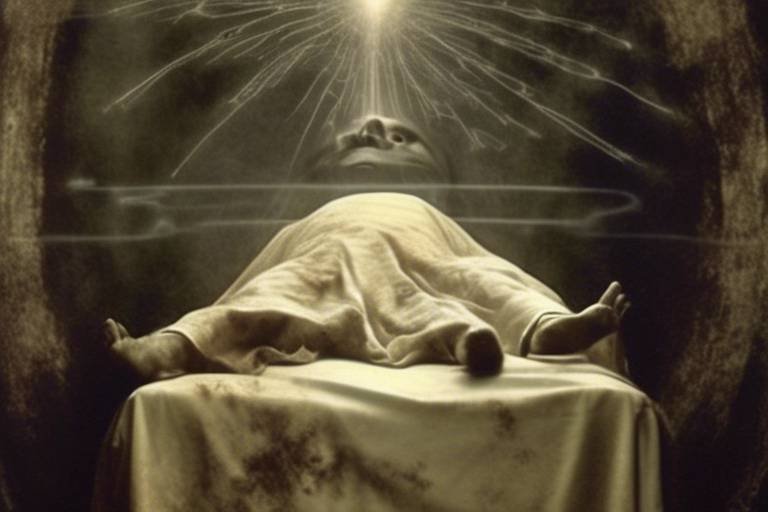
This article explores the philosophical inquiries and theories surrounding life after death, examining various perspectives and beliefs that have shaped human understanding throughout history.
The concept of life after death is as old as humanity itself, a tantalizing idea that has sparked curiosity, fear, and hope across cultures and eras. From ancient civilizations to modern societies, people have pondered the question: what happens when we take our last breath? Is there a continuation of consciousness, or do we simply cease to exist? Different cultures and religions offer a myriad of answers, each painting a unique picture of the afterlife. For instance, in many Western religions, the afterlife is often seen as a place of reward or punishment, while Eastern philosophies might view it as a cycle of rebirth, emphasizing the journey of the soul rather than a final destination.
Philosophical inquiries into life after death delve into the nature of existence, consciousness, and identity. Major theories such as dualism, materialism, and existentialism provide frameworks for understanding these complex issues. Dualism, famously championed by thinkers like Descartes, posits that the mind and body are distinct entities. This perspective raises intriguing questions about the soul’s immortality. In contrast, materialism argues that consciousness arises solely from physical processes within the brain, suggesting that once the body dies, so does the mind. This dichotomy fuels ongoing debates: if our consciousness is tied to our physical form, what does that mean for our beliefs about an afterlife?
When contrasting dualism and materialism, we find ourselves at a crossroads of belief and scientific inquiry. Dualists believe that the mind exists independently of the body, implying that our essence could transcend physical death. On the other hand, materialists assert that everything about our consciousness can be explained through biological processes. This leads to profound implications for life after death. If dualism holds true, the idea of an eternal soul resonates deeply, suggesting a journey beyond this life. However, if materialism is accurate, then the finality of death could be a sobering reality that challenges our notions of identity and purpose.
Many cultures embrace the idea of the soul’s journey after death, with beliefs ranging from reincarnation to spiritual evolution. For instance, in Hinduism, the soul is seen as eternal, undergoing a series of rebirths based on karma—the moral law of cause and effect. This belief underscores the importance of living a righteous life, as one’s actions directly influence future existences. Similarly, in various spiritual traditions, the concept of the soul’s evolution suggests that after death, the soul continues to learn and grow, moving toward a higher state of consciousness. These views not only provide comfort but also a sense of responsibility for our actions in this life.
In recent years, scientific approaches to the topic of life after death have garnered attention, particularly through research on near-death experiences (NDEs). Many individuals who have experienced NDEs report profound transformations and feelings of peace, leading some researchers to explore the possibility of consciousness existing beyond the physical realm. Studies have attempted to understand the brain’s role in these experiences, revealing that while the brain is crucial to our perception of reality, it may not be the sole determinant of consciousness. This ongoing investigation raises the question: Can science and spirituality coexist in understanding life after death?
Life after death also prompts a host of existential questions that challenge our understanding of meaning and purpose. If we believe in an afterlife, how does that shape our moral responsibilities? Are we accountable for our actions in this life if we have a chance at redemption in another? These questions echo through philosophical discussions, compelling us to reflect on our values and beliefs. The idea that our choices may have eternal consequences can be both empowering and daunting, urging us to live authentically and with intention.
When it comes to religious interpretations of life after death, the landscape is rich and varied. Different faiths offer distinct narratives about what awaits us beyond this life. While some may envision a paradise or a hellish realm, others might see it as a cycle of rebirth or a return to a universal consciousness. Understanding these diverse beliefs not only broadens our perspective but also fosters a sense of empathy and respect for different worldviews.
In Christianity, the afterlife is often viewed through the lens of resurrection and eternal life. The belief in Jesus Christ’s resurrection serves as a cornerstone of faith, offering a promise of eternal life to believers. Christians are taught that faith determines one’s afterlife experience, leading to heaven or hell based on their relationship with God. This perspective instills a sense of hope and urgency, encouraging followers to live in accordance with their beliefs.
Buddhism presents a different perspective, focusing on the cycle of samsara—birth, death, and rebirth. The concept of reincarnation emphasizes that our actions (karma) shape our future existences, urging individuals to cultivate compassion and mindfulness in their lives. The ultimate goal is to achieve enlightenment and break free from this cycle, attaining Nirvana. This belief system encourages a deep sense of responsibility for one’s actions, as each life is seen as an opportunity for growth and spiritual evolution.
- What is the concept of life after death? It refers to the belief that an individual’s consciousness continues in some form after physical death.
- How do different religions view life after death? Religions have diverse beliefs, ranging from resurrection in Christianity to reincarnation in Hinduism and Buddhism.
- What are the philosophical perspectives on life after death? Major perspectives include dualism, which separates mind and body, and materialism, which views consciousness as a product of physical processes.
- Are there scientific studies on life after death? Yes, research on near-death experiences has provided insights, but the topic remains controversial and complex.
The Concept of Life After Death
The notion of life after death has captivated the human imagination for centuries, transcending cultures, religions, and philosophies. It’s a concept that raises profound questions: What happens when we die? Is there something beyond this physical existence? These inquiries are not merely abstract; they touch the very core of our existence and influence how we live our lives. Different cultures and religions have attempted to answer these questions, each offering unique interpretations that reflect their values and beliefs.
For many, the idea of an afterlife provides comfort in the face of mortality. It suggests that death is not an end but rather a transition to another state of being. In various traditions, this continuation of existence is often linked to the concept of the soul. The soul, viewed as the essence of a person, is believed to persist beyond the physical body. This belief can lead to a range of interpretations, from eternal paradise to cycles of rebirth.
In the Western world, the **Judeo-Christian** perspective has significantly shaped views on the afterlife. Many Christians believe in a resurrection where individuals are judged and sent to either heaven or hell based on their faith and actions during their earthly life. This dichotomy creates a moral framework that influences behavior and decision-making, emphasizing the importance of faith and good works.
Conversely, Eastern philosophies, particularly in **Hinduism** and **Buddhism**, present a different approach. They embrace the idea of **reincarnation**, where the soul undergoes a cycle of birth, death, and rebirth, influenced by one’s actions (karma) in past lives. This perspective encourages individuals to live ethically, as their current actions can significantly impact their future existences. The cyclical nature of life and death in these traditions fosters a sense of continuity and interconnectedness among all living beings.
Interestingly, some contemporary spiritual movements blend these ancient beliefs with modern interpretations, suggesting that life after death is not just about judgment or rebirth but also about spiritual evolution. This view posits that the soul continues to grow and learn beyond the physical realm, striving for greater understanding and enlightenment.
Ultimately, the concept of life after death is as varied as humanity itself. Each belief system provides a lens through which individuals can explore their existence, offering hope, purpose, and a sense of belonging in the grand tapestry of life. As we ponder our own beliefs about what lies beyond, it’s essential to recognize that these ideas not only shape our understanding of death but also profoundly influence how we choose to live our lives today.
- What are the main beliefs about life after death?
Beliefs about life after death vary widely, including concepts of heaven and hell, reincarnation, and spiritual evolution.
- How do different cultures view the afterlife?
Different cultures have distinct beliefs; for example, Western religions often emphasize judgment, while Eastern philosophies focus on reincarnation.
- Is there any scientific evidence for life after death?
While some studies on near-death experiences suggest a continuation of consciousness, definitive scientific evidence remains elusive.
Philosophical Perspectives
The quest for understanding life after death has long captivated the human mind, leading to a myriad of philosophical inquiries and theories. At the heart of this exploration lies the question of what happens to us when our physical bodies cease to function. Various philosophical frameworks provide differing perspectives on consciousness, identity, and the possibility of an afterlife. Among the most prominent of these are dualism, materialism, and existentialism, each offering unique insights into the nature of existence beyond death.
Let’s start with dualism, a theory famously championed by René Descartes. Dualists believe in the separation of the mind and body, positing that the mind (or soul) is a non-physical entity that exists independently of the physical body. This perspective raises intriguing possibilities for life after death, suggesting that while the body may perish, the mind or soul could continue to exist in some form. Imagine a candle burning brightly; when it goes out, the light doesn’t just disappear; it transforms into something else. Similarly, dualists argue that our consciousness may transcend our physical existence.
In stark contrast, materialism presents a more grounded view. Materialists assert that everything, including consciousness, arises from physical processes. According to this perspective, when the body dies, consciousness ceases to exist because it is entirely dependent on the brain’s biological functions. Picture a computer that shuts down; once the power is off, all data is lost. For materialists, the end of life signals the end of consciousness, leading to a rather somber conclusion about the afterlife.
Both dualism and materialism offer compelling arguments, but what about existentialism? This philosophical movement emphasizes individual experience and responsibility, often questioning the inherent meaning of life and death. Existentialists like Jean-Paul Sartre and Albert Camus argue that life is inherently absurd, and it is up to each person to create their own meaning. In the context of life after death, existentialists might suggest that whether or not an afterlife exists is less important than how we choose to live our lives now. They would argue that our actions and choices define us, regardless of what may come after death.
To further illustrate these philosophical perspectives, consider the following table that summarizes key aspects of each viewpoint:
| Philosophical Perspective | Key Beliefs | Implications for Life After Death |
|---|---|---|
| Dualism | Mind and body are separate entities. | Possibility of the soul’s continued existence. |
| Materialism | Consciousness is a product of physical processes. | No existence after death; consciousness ceases. |
| Existentialism | Life’s meaning is subjective and created by individuals. | Focus on living meaningfully in the present, regardless of afterlife. |
As we ponder these philosophical frameworks, we can’t help but ask ourselves: What do we believe? Do we resonate more with the idea of a transcendent soul, or do we find comfort in the materialist view that encourages us to cherish our current existence? Ultimately, these philosophical perspectives not only shape our understanding of life after death but also influence how we live our lives today.
- What is dualism? Dualism is the belief that the mind and body are separate entities, suggesting that the soul may continue to exist after physical death.
- What do materialists believe about consciousness? Materialists argue that consciousness arises from physical processes in the brain and ceases to exist when the body dies.
- How does existentialism view life after death? Existentialists focus on creating meaning in life, suggesting that the significance of life is more important than speculating about an afterlife.
Dualism vs. Materialism
When we dive into the philosophical debate of dualism versus materialism, we’re really exploring two fundamentally different views on existence and consciousness. Dualism suggests that our minds and bodies are separate entities. Think of it like a computer and its software: the hardware (body) can function without the software (mind), but the two work together to create an experience. In this view, the mind is often associated with the soul, which is thought to persist beyond physical death. This perspective raises intriguing questions about what happens to our consciousness when our bodies cease to function.
On the flip side, materialism argues that everything we experience, including consciousness, is rooted in the physical world. It posits that our thoughts and feelings are merely the byproducts of brain activity. If we think of our brain as a complex machine, then consciousness is like the output of that machine – it doesn’t exist independently. This leads to the conclusion that once our physical bodies die, so does our consciousness, making the concept of life after death seem unlikely from a materialist standpoint.
To better understand these contrasting views, let’s break down some key aspects:
| Aspect | Dualism | Materialism |
|---|---|---|
| Nature of Existence | Mind and body are separate | Mind is a product of the body |
| Afterlife Belief | Possibility of existence beyond death | No existence after death |
| Consciousness | Immortal and non-physical | Temporary and physical |
In the realm of dualism, thinkers like René Descartes have posited that the mind, or soul, is distinct from the body, allowing for the possibility of an afterlife. This view can be comforting to many, as it suggests a continuation of self beyond the physical realm. However, it also raises questions about how a non-physical entity interacts with the physical world – a mystery that has puzzled philosophers for centuries.
Conversely, materialists often cite advancements in neuroscience to support their argument. With every new discovery about how the brain functions, the idea that consciousness is merely a byproduct of brain processes gains traction. This perspective can be unsettling for those who yearn for a sense of continuity after death, as it implies a finality that many find hard to accept.
Ultimately, the dualism versus materialism debate invites us to ponder profound questions about our existence. Are we merely biological machines, or is there something more to our consciousness? This inquiry not only shapes our understanding of life after death but also influences how we live our lives today. The implications of these philosophies reach far beyond abstract thought, touching on issues of morality, identity, and the very essence of what it means to be human.
- What is dualism? Dualism is the philosophical view that the mind and body are separate entities, suggesting that consciousness can exist independently of the physical body.
- What is materialism? Materialism is the belief that everything, including consciousness, is a product of physical processes in the brain, and thus ceases to exist after death.
- Can dualism and materialism coexist? Some argue that elements of both philosophies can coexist, suggesting a more nuanced understanding of consciousness that incorporates aspects of both views.
- How do these theories impact beliefs about the afterlife? Dualism often supports the idea of an afterlife, while materialism generally denies it, leading to different implications for how individuals view their existence.
The Soul’s Journey
The idea of the soul’s journey after death is a captivating concept that has intrigued humanity for centuries. It raises profound questions about what happens when we take our last breath. Does our essence simply fade away, or does it embark on a new adventure? Various cultures and religions offer unique perspectives on this journey, often intertwining beliefs about reincarnation, spiritual evolution, and the afterlife itself.
In many traditions, the soul is viewed as an eternal entity, transcending the physical body. For instance, in Hinduism, the soul undergoes a cycle of samsara, or rebirth, where it is continually reincarnated until it achieves moksha, or liberation. This journey through various lives is influenced by the concept of karma, where one’s actions in previous lives shape their current existence. Imagine it as a cosmic game of chess, where every move counts towards the ultimate goal of liberation.
Similarly, in ancient Egyptian beliefs, the soul’s journey involves navigating the Duat (the underworld) and facing the judgment of the god Osiris. Here, the heart of the deceased is weighed against the feather of Ma’at, symbolizing truth and justice. A heart lighter than the feather signifies a righteous life, granting passage to the afterlife, while a heavier heart leads to dire consequences. This narrative illustrates the importance of living a virtuous life, as it directly impacts the soul’s fate.
In contrast, some Native American cultures perceive the soul’s journey as a return to the earth, where it becomes part of nature. The belief in the Great Spirit signifies a cycle of life and death, where the soul is reborn into the world in various forms, emphasizing interconnectedness with all living things. This perspective fosters a deep respect for nature and the cycles of life, reinforcing the idea that death is not an end but a transformation.
Furthermore, the concept of the soul’s journey often intersects with ideas of spiritual evolution. Many believe that the experiences and lessons learned in each lifetime contribute to the soul’s growth. This journey is not merely about existing but about evolving—each life serves as a chapter in a grand narrative of personal and spiritual development. It’s like climbing a mountain; each step, whether challenging or easy, brings you closer to the summit of enlightenment.
In summary, the soul’s journey after death is a rich tapestry woven from various beliefs and traditions. Whether viewed through the lens of reincarnation, judgment, or spiritual evolution, the journey emphasizes the significance of our choices and actions in life. It invites us to reflect on our existence and consider what legacy we leave behind. As we ponder these profound ideas, we might ask ourselves: What does your soul seek on its journey?
- What is the soul’s journey? The soul’s journey refers to the belief that the soul continues to exist and evolve after physical death, often involving concepts like reincarnation or spiritual progression.
- Do all religions believe in a soul’s journey? No, beliefs about the soul’s journey vary widely among different religions and cultures, with some viewing it as a cycle of rebirth, while others see it as a transition to an afterlife.
- How does karma influence the soul’s journey? In traditions that believe in karma, the actions one takes in life affect the soul’s experiences in future lives, shaping its journey toward enlightenment or liberation.
Scientific Perspectives
When we dive into the realm of science and its relationship with the concept of life after death, things can get a bit murky. Science, after all, thrives on empirical evidence and testable theories, whereas the idea of an afterlife often dances on the fringes of what can be observed and measured. Yet, there are intriguing intersections between scientific inquiry and the age-old questions surrounding existence beyond death. One of the most fascinating areas of research is the study of near-death experiences (NDEs). These experiences, often reported by individuals who have been clinically dead or close to death, provide a glimpse into what some believe could be an afterlife.
Many who have undergone NDEs describe a range of sensations, including feelings of peace, the sensation of floating, and encounters with deceased loved ones or spiritual beings. A common theme is the tunnel experience, where individuals report moving through a dark tunnel towards a bright light. While skeptics argue that these experiences can be attributed to brain activity during traumatic events, proponents suggest that they offer evidence of a consciousness that exists independently of the physical body.
Research into NDEs has gained traction in recent years, with studies attempting to document and analyze these phenomena. For instance, a notable study published in the journal Resuscitation in 2014 involved patients who had suffered cardiac arrest. It revealed that a significant number of participants had vivid experiences during their time of clinical death, raising questions about the nature of consciousness and its potential survival beyond the body.
Moreover, the role of the brain in shaping our perceptions of reality cannot be overlooked. Neuroscience has made incredible strides in understanding how our brains function, particularly during moments of extreme stress or trauma. The brain’s response can trigger a cascade of neurochemical reactions that may lead to the sensations associated with NDEs. This leads to an essential question: is consciousness merely a byproduct of brain activity, or is it something more profound?
To further complicate matters, scientists are also exploring the concept of quantum consciousness. Some theorists propose that consciousness may be linked to quantum processes within the brain. This idea suggests that consciousness could exist in a non-localized state, potentially allowing for the possibility of life after death. While this theory remains controversial and is still in its infancy, it opens up exciting avenues for exploration.
In summary, the scientific perspectives on life after death are as varied as they are complex. While empirical evidence remains elusive, the study of NDEs and the ongoing exploration of consciousness challenge our understanding of life and what may lie beyond. As science continues to push the boundaries of knowledge, it may one day provide clearer insights into one of humanity’s most profound questions: what happens after we die?
- What are near-death experiences (NDEs)?
NDEs are profound psychological events that may occur to individuals who are close to death or in situations of intense physical or emotional danger. - Is there scientific proof of an afterlife?
Currently, there is no definitive scientific proof of an afterlife, but studies on NDEs and consciousness continue to explore this possibility. - How does the brain influence perceptions of life after death?
The brain can produce vivid experiences during traumatic events, which might explain many aspects of NDEs and perceptions of an afterlife. - What is quantum consciousness?
Quantum consciousness is a theory suggesting that consciousness may be linked to quantum processes, potentially allowing for existence beyond the physical body.
Existential Questions
When we ponder the concept of life after death, we inevitably stumble upon a myriad of that challenge our understanding of existence itself. What does it mean to be alive? Is there a purpose to our lives, or are we merely wandering through a cosmic maze with no destination? These inquiries resonate deeply within us, often leaving us in a state of contemplation. The idea of an afterlife can provide comfort, but it also raises profound questions about our moral responsibilities and the implications of our choices.
One of the most pressing questions revolves around the meaning of life. If there is a life after death, does that mean our earthly existence is merely a stepping stone to something greater? Or is life itself the ultimate experience, with the afterlife serving as a mere continuation of the journey? This dichotomy often leads to a deeper exploration of our values and beliefs. For instance, many people find themselves reflecting on their actions and how they align with their perceived purpose. Are we living authentically, or are we merely conforming to societal expectations?
Another critical question is about moral responsibility. If we believe in an afterlife, does that imply that our choices in this life carry weight beyond our physical existence? The idea that our actions can influence our fate in the afterlife can be both liberating and daunting. It encourages us to act with integrity and compassion, but it can also induce anxiety about the consequences of our decisions. This is where philosophical frameworks come into play, offering various interpretations of how our lives may impact our existence beyond death.
Moreover, the question of identity arises: Who are we, really? Are we simply our physical bodies, or is there a deeper essence that transcends our earthly form? This inquiry touches on the core of human experience. Some philosophies argue that our consciousness is a separate entity from our physical being, suggesting a dualistic view of existence. Others, however, posit that we are entirely tied to our physical bodies, emphasizing the materialistic perspective. This debate can significantly influence how we perceive life after death and our subsequent actions in life.
To further illustrate these existential questions, consider the following table that compares different philosophical perspectives:
| Philosophical Perspective | Key Beliefs | Implications for Life After Death |
|---|---|---|
| Dualism | Mind and body are separate; consciousness exists independently. | Life after death is a continuation of the soul’s journey. |
| Materialism | Consciousness is a product of physical processes; no existence after death. | Life is finite, and actions have no eternal consequences. |
| Existentialism | Individual existence precedes essence; we create our own meaning. | Focus on living authentically, regardless of an afterlife. |
As we navigate these existential questions, it’s crucial to recognize that the search for meaning is a deeply personal journey. Each individual may arrive at different conclusions based on their experiences, beliefs, and reflections. Ultimately, the quest for understanding life after death not only shapes our views on existence but also influences how we choose to live our lives today.
- What is the significance of life after death? Life after death provides many individuals with a sense of hope and purpose, influencing how they live their lives.
- Do all religions believe in an afterlife? Not all religions have the same beliefs about the afterlife; interpretations vary widely among different cultures and faiths.
- How do philosophical perspectives shape our understanding of existence? Philosophical frameworks help us explore the nature of consciousness and identity, offering different interpretations of life and death.
Religious Interpretations
The concept of life after death is a profound and intricate topic that has been interpreted in numerous ways across various religions. Each belief system offers unique insights into what happens when we take our final breath, shaping the moral frameworks and existential understandings of their followers. From the serene visions of paradise to the harrowing images of eternal damnation, religious interpretations provide a tapestry of hope, fear, and spiritual guidance. Let’s explore some of the major religious perspectives on life after death, revealing both their distinctions and common threads.
In many Abrahamic faiths, such as Christianity, Islam, and Judaism, the afterlife is often viewed as a consequence of one’s earthly actions. These religions typically emphasize a judgment day where individuals are held accountable for their deeds. For instance, Christianity teaches that faith in Jesus Christ leads to eternal life in heaven, while rejection results in separation from God, often depicted as hell. Similarly, in Islam, the concept of Jannah (paradise) and Jahannam (hell) serves as a motivator for moral living, where one’s actions determine their eternal abode.
On the other hand, Eastern religions, such as Buddhism and Hinduism, present a different understanding of life after death. Instead of a linear journey to heaven or hell, these traditions embrace the idea of reincarnation. In Buddhism, the cycle of samsara — the continuous cycle of birth, death, and rebirth — reflects the karmic consequences of one’s actions. Good deeds lead to favorable rebirths, while negative actions can result in suffering in future lives. This belief encourages a focus on ethical living and spiritual development, as the ultimate goal is to achieve Nirvana, a state of liberation from the cycle of rebirth.
To illustrate these religious interpretations, consider the following table, which summarizes key beliefs about the afterlife across different religions:
| Religion | Afterlife Concept | Key Beliefs |
|---|---|---|
| Christianity | Eternal Heaven or Hell | Faith in Jesus leads to salvation; judgment day determines fate. |
| Islam | Paradise (Jannah) or Hell (Jahannam) | Actions in life dictate afterlife; faith and good deeds are essential. |
| Buddhism | Rebirth (Samsara) | Karma influences future lives; goal is to attain Nirvana. |
| Hinduism | Reincarnation | Atman (soul) is reborn; ultimate goal is Moksha (liberation). |
Despite the variations, a common theme emerges: the quest for meaning and understanding of our existence. Many religious teachings encourage followers to live morally and purposefully, as the actions taken in this life are believed to echo into the next. This perspective can be both comforting and daunting, as it places the responsibility of one’s afterlife firmly in their own hands.
In conclusion, the interpretations of life after death across different religions reveal a rich diversity of beliefs that shape human behavior and ethical considerations. Whether through the promise of eternal life, the cycle of rebirth, or the pursuit of spiritual liberation, these beliefs provide individuals with a framework to navigate the complexities of existence. Ultimately, the question of what lies beyond remains a deeply personal journey, influenced by culture, faith, and individual reflection.
- What happens after we die according to Christianity? Christianity teaches that individuals face judgment and are either rewarded with eternal life in heaven or punished in hell based on their faith and actions.
- How does Buddhism view life after death? Buddhism believes in the cycle of samsara, where one’s actions (karma) influence future rebirths, with the ultimate goal being the attainment of Nirvana.
- Is reincarnation a common belief in many religions? Yes, reincarnation is a central theme in religions like Hinduism and Buddhism, emphasizing the continuous cycle of life, death, and rebirth.
Christianity and Afterlife
When it comes to the concept of life after death, Christianity offers a rich tapestry of beliefs that have evolved over centuries. At the heart of Christian doctrine lies the belief in **resurrection**—the idea that after death, the faithful will be raised to eternal life. This belief is primarily anchored in the resurrection of Jesus Christ, which serves as a cornerstone of the Christian faith. The New Testament is replete with references to eternal life, emphasizing that those who believe in Christ will not perish but have everlasting life (John 3:16).
In Christianity, the afterlife is often depicted as a dichotomy between **heaven** and **hell**. Heaven is described as a place of eternal joy and communion with God, where believers experience the fullness of love and peace. On the other hand, hell is portrayed as a realm of separation from God, often characterized by suffering and despair. This stark contrast raises profound questions about morality and the consequences of one’s actions during their earthly life. The idea of judgement plays a crucial role in determining an individual’s fate in the afterlife, where God assesses each person’s faith and deeds.
Moreover, the significance of faith in Christianity cannot be overstated when discussing the afterlife. Many Christians believe that it is through faith in Jesus Christ that one gains access to heaven. This belief is encapsulated in the concept of **salvation**, which is viewed as a free gift from God, attainable through grace rather than human effort. The Apostle Paul writes in Ephesians 2:8-9, “For by grace you have been saved through faith, and that not of yourselves; it is the gift of God, not of works, lest anyone should boast.” This notion of grace underscores the importance of a personal relationship with Christ as the pathway to eternal life.
In addition to these core beliefs, various Christian denominations interpret the afterlife in unique ways. For example, the Catholic Church teaches about **purgatory**, a temporary state where souls undergo purification before entering heaven. This belief highlights the importance of repentance and the transformative power of God’s mercy. In contrast, many Protestant denominations emphasize a more immediate transition to either heaven or hell upon death, reflecting differing views on judgement and grace.
To further illustrate the diversity of beliefs regarding the afterlife within Christianity, the following table summarizes key concepts from different denominations:
| Denomination | Belief about Afterlife | Key Concepts |
|---|---|---|
| Roman Catholicism | Purgatory, Heaven, Hell | Salvation through faith and works, Sacraments |
| Protestantism | Heaven, Hell | Salvation by grace through faith |
| Orthodox Christianity | Heaven, Hell, Theosis | Transformation into divine likeness |
Ultimately, Christianity’s perspective on the afterlife encourages believers to live morally and purposefully, knowing that their choices have eternal implications. The promise of eternal life serves as a source of hope and motivation for many, inspiring a life centered around love, service, and faith. As Christians navigate the complexities of life, the belief in an afterlife provides a comforting assurance that their existence transcends the physical realm, inviting them to explore deeper spiritual truths.
- What happens immediately after death according to Christianity? Many Christians believe that the soul is judged immediately after death and sent to heaven or hell based on faith and deeds.
- Is there a second chance after death in Christianity? Generally, traditional Christian doctrine does not support the idea of a second chance after death; however, some denominations may have differing views.
- What role does faith play in the Christian afterlife? Faith in Jesus Christ is central to the belief in salvation and eternal life in heaven.
Buddhism and Rebirth
Buddhism presents a profound understanding of life after death through the concept of rebirth, which is intricately tied to the cycle of samsara. Unlike the notion of a singular afterlife destination, Buddhism teaches that life is a continuous cycle of birth, death, and rebirth, influenced by the actions (or karma) accumulated in previous lives. This cyclical journey emphasizes that our current existence is merely one of many, shaped by our past deeds and intentions. The idea of rebirth is not just about the physical form we take in the next life; it also encompasses the experiences and circumstances we encounter based on our moral choices.
In Buddhism, the ultimate goal is to break free from this cycle of samsara. This liberation, known as Nirvana, represents the cessation of suffering and the end of the cycle of rebirth. To achieve Nirvana, practitioners engage in various spiritual practices, such as meditation, ethical conduct, and wisdom cultivation. These practices are designed to purify the mind and reduce attachment to worldly desires, which are seen as the root causes of suffering and the perpetuation of the cycle of rebirth.
Interestingly, the concept of rebirth in Buddhism differs significantly from the idea of reincarnation found in other religions. In Buddhism, it is not a permanent soul that moves from one body to another; rather, it is a stream of consciousness that evolves. This stream is influenced by past actions and mental states, which means that each rebirth is unique and shaped by the karma of previous lives. This perspective invites individuals to reflect on their actions and the impact they have not just on themselves, but also on the collective experience of existence.
Moreover, the teachings of Buddhism emphasize the importance of compassion and mindfulness in our current lives. By understanding that our actions today can significantly affect our future rebirths, followers are encouraged to live ethically and mindfully. This interconnectedness of all beings fosters a sense of responsibility and compassion, urging individuals to consider how their actions contribute to the greater web of life.
To illustrate the concept of rebirth in Buddhism, consider the following table that summarizes key aspects:
| Aspect | Description |
|---|---|
| Cycle of Samsara | The continuous cycle of birth, death, and rebirth influenced by karma. |
| Karma | The law of moral cause and effect that shapes future rebirths. |
| Nirvana | The ultimate goal of liberation from the cycle of samsara. |
| Compassion | The ethical principle that encourages kindness towards all beings. |
In conclusion, the Buddhist perspective on rebirth is a rich tapestry that weaves together ethics, spirituality, and the pursuit of enlightenment. It encourages individuals to reflect on their lives and the impact of their actions, ultimately guiding them toward a path of compassion and understanding. By embracing these teachings, practitioners can navigate their existence with a sense of purpose and a commitment to breaking free from the cycle of suffering.
- What is the difference between reincarnation and rebirth in Buddhism? In Buddhism, rebirth refers to the stream of consciousness influenced by karma, while reincarnation often implies a permanent soul moving from one body to another.
- How can one break the cycle of samsara? By practicing ethical conduct, meditation, and cultivating wisdom, individuals can work towards achieving Nirvana and breaking free from samsara.
- Do all Buddhists believe in rebirth? While rebirth is a central tenet in most Buddhist traditions, interpretations and emphasis on the concept can vary among different schools of thought.
Frequently Asked Questions
- What is the concept of life after death?
The concept of life after death refers to the belief that some aspect of an individual’s consciousness or soul continues to exist after physical death. Different cultures and religions have varying interpretations of this idea, often influenced by their spiritual or philosophical beliefs.
- What are the major philosophical perspectives on life after death?
Major philosophical perspectives include dualism, which posits a separation between mind and body, and materialism, which argues that consciousness is entirely a product of physical processes. Existentialism also plays a role, focusing on the implications of life after death on meaning and purpose in life.
- How do different religions interpret life after death?
Religions interpret life after death in various ways. For instance, Christianity emphasizes resurrection and eternal life, while Buddhism focuses on reincarnation and the cycle of samsara, where actions in life determine the nature of rebirth.
- What does dualism say about the soul?
Dualism suggests that the soul is a distinct entity separate from the body. This perspective supports the idea that the soul can exist independently of the physical form, which has significant implications for beliefs about what happens after death.
- What role does science play in understanding life after death?
Science approaches the topic of life after death by examining phenomena like near-death experiences and studying the brain’s functions. While science does not provide definitive answers about an afterlife, it offers insights into consciousness and perception.
- What are some common existential questions related to life after death?
Common existential questions include: What is the meaning of life? Do our actions have lasting consequences? And how does the belief in an afterlife influence our moral responsibilities? These questions challenge individuals to reflect on their values and purpose.
- How does reincarnation work in Buddhism?
In Buddhism, reincarnation is the belief that after death, a person’s consciousness is reborn into a new body. This cycle, known as samsara, is influenced by one’s actions (karma) in previous lives, determining the circumstances of the next life.
- What is the significance of faith in Christianity regarding the afterlife?
In Christianity, faith is crucial for determining one’s afterlife experience. Believers hold that faith in Jesus Christ leads to eternal life, while a lack of faith may result in separation from God, often described as hell.
Existence, Soul, Consciousness, Afterlife, Reincarnation, Spirituality, Transcendence, Reality, , Existence, Soul, Consciousness, Afterlife, Reincarnation, Spirituality, Transcendence, Reality,
Share this content:
Leave a Reply