
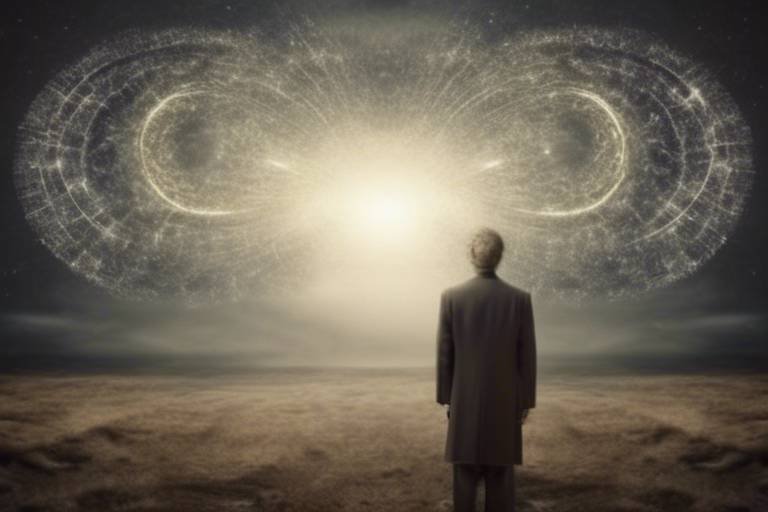
Metaphysics is like the ultimate detective story, where the mysteries of existence unfold before our eyes. It digs deep into the essence of reality, asking questions that seem simple yet are profoundly complex. What is real? What does it mean to exist? These inquiries form the backbone of metaphysical exploration, guiding us through the labyrinth of life and our place within it.
At its core, metaphysics seeks to uncover the fundamental nature of everything around us. Imagine standing at the edge of a vast ocean, where every wave represents a different aspect of reality. Some waves are tangible, like the physical objects we can touch, while others are more abstract, like thoughts and emotions. Metaphysics invites us to dive into this ocean, exploring both the visible and the invisible, the concrete and the abstract.
One fascinating aspect of metaphysics is its focus on the concept of existence. What does it truly mean to exist? Is existence merely about being physically present, or is there more to it? To tackle these questions, philosophers have developed various theories, each offering a unique lens through which we can view reality. For instance, some argue that existence is tied to perception—if no one is there to witness an object, does it truly exist? Others propose that existence is independent of our awareness, suggesting that reality exists in its own right, regardless of our perception.
In our quest to understand existence, we encounter ontology, the study of being. Ontology categorizes entities and explores their relationships, helping us make sense of the complex web of existence. Think of it as a grand library where every book represents a different type of being, from the most tangible objects, like trees and rocks, to the most abstract concepts, like love and justice. By understanding these classifications, we can better grasp the nature of reality and how different forms of being interact with one another.
As we delve deeper into the nature of existence, we confront various existential questions. These inquiries challenge our perceptions, pushing us to consider our identity, purpose, and the essence of consciousness itself. For example, have you ever pondered why you are here? What drives you to seek knowledge and understanding? These questions are not just philosophical musings; they are central to our human experience and shape our understanding of reality.
Another critical area of metaphysical inquiry is the concept of substance. What constitutes reality? Is it the physical matter that surrounds us, or is there an underlying essence that gives rise to all things? Substance theory examines these questions, exploring the essence of objects and their properties. Consider a chair, for instance. While its physical form is evident, what about its purpose? The essence of the chair goes beyond its material; it embodies functionality and comfort, showcasing how substance can be both tangible and intangible.
Now, let’s turn our gaze toward two fundamental components of metaphysical inquiry: time and space. These elements are not just abstract concepts; they shape our entire understanding of reality. Philosophical debates about time often revolve around its nature—Is it linear, like a straight road, or cyclic, like the changing seasons? Different theories, such as presentism and eternalism, offer diverse perspectives on how we perceive time and its impact on our lives.
Presentism, for instance, posits that only the present moment is real, while the past and future are mere constructs of our imagination. On the other hand, eternalism suggests that all points in time are equally real, challenging our conventional understanding of temporal existence. This debate invites us to reflect on how we experience time—Does it flow like a river, or is it more like a vast landscape where every moment coexists?
Similarly, the nature of space invites philosophical exploration. Is space an absolute entity, existing independently of the objects within it, or is it relational, defined by the relationships between those objects? These questions lead us to consider how we perceive the universe around us. Just as time shapes our understanding of change, space influences our grasp of distance and connection.
- What is metaphysics? Metaphysics is a branch of philosophy that explores the fundamental nature of reality, including concepts such as existence, objects, and their properties.
- What are some key questions in metaphysics? Key questions include what it means to exist, the nature of substance, and the relationship between time and space.
- How does ontology relate to metaphysics? Ontology is a key area within metaphysics that categorizes and studies entities and their relationships, shaping our understanding of existence.
- Why are time and space important in metaphysics? Time and space are fundamental aspects of reality that influence our perception and understanding of existence.
Defining Metaphysics
Metaphysics is often considered the backbone of philosophical inquiry, a realm where the most profound questions about existence and reality are explored. At its core, metaphysics delves into the very essence of what it means to be. It examines the fundamental nature of reality, grappling with concepts such as existence, objects, and their properties. Think of metaphysics as the philosophical toolbox that helps us dissect the universe, allowing us to ponder questions like: What is real? and What is the nature of existence?
This branch of philosophy is not just a dry academic exercise; it’s a vibrant field that influences how we perceive our lives and the world around us. For instance, when you wake up in the morning and contemplate your existence, you are engaging in a form of metaphysical reflection. The questions that arise from such contemplation can be both exhilarating and daunting. Metaphysics seeks to provide frameworks for understanding these inquiries, offering insights that shape our worldview.
In essence, metaphysics can be divided into several key areas, including ontology, which focuses on the nature of being; cosmology, which explores the origins and structure of the universe; and epistemology, which investigates the nature of knowledge and belief. Each of these domains interconnects, creating a rich tapestry of thought that helps us navigate the complexities of reality.
To better understand metaphysics, consider the following fundamental questions it addresses:
- What is the nature of existence?
- What can we know about the universe?
- Are there different kinds of existence?
- What is the relationship between mind and matter?
These inquiries not only challenge our perceptions but also encourage us to explore the deeper meanings behind our experiences. As we engage with metaphysical concepts, we find ourselves questioning the very fabric of reality, leading to a richer understanding of both ourselves and the universe. In a world where science and philosophy often intersect, metaphysics remains a crucial player, allowing us to explore the mysteries that lie beyond the tangible.
The Nature of Existence
The concept of existence is one of the most profound and perplexing inquiries in philosophy. It’s like standing on the edge of a vast ocean, peering into the depths, and wondering what lies beneath the surface. At its core, the question of existence challenges us to consider what it truly means to be. Are we merely physical beings, or is there more to our essence? This inquiry isn’t just an abstract puzzle; it resonates with our everyday lives, influencing how we view ourselves and our place in the universe.
Philosophers throughout history have grappled with questions like, “What does it mean to exist?” and “Is existence a fundamental property of objects?” Some argue that existence is an inherent quality of all entities, while others suggest that existence is contingent upon perception and consciousness. Imagine trying to define a shadow without the object that casts it; similarly, existence may be intertwined with awareness, leading to fascinating discussions about the subjective nature of reality.
One way to approach the nature of existence is through the lens of ontology, the study of being. Ontology categorizes entities and explores their relationships, helping us understand the fabric of reality. Think of it like a grand library filled with books, where each book represents a different entity, and the relationships between them form a complex web of existence. This categorization helps clarify the distinctions between various types of being, such as:
- Concrete Entities: These are tangible objects we can perceive through our senses, like trees, rocks, and people.
- Abstract Entities: These include concepts and ideas, such as love, justice, or mathematical truths, which exist outside of physical reality.
Understanding these classifications is crucial as they shape our comprehension of reality. For instance, when we consider abstract entities, we might wonder how they can exist without a physical form. Does love exist if no one feels it? Or is it a mere construct of human experience? These existential questions challenge our perceptions and prompt deeper discussions about identity, purpose, and the very essence of consciousness.
Moreover, the nature of existence often leads to inquiries about the essence of being itself. Some philosophers propose that being is not just a state but a dynamic process. Imagine existence as a river, constantly flowing, changing, and evolving. This perspective suggests that our understanding of existence is not static but rather a continuous journey of discovery. Our experiences, interactions, and reflections all contribute to this evolving narrative, shaping our understanding of what it means to exist.
As we delve deeper into the nature of existence, it becomes evident that these inquiries are not just academic exercises. They have profound implications for how we live our lives. By contemplating existence, we can uncover insights about our identity and purpose. Are we merely products of our environment, or do we have the agency to shape our reality? These questions invite us to explore the interplay between existence and consciousness, urging us to reflect on our role in the grand tapestry of life.
In summary, the nature of existence is a rich and intricate tapestry woven from threads of philosophy, consciousness, and experience. As we ponder these profound questions, we not only engage in intellectual exploration but also embark on a personal journey of understanding. The quest for meaning and purpose is universal, inviting each of us to dive into the depths of existence and emerge with newfound insights about ourselves and the world around us.
- What is metaphysics? Metaphysics is the branch of philosophy that studies the fundamental nature of reality, including existence, objects, and their properties.
- Why is the nature of existence important? Understanding existence helps us explore our identity, purpose, and our relationship with the universe.
- How does ontology relate to existence? Ontology categorizes and studies different types of beings, enhancing our comprehension of existence and reality.
- Are abstract entities real? The reality of abstract entities, like concepts and ideas, is a subject of philosophical debate, focusing on their existence beyond physical form.
What does it mean to exist?
This article explores metaphysics and its interpretations of reality, examining concepts such as existence, substance, and the nature of being, providing insights into philosophical inquiries that shape our understanding of the universe.
Metaphysics is a branch of philosophy that studies the fundamental nature of reality, exploring concepts such as existence, objects, and their properties. It seeks to answer questions about what is ultimately real.
What does it mean to exist? This question is not just a philosophical puzzle; it’s a profound inquiry that has intrigued thinkers for centuries. To exist is to have presence, to occupy space and time, and to be part of a grand tapestry of reality. Yet, existence is more than mere physical presence; it encompasses the essence of being, the qualities that define an entity, and the relationships it has with other entities.
Philosophers have approached this question from various angles. Some argue that existence is tied to perception—if something is perceived, it exists. Others suggest that existence is independent of our awareness; that there are entities and truths that exist whether we acknowledge them or not. This leads us into the realm of ontological debates, where the nature of existence is dissected and analyzed.
Consider the idea of existence in terms of two main categories: concrete entities and abstract entities. Concrete entities, like trees and rocks, have a physical presence that we can touch and see. On the flip side, abstract entities—such as numbers, concepts, and emotions—exist in a different realm. They are not tangible, yet they play a crucial role in our understanding of the world. This duality raises further questions: Are abstract entities less ‘real’ than concrete ones? Or do they hold a different kind of reality that is equally significant?
In exploring existence, we also encounter existential questions that challenge our perceptions. Questions like “Who am I?” and “What is my purpose?” push us to delve deeper into the nature of consciousness and identity. These inquiries are not just academic; they resonate with our everyday experiences and shape our understanding of our place in the universe.
Ontology is a key area within metaphysics that focuses on categorizing and understanding entities. It explores the relationships between different types of beings and their properties, shaping our comprehension of existence. By investigating the nature of being, ontology provides a framework for understanding how entities interact within the fabric of reality.
Different classifications of being, such as concrete and abstract entities, play a crucial role in ontology. Understanding these distinctions helps clarify the nature of reality and the various forms it can take. For example, a table exists as a concrete object, while the concept of ‘justice’ exists as an abstract idea. Recognizing these differences allows us to appreciate the complexity of existence itself.
Existential questions challenge our perceptions of reality, prompting discussions about identity, purpose, and the nature of consciousness. These inquiries are central to metaphysical exploration, influencing philosophical thought across cultures. They remind us that existence is not merely about being but also about understanding what it means to be alive in a world filled with mysteries.
Substance theory examines what constitutes reality, investigating the underlying essence of objects and their properties. This section explores various substance theories and their implications for understanding the material world.
Time and space are fundamental components of metaphysical inquiry. This section discusses different philosophical perspectives on the nature of time and space, exploring their implications for our understanding of reality.
Philosophical debates about time revolve around its linearity, cyclicality, and existence. This subsection addresses different theories of time, including presentism and eternalism, and their impact on our perception of reality.
Space is another critical aspect of metaphysical inquiry. This section examines various theories about the nature of space, including absolute versus relational theories, and how they influence our understanding of the universe.
- What is metaphysics? Metaphysics is the branch of philosophy that investigates the fundamental nature of reality, including concepts such as existence, objects, and their properties.
- Why is the question of existence important? The question of existence is crucial as it shapes our understanding of ourselves and the universe, influencing our beliefs, actions, and philosophies.
- How do abstract entities exist? Abstract entities, such as concepts and emotions, exist in a non-physical realm, yet they have significant impacts on our understanding and experiences of reality.
and examining various theories that attempt to define the essence of being.
This article explores metaphysics and its interpretations of reality, examining concepts such as existence, substance, and the nature of being, providing insights into philosophical inquiries that shape our understanding of the universe.
Metaphysics is a branch of philosophy that studies the fundamental nature of reality, exploring concepts such as existence, objects, and their properties. It seeks to answer questions about what is ultimately real.
This section delves into the philosophical inquiries surrounding existence, addressing questions like What does it mean to exist? and examining various theories that attempt to define the essence of being.
Ontology is a key area within metaphysics that focuses on categorizing and understanding entities. It explores the relationships between different types of beings and their properties, shaping our comprehension of existence.
Different classifications of being, such as concrete and abstract entities, play a crucial role in ontology. Understanding these distinctions helps clarify the nature of reality and the various forms it can take.
Existential questions challenge our perceptions of reality, prompting discussions about identity, purpose, and the nature of consciousness. These inquiries are central to metaphysical exploration, influencing philosophical thought across cultures.
Substance theory examines what constitutes reality, investigating the underlying essence of objects and their properties. This section explores various substance theories and their implications for understanding the material world.
Time and space are fundamental components of metaphysical inquiry. This section discusses different philosophical perspectives on the nature of time and space, exploring their implications for our understanding of reality.
Philosophical debates about time revolve around its linearity, cyclicality, and existence. This subsection addresses different theories of time, including presentism and eternalism, and their impact on our perception of reality.
Space is another critical aspect of metaphysical inquiry. This section examines various theories about the nature of space, including absolute versus relational theories, and how they influence our understanding of the universe.
When we dive into the essence of being, we’re really peeling back the layers of what it means to exist. Imagine trying to grasp the air around you—it’s everywhere, yet so elusive. Philosophers have grappled with this concept for centuries, leading to various theories that attempt to pin down the essence of existence. One prominent theory is Realism, which posits that objects exist independently of our perception. Think of it like a tree falling in a forest; it makes a sound whether or not someone is there to hear it.
On the flip side, we have Idealism, which suggests that reality is fundamentally mental. According to this view, the universe is shaped by our perceptions and thoughts. So, is the world around us just a figment of our imagination? This theory invites us to ponder how our consciousness interacts with the fabric of reality.
Another significant approach is Existentialism, which places emphasis on individual experience and choice. It argues that existence precedes essence, meaning we create our own purpose through our actions. This perspective resonates deeply with those who seek to find meaning in a chaotic world.
Moreover, Materialism asserts that everything that exists is made of matter, emphasizing a scientific approach to understanding reality. This view challenges us to consider whether the essence of being can be fully explained through physical laws and natural phenomena.
To summarize, the exploration of existence is a rich tapestry woven from various philosophical threads. Each theory contributes to our understanding of what it means to be, posing questions that resonate through time and across cultures. The essence of being remains a profound mystery, inviting us to engage in ongoing inquiry and reflection.
- What is metaphysics? Metaphysics is a branch of philosophy that investigates the fundamental nature of reality, including concepts like existence, objects, and their properties.
- What are the main theories of existence? Major theories include Realism, Idealism, Existentialism, and Materialism, each offering different perspectives on the nature of being.
- How does ontology relate to metaphysics? Ontology is a subfield of metaphysics that specifically studies the nature of being and categorizes entities based on their properties and relationships.
- Why are existential questions important? They challenge our understanding of identity, purpose, and consciousness, influencing philosophical thought and personal reflection.
Ontology: The Study of Being
Ontology, a fascinating branch of metaphysics, dives deep into the essence of existence itself. It’s like trying to peel back the layers of an onion to reveal the core of what it means to be. Essentially, ontology seeks to categorize and understand the different entities that populate our reality. Think of it as a grand philosophical taxonomy, where we try to understand not just what exists, but also how different entities relate to one another and what properties they possess.
To grasp ontology, we must first consider the distinction between various types of being. For instance, we can categorize beings as concrete or abstract. Concrete beings are tangible and can be perceived through our senses—like a tree or a rock—while abstract beings, such as numbers or concepts, exist in a realm that is not physically observable. This distinction is crucial as it shapes our understanding of reality and the myriad forms it can take.
Moreover, ontology prompts us to ponder some profound questions that challenge our perceptions of reality. For example, what does it mean to exist? Is existence a prerequisite for consciousness, or can something exist without being aware of its own existence? Questions like these lead us down a rabbit hole of existential inquiry, where we grapple with ideas of identity, purpose, and the very nature of consciousness itself. These discussions are not merely academic; they influence philosophical thought across cultures and epochs.
In ontology, we also encounter various theories that attempt to explain the nature of being. Some philosophers argue for a monistic view, suggesting that all entities stem from a single substance, while others advocate for pluralism, positing that multiple substances exist independently. This philosophical debate is akin to a never-ending chess match, where each move opens up new possibilities and challenges our understanding of reality.
To illustrate the complexity of ontological inquiry, consider the following table that summarizes key ontological theories:
| Theory | Description |
|---|---|
| Monism | All entities are derived from a single substance or reality. |
| Pluralism | Multiple substances exist independently, each with its own properties. |
| Materialism | Only physical substances exist; everything can be explained through matter. |
| Idealism | Reality is fundamentally mental; physical objects are manifestations of the mind. |
Ultimately, ontology serves as a crucial framework for understanding the complexities of existence. It invites us to question our assumptions and explore the intricate web of relationships that define our reality. In doing so, it not only enriches our philosophical discourse but also enhances our appreciation for the diverse forms of being that populate our universe.
- What is ontology? Ontology is the study of being and existence, focusing on categorizing entities and understanding their properties and relationships.
- Why is ontology important? It helps us understand the fundamental nature of reality and challenges our perceptions of existence.
- What are the different types of being? Entities can be categorized as concrete (tangible) or abstract (conceptual).
- What are some major ontological theories? Key theories include monism, pluralism, materialism, and idealism.
Types of Being
When we dive into the realm of ontology, one of the first things that strikes us is the fascinating diversity of being itself. Think of it like a vast ocean, where each wave represents a different type of existence. In this ocean, we can categorize beings into two primary types: concrete and abstract entities. Concrete beings are those that we can touch, see, and interact with in our physical world, such as trees, animals, and even humans. They occupy space and time, making them tangible and real in a way that we can easily comprehend.
On the other hand, abstract beings are a bit trickier to grasp. They include concepts like love, justice, and mathematical truths. These entities do not have a physical form; rather, they exist in our minds and are often shaped by our thoughts and experiences. Imagine trying to hold onto a feeling of happiness or the concept of fairness—these are real in their impact but elusive in their essence.
The distinction between these types of being is crucial for understanding the nature of reality. For instance, when we engage in philosophical discussions or debates, we often find ourselves navigating between these two realms. Are we discussing the physical world, or are we delving into the abstract ideas that govern our understanding of that world? This interplay raises questions that challenge our perceptions and push the boundaries of our knowledge.
Moreover, the relationship between concrete and abstract beings can be quite intricate. For example, consider the abstract concept of justice. While justice itself is an idea, it manifests in concrete forms through laws and social systems. This interaction illustrates how abstract entities can influence and shape our concrete realities. In a way, it’s like a dance where both partners—concrete and abstract—move in harmony, each affecting the other.
Understanding these types of being also opens the door to deeper existential inquiries. What does it mean for something to exist? Is the existence of an abstract concept any less significant than that of a physical object? These questions not only provoke thought but also highlight the complexities of our existence. As we explore these dimensions of being, we begin to appreciate the rich tapestry that makes up our reality, where every thread—be it concrete or abstract—plays a vital role.
In summary, the exploration of types of being is not just an academic exercise; it is a journey into the heart of what it means to exist. By recognizing the interplay between concrete and abstract entities, we can better understand the nature of our reality and the philosophical inquiries that shape our world. So, the next time you ponder existence, remember that you are navigating a complex landscape filled with diverse forms of being, each contributing to the grand narrative of life.
Existential Questions
When we dive into the ocean of , it’s like plunging into a deep abyss filled with mysteries that challenge our very understanding of life. Questions such as “Who am I?”, “What is my purpose?”, and “Is there life after death?” swirl around us, demanding answers that often seem elusive. These inquiries are not just trivial musings; they form the backbone of philosophical exploration, prompting us to reflect on our existence and the universe at large.
At the heart of these questions lies the quest for identity. We often find ourselves pondering what it truly means to be. Is our identity shaped by our experiences, thoughts, and emotions, or is it something more profound and unchangeable? This introspection can lead us to various conclusions, each as valid as the next, yet none providing a definitive answer. It’s like trying to catch smoke with your bare hands—every time you think you’ve got a grip, it slips away.
Moreover, the concept of purpose plays a pivotal role in our existential musings. Many people grapple with the idea that life should have a greater meaning or direction. This leads to a myriad of perspectives, such as:
- Some find purpose through relationships and connections with others.
- Others seek it through personal achievements or contributions to society.
- A few may turn to spirituality or religion, believing that a higher power has a specific plan for them.
These diverse interpretations highlight the subjective nature of purpose and how it varies from one individual to another. It’s fascinating to think about how two people can live side by side, yet their understanding of life’s purpose can be worlds apart.
Another significant aspect of existential questions is the nature of consciousness. What does it mean to be aware? Are we merely the sum of our thoughts, or is there a deeper essence that transcends our physical being? This line of questioning often leads us down the rabbit hole of consciousness studies, where philosophers and scientists alike attempt to unravel the mysteries of the mind. The debates can get pretty heated, with various theories emerging about the relationship between the mind and body, such as dualism and physicalism. Each theory presents its own set of implications for how we understand our existence and reality.
Ultimately, these existential inquiries are not just academic exercises; they resonate deeply with our everyday lives. They influence our decisions, shape our relationships, and even impact our mental health. Engaging with these questions can be both enlightening and daunting, prompting us to confront uncomfortable truths about ourselves and the world we inhabit. It’s a journey that can feel like wandering through a dense fog, where every step forward reveals new layers of complexity.
As we navigate through these profound questions, we might find solace in the knowledge that we are not alone in our quest for understanding. Philosophers, poets, and thinkers throughout history have grappled with these same dilemmas, leaving behind a rich tapestry of insights and reflections. Perhaps the true value lies not in finding definitive answers but in the exploration itself—the journey of questioning and seeking that defines our human experience.
- What are existential questions? Existential questions are profound inquiries that explore the nature of existence, identity, purpose, and consciousness.
- Why are existential questions important? They help us understand our place in the universe, guiding our decisions and shaping our beliefs.
- Can existential questions be answered? While some may find personal answers, these questions often lead to more inquiries rather than definitive solutions.
- How can I explore my existential questions? Engaging in philosophical discussions, reading literature, or reflecting through journaling can help you explore these profound inquiries.
Substance and Reality
The concept of substance is pivotal in metaphysics as it seeks to unravel what truly constitutes reality. Imagine for a moment that reality is like a grand tapestry, woven with countless threads of existence. Each thread represents a substance, contributing to the overall picture of what we perceive. Substance theory, therefore, is not just a dry academic pursuit; it’s an exploration of the very fabric of our universe. Philosophers have long debated the nature of substances, questioning whether they are material, immaterial, or perhaps a blend of both.
At its core, substance theory attempts to answer the question: what is it that makes something a distinct entity? This inquiry leads us to consider various perspectives on what substances might be. For instance, some philosophers argue that substances are fundamentally physical objects—things we can touch, see, and measure. Others propose that substances might include abstract entities, such as numbers or concepts, which, while not tangible, hold significant value in our understanding of reality.
To further illustrate the diversity of thought surrounding substance, let’s delve into a few key theories:
- Materialism: This view posits that only physical substances exist. Everything we perceive, from the stars in the sky to the thoughts in our minds, can ultimately be traced back to material interactions.
- Idealism: In contrast, idealism asserts that reality is fundamentally mental or spiritual. Here, substances are not physical entities but ideas or consciousness itself, suggesting that the material world is a manifestation of a deeper mental reality.
- Dualism: This perspective combines both material and immaterial substances, proposing that both the physical body and the mind (or spirit) are essential components of existence.
Each of these theories brings its own implications for how we understand the nature of reality. For example, if we lean towards materialism, we might view consciousness as a byproduct of physical processes in the brain. Conversely, if we embrace idealism, we might argue that our perceptions of the physical world are merely reflections of a greater, unseen reality.
Moreover, the implications of substance theory extend beyond mere academic discussion; they shape our everyday experiences and decisions. For instance, consider how our understanding of substances influences ethics, science, and even our personal identities. When we ponder questions like, “What makes me, me?” or “What is the essence of a chair?” we are engaging with the very questions that substance theory seeks to address.
As we navigate through these philosophical waters, it becomes clear that the exploration of substance and reality is not just an intellectual exercise; it’s a journey into the heart of what it means to exist. It challenges us to think critically about our surroundings and encourages us to question the nature of our own being. In this light, substance theory acts as a guide, helping us to decipher the complex interplay between the tangible and the intangible, the known and the unknown.
- What is substance in metaphysics? Substance in metaphysics refers to what fundamentally constitutes reality, including both material and immaterial entities.
- How does substance theory differ from other theories of existence? Substance theory specifically focuses on the nature and essence of entities, while other theories may emphasize different aspects of existence, such as relations or experiences.
- Can abstract entities be considered substances? Yes, many philosophers argue that abstract entities like numbers or concepts can be considered substances, as they play a crucial role in our understanding of reality.
Time and Space in Metaphysics
When we think about time and space, we often picture them as the mere backdrop of our daily lives. However, in the realm of metaphysics, these concepts take on a far more profound significance. They are not just coordinates on a map or ticks on a clock; they are fundamental aspects that shape our understanding of reality itself. Imagine time as a river flowing endlessly, where every moment is a drop of water that contributes to the vast ocean of existence. Similarly, space can be envisioned as a canvas, where every object is a brushstroke that contributes to the masterpiece of the universe.
In metaphysical discussions, time and space are often intertwined, yet they are examined through distinct lenses. Philosophers have long debated the nature of time: Is it a straight line, moving from past to present to future, or is it more cyclical, with events repeating in an endless loop? Theories such as presentism, which posits that only the present moment is real, and eternalism, which suggests that all points in time are equally real, provide a fascinating glimpse into how our understanding of time can vary dramatically.
Similarly, space is not merely an empty void waiting to be filled. It is a dynamic entity that interacts with the objects it contains. The debate between absolute and relational theories of space is pivotal here. Absolute theories argue that space exists independently of objects, much like a stage that exists whether or not actors are present. On the other hand, relational theories suggest that space is defined by the relationships and distances between objects, akin to a network of connections that gives meaning to the universe.
To further explore these concepts, let’s take a look at a comparative table highlighting the key differences between these theories:
| Theory | Definition | Implications |
|---|---|---|
| Presentism | Only the present exists; past and future are unreal. | Focus on the immediacy of experience; the past is merely memory. |
| Eternalism | All points in time are equally real. | Past, present, and future coexist; our perception is limited. |
| Absolute Space | Space exists independently of objects. | Provides a fixed framework for understanding motion and location. |
| Relational Space | Space is defined by the relationships between objects. | Emphasizes the interconnectedness of all entities in the universe. |
As we dive deeper into these metaphysical waters, we encounter questions that challenge our very perception of reality. For instance, how does our understanding of time affect our sense of identity? If time is linear, do we become different people as we move forward? Conversely, if time is cyclical, do we find ourselves trapped in a loop, repeating our choices endlessly? These inquiries are not just academic; they resonate with our personal experiences, shaping how we navigate our lives.
Space, too, invites reflection. In a universe that is constantly expanding, how do we reconcile our sense of self with the vastness around us? Each of us occupies a unique point in space, yet we are all part of a larger tapestry. This interconnectedness can evoke feelings of both insignificance and belonging, prompting us to explore our place within the cosmos.
Ultimately, the exploration of time and space in metaphysics is not merely an intellectual exercise; it is a journey into the heart of what it means to be. By grappling with these concepts, we gain insights that enrich our understanding of existence and our role within it. So, the next time you glance at a clock or look up at the stars, consider the deeper implications of what you see. Time and space are not just measurements; they are the very fabric of reality, inviting us to ponder the mysteries of life.
- What is the main focus of metaphysics? Metaphysics primarily investigates the fundamental nature of reality, including concepts such as existence, objects, and their properties.
- How does metaphysics relate to time and space? Metaphysics examines the nature of time and space, exploring various theories that shape our understanding of these fundamental aspects of reality.
- What are some key theories of time? Key theories include presentism, which suggests only the present is real, and eternalism, which posits that all points in time are equally real.
- What is the difference between absolute and relational space? Absolute space exists independently of objects, while relational space is defined by the relationships and distances between objects.
The Nature of Time
When we think about time, it’s almost like trying to grasp water with our hands—it slips through our fingers, elusive and ever-changing. Philosophers have pondered the nature of time for centuries, and their debates often revolve around its very essence. Is time linear, flowing in a straight line from past to present to future? Or is it cyclical, repeating itself like the seasons? These questions are not just academic; they shape how we perceive our lives and the universe around us.
One of the most intriguing theories in this discussion is presentism, which posits that only the present moment is real. According to presentists, the past has faded into oblivion, and the future is merely a figment of our imagination. This view invites us to live in the now, emphasizing the importance of our current experiences. But wait—what happens to our memories and our plans? Are they simply illusions?
On the other hand, we have eternalism, which argues that all points in time—past, present, and future—exist simultaneously. Imagine a vast landscape where every moment is laid out before you like a map. In this view, time is akin to a book, where every page is written and exists at once. This perspective challenges our conventional understanding and raises fascinating questions about fate and free will.
To illustrate these contrasting views, consider the following table:
| Theory | Description |
|---|---|
| Presentism | Only the present moment is real; the past and future do not exist. |
| Eternalism | All points in time exist simultaneously; the past, present, and future are equally real. |
As we navigate these philosophical waters, we must also consider how time affects our reality. Our perception of time influences our decisions, relationships, and overall sense of purpose. Have you ever noticed how time seems to fly when you’re having fun, yet drags when you’re bored? This subjective experience of time can lead us to question its true nature. Is it a rigid structure, or is it more like a fluid river, shaped by our experiences and emotions?
Furthermore, the concept of time is intertwined with our understanding of space. How do they interact? Can we have one without the other? Some philosophers argue that time cannot exist without space, suggesting that they are two sides of the same coin. This leads us to ponder whether time is merely a way to measure change and movement within the cosmos.
In summary, the nature of time is a complex tapestry woven from various threads of thought. Whether we lean towards presentism or eternalism, the exploration of time invites us to reflect on our existence and our place in the universe. So, the next time you glance at the clock, take a moment to consider: what does time mean to you?
- What is the difference between presentism and eternalism?
Presentism claims that only the present is real, while eternalism holds that all points in time exist simultaneously. - How does our perception of time affect our daily lives?
Our sense of time can influence our mood, decision-making, and overall life satisfaction. - Is time a physical entity?
This is a debated topic; some philosophers and scientists view time as a dimension, while others see it as a construct of human consciousness.
Understanding Space
When we think about space, it often conjures images of vast, empty expanses filled with stars and planets. But in the realm of metaphysics, space is much more than just a backdrop for celestial bodies; it is a fundamental aspect of our reality that shapes how we perceive and interact with the universe. Philosophers have long debated the nature of space, pondering whether it exists independently of the objects within it or if it is merely a relational construct defined by the distances between those objects.
Two primary theories dominate the philosophical landscape regarding space: the absolute theory and the relational theory. The absolute theory posits that space exists as a distinct entity, independent of the objects it contains. Think of it as a stage where everything happens, whether there are actors (objects) on it or not. In contrast, the relational theory suggests that space is not a separate entity but rather a system of relationships between objects. In this view, space is defined by the distances and connections between things, much like how the meaning of a word can change depending on the context in which it is used.
| Theory | Description |
|---|---|
| Absolute Theory | Space exists independently of objects; it is a container for all things. |
| Relational Theory | Space is defined by the relationships between objects; it does not exist independently. |
Understanding space also leads us to consider the implications of these theories on our everyday lives. For instance, if we accept the absolute theory, we might view space as a static entity that can be measured and quantified. This perspective can influence fields like physics and engineering, where precise measurements of distance and volume are crucial. On the other hand, if we lean towards the relational theory, we might adopt a more fluid understanding of space, recognizing how our experiences and interactions shape our perception of it. This can lead to deeper philosophical inquiries about how our consciousness interacts with the world around us.
Moreover, the nature of space raises intriguing questions about the concept of infinity. Is space infinite, or does it have boundaries? If it is infinite, what does that mean for our understanding of the universe? These questions not only challenge our scientific understanding but also invite us to reflect on our place within the cosmos. Are we mere specks in an endless void, or do we have a significant role to play in the grand scheme of things?
In conclusion, grappling with the nature of space is an essential part of metaphysical inquiry. It not only influences our understanding of the physical universe but also shapes our philosophical perspectives on existence and reality. As we continue to explore these concepts, we may find that our understanding of space is as dynamic and evolving as the universe itself.
- What is the difference between absolute and relational theories of space? Absolute theory posits that space exists independently, while relational theory suggests that space is defined by the relationships between objects.
- Why is understanding space important in metaphysics? Understanding space allows us to explore fundamental questions about existence, reality, and our place in the universe.
- Can space be measured? Yes, if we adhere to the absolute theory, space can be measured and quantified. However, from a relational perspective, measurement may be more about the relationships between objects.
Frequently Asked Questions
- What is metaphysics?
Metaphysics is a branch of philosophy that investigates the fundamental nature of reality. It explores concepts like existence, objects, and their properties, seeking to answer profound questions about what is ultimately real.
- What are existential questions?
Existential questions challenge our understanding of life and reality. They delve into topics such as identity, purpose, and consciousness, prompting us to reflect on what it means to exist and our place in the universe.
- What is ontology?
Ontology is a key area within metaphysics that focuses on the study of being. It categorizes different types of entities and explores the relationships between them, helping us grasp the complexities of existence.
- How do substance theories relate to reality?
Substance theories examine what constitutes reality by investigating the underlying essence of objects and their properties. These theories help us understand the material world and the nature of what we perceive.
- What is the nature of time in metaphysics?
Philosophical debates about time revolve around its characteristics, such as whether it is linear or cyclical. Different theories, like presentism and eternalism, offer diverse perspectives on how we perceive and understand time.
- How is space understood in metaphysical terms?
Space is a critical aspect of metaphysical inquiry. Various theories, including absolute and relational theories, explore the nature of space and its implications for our understanding of the universe and our place within it.
metaphysics, nature of reality, existence, substance, essence, causality, ontology, dualism, , metaphysics, nature of reality, existence, substance, essence, causality, ontology, dualism,
Share this content:
Leave a Reply