
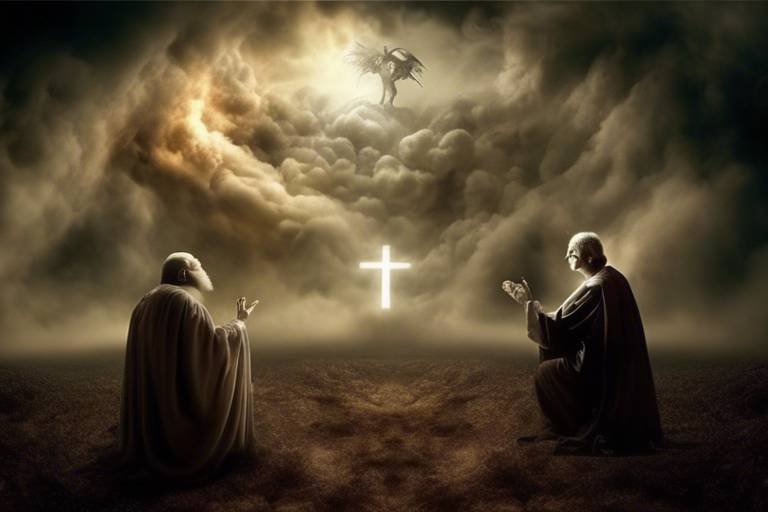
Have you ever pondered the age-old question of what makes something good or evil? It’s a topic that has sparked countless debates among philosophers, theologians, and everyday folks alike. At its core, the exploration of good and evil is not just a moral inquiry but a profound metaphysical one. Metaphysics, the branch of philosophy that deals with the fundamental nature of reality, seeks to understand the essence of things beyond the physical world. So, can it really shed light on our understanding of morality? The answer is both yes and no, depending on the philosophical lens through which we examine these concepts.
To dive deeper, we need to ask ourselves: are good and evil inherent qualities of the universe, or are they merely constructs shaped by human perception? This question is at the heart of metaphysical inquiry and sets the stage for a rich exploration of various philosophical traditions. In this article, we will unpack the nature of good and evil, examine different metaphysical frameworks, and discuss how these perspectives influence our understanding of morality and ethical behavior.
As we navigate through the complex landscape of moral philosophy, it’s essential to recognize that our interpretations of good and evil can significantly impact our choices and actions. Whether we view these concepts as absolute truths or subjective opinions can lead to vastly different conclusions about how we should live our lives. So, buckle up as we embark on this philosophical journey to uncover the metaphysical foundations of good and evil!
To truly grasp the metaphysical implications of good and evil, we first need to establish what these terms actually mean. In many philosophical traditions, good is often associated with qualities like beneficence, justice, and truth, while evil is linked to harm, injustice, and deception. However, these definitions can vary significantly across cultures and contexts.
For instance, in some Eastern philosophies, good and evil are seen as two sides of the same coin, intertwined in a constant dance of balance. In contrast, many Western traditions depict them as opposing forces in a moral struggle. This divergence in understanding leads us to question: is good and evil a universal concept, or is it shaped by cultural and societal influences? This question is crucial as we explore different metaphysical frameworks that attempt to explain these moral categories.
When it comes to understanding good and evil through a metaphysical lens, several frameworks come into play. Each offers unique insights into how we perceive morality:
- Realism: Posits that moral truths exist independently of human beliefs.
- Idealism: Suggests that good and evil are constructs shaped by human consciousness.
- Dualism: Frames good and evil as opposing forces that influence our moral choices.
Each of these frameworks presents its own strengths and weaknesses, leading to rich discussions about the nature of morality and ethical behavior. For example, realism argues for the existence of objective moral truths, while idealism raises questions about the subjective nature of our moral constructs. Dualism, on the other hand, highlights the conflicts and dilemmas we face in our moral lives.
Moral realism posits that good and evil exist in a realm that is independent of human perception. In other words, there are objective moral truths that govern our understanding of right and wrong. This perspective implies that even if individuals disagree on what is good or evil, there is a moral standard that remains constant, much like the laws of physics. Imagine trying to argue that gravity doesn’t exist; no matter your opinion, the truth remains unchanged. This idea can be both liberating and daunting, as it places a significant weight on our ethical decision-making and moral responsibilities.
However, moral realism is not without its critics. Relativism and subjectivism challenge the notion of universal moral truths by suggesting that morality is shaped by cultural contexts and personal experiences. For instance, what one culture may deem as good, another might view as evil. This raises a critical question: if morality is subjective, can we ever truly agree on what is right or wrong? The implications of these challenges are profound, as they force us to reconsider our moral convictions and the basis on which we make ethical decisions.
Despite these challenges, defenders of moral realism argue that the existence of objective moral values is essential for meaningful ethical discussions. They contend that without a shared understanding of good and evil, we risk descending into moral chaos where anything goes. By grounding our moral beliefs in universal truths, we can foster a more coherent and just society. After all, if we can agree that certain actions—like murder or theft—are inherently wrong, we can work towards creating a more ethical world.
On the flip side, moral idealism suggests that good and evil are not fixed entities but rather constructs shaped by human consciousness. This perspective emphasizes the role of societal norms and cultural influences in defining morality. For example, consider how views on issues like marriage, gender roles, and justice have evolved over time. What was once considered morally acceptable may now be viewed as outdated or even harmful. This fluidity in moral constructs raises important questions about the nature of ethical behavior and the impact of cultural shifts on our understanding of good and evil.
Dualism presents a compelling framework for understanding the conflict between good and evil. It posits that these concepts are not just abstract ideas but opposing forces that shape our moral landscape. This perspective can be traced back to various religious and philosophical traditions that depict good and evil as eternal adversaries, constantly at odds with one another.
Historically, dualistic thought has influenced countless narratives, from ancient religious texts to modern literature. The battle between good and evil serves as a powerful metaphor for the human experience, reflecting our internal struggles and moral dilemmas. This dualistic framework has shaped contemporary moral discourse, prompting us to consider the implications of our choices and the consequences that follow.
In today’s world, the relevance of dualistic frameworks is more pronounced than ever. As we grapple with complex ethical issues such as justice, punishment, and redemption, understanding the interplay between good and evil becomes crucial. For instance, in discussions about criminal justice, the dualistic perspective encourages us to consider not just the punishment of wrongdoers but also the potential for rehabilitation and redemption. By acknowledging the dual nature of morality, we can foster a more compassionate and nuanced approach to ethical dilemmas.
- What is the difference between good and evil? Good is typically associated with positive actions and intentions, while evil is linked to harm and negativity.
- Can good and evil be objective? Moral realism argues that good and evil can exist independently of human beliefs, while relativism suggests they are subjective.
- How does dualism influence modern ethics? Dualism highlights the conflict between good and evil, shaping our understanding of moral dilemmas and ethical choices.
The Nature of Good and Evil
When we think about good and evil, we often find ourselves diving into a pool of philosophical musings that can feel as deep and murky as the ocean. What do these terms really mean? Are they universal truths, or are they simply constructs shaped by culture and experience? In this exploration, we’ll peel back the layers of these complex concepts, revealing how different philosophical traditions interpret them and what implications these interpretations have for our behavior.
At its core, the definition of good often aligns with actions or intentions that promote well-being, happiness, or moral virtue. Conversely, evil is typically associated with actions that cause harm, suffering, or moral depravity. But here lies the crux of the matter: these definitions can vary dramatically depending on cultural, religious, and personal beliefs. For instance, what one culture deems as a virtuous act, another might view as immoral. This divergence raises important questions: Is there a universal morality, or is morality inherently subjective?
Throughout history, various philosophical traditions have attempted to categorize good and evil in ways that help us make sense of our ethical choices. For example, in Utilitarianism, good is often defined by the greatest happiness principle, where actions are deemed right if they promote the greatest good for the greatest number. In contrast, Kantian ethics posits that good actions are those performed out of duty and adherence to moral laws, regardless of the consequences. These frameworks illustrate the rich tapestry of thought surrounding moral categories, but they also highlight the challenges in reaching a consensus on what constitutes good and evil.
Moreover, the implications of these definitions extend far beyond philosophical debates. They shape our laws, influence social norms, and even dictate personal relationships. For instance, consider how a society grapples with issues like justice and punishment. If a community believes in a strict moral realism—that good and evil exist as objective truths—then their approach to crime and punishment may lean toward retribution. However, if they adopt a more relativistic view, they might focus on rehabilitation and understanding the societal factors that contribute to crime.
In summary, the nature of good and evil is not just a philosophical quandary; it’s a lens through which we view our world and make decisions every day. Understanding these concepts requires a willingness to engage with the complexities of human experience and the myriad ways we interpret our moral landscape. As we continue to explore these ideas, we’ll uncover how metaphysics plays a crucial role in shaping our understanding of these essential concepts.
- What is the difference between good and evil? Good typically refers to actions that promote well-being, while evil is associated with harm and suffering.
- Are good and evil universal concepts? The definitions of good and evil can vary significantly across cultures and philosophical traditions.
- How do philosophical frameworks influence our understanding of morality? Different frameworks, like Utilitarianism and Kantian ethics, provide distinct approaches to defining what is considered good or evil.
- Why is it important to understand the nature of good and evil? Understanding these concepts helps us navigate ethical dilemmas and informs our decisions in personal, social, and legal contexts.
Metaphysical Frameworks
When we dive into the realm of , we’re embarking on a journey through the intricate landscapes of philosophy that shape our understanding of good and evil. These frameworks are not just abstract ideas; they serve as the foundation upon which our moral beliefs are built. To grasp the complexities of moral philosophy, it’s essential to explore the three primary metaphysical frameworks: realism, idealism, and dualism. Each of these perspectives offers unique insights and raises profound questions about the nature of morality.
Realism posits that moral truths exist independently of human thoughts and perceptions. Imagine a world where good and evil are like physical objects—real, tangible, and existing outside our consciousness. This perspective suggests that there are objective moral facts that can guide our ethical decisions. However, this leads us to ponder: if good and evil are objective truths, how do we come to know them? This question opens the door to a myriad of philosophical debates.
On the other hand, we have idealism, which takes a different approach by suggesting that our concepts of good and evil are constructs of human consciousness. Think of it as a canvas where our experiences, culture, and societal norms paint the picture of morality. This perspective emphasizes the role of human interpretation, suggesting that what we consider “good” or “evil” can vary significantly from one culture to another. This raises an intriguing question: if morality is a construct, can it ever be universal, or is it forever bound to the context in which it exists?
Finally, we encounter dualism, a framework that views good and evil as opposing forces. This perspective is reminiscent of the classic battle between light and darkness, where each force constantly influences human actions and decisions. Dualism presents a compelling narrative that can help us understand moral dilemmas, as it posits that we are often caught in the crossfire of these opposing forces. The implications of dualism are vast, affecting everything from our personal choices to societal ethics.
To better understand these frameworks, let’s summarize their essential characteristics in the following table:
| Framework | Core Idea | Implications for Ethics |
|---|---|---|
| Realism | Moral truths exist independently | Objective moral values guide decisions |
| Idealism | Morality is a human construct | Ethics can vary across cultures |
| Dualism | Good and evil are opposing forces | Influences moral dilemmas and choices |
Each of these frameworks offers a lens through which we can explore the intricate tapestry of morality. They challenge us to reflect on our ethical beliefs and the foundations upon which they stand. As we continue to navigate the complexities of good and evil, understanding these metaphysical frameworks becomes essential in grasping the broader picture of human morality.
- What is moral realism? Moral realism is the view that there are objective moral truths that exist independently of human beliefs.
- How does idealism differ from realism? Idealism suggests that moral concepts are constructed by human consciousness, while realism asserts that they exist independently.
- What role does dualism play in moral philosophy? Dualism frames good and evil as opposing forces, influencing human decisions and ethical dilemmas.
Realism and Moral Truths
When we dive into the world of moral realism, we encounter a fascinating proposition: that good and evil exist independently of our perceptions and opinions. Imagine walking through a vast forest; the trees stand tall and unyielding, regardless of whether you notice them or not. Similarly, moral realists argue that moral truths exist in a similar manner. They contend that actions can be objectively categorized as good or evil, regardless of individual beliefs or cultural influences.
This objective stance implies that there are universal moral truths that apply to all human beings. Think of it as a cosmic law governing our ethical behavior. For instance, most cultures agree that murder is wrong. This consensus suggests that there is something inherently evil about taking a life, transcending individual or societal perspectives. But how do these moral truths manifest in our daily lives? Well, they guide our ethical decision-making, providing a compass that helps us navigate complex moral dilemmas.
However, moral realism isn’t without its challenges. Critics often argue that if moral truths were universal, we would see a broader agreement across different cultures. Instead, we often encounter a tapestry of moral beliefs that vary dramatically from one society to another. This leads to a crucial question: Are moral truths truly objective, or are they simply reflections of cultural norms? To address this, we must consider the implications of moral realism for moral responsibility. If good and evil exist independently, then individuals can be held accountable for their actions based on these objective standards.
Consider a scenario where a person commits a crime. If moral realism holds true, then the perpetrator can be judged against a set of objective moral truths, which could lead to a more consistent application of justice. This perspective encourages a society where ethical behavior is not merely subjective but rooted in a deeper understanding of morality.
In summary, the idea of moral realism presents a compelling case for the existence of objective moral truths. It challenges us to reflect on our ethical beliefs and consider the broader implications of our actions. Yet, this framework must navigate the turbulent waters of cultural relativism and subjectivism, posing a significant challenge to the notion of universal morality.
- What is moral realism? Moral realism is the belief that there are objective moral truths that exist independently of human perceptions.
- How does moral realism impact ethical decision-making? It provides a framework for judging actions based on universal moral standards, promoting accountability and consistency in moral judgments.
- What are the criticisms of moral realism? Critics argue that moral truths vary across cultures, suggesting that they may not be as objective as moral realists claim.
Challenges to Moral Realism
The concept of moral realism posits that moral truths exist independently of human beliefs and perceptions. However, this idea faces significant challenges from various philosophical perspectives, particularly relativism and subjectivism. Relativism argues that moral truths are not universal but rather contingent upon cultural, societal, or individual contexts. This view raises a critical question: if morality is shaped by cultural norms, can there truly be a universal standard of good and evil? For instance, what is deemed acceptable in one society may be considered abhorrent in another. This divergence complicates the notion of objective morality, suggesting that our understanding of good and evil is inherently subjective.
On the other hand, subjectivism takes this a step further by asserting that moral judgments are merely expressions of individual feelings and attitudes. In this light, morality becomes a personal affair, devoid of any objective grounding. This perspective leads to a rather unsettling implication: if everyone’s moral compass is valid, how can we resolve ethical disputes? Imagine a world where every opinion holds equal weight, resulting in a cacophony of conflicting moral views. It’s like trying to navigate a ship in a storm without a compass—chaotic and directionless.
Moreover, the challenges to moral realism extend beyond philosophical debates; they touch upon practical implications in our daily lives. For instance, consider the realm of law and justice. If moral truths are subjective, how do we justify legal systems that claim to uphold justice? The tension between moral relativism and the need for a stable legal framework creates a paradox that society must grapple with. It’s akin to trying to build a house on shifting sands—without a solid foundation, the structure is bound to collapse.
Despite these challenges, proponents of moral realism argue that the existence of widespread moral agreements across cultures suggests the presence of objective moral truths. For example, concepts like fairness and harm are often recognized universally, indicating a shared understanding of certain moral values. This leads to the question: can we reconcile the subjective experiences of morality with the notion of objective truths? The ongoing discourse between moral realists and their challengers illustrates the complexity of this issue, highlighting the necessity for continued exploration and dialogue.
In conclusion, while moral realism faces formidable challenges from relativism and subjectivism, the quest for understanding the nature of good and evil remains a vital philosophical endeavor. As we navigate the intricate landscape of morality, it becomes increasingly important to recognize the interplay between subjective experiences and the search for objective truths. After all, in a world filled with moral dilemmas, can we afford to ignore the possibility of universal moral principles?
- What is moral realism?
Moral realism is the philosophical view that there are objective moral truths that exist independently of human beliefs. - What are the main challenges to moral realism?
The primary challenges include moral relativism, which suggests that moral truths are culturally dependent, and moral subjectivism, which posits that moral judgments are based on individual feelings. - Can moral realism coexist with cultural diversity?
Proponents argue that despite cultural differences, there are universal moral principles that can be identified, such as fairness and harm. - How does moral relativism affect ethical decision-making?
Moral relativism complicates ethical decision-making by suggesting that there are no absolute standards, leading to potential conflicts in moral judgments.
Defending Moral Realism
When it comes to defending moral realism, one might wonder, “What makes this perspective so compelling?” At its core, moral realism asserts that there are objective moral truths that exist independently of human beliefs or perceptions. This idea can be likened to the laws of physics; just as gravity operates regardless of whether we believe in it, moral truths exist irrespective of our opinions. For instance, the belief that causing unnecessary suffering is wrong is not merely a subjective viewpoint but a moral fact that transcends individual perspectives.
One of the strongest arguments in favor of moral realism is the universality of certain moral principles across diverse cultures. While practices and beliefs may vary, many societies converge on fundamental ethical tenets, such as the prohibition against murder or the value of honesty. This suggests that there are foundational moral truths that resonate with human nature. To illustrate this, consider the following table that highlights common moral principles found across different cultures:
| Culture | Common Moral Principle |
|---|---|
| Western Societies | Value of honesty |
| Eastern Societies | Respect for elders |
| African Cultures | Community welfare |
| Indigenous Cultures | Harmony with nature |
This table illustrates that despite cultural differences, certain moral principles remain consistent, reinforcing the idea that moral realism holds water. Additionally, moral realism provides a robust framework for ethical discussions and debates. When we acknowledge the existence of objective moral truths, we can engage in meaningful conversations about right and wrong, rather than getting lost in a sea of subjective opinions.
Furthermore, moral realism has significant implications for moral responsibility. If we accept that there are objective moral truths, it follows that individuals can be held accountable for their actions. This accountability is crucial in fostering a society where ethical behavior is not only encouraged but expected. Imagine a world where everyone believed that morality was subjective; the chaos that would ensue is unimaginable. In contrast, moral realism offers a stabilizing force, creating a foundation upon which we can build our ethical frameworks.
Critics of moral realism often argue that it fails to account for the diversity of moral beliefs. However, this criticism can be countered by emphasizing that just because people disagree on moral issues does not mean there isn’t an objective truth to be discovered. Just as disagreements in science do not negate the existence of scientific truths, moral disagreements do not undermine the possibility of objective moral values. In essence, defending moral realism is about championing the idea that, like the laws of nature, moral truths exist, waiting to be understood and embraced.
In conclusion, defending moral realism is not just an academic exercise; it is a vital discourse that shapes our understanding of morality. By recognizing the existence of objective moral truths, we can engage in meaningful ethical discussions, hold ourselves accountable, and navigate the complexities of human behavior with greater clarity. So, the next time you ponder the nature of good and evil, remember that moral realism stands as a beacon of hope, guiding us toward a more ethical and just society.
- What is moral realism? Moral realism is the philosophical position that there are objective moral truths that exist independently of human beliefs or perceptions.
- How does moral realism differ from moral relativism? While moral realism asserts that moral truths are universal and objective, moral relativism holds that moral beliefs are shaped by cultural and individual perspectives.
- Can moral realism coexist with diverse moral beliefs? Yes, moral realism can coexist with diverse beliefs by suggesting that while people may disagree on moral issues, there are still objective truths to be discovered.
- What are the implications of moral realism for moral responsibility? Moral realism implies that individuals can be held accountable for their actions, as there are objective standards against which behavior can be measured.
Idealism and Moral Constructs
When we think about good and evil, it’s easy to assume that these concepts are as tangible as a rock or a tree. However, idealism challenges this notion by suggesting that good and evil are not fixed entities but rather constructs shaped by human consciousness and societal influences. Imagine if morality were like a canvas, painted differently by each culture and individual, reflecting their unique experiences, beliefs, and values. This perspective invites us to explore how our understanding of morality is influenced by context and perception.
At its core, moral idealism posits that our ideas about right and wrong are not universal truths but rather subjective interpretations. This means that what one culture considers virtuous, another might view as immoral. For instance, in some societies, communal living and sharing resources are seen as the ultimate good, while in others, individualism and personal success are celebrated. This divergence raises intriguing questions: Are there any absolute moral truths, or are all moral judgments merely reflections of our personal and cultural backgrounds?
Furthermore, moral idealism emphasizes the role of human consciousness in shaping ethical constructs. Our thoughts, emotions, and societal narratives intertwine to create a moral framework that guides our behavior. For example, consider how storytelling influences our understanding of heroism and villainy. The stories we tell—through literature, film, or even social media—play a significant role in shaping our moral landscapes. They provide a lens through which we interpret actions and their consequences, thus molding our perceptions of good and evil.
However, while idealism offers a valuable perspective on morality, it also has its challenges. Critics argue that if morality is entirely subjective, it could lead to moral relativism, where any action can be justified based on individual or cultural beliefs. This brings us to a critical point: if we accept that morality is a construct, how do we navigate ethical dilemmas? Are we left with a moral free-for-all, or can we find common ground despite our differences?
To better understand the implications of moral idealism, let’s consider a few key aspects:
- Cultural Influence: Different cultures have varying moral codes, which can lead to misunderstandings and conflicts. For example, practices viewed as acceptable in one culture may be condemned in another.
- Personal Experience: Our individual experiences shape our moral beliefs. A person who has faced injustice may develop a strong sense of empathy and advocate for social justice, while someone with a privileged background might prioritize personal success.
- Evolution of Morality: As societies evolve, so do their moral constructs. What was once considered acceptable may become obsolete, highlighting the fluidity of moral values.
In conclusion, idealism provides a fascinating lens through which to examine the constructs of good and evil. It challenges us to consider how our beliefs are shaped by our environment and experiences, prompting us to engage in deeper conversations about morality. By recognizing that our understanding of good and evil is not static, we open the door to a more inclusive and empathetic approach to ethical discussions.
- What is moral idealism? Moral idealism is the philosophical view that concepts of good and evil are constructs shaped by human consciousness and societal influences, rather than fixed truths.
- How does cultural influence affect morality? Different cultures have unique moral codes, which can lead to varying interpretations of what is considered right or wrong, sometimes resulting in misunderstandings or conflicts.
- Can moral idealism lead to moral relativism? Yes, critics of moral idealism argue that if morality is entirely subjective, it could lead to moral relativism, where any action can be justified based on individual or cultural beliefs.
Dualism: The Conflict of Good and Evil
When we talk about dualism, we’re diving into a fascinating philosophical realm where good and evil are seen as opposing forces. Imagine a cosmic battle, where light and darkness, virtue and vice, are locked in an eternal struggle. This dualistic perspective has profoundly influenced how we perceive morality and ethical choices throughout history. It’s like watching a thrilling movie where the heroes and villains are clearly defined, making it easy to root for one side over the other. But, as we explore this concept further, we realize that life is often much more complex than a simple good versus evil narrative.
Historically, dualism has its roots in various religious and philosophical traditions. For instance, in Zoroastrianism, the conflict between Ahura Mazda (the wise lord) and Angra Mainyu (the destructive spirit) illustrates this struggle vividly. In this worldview, the moral choices we make are not just about personal preference; they reflect a larger cosmic battle between good and evil. Similarly, in Christianity, the struggle between God and Satan encapsulates the dualistic theme, influencing countless moral teachings and ethical frameworks.
But why does this dualistic perspective resonate so deeply with us? One reason might be our innate desire for clarity in a world that often feels chaotic and confusing. When faced with moral dilemmas, it can be comforting to categorize actions and intentions into black and white, good and evil. However, this oversimplification can lead to significant challenges. For example, consider the ethical implications of a dualistic worldview:
- Reductionism: It can reduce complex human experiences into simplistic categories, ignoring the nuances of individual circumstances.
- Polarization: It may encourage an ‘us vs. them’ mentality, leading to conflict and division instead of understanding and compassion.
- Ethical Dilemmas: Real-life situations often present moral gray areas that challenge the binary nature of good and evil.
In modern society, the implications of dualism are evident in numerous ethical debates. Take the issue of justice and punishment. Many legal systems operate under the assumption that wrongdoers must be punished to restore balance, reflecting a dualistic notion of righting wrongs. However, this perspective can lead to harsh consequences, such as mass incarceration, particularly when the complexities of individual circumstances are ignored. Moreover, the idea of redemption is often sidelined in a strict dualistic framework, where once labeled ‘evil,’ individuals struggle to regain their place in society.
Furthermore, dualism influences our understanding of morality in cultural contexts. In some cultures, the battle between good and evil is depicted in folklore and storytelling, shaping the moral fabric of the community. These narratives often serve as cautionary tales, illustrating the consequences of straying from the path of righteousness. However, they also risk perpetuating stereotypes and stigmas against those deemed ‘evil,’ which can have lasting social implications.
Ultimately, while dualism offers a compelling lens through which to view the conflict between good and evil, it’s crucial to approach this perspective with caution. Recognizing the complexity and fluidity of moral concepts can lead to a more nuanced understanding of ethical behavior. As we navigate our moral landscapes, perhaps we should strive for a balance that acknowledges the existence of good and evil while also embracing the shades of gray that define human experience.
- What is dualism in philosophy? Dualism is the belief that reality consists of two fundamental opposing forces, often represented as good and evil.
- How does dualism influence our moral decisions? Dualism can simplify moral choices by categorizing actions as good or evil, but it may overlook the complexities of individual circumstances.
- Are there criticisms of dualistic thinking? Yes, critics argue that dualism can lead to polarization and reduce complex human experiences to simplistic categories.
- How can we reconcile dualistic perspectives with modern ethical dilemmas? By recognizing the nuances of morality and embracing a more holistic view that considers context and individual circumstances.
Historical Perspectives on Dualism
Dualism, the philosophical concept that posits the existence of two fundamental and opposing forces—often understood as good and evil—has a rich historical tapestry woven through various cultures and belief systems. Its roots can be traced back to ancient civilizations, where the struggle between light and darkness, order and chaos, became a central theme in religious and philosophical discourse. For instance, in Zoroastrianism, one of the world’s oldest religions, the eternal conflict between Ahura Mazda (the god of light) and Angra Mainyu (the spirit of darkness) illustrates a clear dualistic worldview. This dichotomy not only defined their cosmology but also shaped their moral framework, influencing followers to choose righteousness over malevolence.
In the realm of philosophy, dualism found a prominent voice in the works of Plato, who distinguished between the world of forms—representing ultimate goodness—and the material world, which was often seen as flawed and imperfect. Plato’s allegory of the cave serves as a metaphor for this dualistic perspective, suggesting that most people live in ignorance, only perceiving shadows of the true forms of good and evil. This philosophical stance paved the way for later thinkers, such as René Descartes, who famously argued for the separation of mind and body, further entrenching dualistic thought in Western philosophy.
However, dualism didn’t just thrive in the philosophical realm; it also permeated religious traditions. In Christianity, the battle between God and Satan embodies the dualistic struggle between good and evil, influencing moral teachings and ethical behavior among believers. This ideological framework has had profound implications for how societies conceptualize sin, virtue, and redemption. The narrative of good triumphing over evil resonates deeply with human experience, providing a moral compass that guides individual and collective actions.
Moreover, the historical perspectives on dualism extend into Eastern philosophies as well. In Hinduism, the concept of duality is evident in the interplay between the material world (Maya) and the spiritual realm (Brahman). The Bhagavad Gita presents the conflict between Arjuna and his moral dilemmas as a representation of the dualistic struggle within oneself, highlighting the importance of understanding and reconciling these opposing forces.
As we navigate through the historical context of dualism, it becomes evident that this philosophical perspective has not only shaped religious beliefs but has also influenced cultural narratives, art, and literature throughout the ages. The idea of conflict between good and evil continues to resonate in modern storytelling, from epic tales in literature to contemporary films where heroes and villains embody these timeless archetypes. This ongoing relevance speaks to the human condition and our intrinsic desire to understand the complexities of morality.
In conclusion, the historical perspectives on dualism reveal a profound and enduring struggle that transcends time and culture. By examining the roots of this philosophical concept, we gain insight into how it has influenced ethical thought and behavior, shaping our understanding of good and evil across various contexts. As we delve deeper into dualism’s implications, we can appreciate its role in framing moral dilemmas and guiding ethical choices in our own lives.
- What is dualism? Dualism is a philosophical concept that posits the existence of two opposing forces, commonly understood as good and evil, which influence human behavior and moral decision-making.
- How does dualism relate to religion? Many religious traditions incorporate dualistic themes, depicting a struggle between divine and malevolent forces, which shapes their moral teachings and ethical frameworks.
- What are some historical examples of dualism? Historical examples include Zoroastrianism’s battle between Ahura Mazda and Angra Mainyu, as well as Plato’s distinction between the world of forms and the material world.
- Is dualism still relevant today? Yes, dualism remains relevant in modern ethical debates, literature, and media, influencing how we perceive moral dilemmas and the nature of good and evil.
Modern Implications of Dualism
In today’s world, the concept of dualism—viewing good and evil as opposing forces—continues to shape our ethical landscape. This perspective not only influences individual moral choices but also impacts societal structures and institutions. For instance, when we think about justice systems, dualism plays a crucial role in how we interpret crime and punishment. It raises questions about whether individuals are inherently good or evil, and how these labels affect rehabilitation efforts. Are offenders simply victims of their circumstances, or do they embody a darker nature that society must control?
Furthermore, dualistic thinking permeates political discourse, often manifesting in the “us versus them” mentality. This binary view simplifies complex issues, leading to polarized debates where compromise feels impossible. For example, consider the ongoing discussions around climate change. Some argue that those who oppose environmental regulations are “evil,” while others see activists as overly idealistic. This division can hinder constructive dialogue and prevent collaborative solutions. It highlights the necessity of understanding that moral dilemmas are rarely black and white, and that recognizing shades of gray can lead to more effective outcomes.
Moreover, the implications of dualism extend into personal relationships. When individuals categorize others as either wholly good or entirely evil, it can lead to conflicts and misunderstandings. Think about a friend who betrays your trust; labeling them as “evil” might hinder reconciliation. Instead, acknowledging the complexity of human behavior allows for empathy and growth. This nuanced approach encourages us to explore the underlying motivations behind actions, fostering a more compassionate society.
In the realm of psychology, dualism’s influence is evident in therapeutic practices. Many therapeutic models emphasize the importance of recognizing both the light and dark aspects of human nature. For instance, cognitive-behavioral therapy often helps individuals confront their negative thoughts and behaviors while reinforcing positive ones. This balance aligns with the dualistic perspective, suggesting that embracing our full spectrum of emotions can lead to healthier mental states.
To summarize, the modern implications of dualism are far-reaching, affecting our justice systems, political discourse, personal relationships, and even psychological practices. By understanding and navigating the complexities of good and evil, we can foster a more inclusive and empathetic society. Embracing dualism does not mean we must accept a simplistic view of morality; rather, it invites us to engage in deeper conversations about the human experience.
- What is dualism in philosophy? Dualism is the belief that there are two fundamental and opposing forces in the universe, often conceptualized as good and evil.
- How does dualism affect our understanding of morality? Dualism influences our perception by framing moral choices as binary, impacting how we judge actions and individuals.
- Can dualism coexist with other philosophical frameworks? Yes, dualism can intersect with various philosophical ideas, such as idealism and realism, creating a more comprehensive understanding of ethics.
- Why is it important to recognize the complexities of good and evil? Acknowledging the complexities allows for more compassionate interactions and more effective solutions to moral dilemmas.
Frequently Asked Questions
- What is the definition of good and evil in metaphysics?
In metaphysics, good and evil are often viewed as fundamental moral categories that shape our understanding of ethics. Good typically refers to actions, behaviors, or outcomes that promote well-being, happiness, and moral virtue, while evil is associated with harm, suffering, and moral wrongdoing. These definitions can vary significantly across different philosophical traditions, influencing how we perceive and engage with moral issues in our lives.
- How do different metaphysical frameworks explain good and evil?
Different metaphysical frameworks, such as realism, idealism, and dualism, offer unique perspectives on good and evil. Realism posits that moral truths exist independently of human perception, suggesting that good and evil are objective realities. In contrast, idealism argues that these concepts are constructs shaped by human consciousness and cultural contexts. Dualism presents good and evil as opposing forces, highlighting the conflict between them in moral dilemmas and ethical choices.
- What are the implications of moral realism?
Moral realism implies that there are objective moral truths that guide ethical decision-making and moral responsibility. This perspective suggests that individuals have a duty to recognize and act according to these truths, regardless of personal beliefs or societal norms. However, it also faces challenges from relativism and subjectivism, which argue that moral values are not universal and can vary based on individual or cultural perspectives.
- What challenges does moral realism face?
Moral realism is often challenged by relativism, which posits that moral truths are not absolute but rather dependent on cultural or individual perspectives. Subjectivism further complicates this by suggesting that moral judgments are purely personal opinions. These challenges raise important questions about the existence of universal moral truths and the nature of ethical behavior in a diverse world.
- Can moral realism be defended against its critics?
Yes, moral realism can be defended by presenting arguments and evidence that support the existence of objective moral values. Proponents argue that certain moral principles, such as justice and fairness, are universally recognized across cultures, suggesting a foundation for moral truths. Additionally, the consequences of denying moral realism can lead to ethical nihilism, which further underscores the importance of recognizing some form of objective morality.
- What is moral idealism?
Moral idealism posits that good and evil are constructs shaped by human consciousness and social contexts. This perspective emphasizes the role of cultural norms and individual perceptions in defining moral values. As a result, moral idealism encourages a more flexible and empathetic approach to ethics, acknowledging that moral judgments can vary widely across different societies and situations.
- How does dualism frame the concepts of good and evil?
Dualism frames good and evil as opposing forces that are in constant conflict. This perspective influences how individuals approach moral dilemmas, often presenting ethical choices as battles between these two forces. Dualistic frameworks can be found in various religious and philosophical traditions, shaping contemporary discussions around justice, punishment, and redemption.
- What historical influences have shaped dualistic thought?
Historical influences on dualistic thought include religious beliefs, such as those found in Zoroastrianism, Christianity, and Gnosticism, which often depict a cosmic struggle between good and evil. Philosophical traditions, including those of Plato and Descartes, have also contributed to dualistic perspectives, framing the moral landscape as a battleground for ethical decisions and human behavior.
- What are the modern implications of dualism in ethics?
In modern ethical debates, dualism remains relevant as it shapes discussions around justice, punishment, and the concept of redemption. The dualistic view can influence how societies address issues such as crime and morality, often framing these discussions in terms of right versus wrong. This perspective encourages individuals to consider the broader implications of their moral choices and the potential for reconciliation between opposing forces.
metaphysics, good, evil, moral philosophy, ethics, ontology, universe, morality, , metaphysics, good, evil, moral philosophy, ethics, ontology, universe, morality,
Share this content:
Leave a Reply