
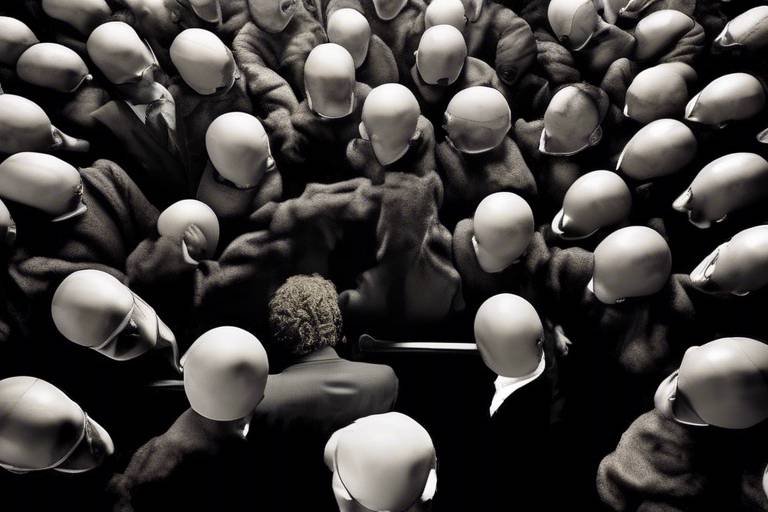
This article explores the fundamental concepts of human rights, their philosophical underpinnings, and the ethical implications associated with them in contemporary society. Human rights are not just abstract ideas; they are the very foundation upon which we build our moral and ethical frameworks. They represent the core values that define our humanity and guide our interactions with one another. But what exactly are human rights? Are they universal, or do they vary across cultures? These questions lead us into a deep philosophical inquiry that can illuminate the importance of these rights in our daily lives.
Understanding what human rights are and their significance in moral philosophy helps us grasp their role in promoting justice and equality across different cultures and societies. At their core, human rights are about recognizing the inherent dignity of every individual. They serve as a bulwark against oppression and injustice, ensuring that everyone has the freedom to live their life without fear of discrimination or violence. Imagine living in a world where your basic needs are met, where your voice matters, and where your rights are respected. This is the essence of what human rights strive to achieve.
Examining the evolution of human rights throughout history reveals how philosophical ideas have shaped modern interpretations and implementations of these rights in various legal frameworks. From ancient civilizations to the Enlightenment and beyond, the journey of human rights is a testament to humanity’s ongoing struggle for dignity and respect. It’s fascinating to see how different cultures have contributed to this discourse, each adding layers of meaning and understanding. For instance, the Magna Carta of 1215 can be seen as one of the earliest documents to advocate for individual rights against the whims of authority.
The contributions of Enlightenment philosophers like John Locke and Jean-Jacques Rousseau laid the groundwork for contemporary human rights discourse, emphasizing individual liberty and the social contract. Locke’s theories revolved around the idea that individuals possess natural rights that are inalienable and should be protected by society. This perspective was revolutionary and set the stage for modern democracies. On the other hand, Rousseau introduced the concept of the social contract, arguing that individuals achieve freedom not in isolation but through collective governance. This interplay between individual rights and societal responsibilities is crucial for understanding our current human rights framework.
Locke’s assertion that individuals possess inherent rights to life, liberty, and property significantly influenced the development of human rights as universal entitlements. He argued that these rights are not granted by any government but are inherent to all humans. This notion challenged the prevailing ideas of divine right and absolute monarchy, paving the way for democratic ideals. Locke’s philosophy encourages us to view human rights as fundamental, not merely privileges granted by the state.
Rousseau’s concept of the social contract highlights the relationship between individual freedoms and collective governance, a crucial aspect of human rights philosophy. He believed that true freedom is achieved when individuals come together to form a society that respects and upholds the rights of all. This idea resonates with contemporary movements advocating for social justice and equality, emphasizing that our rights are interconnected and that we have a responsibility to ensure that everyone’s rights are respected.
Exploring contemporary human rights frameworks, such as the Universal Declaration of Human Rights, illustrates how philosophical ideas have been codified into international law and policy. Adopted by the United Nations in 1948, this declaration is a landmark document that articulates the rights to which every individual is entitled, regardless of nationality, ethnicity, or religion. It serves as a moral compass for nations and societies, guiding them in their pursuit of justice and equality.
The ethical dimensions of human rights raise questions about moral obligations, justice, and the responsibilities of individuals and states in upholding these rights. Are we merely passive observers, or do we have an active role in defending and promoting human rights? The answer is complex and requires us to engage critically with our own beliefs and actions. We must consider not only the rights we claim for ourselves but also those we are willing to advocate for others.
The debate between universalism and cultural relativism challenges our understanding of human rights, questioning whether rights are absolute or culturally contingent. Universalists argue that human rights apply to all people, regardless of cultural context, while cultural relativists contend that rights should be interpreted within specific cultural frameworks. This ongoing discourse is essential as it shapes international human rights policies and practices.
The relationship between human rights and global justice emphasizes the need for equitable distribution of resources and opportunities to ensure the realization of these rights for all individuals. In an increasingly interconnected world, the disparities in wealth and power raise ethical questions about our responsibilities to one another. Can we claim to uphold human rights if we ignore the plight of those suffering from poverty and inequality? Thus, the pursuit of human rights is not just a local or national endeavor; it is a global imperative.
- What are human rights? Human rights are fundamental rights and freedoms that belong to every person in the world, from birth until death.
- Why are human rights important? They are essential for ensuring dignity, freedom, and justice for all individuals.
- How do human rights evolve? Human rights evolve through social movements, legal frameworks, and philosophical discourse that respond to changing societal needs.
- What is the Universal Declaration of Human Rights? It is a milestone document that outlines the rights and freedoms to which all humans are entitled.
The Nature of Human Rights
Understanding the nature of human rights is essential for grasping their significance in our world today. At their core, human rights are the fundamental entitlements that every individual possesses simply by being human. These rights transcend cultural, geographical, and political boundaries, making them universal in principle. But what does this really mean? Imagine a world where everyone, regardless of their background, is guaranteed basic freedoms and protections. This is not just an idealistic dream; it is a vision grounded in moral philosophy that seeks to promote justice and equality for all.
Human rights serve as a framework for evaluating the treatment of individuals within societies. They are often categorized into two main types: civil and political rights, which protect individual freedoms, and economic, social, and cultural rights, which ensure a basic standard of living. This duality emphasizes that human rights are not merely about freedom from oppression but also about creating conditions that allow individuals to thrive. Think of civil rights as the foundation of a house, while social rights are the walls that provide structure and support. Without both, the house cannot stand.
Moreover, the significance of human rights extends beyond mere legal entitlements; they are deeply embedded in our moral consciousness. They prompt us to question: What does it mean to be human? What responsibilities do we have towards one another? These questions lead us to the ethical implications of human rights, urging us to consider our roles as individuals and as part of a larger community. For instance, when we witness injustice or inequality, we are often compelled to act, driven by an innate sense of duty to uphold the rights of others.
In contemporary discussions, the nature of human rights also faces challenges. Debates around universalism versus cultural relativism highlight the complexities of applying a universal set of rights across diverse cultures. While some argue that human rights should be absolute, others contend that cultural contexts must be considered. This tension raises critical questions: Are human rights truly universal, or do they reflect a Western-centric viewpoint? Such inquiries are vital for developing a more inclusive understanding of what human rights mean in a globalized world.
To summarize, the nature of human rights is multifaceted, encompassing legal, moral, and social dimensions. They are not just a set of laws but a reflection of our shared humanity. As we continue to explore these concepts, we must remain vigilant in advocating for the rights of all individuals, ensuring that the principles of justice and equality are not just ideals but realities for everyone.
- What are human rights? Human rights are the basic rights and freedoms that belong to every person, regardless of nationality, sex, ethnicity, religion, or any other status.
- Why are human rights important? They are essential for ensuring dignity, freedom, and justice for all individuals, promoting peace and security in societies.
- How are human rights protected? Human rights are protected through international treaties, national laws, and various organizations that monitor and promote these rights globally.
- What is the difference between civil rights and human rights? Civil rights typically refer to the rights of citizens in a particular country, while human rights are universal and apply to all individuals worldwide.
Historical Perspectives on Human Rights
The journey of human rights is a fascinating tapestry woven through centuries of philosophical thought, social upheaval, and cultural evolution. To truly appreciate the significance of human rights today, one must delve into the historical context that has shaped their development. The concept of human rights has not always been universally accepted; rather, it has undergone profound transformations influenced by various philosophical ideologies and significant historical events. From ancient civilizations to modern democracies, the evolution of human rights reflects a broader understanding of justice, dignity, and equality.
In ancient times, notions of rights were often tied to citizenship and social status, with privileges granted to a select few. However, as societies evolved, so too did the understanding of individual rights. The Magna Carta of 1215 marked a pivotal moment in history, establishing the idea that even rulers are bound by law, laying the groundwork for the development of legal rights. This early document signified a shift towards recognizing the rights of individuals against arbitrary power, a theme that would echo throughout history.
Fast forward to the Enlightenment period, where thinkers like John Locke and Jean-Jacques Rousseau revolutionized the discourse on rights. Locke’s philosophy introduced the idea of natural rights, asserting that individuals inherently possess rights to life, liberty, and property. This radical notion challenged the divine right of kings and laid the foundation for democratic principles that prioritize individual freedoms. Rousseau, on the other hand, brought forth the concept of the social contract, emphasizing the balance between individual liberties and collective governance. His ideas urged society to consider how rights are not just given but are also a responsibility shared among its members.
As we move into the 20th century, the atrocities of World War II prompted a global reevaluation of human rights. The establishment of the United Nations in 1945 and the subsequent adoption of the Universal Declaration of Human Rights in 1948 marked a watershed moment. This declaration was not merely a list of rights; it was a manifesto asserting that all human beings are entitled to certain inalienable rights, regardless of nationality, race, or religion. It represented a collective commitment to uphold dignity and justice on a global scale, transcending borders and cultures.
In examining the historical perspectives on human rights, it is essential to recognize that the journey is ongoing. The evolution of human rights has been met with resistance and challenges, often reflecting the tensions between universalism and cultural relativism. While some argue that human rights are universal and should apply to all individuals, others contend that rights must be understood within cultural contexts. This debate continues to shape contemporary discussions on human rights, highlighting the complexity of implementing these ideals in diverse societies.
In conclusion, the historical perspectives on human rights reveal a rich interplay of ideas, struggles, and advancements. Understanding this history is crucial for appreciating the rights we often take for granted today. As we reflect on the past, we must also look to the future, recognizing that the fight for human rights is far from over. Each generation carries the torch, igniting conversations about justice, equality, and the inherent dignity of every individual.
- What are human rights? Human rights are the basic rights and freedoms that belong to every person in the world, from birth until death.
- Why is the history of human rights important? Understanding the history of human rights helps us recognize the struggles and achievements that have shaped our current rights and freedoms.
- How have historical events influenced human rights? Major historical events, such as wars and revolutions, have often prompted shifts in the recognition and implementation of human rights.
- What role do philosophers play in the development of human rights? Philosophers have provided foundational ideas that have influenced the understanding and articulation of human rights throughout history.
Enlightenment Thinkers
The Enlightenment era, often referred to as the Age of Reason, was a transformative period in history that laid the intellectual foundations for modern human rights. This movement, which blossomed in Europe during the 17th and 18th centuries, was characterized by a surge in philosophical thought that championed reason, individualism, and skepticism of traditional authority. At the heart of this movement were several key thinkers whose ideas continue to resonate in contemporary discussions about human rights.
One of the most influential figures of this period was John Locke. Locke’s philosophy revolved around the concept of natural rights, which he argued were inherent to all individuals by virtue of their humanity. He famously asserted that these rights include life, liberty, and property. Locke’s ideas were revolutionary at the time, as they challenged the divine right of kings and posited that governments should be established to protect these fundamental rights. His belief that individuals have the right to revolt against oppressive governments laid the groundwork for democratic principles that we see in many societies today.
Another monumental figure was Jean-Jacques Rousseau, whose contributions to political theory emphasized the importance of the social contract. Rousseau argued that individuals enter into a collective agreement to form a society, thereby sacrificing some personal freedoms for the greater good. This idea of balancing individual rights with collective responsibilities is crucial in understanding the philosophical underpinnings of human rights. Rousseau’s work highlighted the tension between personal liberty and social order, a theme that remains relevant in modern discussions about governance and human rights.
To further illustrate the impact of these thinkers, consider the following table that summarizes their key contributions:
| Philosopher | Key Contribution | Impact on Human Rights |
|---|---|---|
| John Locke | Theory of Natural Rights | Foundation for individual rights and democratic governance |
| Jean-Jacques Rousseau | Social Contract Theory | Balancing individual freedoms with collective good |
These Enlightenment thinkers not only shaped the philosophical discourse surrounding human rights but also influenced revolutionary movements across the globe. Their ideas prompted individuals to question authority and seek a society where rights are recognized and protected. The ripple effects of their philosophies can be seen in the drafting of documents such as the American Declaration of Independence and the French Declaration of the Rights of Man and of the Citizen. As we delve deeper into the evolution of human rights, it’s essential to recognize how these foundational ideas continue to inform our understanding of justice and equality today.
- What are natural rights? Natural rights are fundamental rights that individuals possess inherently, which cannot be taken away or denied. They include rights to life, liberty, and property.
- How did Enlightenment thinkers influence modern democracy? Enlightenment thinkers emphasized reason, individual rights, and the social contract, which laid the groundwork for democratic principles and the establishment of governments that protect these rights.
- What is the significance of the social contract? The social contract is a theoretical agreement among individuals to form a society, balancing personal freedoms with the responsibilities to the collective, which is crucial for the functioning of contemporary democracies.
Locke’s Theory of Natural Rights
John Locke, a towering figure in the realm of Enlightenment philosophy, profoundly influenced our understanding of human rights through his theory of natural rights. At its core, Locke’s philosophy asserts that every individual is born with certain inalienable rights. These rights are not granted by any government or authority; rather, they are inherent to each person by virtue of their humanity. Imagine these rights as a shield that protects individuals from the arbitrary power of others, ensuring that everyone has the freedom to pursue their own happiness, as long as they do not infringe upon the rights of others.
Locke categorized these natural rights primarily into three fundamental categories: life, liberty, and property. He argued that the right to life is paramount; without it, all other rights are meaningless. The right to liberty allows individuals to act freely and make choices about their own lives, while the right to property encompasses not just physical possessions but also the fruits of one’s labor and efforts. This triad of rights forms the backbone of Locke’s philosophy and serves as a foundation for modern democratic principles.
Locke’s ideas were revolutionary for his time and continue to resonate today. His assertion that governments are established to protect these natural rights laid the groundwork for modern democratic thought. He famously stated, “Where there is no law, there is no freedom,” emphasizing that laws must exist to safeguard individual rights against infringement. This leads to the concept of the social contract, where individuals consent to form a society and accept certain limitations on their freedoms in exchange for the protection of their rights. In a sense, it’s like a pact among friends: you agree to respect each other’s rights and freedoms, and in return, you gain the security that comes from living in a community.
Furthermore, Locke’s philosophy raises important questions about the role of government and the responsibilities of citizens. If a government fails to protect these natural rights, Locke argues that citizens have not just the right, but the duty to revolt. This idea was radical and laid the groundwork for the revolutions that would follow, including the American Revolution. Locke’s thoughts on natural rights have been immortalized in various documents, such as the United States Declaration of Independence, which echoes his sentiments about life, liberty, and the pursuit of happiness.
In conclusion, Locke’s theory of natural rights is more than just philosophical musings; it is a call to action, urging individuals to recognize their inherent rights and the need to protect them. His ideas have transcended time and continue to influence contemporary discussions on human rights, illustrating the enduring nature of his legacy. As we navigate the complexities of modern society, Locke’s emphasis on individual rights serves as a crucial reminder of the fundamental principles that should guide our governance and interpersonal relations.
- What are natural rights according to Locke? Natural rights, as defined by Locke, are inherent rights that every individual possesses, including the rights to life, liberty, and property.
- How did Locke influence modern democracy? Locke’s ideas about the protection of individual rights and the role of government laid the groundwork for democratic principles, emphasizing that governments must serve the people and protect their rights.
- What happens if a government fails to protect natural rights? Locke believed that citizens have the right and responsibility to revolt against a government that fails to protect their natural rights.
Rousseau’s Social Contract
Jean-Jacques Rousseau’s concept of the social contract is a pivotal idea in the realm of political philosophy and human rights. At its core, Rousseau’s theory proposes that individuals come together to form a society by collectively agreeing to abide by certain rules and principles that govern their interactions. This agreement is not merely a legal formality; it is a profound moral commitment to the common good. Rousseau believed that in order to achieve true freedom, individuals must surrender some of their personal liberties to the collective will, which he termed the general will. This general will is not just the sum of individual desires; rather, it represents what is best for the society as a whole.
Rousseau argued that this social contract is the foundation of legitimate political authority. Unlike earlier thinkers who viewed government as a means to protect property and maintain order, Rousseau emphasized that the purpose of government should be to ensure freedom and equality among its citizens. The social contract, therefore, is a transformative agreement that enables individuals to transcend their selfish impulses and work towards the common good. In this light, human rights are not just individual entitlements; they are rooted in the collective responsibility to uphold the dignity and welfare of all members of society.
One of the most intriguing aspects of Rousseau’s social contract is its implication for governance. He posited that a government should be based on the consent of the governed, making it inherently accountable to the people. If the government fails to act in accordance with the general will, citizens have the right to resist or overthrow it. This revolutionary idea has inspired countless movements for democracy and human rights throughout history, as it places the power in the hands of the people rather than a select few.
To illustrate Rousseau’s ideas further, consider the following table that summarizes key aspects of his social contract theory:
| Aspect | Description |
|---|---|
| General Will | The collective will of the people aimed at the common good. |
| Legitimate Authority | Government derives its power from the consent of the governed. |
| Collective Responsibility | Individuals have a duty to promote the welfare of the community. |
| Right to Resistance | Citizens can challenge a government that does not act in accordance with the general will. |
Rousseau’s ideas continue to resonate today, particularly in discussions about the balance between individual rights and collective responsibilities. His vision of a society where citizens actively participate in governance and uphold each other’s rights is a powerful reminder of the ethical dimensions of human rights. It challenges us to consider not just what we are entitled to as individuals, but also what we owe to each other as members of a community.
- What is the social contract? The social contract is an agreement among individuals to form a society and abide by its rules for the sake of the common good.
- How does Rousseau view individual freedom? Rousseau believes that true freedom is achieved when individuals work towards the collective will, balancing personal liberties with social responsibilities.
- What role does the general will play in governance? The general will represents the collective interests of the people, and legitimate governments must act in accordance with it to maintain their authority.
- Can citizens resist their government according to Rousseau? Yes, Rousseau argues that citizens have the right to resist or overthrow a government that fails to represent the general will.
Modern Human Rights Frameworks
In today’s world, the concept of human rights has been formalized through various frameworks that aim to protect and promote the dignity of every individual. One of the most significant milestones in this journey is the Universal Declaration of Human Rights (UDHR)
The UDHR is not merely a list of rights; it is a powerful statement of principles that has inspired numerous international treaties and national laws. It emphasizes the inherent dignity of every person and the equal and inalienable rights of all members of the human family. The declaration includes civil, political, economic, social, and cultural rights, creating a comprehensive framework that addresses the multifaceted nature of human existence. To illustrate the significance of these frameworks, let’s delve into some key aspects of the UDHR and other related instruments: These frameworks not only outline rights but also establish mechanisms for accountability and enforcement. For instance, various treaties require states to report on their progress in implementing human rights standards, thereby fostering a culture of transparency and responsibility. However, the challenge remains: how do we ensure that these rights are upheld in practice? The effectiveness of modern human rights frameworks often hinges on the political will of nations to adhere to their commitments. While some countries have robust legal systems that support human rights, others struggle with enforcement, leading to significant disparities in the realization of these rights. This inconsistency raises critical questions about the universality of human rights and the obligations of states to protect them. Furthermore, the rise of globalization has added another layer of complexity to human rights frameworks. Issues such as migration, climate change, and economic inequality transcend national borders, necessitating a coordinated international response. This has led to the emergence of various non-governmental organizations (NGOs) and advocacy groups that work tirelessly to promote human rights at a global level and hold violators accountable. In conclusion, modern human rights frameworks represent a significant evolution in our understanding of justice and dignity. They provide a foundation for individuals to claim their rights and for governments to be held accountable. As we navigate the complexities of the contemporary world, the challenge remains to ensure that these frameworks are not just theoretical ideals but practical tools for fostering a more equitable and just society.
Document
Year Adopted
Key Focus Areas
Universal Declaration of Human Rights
1948
Fundamental freedoms, equality, and dignity
Covenant on Civil and Political Rights
1966
Rights to life, liberty, and security
Covenant on Economic, Social and Cultural Rights
1966
Right to work, education, and health
Convention on the Elimination of All Forms of Discrimination Against Women
1979
Gender equality and women’s rights
The UDHR is a foundational document adopted by the United Nations that outlines the fundamental rights and freedoms to which all individuals are entitled.
These frameworks provide legal protections and mechanisms for individuals to claim their rights and seek justice when those rights are violated.
NGOs work to raise awareness, advocate for policy changes, and hold governments accountable for human rights abuses.
While human rights are intended to be universal, their implementation can vary widely across different cultures and legal systems.Ethical Implications of Human Rights
When we dive into the , we step into a world filled with complex questions and moral dilemmas. Human rights are not just lofty ideals; they are the foundation upon which we build our understanding of justice, equality, and humanity itself. But what does it mean to uphold these rights? Are we merely passive observers, or do we have an active role in ensuring they are respected? These questions force us to reflect on our moral obligations, both as individuals and as members of a society.
One of the central debates in the realm of human rights is the tension between universalism and cultural relativism. Universalists argue that human rights are inherent and should apply to all people, regardless of their cultural backgrounds. This perspective is grounded in the belief that certain rights, such as the right to life and freedom from torture, are fundamental and should not be violated under any circumstances. On the other hand, cultural relativists contend that human rights cannot be universally applied because they are deeply embedded in cultural contexts. This raises a critical ethical question: can we truly claim that our understanding of rights is superior to that of another culture?
To illustrate this point, consider the following table that outlines the core arguments of both sides:
| Universalism | Cultural Relativism |
|---|---|
| Rights are inherent and universal. | Rights are shaped by cultural norms and values. |
| Emphasizes individual liberty and autonomy. | Focuses on community and social cohesion. |
| Supports international human rights laws. | Argues against imposing external standards. |
This debate is not merely academic; it has real-world implications. For instance, when humanitarian organizations intervene in countries with differing cultural practices, they often face backlash for imposing what are perceived as foreign values. This raises an important ethical dilemma: how do we balance respect for cultural diversity with the need to protect fundamental human rights? It’s a tightrope walk that requires sensitivity, understanding, and an unwavering commitment to justice.
Additionally, the ethical implications of human rights extend beyond cultural considerations. They also touch upon issues of global justice. In an increasingly interconnected world, the realization of human rights for all individuals is contingent upon equitable distribution of resources and opportunities. The gap between the rich and the poor, both within and between nations, often leads to violations of rights, particularly for marginalized communities. Therefore, we must ask ourselves: what responsibilities do we bear in our pursuit of global justice? Are we willing to advocate for policies that ensure the fair treatment of all, regardless of their socio-economic status?
In conclusion, the ethical implications of human rights compel us to examine our values, challenge our assumptions, and take action. They remind us that human rights are not just a set of principles to be admired from afar but are calls to action that demand our engagement. As we navigate these complex waters, let’s remember that our commitment to human rights is a reflection of our shared humanity.
- What are human rights? Human rights are basic rights and freedoms that belong to every person in the world, from birth until death.
- Why are ethical implications important in human rights? Ethical implications help us understand our responsibilities and the moral dilemmas we face in promoting and protecting human rights.
- How do cultural differences affect human rights? Cultural differences can lead to varying interpretations of what constitutes a human right, creating challenges in universal application.
- What is the relationship between human rights and global justice? Global justice emphasizes the need for equitable distribution of resources to ensure that all individuals can enjoy their human rights.
Universalism vs. Cultural Relativism
The debate between universalism and cultural relativism is one of the most profound discussions in the realm of human rights. At its core, universalism posits that there are certain rights that every individual, regardless of their cultural background, is entitled to simply by being human. These rights are seen as absolute and inalienable, transcending geographical and cultural boundaries. On the other hand, cultural relativism argues that rights and moral values are shaped by cultural contexts, suggesting that what is considered a right in one society may not be applicable or relevant in another. This tension raises critical questions: Are human rights truly universal, or are they merely a reflection of Western values imposed on the rest of the world?
To illustrate this philosophical clash, consider the following points:
- Universalism: Advocates argue that human rights are grounded in shared human dignity and should apply to all, irrespective of cultural differences. For instance, the Universal Declaration of Human Rights (UDHR) adopted by the United Nations in 1948 is a testament to this belief, outlining fundamental rights that every person should enjoy.
- Cultural Relativism: Proponents of cultural relativism assert that human rights must be understood within the context of specific cultures. They argue that imposing universal standards can lead to cultural imperialism, where one culture’s values are prioritized over others, potentially undermining local customs and practices.
This debate is not just academic; it has real-world implications. For example, when international organizations intervene in countries to promote human rights, they often face resistance from local communities who feel that these efforts disregard their cultural norms. This can lead to a backlash, where the very rights intended to empower individuals are rejected because they are perceived as foreign impositions.
Moreover, the challenge lies in finding a balance between respecting cultural differences and advocating for fundamental human rights. Some scholars suggest a middle ground, where universal principles can be adapted to fit local contexts without compromising their essence. This approach acknowledges that while the right to life, freedom from torture, and equality before the law may be universal, the ways in which these rights are expressed and protected can vary significantly across different cultures.
Ultimately, the conversation around universalism and cultural relativism pushes us to reflect on our own biases and assumptions. It challenges us to ask difficult questions: How do we define rights? Who gets to decide what is a right? And most importantly, how do we ensure that the pursuit of human rights does not trample on the very cultures we aim to uplift?
- What is universalism in the context of human rights? Universalism in human rights refers to the belief that certain rights are inherent to all individuals, regardless of cultural or societal differences.
- What does cultural relativism argue? Cultural relativism argues that rights and moral values are culturally bound, and what is considered a right in one culture may not be viewed the same way in another.
- Can universal rights coexist with cultural practices? Yes, many scholars advocate for a balance where universal human rights are adapted to respect and incorporate cultural practices without compromising their fundamental nature.
Human Rights and Global Justice
When we talk about human rights, we often envision a world where every individual is treated with dignity and respect, regardless of their background. However, this ideal is intricately linked to the concept of global justice. The relationship between human rights and global justice is not just an academic debate; it’s a pressing issue that affects millions of lives around the world. Imagine a world where every person, regardless of where they were born, has equal access to the resources they need to thrive. This vision is at the heart of the struggle for global justice.
At its core, global justice advocates for the fair distribution of resources and opportunities across the globe. It raises critical questions: Should wealthier nations be held accountable for the poverty and suffering in less fortunate countries? How do we ensure that human rights are not merely theoretical constructs but are actively realized in everyday life? These questions are not just rhetorical; they demand urgent responses from individuals, governments, and international organizations alike.
To illustrate the connection between human rights and global justice, consider the following points:
- Equitable Resource Distribution: Every individual has the right to access essential resources such as food, water, and education. However, disparities in wealth and power often lead to unequal access.
- Global Responsibility: Wealthier nations have a moral obligation to assist those in need, not just through charity but by addressing systemic inequalities that perpetuate poverty.
- Collective Action: Global issues like climate change and pandemics require unified efforts. Upholding human rights in this context means ensuring that vulnerable populations are protected and supported.
The ethical implications of this relationship are profound. If we accept that human rights are universal, then we must also acknowledge that their realization is interconnected with global justice. This means that the fight for human rights cannot be confined to national borders; it must be a global endeavor. As we navigate issues like migration, refugee crises, and international trade, we must ask ourselves: Are we upholding the rights of those who are most vulnerable?
Furthermore, the concept of justice extends beyond mere legal frameworks. It encompasses social, economic, and political dimensions. For instance, consider how economic policies in developed countries can impact the livelihoods of people in developing nations. Trade agreements that favor the wealthy can perpetuate cycles of poverty and inequality, thus undermining human rights. Therefore, advocating for global justice involves challenging these inequities and striving for policies that promote fairness and equity.
In conclusion, the interplay between human rights and global justice is a complex yet crucial aspect of our modern world. To create a just society, we must recognize that the rights of individuals are fundamentally linked to the collective well-being of humanity. Only by addressing the root causes of inequality can we hope to realize the vision of a world where human rights are not just ideals but lived realities for everyone.
- What are human rights? Human rights are fundamental rights and freedoms that belong to every person, regardless of nationality, sex, ethnicity, or any other status.
- How are human rights connected to global justice? Global justice emphasizes the fair distribution of resources and opportunities, which is essential for ensuring that human rights are upheld worldwide.
- What can individuals do to promote human rights and global justice? Individuals can advocate for policy changes, support organizations that work on these issues, and educate others about the importance of human rights.
Frequently Asked Questions
- What are human rights?
Human rights are fundamental rights and freedoms that belong to every person in the world, from birth until death. They encompass a range of entitlements, such as the right to life, freedom of speech, and the right to education. These rights are considered universal, meaning they apply to all individuals regardless of nationality, sex, ethnicity, or religion.
- Why are human rights important?
Human rights are vital because they provide a framework for justice and equality. They serve to protect individuals from abuse and discrimination, ensuring that everyone has the opportunity to live with dignity and respect. By promoting human rights, societies can foster environments where individuals can thrive and contribute positively to their communities.
- How have human rights evolved over time?
The evolution of human rights can be traced back through history, influenced by various philosophical ideas and movements. From the Magna Carta to the Universal Declaration of Human Rights in 1948, different eras have contributed to the development of human rights as we understand them today. Each historical milestone reflects changing societal values and a growing recognition of individual rights.
- What role do Enlightenment thinkers play in human rights?
Enlightenment thinkers like John Locke and Jean-Jacques Rousseau significantly shaped modern human rights discourse. Locke’s theory of natural rights emphasized individual liberty, while Rousseau’s social contract highlighted the balance between individual freedoms and collective governance. Their ideas laid the groundwork for contemporary understandings of human rights as universal entitlements.
- What is the Universal Declaration of Human Rights?
The Universal Declaration of Human Rights (UDHR) is a landmark document adopted by the United Nations in 1948. It outlines a comprehensive set of rights that all humans are entitled to, regardless of their background. The UDHR serves as a foundational text for international human rights law, influencing treaties, national constitutions, and legal frameworks worldwide.
- What are the ethical implications of human rights?
The ethical implications of human rights raise important questions about our moral obligations to uphold these rights. They challenge us to consider justice, equity, and the responsibilities of individuals and states. Discussions around universalism versus cultural relativism further complicate our understanding, prompting debates about whether human rights are absolute or shaped by cultural contexts.
- How do human rights relate to global justice?
Human rights are intrinsically linked to global justice, as they emphasize the need for equitable distribution of resources and opportunities. To realize human rights for all individuals, societies must address systemic inequalities and work towards a fairer world where everyone has access to the rights and freedoms they deserve.
philosophy, human rights, ethics, justice, morality, dignity, autonomy, universality, , philosophy, human rights, ethics, justice, morality, dignity, autonomy, universality,
Share this content:
Leave a Reply