
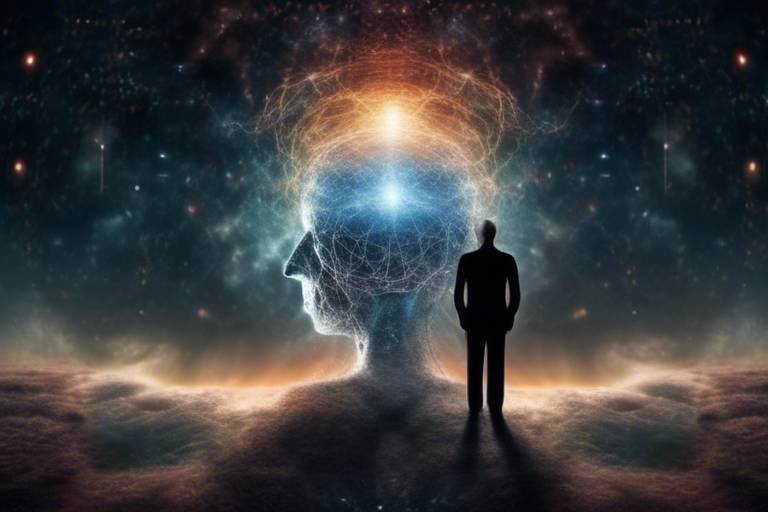
Welcome to the fascinating world of consciousness! Have you ever stopped to ponder what it truly means to be aware? Consciousness is not just a mere flicker of awareness; it is the very essence of our being, the core that defines our reality. In this article, we will embark on a journey to explore the complex relationship between consciousness and reality, diving deep into philosophical perspectives, scientific insights, and the profound implications these have on our understanding of existence itself. Buckle up, because this exploration is not just an intellectual exercise; it’s a quest to understand who we are at the most fundamental level!
So, what exactly is consciousness? At its core, consciousness can be defined as the state of being aware of and able to think about one’s own existence, thoughts, and surroundings. It’s that inner voice that narrates your life, the one that makes you reflect on your experiences. But consciousness is not just about awareness; it encompasses a myriad of characteristics that make it a profound subject of study. For instance, it allows us to experience emotions, perceive sensations, and engage in complex thought processes. It’s like a rich tapestry woven from the threads of perception, memory, and intention.
To differentiate consciousness from mere awareness, think of it this way: awareness is like the background music playing softly in your mind, while consciousness is the vibrant symphony of thoughts, feelings, and reflections that come to the forefront. This distinction is crucial because it sheds light on the profound implications of consciousness for our understanding of self and existence. It raises questions like: Are we merely biological machines, or is there something more to our existence?
Philosophers have long grappled with the nature of consciousness, leading to a variety of perspectives that shape our understanding today. Among the most prominent theories are dualism, materialism, and idealism. Each of these viewpoints offers a unique lens through which we can examine consciousness and its metaphysical implications. Dualism posits that the mind and body are distinct entities, while materialism argues that everything, including consciousness, can be explained through physical processes. Idealism, on the other hand, suggests that consciousness is the fundamental reality, questioning the existence of the material world itself.
The debate between dualism and materialism is as old as philosophy itself. Dualism, famously championed by René Descartes, asserts that the mind (or soul) is separate from the physical body. This perspective allows for the possibility of an afterlife and spiritual experiences, making it appealing to many. However, it also raises challenging questions about how the mind and body interact. On the flip side, materialism, which has gained traction in the wake of scientific advancements, suggests that consciousness arises from physical processes in the brain. This view aligns well with our understanding of neuroscience but can feel reductionist, stripping away the mystery of human experience.
The historical evolution of dualism and materialism is a rich tapestry of ideas and thinkers. From the ancient Greeks, who pondered the essence of existence, to the Enlightenment philosophers who laid the groundwork for modern thought, these perspectives have been shaped by cultural and scientific developments. Figures like Immanuel Kant and John Locke contributed significantly to the discourse, each adding layers of complexity to our understanding of consciousness.
Fast forward to today, and we find contemporary philosophers and scientists reconceptualizing dualism and materialism in light of groundbreaking discoveries in neuroscience and quantum physics. As we delve deeper into the workings of the brain, we uncover insights that challenge traditional views. For instance, some argue that consciousness might not be a byproduct of brain activity but rather a fundamental aspect of the universe, akin to space and time. This shift in perspective opens up new avenues for understanding consciousness and its place in the fabric of reality.
Now, let’s turn our attention to idealism, a perspective that posits consciousness as the cornerstone of reality. This viewpoint raises provocative questions: If consciousness is the primary reality, what does that say about the material world we perceive? Is it merely a projection of our minds? Idealism challenges us to reconsider the nature of existence itself, suggesting that our thoughts and perceptions shape the world around us. This idea can be both exhilarating and daunting, as it implies that our consciousness plays an active role in creating our reality.
As we venture into the realm of science, we uncover fascinating findings that shed light on consciousness. Neuroscience, in particular, has made significant strides in understanding the relationship between brain activity and conscious experience. Researchers are mapping the brain, attempting to pinpoint where consciousness arises. This quest is akin to exploring uncharted territory, where each discovery reveals more about the intricate workings of the mind.
Through advanced imaging techniques, scientists can now observe brain activity in real-time, providing insights into how our thoughts, emotions, and perceptions are generated. This research not only enhances our understanding of consciousness but also raises ethical questions about free will and personal identity. If our thoughts can be mapped and predicted, what does that mean for our sense of self?
One of the most intriguing areas of study is the concept of quantum consciousness. Some theorists propose that there may be a connection between quantum mechanics and conscious experience, suggesting that consciousness could be a fundamental aspect of the universe. This notion is still highly speculative, but it opens up exciting possibilities for metaphysical discussions. Imagine a world where consciousness is intertwined with the very fabric of reality, where our thoughts could influence the physical world in profound ways!
- What is consciousness? Consciousness is the state of being aware of and able to think about one’s own existence, thoughts, and surroundings.
- How does dualism differ from materialism? Dualism posits that the mind and body are separate entities, while materialism argues that consciousness arises from physical processes in the brain.
- What is idealism? Idealism is the philosophical viewpoint that consciousness is the fundamental reality, questioning the existence of the material world.
- How does neuroscience contribute to our understanding of consciousness? Neuroscience studies the brain’s activity to uncover how thoughts and emotions are generated, providing insights into the nature of consciousness.
- What is quantum consciousness? Quantum consciousness is a speculative theory that suggests a connection between quantum mechanics and conscious experience.
The Nature of Consciousness
When we dive into the nature of consciousness, we find ourselves at the crossroads of philosophy, science, and the very essence of what it means to be human. But what is consciousness, really? It’s more than just being aware; it’s a complex tapestry woven from thoughts, feelings, perceptions, and experiences. Think of consciousness as the stage where the play of life unfolds, with each actor representing different facets of our mind. This stage not only hosts our experiences but also shapes our understanding of self and existence.
At its core, consciousness can be defined as the state of being aware of and able to think about one’s own existence, sensations, thoughts, and surroundings. It’s that little voice in your head that narrates your daily life, but it’s also the deeper awareness that connects you to the universe. This brings us to an interesting distinction: consciousness is not just mere awareness. While awareness can be seen as a passive observation, consciousness is an active engagement with reality. It’s akin to the difference between watching a movie and being the main character in it—one is a spectator, while the other is fully immersed in the experience.
To better understand consciousness, let’s explore some of its key characteristics:
- Subjectivity: Each person’s experience of consciousness is unique. Your thoughts, feelings, and perceptions are yours alone, creating a personal reality that shapes how you interact with the world.
- Intentionality: Consciousness often directs our attention towards something. Whether it’s a thought, a feeling, or an external stimulus, this ability to focus is a fundamental aspect of conscious experience.
- Unity: Despite the multitude of thoughts and sensations we experience, consciousness presents itself as a unified whole. This is why you can feel joy and sadness simultaneously yet still perceive them as part of a single experience.
- Continuity: Consciousness flows like a river, constantly changing yet retaining a sense of continuity over time. This ongoing stream of experience is what allows us to reflect on our past and anticipate our future.
These characteristics not only highlight the complexity of consciousness but also hint at its profound implications for our understanding of existence. If consciousness is indeed a fundamental aspect of reality, then what does that mean for the material world around us? Are our thoughts and experiences merely products of brain activity, or do they hold a deeper significance in the grand scheme of things? This question leads us into the heart of metaphysical inquiry, where the relationship between consciousness and reality becomes a tantalizing puzzle.
As we continue to explore this topic, it’s essential to recognize that the nature of consciousness is not just an abstract philosophical debate; it has real-world implications. Understanding consciousness can influence areas such as mental health, artificial intelligence, and even our ethical frameworks. For instance, if we begin to see consciousness as an essential quality of existence, it could reshape how we approach issues like animal rights or the development of conscious machines.
In summary, the nature of consciousness is a multifaceted phenomenon that challenges our perceptions and invites us to question the very fabric of reality. As we peel back the layers of this intricate concept, we find ourselves in a realm where philosophy and science converge, urging us to reconsider what it means to exist and to be aware.
- What is consciousness? Consciousness is the state of being aware of and able to think about one’s own existence, sensations, thoughts, and surroundings.
- How does consciousness differ from awareness? Awareness is a passive observation of experiences, while consciousness is an active engagement with reality.
- What are the key characteristics of consciousness? Key characteristics include subjectivity, intentionality, unity, and continuity.
- Why is understanding consciousness important? Understanding consciousness has implications for mental health, artificial intelligence, ethics, and our overall understanding of existence.
Philosophical Perspectives
When we dive into the philosophical perspectives surrounding consciousness, we find ourselves navigating through a complex landscape filled with various theories that attempt to explain our very existence. Consciousness is not just a simple awareness of our surroundings; it is a profound experience that raises questions about the essence of reality itself. Different philosophers have approached this topic from unique angles, leading to a rich tapestry of thought that challenges our understanding of what it means to be conscious.
At the heart of this discourse are three primary schools of thought: dualism, materialism, and idealism. Each of these perspectives offers a distinct lens through which we can examine consciousness, and they often stand in stark contrast to one another. For instance, dualism posits that the mind and body are separate entities. This viewpoint, famously advocated by René Descartes, suggests that while our physical bodies are made of matter, our consciousness is non-physical and exists independently. This raises fascinating questions: If our consciousness can exist apart from the body, what does that imply about the afterlife or the nature of existence beyond death?
On the other hand, materialism argues that everything about consciousness can be explained through physical processes. According to this view, our thoughts, feelings, and experiences are merely the result of biochemical reactions occurring within our brains. This perspective is often supported by scientific advancements in neuroscience, which suggest that understanding the brain’s workings could eventually unlock the mysteries of consciousness itself. However, this raises a crucial dilemma: if consciousness is just a byproduct of brain activity, does that diminish its significance? Are we merely sophisticated machines devoid of true awareness?
Then there’s idealism, a perspective that flips the script entirely. Idealists argue that consciousness is the fundamental reality, and the material world is merely a manifestation of our conscious experiences. This perspective invites us to consider whether the physical universe exists independently of our perception or if it is entirely dependent on our consciousness for its existence. Imagine a dream where you create an entire world — does that world hold any reality outside your mind? Idealism challenges us to rethink our assumptions about reality and consciousness.
The debate between dualism and materialism has been ongoing for centuries, and it’s a fascinating battleground for philosophical inquiry. Each perspective has its strengths and weaknesses. For instance, dualism provides a compelling argument for the existence of the soul and the possibility of life after death, appealing to our innate desire for transcendence. However, it struggles to explain how two distinct entities — the mind and body — interact. How does a non-physical mind influence a physical body?
Conversely, materialism offers a more straightforward explanation by tying consciousness directly to brain activity. Yet, it often faces criticism for potentially reducing the richness of human experience to mere chemical reactions. Can the complexities of love, creativity, and spirituality truly be encapsulated by neurons firing in the brain? This ongoing dialogue between dualism and materialism highlights the profound implications of our understanding of consciousness.
To fully appreciate these philosophical perspectives, we must also consider their historical context. The roots of dualism can be traced back to ancient philosophers like Plato, who distinguished between the physical world and the realm of ideas. Fast forward to Descartes in the 17th century, who famously declared, “I think, therefore I am,” solidifying the dualist viewpoint in modern philosophy.
Materialism, however, gained traction during the Enlightenment, as thinkers like Hobbes and later, the empiricists, began to emphasize observation and physical evidence as the basis of knowledge. This shift marked a significant departure from the metaphysical musings of earlier philosophers, placing greater emphasis on the tangible aspects of reality.
Today, contemporary philosophers and scientists are reexamining these traditional views in light of new discoveries in neuroscience and quantum physics. The emergence of fields like cognitive science and the study of consciousness has led to innovative interpretations of both dualism and materialism. Some argue for a more integrated approach, suggesting that consciousness may not fit neatly into either category. Instead, it could be a complex interplay of physical processes and non-physical experiences, challenging us to rethink our definitions of both consciousness and reality.
In conclusion, the philosophical perspectives on consciousness are as diverse as they are profound. As we continue to explore these ideas, we find ourselves not only questioning the nature of consciousness but also our place in the universe. Are we mere observers of a reality that exists independently, or are we active participants in creating that reality through our consciousness? The journey to understand consciousness is far from over, and it beckons us to engage with these questions in our quest for meaning.
- What is consciousness? Consciousness refers to the state of being aware of and able to think about one’s own existence, thoughts, and surroundings.
- What are the main philosophical perspectives on consciousness? The primary perspectives include dualism, materialism, and idealism, each offering different insights into the nature of consciousness.
- How does neuroscience relate to consciousness? Neuroscience studies the brain and its functions, providing insights into how brain activity correlates with conscious experience.
- Can consciousness exist without the body? Dualism suggests it can, while materialism argues that consciousness is inherently tied to physical processes in the brain.
Dualism vs. Materialism
When it comes to the age-old debate of dualism versus materialism, we find ourselves at a fascinating crossroads of philosophy and science. At its core, dualism posits that the mind and body are distinct entities. This means that our thoughts, emotions, and consciousness exist separately from our physical form. Imagine your consciousness as a pilot navigating a ship (your body) through the vast ocean of reality. In this view, the mind is not merely a byproduct of brain activity but a separate force that interacts with the physical world.
On the other hand, materialism argues that everything, including consciousness, can be explained through physical processes. Picture this perspective as a computer where hardware (the brain) and software (the mind) are intricately intertwined. Materialists believe that our thoughts and experiences are simply the result of neural interactions and chemical reactions within the brain. This argument raises a critical question: if consciousness is merely a product of physical processes, what does that mean for our understanding of free will and personal identity?
To better understand the strengths and weaknesses of both perspectives, let’s break them down:
| Aspect | Dualism | Materialism |
|---|---|---|
| Definition | Mind and body are separate entities. | Everything is physical; consciousness arises from brain activity. |
| Implications | Suggests a non-physical aspect of existence. | All experiences can be understood through science. |
| Criticism | Challenges in explaining interaction between mind and body. | May overlook subjective experiences and qualia. |
While dualism offers a compelling narrative about the existence of a non-material aspect of reality, it struggles with the interaction problem. How does a non-physical mind influence a physical body? This question has puzzled philosophers for centuries. On the flip side, materialism, while grounded in scientific inquiry, often faces criticism for neglecting the subjective qualities of consciousness—those rich, personal experiences that make us human. Can we really reduce the essence of being to mere chemical reactions?
In contemporary discussions, many thinkers are attempting to bridge these perspectives, suggesting that perhaps the truth lies somewhere in between. Some propose that consciousness could emerge from complex systems in the brain, aligning with materialist views, yet still holds unique qualities that are not entirely reducible to physical processes, hinting at a dualistic flavor. This ongoing dialogue invites us to explore the depths of our existence and question the very nature of reality.
As we navigate this intricate landscape, it becomes evident that both dualism and materialism offer valuable insights into the nature of consciousness. The debate is not just academic; it influences how we perceive ourselves, our relationships, and our place in the universe. So, which perspective resonates more with you? Are we simply intricate machines, or is there something more profound at play?
- What is dualism? Dualism is the philosophical belief that the mind and body are separate entities, each with its own properties and functions.
- What is materialism? Materialism is the view that everything, including consciousness, can be explained through physical processes and interactions within the brain.
- What are the implications of each perspective? Dualism suggests a non-physical aspect of existence, while materialism emphasizes a scientific understanding of consciousness as a product of brain activity.
- Can dualism and materialism coexist? Some contemporary thinkers propose a synthesis of both views, suggesting that consciousness may emerge from complex brain processes while retaining unique qualities.
Historical Context
To truly grasp the essence of consciousness, we must journey back through time, exploring the rich tapestry of philosophical thought that has shaped our understanding. The debate surrounding consciousness isn’t a modern phenomenon; it stretches back to ancient civilizations where the nature of the mind and its relationship to the body was a topic of intense scrutiny. Thinkers like Plato and Aristotle laid the groundwork, with Plato proposing that the soul is immortal and distinct from the body, while Aristotle viewed the mind as a function of the body, a perspective that hinted at materialism.
As we moved into the Middle Ages, the conversation evolved further. The influence of religious doctrines led to a resurgence of dualistic thought, particularly through the works of St. Augustine, who argued that the mind and body are separate entities created by God. This dualism found a more structured form in the 17th century with René Descartes, who famously stated, “Cogito, ergo sum” (I think, therefore I am). Descartes’ assertion that the mind is a non-physical substance sparked a fiery debate that continues to this day.
The Enlightenment era brought with it a wave of rationalism and empiricism, with philosophers like John Locke and David Hume contributing to the discourse. Locke’s ideas about personal identity and consciousness as a continuous stream of experiences challenged previous notions, while Hume’s skepticism regarding the self questioned the very foundation of consciousness itself. This period was crucial as it began to shift the focus toward a more scientific approach to understanding the mind.
In the 19th century, the advent of psychology as a formal discipline marked a significant turning point. Figures such as Wilhelm Wundt and Sigmund Freud introduced methods to study consciousness empirically. Wundt’s establishment of the first psychology lab in 1879 opened the floodgates for systematic study, while Freud’s exploration of the unconscious mind added layers of complexity to our understanding of consciousness.
Fast forward to the 20th century, where the rise of behaviorism and later cognitive psychology further transformed the landscape. Behaviorists like B.F. Skinner dismissed consciousness as a subject of study, focusing instead on observable behavior. However, as cognitive science emerged, the exploration of the mind regained traction, leading to a renewed interest in consciousness and its implications for understanding human existence.
The historical context of consciousness is not merely a chronology of thinkers and theories; it’s a reflection of humanity’s quest to understand itself. Each philosophical movement and scientific discovery has contributed to a richer, more nuanced understanding of consciousness. Today, as we stand on the shoulders of giants, we find ourselves at a crossroads where ancient wisdom meets cutting-edge science, inviting us to ponder profound questions about our existence.
- What is consciousness? Consciousness refers to the state of being aware of and able to think about one’s own existence, thoughts, and surroundings.
- How does dualism differ from materialism? Dualism posits that the mind and body are separate entities, while materialism asserts that everything, including consciousness, is a product of physical processes.
- What role does neuroscience play in understanding consciousness? Neuroscience studies the brain’s structure and function to understand how conscious experiences arise from neural activity.
- Can consciousness exist without a physical body? This is a debated topic; dualists argue for the possibility, while materialists typically reject it.
Contemporary Views
In the ever-evolving landscape of philosophy and science, contemporary views on consciousness are as diverse as they are intriguing. As we stand at the intersection of ancient wisdom and cutting-edge research, new ideas are reshaping our understanding of what it means to be conscious. One of the most fascinating aspects of modern thought is the shift towards an integrative approach that encompasses both scientific insights and philosophical inquiries. This multidimensional perspective allows for a richer exploration of consciousness, moving beyond the rigid dichotomies of the past.
For instance, many contemporary philosophers are now advocating for a view known as panpsychism, which suggests that consciousness is a fundamental feature of the universe, present in all things, from the smallest particles to the largest celestial bodies. This idea challenges traditional materialist perspectives that confine consciousness to complex biological systems. In this view, consciousness is not merely an emergent property of brain activity but a pervasive quality of existence itself. Imagine consciousness as a vast ocean, where each drop represents a different form of awareness, coexisting and interacting in a dynamic interplay.
Furthermore, advancements in neuroscience have prompted a reevaluation of the mind-body problem. Researchers are now employing sophisticated imaging techniques to observe brain activity in real-time, leading to groundbreaking discoveries about how our thoughts, emotions, and experiences correlate with neural processes. These findings have sparked debates about whether consciousness can be fully explained through physical processes or if there is something more to our subjective experiences. For example, the concept of the neural correlates of consciousness (NCC) has emerged, suggesting specific brain regions and networks are directly linked to conscious experience. However, this raises questions: Does mapping these correlates truly capture the essence of consciousness, or does it merely scratch the surface?
As we delve deeper into the realm of consciousness, the interplay between philosophy and science becomes increasingly evident. Contemporary thinkers are not just content with categorizing consciousness; they are exploring its implications for our understanding of reality itself. Some propose that consciousness plays a role in shaping our experiences and perceptions, suggesting a more interactive relationship between the observer and the observed. This notion resonates with the principles of quantum mechanics, where the act of observation can influence the behavior of particles. Could it be that our conscious awareness is intricately linked to the fabric of reality, weaving together the threads of existence in ways we are just beginning to comprehend?
In summary, contemporary views on consciousness are marked by a vibrant tapestry of ideas that challenge us to rethink our assumptions. As we continue to explore the depths of consciousness, we are invited to embrace the complexity and mystery of existence. The journey is not just about understanding consciousness but also about recognizing our place within the universe. So, what does the future hold for our understanding of consciousness? Only time will tell, but one thing is certain: the quest for knowledge is far from over.
- What is consciousness? – Consciousness refers to the state of being aware of and able to think about one’s own existence, thoughts, and surroundings.
- How do neuroscience and consciousness relate? – Neuroscience studies the brain’s functions and structures, aiming to understand how they correlate with conscious experiences.
- What is panpsychism? – Panpsychism is the view that consciousness is a fundamental aspect of all matter, suggesting that even inanimate objects possess some form of awareness.
- Can consciousness be fully explained by science? – This remains a contentious topic; while neuroscience provides insights, many argue that subjective experience cannot be wholly captured by physical explanations.
Idealism and Consciousness
When we dive into the realm of idealism, we find ourselves grappling with a fascinating perspective that positions consciousness as the very foundation of reality. Unlike the materialist view, which suggests that the physical world is the primary substance of existence, idealism asserts that our thoughts, perceptions, and consciousness are what truly shape the universe around us. Imagine for a moment that reality is akin to a grand canvas, and each of our conscious experiences adds a stroke of color, creating the intricate masterpiece we call life. This perspective raises profound questions: Is the material world merely a reflection of our consciousness? Or does it exist independently, regardless of our awareness of it?
One of the most compelling aspects of idealism is its challenge to our conventional understanding of existence. If consciousness is indeed the bedrock of reality, then everything we perceive, from the tiniest particle to the vastness of the cosmos, is intertwined with our conscious experience. This leads us to consider the implications of idealism on various domains, including ethics, aesthetics, and even the nature of time and space. For instance, if our perceptions shape reality, how do we navigate moral dilemmas? Are our ethical frameworks merely constructs of our consciousness, or do they reflect an objective reality?
Philosophers like Bishop Berkeley have championed this view, famously declaring that “to be is to be perceived.” In Berkeley’s world, the existence of objects is contingent upon being observed. This idea can be quite mind-bending, as it implies that the universe could cease to exist in its current form if there were no conscious beings to perceive it. Such a notion can evoke feelings of both wonder and existential dread—how fragile is our reality if it hinges on our awareness?
Furthermore, idealism invites us to explore the relationship between consciousness and the cosmos. It suggests that consciousness might be a fundamental aspect of the universe, much like gravity or electromagnetism. This idea aligns with some modern interpretations of quantum physics, where consciousness plays a pivotal role in the collapse of the wave function, leading to the manifestation of physical reality. As we peel back the layers of this complex relationship, we begin to see that consciousness is not merely a byproduct of brain activity; it is an integral part of the fabric of existence itself.
As we navigate through the implications of idealism, we must also consider its criticisms. Detractors argue that idealism can lead to solipsism, the philosophical idea that only one’s mind is sure to exist. This perspective can feel isolating and counterproductive, as it raises doubts about the existence and experiences of others. Yet, proponents of idealism counter that while individual consciousness is subjective, the shared experiences and interactions among conscious beings create a collective reality that transcends individual perception.
In conclusion, the exploration of idealism in relation to consciousness opens up a rich tapestry of philosophical inquiry. It challenges us to reconsider our understanding of reality and our place within it. Are we mere observers of a world that exists independently, or are we active participants in the creation of our reality? This question lies at the heart of the idealist perspective and continues to inspire deep reflection and debate among philosophers, scientists, and curious minds alike.
- What is idealism in philosophy? Idealism is a philosophical perspective that posits consciousness as the primary substance of reality, suggesting that the material world is shaped by our thoughts and perceptions.
- How does idealism differ from materialism? While idealism asserts that consciousness is fundamental to existence, materialism claims that the physical world is the primary reality, independent of consciousness.
- Who are some key philosophers associated with idealism? Notable figures include George Berkeley, Immanuel Kant, and more contemporary thinkers who explore the implications of consciousness in relation to reality.
- Can idealism lead to solipsism? Yes, critics argue that idealism can lead to solipsism, but proponents maintain that shared experiences among conscious beings create a collective reality.
Scientific Insights
When we dive into the realm of regarding consciousness, we uncover a treasure trove of knowledge that not only illuminates our understanding of the mind but also challenges our perceptions of reality itself. Neuroscience and psychology have made significant strides in mapping the intricate connections between brain activity and conscious experience. Imagine consciousness as a vast ocean, with each wave representing a thought or feeling, and the brain as the shoreline that shapes and contains these waves. This analogy helps us grasp the complex interplay between our physical brain and the enigmatic phenomenon of consciousness.
One of the most fascinating aspects of this exploration is how scientists utilize advanced imaging techniques, such as functional magnetic resonance imaging (fMRI) and electroencephalography (EEG), to observe the brain in action. These tools allow researchers to visualize which areas of the brain light up during specific tasks, revealing how different regions contribute to our conscious experience. For instance, studies have shown that the prefrontal cortex is crucial for decision-making and self-awareness, while the temporal lobes play a significant role in processing auditory information and memory. The following table summarizes some key brain regions associated with various aspects of consciousness:
| Brain Region | Function |
|---|---|
| Prefrontal Cortex | Decision-making, self-awareness |
| Temporal Lobes | Memory, auditory processing |
| Parietal Lobes | Spatial awareness, perception |
| Occipital Lobes | Visual processing |
However, the relationship between consciousness and brain activity is not as straightforward as it may seem. While we can correlate certain brain functions with conscious experiences, the hard problem of consciousness still looms large. This term, coined by philosopher David Chalmers, refers to the challenge of explaining why and how subjective experiences arise from neural processes. It’s akin to trying to explain the flavor of chocolate by merely describing its chemical composition. Sure, you can break it down into its components, but the rich, velvety experience of tasting chocolate remains elusive. This is where the intersection of neuroscience and philosophy becomes particularly intriguing.
Moreover, the realm of consciousness is further complicated by the emerging field of quantum consciousness. This concept posits that quantum mechanics might play a role in our conscious experience, suggesting that the fundamental nature of consciousness could be intertwined with the very fabric of reality. Some theorists, like physicist Roger Penrose, propose that quantum processes in the brain could give rise to conscious thought, challenging traditional views that confine consciousness to classical physics. This idea opens up a Pandora’s box of questions: Could consciousness exist outside the biological substrate of the brain? Are our thoughts influenced by quantum phenomena? These inquiries not only expand our understanding but also push the boundaries of metaphysical discussions.
As we continue to unravel the mysteries of consciousness, it’s essential to acknowledge the contributions of various scientific disciplines, including psychology. Research in this field has revealed how our thoughts, emotions, and behaviors are interconnected, shaping our conscious experience. Cognitive psychology, for instance, examines how mental processes such as perception, memory, and problem-solving influence our awareness. By understanding these connections, we can better appreciate the complexity of consciousness and its role in our existence.
In conclusion, the scientific insights into consciousness are not just academic pursuits; they hold profound implications for our understanding of what it means to be human. As we bridge the gap between the physical and metaphysical, we find ourselves at the precipice of a new understanding of existence itself. By embracing the complexities of consciousness, we take a step closer to unraveling the mysteries that define our reality.
- What is consciousness? Consciousness refers to our awareness of ourselves and our environment, encompassing thoughts, feelings, and perceptions.
- How do scientists study consciousness? Researchers use various techniques, including fMRI and EEG, to observe brain activity associated with conscious experiences.
- What is the hard problem of consciousness? This term describes the difficulty of explaining why and how subjective experiences arise from neural processes.
- Can quantum mechanics explain consciousness? Some theories suggest that quantum processes may be linked to conscious experience, although this remains a highly debated topic.
Neuroscience and Consciousness
Neuroscience has made significant strides in unraveling the intricate relationship between the brain and consciousness, shedding light on how our mental experiences arise from neural processes. Imagine your brain as a complex orchestra, where each neuron plays its unique instrument, creating a symphony of thoughts, emotions, and sensations. This fascinating interplay raises profound questions: How does the firing of neurons translate into the rich tapestry of our conscious experience? And what does this mean for our understanding of existence itself?
At the heart of neuroscience’s exploration of consciousness lies the quest to map brain activity and correlate it with conscious experience. Researchers utilize advanced imaging techniques, such as functional magnetic resonance imaging (fMRI) and electroencephalography (EEG), to observe brain activity in real-time. These tools allow scientists to pinpoint which areas of the brain are engaged during various tasks, from simple reactions to complex decision-making. For instance, studies have shown that the prefrontal cortex is crucial for higher-order functions like planning and self-reflection, while the occipital lobe is primarily responsible for processing visual information.
One of the most intriguing findings in neuroscience is the concept of the “neural correlates of consciousness” (NCC). These are the specific brain states that correspond with conscious awareness. While researchers have identified several potential NCCs, the debate continues over whether these correlates fully explain the phenomenon of consciousness. This leads us to ponder: Is consciousness merely a byproduct of brain activity, or is it something more profound? The implications of these inquiries are vast, influencing not only philosophy but also ethics, artificial intelligence, and our understanding of what it means to be human.
Moreover, the relationship between neuroscience and consciousness extends into the realm of disorders of consciousness, such as coma and vegetative states. By examining brain activity in individuals who are unresponsive, scientists have discovered that some patients may retain a level of consciousness that is undetectable through traditional assessments. This revelation challenges our perceptions of consciousness and raises ethical questions about treatment and quality of life.
To summarize, neuroscience offers a window into the workings of consciousness, providing valuable insights while simultaneously posing deeper questions about the essence of our existence. As we continue to explore the brain’s mysteries, we find ourselves at the intersection of science and philosophy, where the quest for understanding consciousness becomes a journey into the very nature of reality.
- What is the role of the brain in consciousness? The brain is central to consciousness, as it processes sensory information and generates thoughts and emotions that contribute to our conscious experience.
- Can consciousness exist without brain activity? This is a contentious topic; while some argue that consciousness is entirely dependent on brain function, others propose that consciousness may have a non-material basis.
- How do neuroscientists study consciousness? Researchers use various imaging techniques, such as fMRI and EEG, to observe brain activity and identify the neural correlates of consciousness.
- What are disorders of consciousness? These are medical conditions where individuals exhibit altered states of awareness, such as coma or vegetative states, raising questions about the nature of consciousness in these patients.
Quantum Consciousness
The concept of is one of the most fascinating and controversial ideas in the intersection of science and philosophy. It suggests that consciousness may not just be a byproduct of neural activity but could be fundamentally linked to the very fabric of reality itself. Imagine a world where our thoughts and experiences are intertwined with the quantum realm, where the act of observing can influence the state of a particle. This perspective challenges traditional notions of consciousness, urging us to rethink how we perceive our existence.
At the heart of the quantum consciousness debate is the idea that consciousness plays a crucial role in shaping reality. Some theorists propose that consciousness collapses quantum states, a process that determines the outcome of quantum events. This theory echoes the famous double-slit experiment, where particles behave differently when observed. In this light, consciousness becomes not just a passive observer but an active participant in the unfolding of reality. It raises questions: Are we merely observers of a pre-existing universe, or do we play a role in creating it through our awareness?
One of the most prominent advocates of this idea is physicist Roger Penrose, who suggests that consciousness arises from quantum processes within the brain’s microtubules. He posits that these structures may facilitate quantum computations that contribute to our conscious experience. If true, this theory could bridge the gap between the physical and the metaphysical, suggesting that our thoughts are not only products of biological processes but also deeply rooted in the quantum world.
However, the concept of quantum consciousness is not without its critics. Many scientists argue that the brain operates at a macroscopic level, where classical physics predominates, and that quantum effects are negligible in the context of neural processes. They caution against conflating consciousness with quantum mechanics, urging a more cautious approach to this tantalizing idea. Yet, the mere exploration of quantum consciousness opens doors to profound implications for our understanding of existence, suggesting that our consciousness might be far more complex and intertwined with the universe than we ever imagined.
To further illustrate the implications of quantum consciousness, consider the following table that summarizes key theories and their proponents:
| Theory | Proponent | Key Idea |
|---|---|---|
| Orchestrated Objective Reduction (Orch-OR) | Roger Penrose | Consciousness arises from quantum processes in microtubules. |
| Quantum Brain Hypothesis | Henry Stapp | Consciousness is a fundamental aspect of quantum mechanics. |
| Consciousness as a Quantum State | David Deutsch | Consciousness is a result of quantum computational processes. |
As we delve deeper into the mysteries of consciousness, the exploration of quantum consciousness invites us to reflect on our place in the universe. Are we merely biological machines, or are we something far greater? The answers may lie at the intersection of consciousness and quantum mechanics, challenging our understanding of reality and existence itself.
- What is quantum consciousness? Quantum consciousness is the idea that consciousness may be fundamentally linked to quantum mechanics, suggesting that our awareness could influence reality at a quantum level.
- Who proposed the theory of quantum consciousness? Roger Penrose is one of the most notable proponents of quantum consciousness, suggesting that it arises from quantum processes in the brain.
- Are there criticisms of quantum consciousness? Yes, many scientists argue that the brain functions at a macroscopic level, where classical physics is more applicable, and that quantum effects may not play a significant role in consciousness.
- What are the implications of quantum consciousness? If consciousness is linked to quantum processes, it could redefine our understanding of reality, suggesting that our thoughts and observations may shape the universe.
Frequently Asked Questions
- What is consciousness?
Consciousness is the state of being aware of and able to think about one’s own existence, thoughts, and surroundings. It’s not just about being awake; it’s a complex interplay of awareness, perception, and thought that shapes our understanding of reality.
- How does consciousness differ from mere awareness?
While awareness refers to the ability to perceive stimuli, consciousness encompasses a deeper level of engagement that includes thoughts, feelings, and self-reflection. Think of awareness as the surface of a lake, while consciousness is the deeper waters beneath.
- What are the main philosophical perspectives on consciousness?
There are several philosophical viewpoints, including dualism, which posits that mind and body are separate; materialism, which argues that everything is physical; and idealism, which suggests that consciousness is the primary reality. Each perspective offers unique insights into the nature of existence.
- What is the debate between dualism and materialism?
This debate centers on whether consciousness is a separate entity from the physical brain (dualism) or if it is entirely a product of physical processes (materialism). Each side has its strengths and weaknesses, leading to ongoing discussions in philosophy and science.
- How has the understanding of consciousness evolved historically?
Historically, thinkers like Descartes and Locke laid the groundwork for dualism and materialism. Over time, new philosophical movements and scientific discoveries have influenced how we view consciousness, leading to a richer understanding of its complexities.
- What are contemporary views on consciousness?
Modern interpretations are increasingly informed by advances in neuroscience and quantum physics. Today, many philosophers and scientists are reevaluating traditional notions of dualism and materialism, considering how new findings reshape our understanding of consciousness.
- What role does neuroscience play in understanding consciousness?
Neuroscience investigates the relationship between brain activity and conscious experience. By mapping brain functions and exploring how they correlate with thoughts and feelings, researchers aim to uncover the biological basis of consciousness.
- What is quantum consciousness?
Quantum consciousness is a fascinating theory that suggests a connection between quantum mechanics and conscious experience. Some researchers propose that quantum processes could be involved in the workings of the mind, leading to intriguing implications for metaphysical discussions.
consciousness, metaphysics, existence, perception, awareness, reality, dualism, spirituality, , consciousness, metaphysics, existence, perception, awareness, reality, dualism, spirituality,
Share this content:
Leave a Reply