
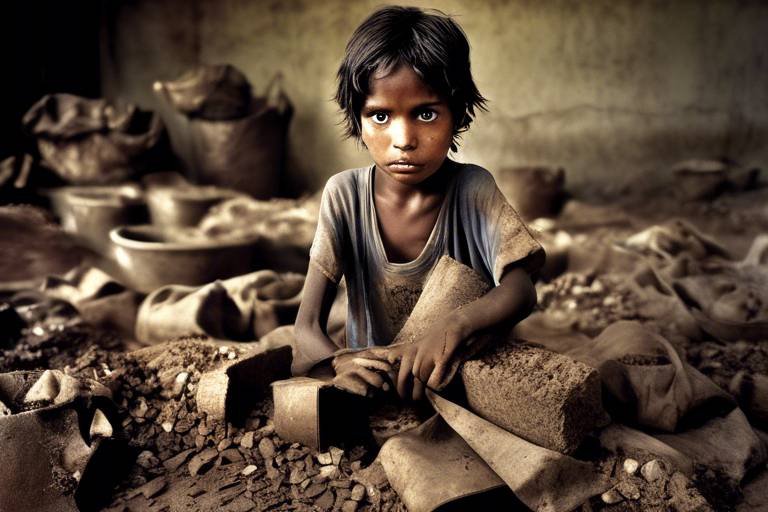
Child labor is a deeply troubling issue that transcends borders and cultures, raising a plethora of ethical dilemmas that challenge our collective conscience. At its core, child labor involves the exploitation of children for economic gain, often at the expense of their education, health, and overall well-being. But what does this really mean for the children involved? It’s not just about a child working; it’s about a child’s future being compromised, their dreams stifled, and their innocence stripped away. The ethical implications are vast and complex, touching on human rights, social justice, and moral responsibility.
One of the most pressing ethical issues surrounding child labor is the violation of children’s rights. According to the United Nations Convention on the Rights of the Child, every child has the right to a safe and nurturing environment where they can learn and grow. Yet, in many parts of the world, children are thrust into hazardous working conditions, deprived of their right to education and a carefree childhood. This leads us to ponder: how can we, as a global society, stand by and allow this to happen? The exploitation of vulnerable children not only harms them individually but also perpetuates cycles of poverty and inequality within communities.
Moreover, child labor raises significant questions about corporate responsibility. Many companies, knowingly or unknowingly, benefit from child labor in their supply chains. This brings to light the ethical dilemma of profit versus principle. Should companies prioritize their bottom line over the welfare of children? The answer seems clear, yet the reality is often murky. Businesses must grapple with their role in either perpetuating or alleviating these issues. This ethical conundrum forces us to consider the broader implications of consumer choices and corporate practices.
Another critical aspect is the psychological impact of child labor on young minds. Children engaged in labor often experience feelings of worthlessness and despair, which can lead to long-term mental health issues. The ethical question here revolves around the responsibility of society to protect its most vulnerable members. Are we doing enough to advocate for children’s mental health and emotional well-being in the face of such exploitation? The answer is a resounding no for many regions around the world.
Furthermore, the societal implications of child labor cannot be overlooked. When children are forced to work instead of attending school, entire communities suffer. Lack of education leads to a less informed populace, perpetuating cycles of poverty and limiting economic growth. This raises the ethical question of intergenerational justice. Are we sacrificing the future of our societies for short-term economic gains? The answer lies in our commitment to addressing these issues at both local and global levels.
In conclusion, the ethical issues surrounding child labor are multifaceted and demand our urgent attention. From the rights of the child to corporate accountability and societal implications, it is clear that child labor is not just an economic issue; it is a profound moral challenge that we must collectively face. The question remains: how can we turn our awareness into action? By advocating for stronger regulations, supporting ethical businesses, and raising awareness, we can work towards a world where children can thrive, not just survive.
- What is child labor? Child labor refers to the employment of children in work that deprives them of their childhood, potential, and dignity, and that is harmful to physical and mental development.
- What are the main causes of child labor? The primary causes include poverty, lack of access to education, and cultural attitudes towards work.
- How can we help combat child labor? Supporting organizations that work to eliminate child labor, advocating for policy changes, and raising awareness are effective ways to help.
- What are the long-term effects of child labor on children? Long-term effects can include poor physical and mental health, limited educational opportunities, and perpetuated cycles of poverty.
The Definition of Child Labor
Understanding child labor is crucial to addressing the ethical dilemmas surrounding it. At its core, child labor refers to the employment of children in a manner that is detrimental to their physical, mental, or emotional well-being. However, it’s essential to differentiate between what constitutes acceptable work and what is exploitative child labor.
According to the International Labour Organization (ILO), child labor is defined as work that deprives children of their childhood, their potential, and their dignity, and that is harmful to physical and mental development. This includes work that:
- Interferes with their schooling
- Is mentally, physically, socially, or morally dangerous and harmful
- Involves slavery or similar practices
- Is performed by children below the minimum age for employment
To further clarify, the ILO has established specific age limits and guidelines. Generally, children under the age of 13 should not be engaged in any form of work, while those aged 13 to 15 may participate in light work that does not interfere with their schooling. For children aged 16 and older, they can engage in more substantial forms of work, provided it adheres to national laws and regulations. This framework is designed to protect children while acknowledging that some forms of work, such as helping in family businesses or participating in community activities, can be acceptable if they do not harm the child’s development.
The ethical implications of child labor are vast. While some argue that certain forms of work can provide valuable skills and financial support for families, the reality is that many children are subjected to harsh conditions that stifle their growth and opportunities. The debate often centers around the balance between economic necessity for families and the fundamental rights of children to a safe and nurturing environment.
In summary, the definition of child labor is not just about age or type of work; it encompasses a broader understanding of a child’s right to a healthy, safe, and supportive upbringing. As we delve deeper into this issue, we must consider not only the legal definitions but also the ethical responsibilities we hold as a society to protect the most vulnerable among us.
The Historical Context
Child labor is not a modern phenomenon; it has deep historical roots that stretch back centuries. To truly understand the ethical issues surrounding child labor today, we must delve into its past. Historically, children have been an integral part of the workforce, often employed in agriculture, mining, and textile industries. In the late 18th and early 19th centuries, during the Industrial Revolution, the demand for cheap labor skyrocketed, leading to the exploitation of children in factories. These young workers, some as young as five, endured grueling hours and hazardous conditions, often for meager wages.
The socio-economic factors that perpetuated child labor are multifaceted. Families in poverty often relied on the income generated by their children to survive. This cycle of poverty created a scenario where sending children to work was not just common but necessary. In many cultures, children’s contributions to the family income were seen as vital, and education was often deprioritized. The harsh reality is that for many families, the choice was between survival and education, and survival often won.
As we trace the evolution of child labor practices, we can observe significant changes over time. For instance, in the early 20th century, social reformers began to advocate for children’s rights, leading to the establishment of laws aimed at protecting children from exploitation. However, despite these advancements, child labor persists in various forms around the globe. The table below illustrates the historical timeline of child labor laws and significant milestones in the fight against child labor:
| Year | Milestone |
|---|---|
| 1833 | Factory Act in the UK limits working hours for children. |
| 1919 | International Labour Organization (ILO) is founded to promote labor rights. |
| 1973 | ILO adopts Convention No. 138, setting the minimum age for employment. |
| 1999 | ILO launches the Global Action Program against child labor. |
Despite these efforts, child labor remains a complex issue influenced by cultural attitudes and economic conditions. In some regions, child labor is still viewed as a rite of passage or a necessary part of childhood. This cultural acceptance complicates the fight against child labor, making it essential to approach the issue with sensitivity and understanding. Addressing the root causes of child labor, such as poverty and lack of access to education, is crucial for creating sustainable solutions that honor children’s rights and promote their well-being.
In summary, the historical context of child labor reveals a persistent struggle against exploitation. Understanding this history is vital for anyone wishing to engage in the conversation about child labor today. By acknowledging the past, we can better equip ourselves to advocate for change and work towards a future where children are free to learn, play, and grow without the burden of labor.
- What is child labor? Child labor refers to the employment of children in work that deprives them of their childhood, potential, and dignity, and is harmful to their physical and mental development.
- Why does child labor still exist? Child labor persists due to factors such as poverty, lack of access to education, and cultural attitudes that prioritize work over schooling.
- What are the effects of child labor on children? Child labor can have devastating effects on children’s health, education, and emotional well-being, leading to a cycle of poverty and exploitation.
- How can we combat child labor? Combating child labor requires a multifaceted approach, including advocacy, education, and economic support for families to reduce reliance on child labor.
Legal Frameworks and Regulations
When it comes to tackling the complex issue of child labor, understanding the in place is essential. Various laws have been established globally to combat child labor, aiming to protect the rights of children and ensure their safety and well-being. These legal measures can be categorized into international treaties, national laws, and local regulations, each playing a crucial role in the fight against exploitative practices.
At the international level, the International Labour Organization (ILO) has been a key player in setting standards that define acceptable work for children. The ILO’s conventions, particularly Convention No. 138 on the Minimum Age for Admission to Employment and Convention No. 182 on the Worst Forms of Child Labor, provide a framework for countries to develop their own laws. For instance, Convention No. 138 establishes that the minimum age for employment should not be less than 15 years, while Convention No. 182 emphasizes the need to eliminate the worst forms of child labor, such as slavery and trafficking.
However, the effectiveness of these international treaties often hinges on individual countries’ commitment to implementing and enforcing their provisions. In many regions, national laws may exist, but enforcement can be lax due to various factors, including corruption, lack of resources, and insufficient political will. Countries like India and Bangladesh have made strides in enacting laws to curb child labor, yet the reality on the ground often tells a different story. Children continue to work in hazardous conditions, often invisible to the broader society.
To illustrate the current landscape of child labor laws, let’s take a look at a comparison of legal frameworks in different countries:
| Country | Minimum Age for Employment | Worst Forms of Child Labor Prohibited |
|---|---|---|
| India | 14 years | Yes |
| Bangladesh | 14 years | Yes |
| United States | 14 years | Yes |
| Brazil | 16 years | Yes |
This table highlights that while many countries have established minimum ages for employment, the age varies significantly, and the enforcement of laws against the worst forms of child labor remains inconsistent. It’s essential to recognize that laws alone cannot eradicate child labor; they must be supported by strong enforcement mechanisms and public awareness.
Moreover, local regulations often play a significant role in addressing child labor within specific communities. Non-governmental organizations (NGOs) and grassroots movements frequently collaborate with local governments to create programs that not only enforce existing laws but also educate families about the importance of keeping children in school rather than sending them to work. These initiatives can prove invaluable in changing societal perceptions about child labor.
In conclusion, while there are numerous legal frameworks and regulations aimed at combating child labor, the challenge lies in their implementation and the societal factors that perpetuate this issue. It is crucial for governments, international organizations, and civil society to work together to strengthen these laws and ensure that every child has the right to a safe and nurturing environment, free from the burdens of labor.
- What is the minimum age for employment in most countries? The minimum age varies, but it is commonly set at 14 to 16 years in many countries.
- Are there laws against child labor? Yes, many countries have laws prohibiting child labor, particularly in its worst forms.
- How effective are these laws? The effectiveness varies greatly, with some countries struggling to enforce their laws due to corruption and lack of resources.
- What can be done to improve the situation? Strengthening enforcement mechanisms, increasing public awareness, and ensuring access to education are critical steps.
Economic Factors Contributing to Child Labor
In the complex tapestry of child labor, economic factors play a pivotal role, often acting as the thread that holds together the harsh realities faced by millions of children around the world. To grasp the full extent of this issue, we must first understand that child labor is not merely a consequence of poor parenting or societal neglect; it is deeply intertwined with the economic conditions of families and communities. For many, the need for additional income can outweigh the moral implications of sending a child to work, creating a cycle of poverty that is difficult to escape.
Imagine a family living in a rural area where opportunities are scarce. Parents often find themselves in a desperate situation, trying to make ends meet with limited resources. When faced with the choice of allowing their child to work or risking hunger and homelessness, many feel they have no option but to send their children into the workforce. This scenario is not just a hypothetical; it is a reality for countless families. The economic pressures that drive child labor can be summarized as follows:
- Poverty: Families living below the poverty line are often compelled to rely on every available source of income, including their children. This dire situation forces children into labor at a young age, depriving them of education and a chance for a better future.
- Unemployment: High rates of unemployment among adults can lead to a reliance on child labor. When parents cannot find work, children are often pushed into the labor market to help support the family.
- Lack of Access to Education: In many regions, educational facilities are either unavailable or too expensive. Without access to education, children are more likely to enter the workforce, perpetuating the cycle of poverty.
Furthermore, the economic landscape is often shaped by systemic issues such as corruption, inadequate labor laws, and the global demand for cheap labor. For instance, in industries like agriculture, textiles, and mining, the demand for low-cost labor creates an environment where child labor is not only tolerated but, in some cases, expected. This is particularly prevalent in developing countries where regulations may be weak or poorly enforced.
To illustrate the economic impact of child labor, consider the following table that outlines the relationship between child labor rates and economic factors in various regions:
| Region | Child Labor Rate (%) | Unemployment Rate (%) | Poverty Rate (%) |
|---|---|---|---|
| Sub-Saharan Africa | 20% | 10% | 40% |
| South Asia | 12% | 8% | 30% |
| Latin America | 7% | 6% | 25% |
This table highlights a clear correlation between high poverty and unemployment rates and increased child labor. As these economic pressures rise, so does the likelihood of children being forced into labor, often at the expense of their education and well-being. The cycle continues, with each generation facing the same grim choices.
In conclusion, the economic factors contributing to child labor are multifaceted and deeply rooted in the social fabric of communities. To effectively combat this issue, it is essential to address the underlying economic conditions that force families to make such difficult choices. Only by creating sustainable economic opportunities and ensuring access to education can we hope to break this cycle and protect the rights and futures of children around the globe.
- What is child labor? Child labor refers to the employment of children in work that deprives them of their childhood, potential, and dignity, and that is harmful to physical and mental development.
- Why do families resort to child labor? Families often resort to child labor due to economic necessity, including poverty, unemployment, and lack of access to education.
- How can we help combat child labor? Supporting initiatives that promote education, fair wages, and economic development can help combat child labor. Advocacy and awareness campaigns also play a crucial role.
The Impact on Children’s Development
Child labor is not just a violation of rights; it is a thief that steals the very essence of childhood. Imagine a child, barely ten years old, working long hours in a factory or on a farm instead of playing with friends or attending school. This scenario is all too common in many parts of the world, and the consequences are profound and far-reaching. The impact of child labor on children’s development can be categorized into several critical areas: physical health, education, emotional well-being, and social skills.
Firstly, let’s talk about physical health. Children engaged in labor are often exposed to hazardous working conditions, which can lead to serious injuries and long-term health issues. For instance, children working in agriculture may be exposed to harmful pesticides, while those in factories might face dangerous machinery. According to the International Labour Organization (ILO), around 60% of child laborers are involved in hazardous work. The toll on their bodies can lead to chronic illnesses, stunted growth, and even premature death. The following table illustrates some of the health risks associated with child labor:
| Type of Work | Health Risks |
|---|---|
| Agriculture | Exposure to pesticides, injuries from machinery |
| Manufacturing | Repetitive strain injuries, respiratory issues |
| Mining | Physical injuries, exposure to toxic substances |
Now, let’s shift our focus to education. Child labor often means that children are forced to drop out of school or miss classes to work. This denial of education not only limits their immediate opportunities but also has long-term implications for their future. Without an education, these children are more likely to remain in low-paying jobs as adults, perpetuating a cycle of poverty. Research shows that children who work are significantly less likely to complete their education compared to their peers who do not work. This educational gap can be devastating, as it limits their ability to break free from the chains of poverty.
Moreover, the emotional and psychological effects of child labor are equally alarming. Children who work long hours often experience feelings of isolation, anxiety, and depression. They miss out on crucial social interactions that help develop their interpersonal skills. Instead of forming friendships and enjoying their formative years, they are burdened with adult responsibilities. This can lead to a distorted sense of self-worth and a bleak outlook on life. Studies indicate that child laborers are more susceptible to mental health issues, which can follow them into adulthood.
Finally, let’s consider the social implications. When children are engaged in labor, they miss out on vital experiences that help shape their social skills. Play is essential for developing teamwork, communication, and conflict resolution abilities. Without these experiences, child laborers may struggle to integrate into society as they grow older. They may find it challenging to build relationships or work collaboratively with others, which can further hinder their personal and professional development.
In conclusion, the impact of child labor on children’s development is nothing short of catastrophic. From compromised health and educational opportunities to emotional distress and social isolation, the consequences are severe and far-reaching. Addressing these issues requires a concerted effort from governments, organizations, and communities worldwide. By working together, we can ensure that every child has the opportunity to enjoy a healthy, happy, and fulfilling childhood.
- What is child labor? Child labor refers to the employment of children in work that deprives them of their childhood, potential, and dignity, and that is harmful to their physical and mental development.
- What are the main causes of child labor? The primary causes include poverty, lack of access to education, and cultural attitudes towards work.
- How does child labor affect education? Child labor often results in children missing school or dropping out entirely, leading to a lack of educational attainment and limited future opportunities.
- What can be done to combat child labor? Solutions include improving access to education, raising awareness, and enforcing laws against child labor.
Societal Implications of Child Labor
Child labor is not just a violation of children’s rights; it has profound societal implications that ripple through communities and nations. When children are forced into labor, it affects not only their personal development but also the fabric of society itself. Imagine a community where children are absent from schools, engaged instead in grueling work. This scenario leads to a cycle of poverty that is incredibly hard to break. As these children grow up without education, they become adults who struggle to find decent jobs, perpetuating the cycle for future generations.
Moreover, child labor can skew the social structure of a community. When children are taken out of school to work, the balance between education and labor shifts dramatically. This shift can lead to a decline in literacy rates and a workforce that is less skilled. As a result, entire communities may face challenges in economic development and innovation. The lack of education among the youth can create a workforce that is ill-prepared for the demands of modern economies, leading to stagnation.
In addition, child labor often perpetuates inequality. It disproportionately affects marginalized groups, including those living in poverty, minorities, and rural populations. This inequality can create a sense of disenfranchisement among these communities, leading to social unrest and a lack of trust in institutions. When children are seen as economic assets rather than individuals with rights, it can foster a culture that devalues education and personal growth.
Furthermore, the normalization of child labor can alter cultural perceptions of childhood itself. In societies where child labor is prevalent, children may be viewed more as contributors to the family income than as individuals deserving of education and protection. This cultural shift can have long-lasting effects, making it harder to advocate for children’s rights and push for systemic changes. It raises the question: what kind of future are we building for our next generation?
To illustrate the societal impacts of child labor, consider the following table that summarizes key implications:
| Implication | Details |
|---|---|
| Educational Decline | Reduced school attendance and literacy rates, leading to a less educated workforce. |
| Poverty Cycle | Perpetuates poverty as children grow up without skills, leading to low-income jobs. |
| Social Inequality | Disproportionate impact on marginalized communities, fostering inequality. |
| Cultural Changes | Shift in perception of childhood, viewing children as economic assets. |
Ultimately, the implications of child labor extend far beyond the individual child. They touch upon the very essence of what it means to be a thriving society. Addressing these issues requires a collective effort from governments, organizations, and communities to prioritize children’s rights and reshape the narrative around childhood. Only then can we hope to build a future where every child has the opportunity to learn, grow, and contribute positively to society.
- What is child labor? Child labor refers to the employment of children in any work that deprives them of their childhood, potential, and dignity.
- Why does child labor persist? Economic pressures, lack of access to education, and cultural attitudes contribute to the persistence of child labor.
- What are the effects of child labor on society? Child labor leads to educational decline, perpetuates poverty, and fosters social inequality.
- How can we combat child labor? Combating child labor requires legal action, awareness campaigns, and community support to prioritize education and children’s rights.
Global Perspectives on Child Labor
Child labor is not just a local issue; it is a global challenge that transcends borders, cultures, and economies. The perspectives on child labor vary widely across different regions of the world, influenced by cultural norms, economic conditions, and social structures. In some countries, children working in family businesses is seen as a rite of passage, while in others, it is viewed as a violation of human rights. This disparity raises significant questions: What is acceptable work for children? and How do we define exploitation?
In many developing nations, child labor is often a direct consequence of poverty. Families struggling to make ends meet may rely on their children to contribute financially. For instance, in parts of South Asia and Sub-Saharan Africa, children can be found working in agriculture, mining, and even domestic settings. These children often miss out on education, perpetuating a cycle of poverty that is hard to break. Conversely, in wealthier nations, child labor is generally illegal and heavily regulated. Here, the focus tends to be on education and child welfare, emphasizing that children should be in school, not working.
Despite the differences, there is a growing global consensus that child labor is a serious issue that needs to be addressed. Organizations like the International Labour Organization (ILO) and various non-profits are working tirelessly to combat child labor. They advocate for policies that prioritize education and economic support for families. For example, the ILO’s Global Action Program on Child Labor aims to eliminate child labor by promoting decent work opportunities for adults and ensuring access to education for children.
Additionally, cultural perceptions play a significant role in how child labor is viewed. In some cultures, children are expected to contribute to household duties from a young age, which can blur the lines between acceptable work and exploitation. In these contexts, it is crucial to engage communities in discussions about the implications of child labor on children’s futures. Only through understanding and dialogue can we hope to shift these perceptions and advocate for children’s rights effectively.
Moreover, the impact of globalization cannot be overlooked. As companies seek cheaper labor to maximize profits, the demand for child labor can increase, particularly in supply chains for industries like textiles and agriculture. This raises ethical questions about consumer responsibility: What role do we play in supporting child labor through our purchasing choices? It is essential for consumers to be aware of where their products come from and to advocate for fair labor practices.
To illustrate the global landscape of child labor, the following table summarizes the prevalence of child labor in different regions, highlighting the stark contrasts and challenges faced globally:
| Region | Estimated Number of Child Laborers | Common Industries |
|---|---|---|
| Sub-Saharan Africa | 80 million | Agriculture, Mining |
| South Asia | 50 million | Textiles, Domestic Work |
| Latin America | 10 million | Agriculture, Street Work |
| Middle East and North Africa | 9 million | Construction, Agriculture |
| East Asia and the Pacific | 15 million | Manufacturing, Fishing |
In conclusion, addressing child labor requires a nuanced understanding of the global perspectives surrounding it. By fostering dialogue, promoting education, and implementing effective policies, we can work towards a world where children are free to learn and grow, rather than being forced into labor. The journey towards eradicating child labor is complex, but it is a challenge we must face together, recognizing that every child deserves a chance to thrive.
- What is considered child labor? Child labor refers to work that deprives children of their childhood, potential, and dignity, and that is harmful to physical and mental development.
- How does child labor affect education? Child labor often prevents children from attending school, hindering their educational opportunities and future prospects.
- What can be done to combat child labor? Solutions include enforcing laws, promoting education, and supporting families economically to reduce reliance on child labor.
- Are there global initiatives to end child labor? Yes, organizations like the ILO and various NGOs are actively working to combat child labor through advocacy, policy-making, and support programs.
Advocacy and Awareness Efforts
In the fight against child labor, advocacy and awareness play pivotal roles in driving change. Numerous organizations and grassroots movements are dedicated to raising awareness about the plight of children forced into labor. They work tirelessly to educate the public, policymakers, and businesses about the ethical implications and human rights violations associated with child labor. The journey toward eradicating child labor is not just about enforcing laws; it’s about changing hearts and minds.
One of the most effective strategies employed by these organizations is the use of storytelling. By sharing personal narratives of children affected by labor, advocates create a powerful emotional connection that transcends statistics and reports. These stories humanize the issue, making it relatable and urgent for the audience. For instance, when people learn about a child who has to work in hazardous conditions instead of attending school, it sparks outrage and a desire to act.
Moreover, social media has emerged as a formidable tool in the advocacy toolkit. Campaigns like #EndChildLabor have gained traction, mobilizing individuals around the globe to raise their voices against this injustice. Through hashtags, infographics, and videos, advocates can reach millions, spreading awareness faster than ever before. This digital movement not only informs but also encourages individuals to participate in local and global initiatives.
In addition to social media campaigns, many organizations focus on collaborative efforts with governments and corporations. By forming partnerships, they can influence policy changes and encourage businesses to adopt ethical practices. For example, initiatives that promote fair trade often include clauses that prohibit child labor in their supply chains. These collaborations are essential, as they help create a comprehensive approach to tackling child labor.
Furthermore, educational programs are crucial in the fight against child labor. By providing children and their families with access to education, organizations can break the cycle of poverty that often leads to child labor. Programs that offer scholarships, vocational training, and literacy classes empower families, enabling them to make informed choices about their children’s futures. Education is not just a remedy; it’s a long-term solution that fosters resilience and self-sufficiency.
To illustrate the impact of advocacy and awareness efforts, consider the following table that outlines some key organizations and their initiatives:
| Organization | Initiative | Impact |
|---|---|---|
| International Labour Organization (ILO) | Global Action Plan | Strengthens international standards against child labor |
| Save the Children | Education Programs | Provides access to education for over 1 million children |
| UNICEF | Child Protection Initiatives | Advocates for policies to protect children from exploitation |
As we move forward, it’s clear that advocacy and awareness efforts must continue to evolve and adapt. The fight against child labor is ongoing, and it requires a unified front from all sectors of society. Whether through grassroots movements, policy advocacy, or educational initiatives, every effort counts. By working together, we can amplify our voices and create a world where children can thrive, free from the burdens of labor.
Q: What is child labor?
A: Child labor refers to the exploitation of children through any form of work that deprives them of their childhood, education, and potential.
Q: How can I help combat child labor?
A: You can help by supporting organizations that work to end child labor, spreading awareness, and advocating for policies that protect children’s rights.
Q: Are there laws against child labor?
A: Yes, many countries have laws and international regulations aimed at preventing child labor, but enforcement and compliance can vary.
Q: What are the long-term effects of child labor on children?
A: Children engaged in labor often face long-term consequences, including limited access to education, poor health, and reduced economic opportunities in adulthood.
Future Directions and Solutions
Addressing the complex issue of child labor requires a multifaceted approach that goes beyond mere legislation. It’s essential to recognize that the roots of child labor are deeply embedded in socio-economic structures, and thus, any effective solution must tackle these underlying causes. One promising direction is the integration of education as a fundamental pillar in the fight against child labor. By ensuring that children have access to quality education, we can provide them with the tools they need to break the cycle of poverty that often leads families to rely on their children for income.
Moreover, international cooperation plays a crucial role in combating child labor. Countries must work together to establish and enforce global standards that protect children’s rights. This can be achieved through partnerships between governments, non-governmental organizations (NGOs), and the private sector. For instance, companies can adopt ethical sourcing practices that ensure their supply chains are free from child labor, thereby creating a market-driven incentive to prioritize children’s welfare.
In addition to education and international collaboration, we must also focus on community empowerment. Local communities should be actively involved in identifying the specific challenges they face regarding child labor. By fostering local leadership and encouraging community-driven initiatives, we can create tailored solutions that resonate with the unique cultural and economic contexts of each area. For example, microfinance programs that provide families with small loans can help them invest in their businesses, reducing their reliance on child labor to make ends meet.
Furthermore, raising awareness about the consequences of child labor is vital. Advocacy campaigns can educate the public about the importance of protecting children’s rights and the long-term benefits of investing in their futures. A well-informed society is more likely to support policies and initiatives aimed at eradicating child labor. Social media platforms, community events, and educational programs in schools can serve as effective tools for spreading this message.
To illustrate the potential impact of these solutions, consider the following table that outlines various strategies and their expected outcomes:
| Strategy | Expected Outcome |
|---|---|
| Access to Education | Increased literacy rates and better job opportunities for children in the future. |
| International Cooperation | Stronger enforcement of child labor laws and ethical business practices. |
| Community Empowerment | Reduced reliance on child labor through local economic development. |
| Awareness Campaigns | Greater public support for children’s rights and policy changes. |
In conclusion, while the challenge of child labor may seem daunting, a combination of education, community empowerment, international collaboration, and advocacy can pave the way for a brighter future for children worldwide. By investing in these areas, we not only protect the rights of children but also foster healthier societies that value the potential of every child.
- What is child labor? Child labor refers to the employment of children in any work that deprives them of their childhood, potential, and dignity, and that is harmful to their physical and mental development.
- What are the main causes of child labor? The main causes include poverty, lack of access to education, unemployment, and cultural norms that may prioritize work over education.
- How can I help combat child labor? You can support organizations working to end child labor, advocate for children’s rights, and educate others about the importance of this issue.
Frequently Asked Questions
- What is the difference between acceptable work and exploitative child labor?
Acceptable work typically refers to tasks that children can perform in a safe environment without hindering their education or development. In contrast, exploitative child labor involves children working in hazardous conditions, often for long hours and low wages, which can severely impact their physical and mental well-being.
- What historical factors have contributed to the persistence of child labor?
Child labor has deep historical roots, often linked to socio-economic factors such as poverty, lack of access to education, and cultural attitudes towards work. Historically, during industrialization, many families relied on the income generated by their children, perpetuating the cycle of child labor across generations.
- How effective are current laws in combatting child labor?
While many countries have established laws and regulations aimed at combating child labor, enforcement remains a significant challenge. Success varies widely by region, with some countries making strides in reducing child labor, while others struggle due to corruption, lack of resources, or cultural norms that accept child labor.
- What economic factors drive families to rely on child labor?
Poverty and unemployment are primary drivers of child labor. Many families, unable to meet basic needs, depend on the income generated by their children. Additionally, limited access to quality education forces children into the workforce instead of classrooms, perpetuating the cycle of poverty.
- What are the impacts of child labor on children’s development?
Child labor can have devastating effects on children’s physical and mental development. It often leads to educational deprivation, health issues, and emotional distress, which can hinder their ability to grow into healthy, educated adults. The long-term consequences can affect entire communities and societies.
- How does child labor affect society as a whole?
Child labor has far-reaching societal implications, influencing economic development and social structures. It can perpetuate cycles of poverty and inequality, affecting cultural perceptions of childhood and work, and ultimately hindering social progress and cohesion.
- What are the global perspectives on child labor?
Child labor is viewed differently across cultures. In some regions, cultural norms may accept child work as a rite of passage, while international organizations advocate for children’s rights and welfare. Understanding these diverse perspectives is crucial for developing effective solutions to combat child labor globally.
- What role do advocacy and awareness efforts play in addressing child labor?
Advocacy and awareness campaigns are vital in combating child labor. Organizations work to educate communities, influence policy changes, and promote children’s rights. Grassroots movements often empower local communities to take action against child labor practices, fostering a collective effort towards change.
- What innovative solutions are being proposed to eradicate child labor?
Addressing child labor requires collaborative efforts and innovative solutions such as improving access to education, creating economic opportunities for families, and enforcing stricter regulations against exploitative practices. Engaging communities in the conversation is essential for creating sustainable change.
exploitation, rights, education, poverty, health, consent, trafficking, legislation, , exploitation, rights, education, poverty, health, consent, trafficking, legislation,
Share this content:
Leave a Reply