
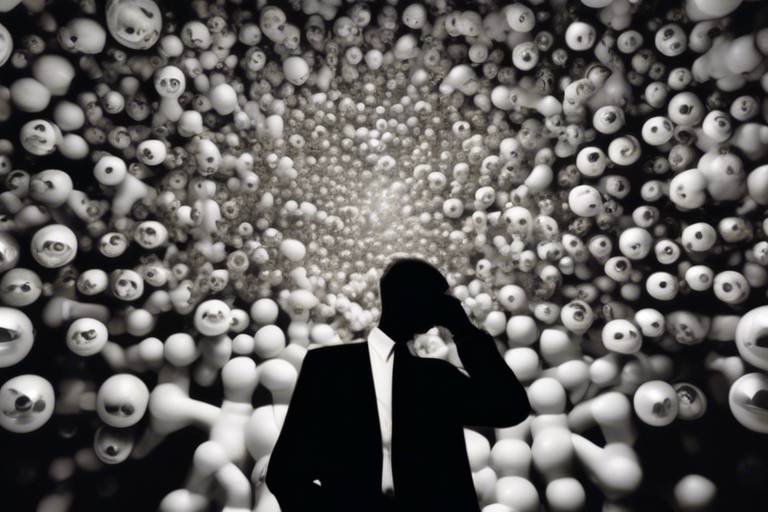
Have you ever stopped to think about how your beliefs shape your reality? It’s a fascinating concept, isn’t it? Ontology, the study of being and existence, acts as a lens through which we interpret our world. It’s not just a philosophical term; it has real-world implications that affect how we see ourselves, others, and the universe at large. In this article, we will explore the intricate web of ontology and its influence on our perception of reality, diving into philosophy, science, and even our daily lives.
At its core, ontology asks fundamental questions: What exists? What does it mean to be? These questions may seem abstract, but they have profound implications. For instance, consider how different cultures interpret existence. In some traditions, the spiritual realm holds equal weight to the physical world, while in others, only tangible entities are deemed real. This divergence in understanding can lead to vastly different perceptions of reality, influencing everything from personal identity to societal norms.
Imagine walking into a room filled with people who hold different ontological beliefs. Each person perceives the same space, yet their interpretations of it can vary widely based on their underlying beliefs about existence. Some may see the room as a mere physical space, while others might view it as a sacred gathering place filled with energy. This interplay of beliefs and perceptions illustrates how ontology shapes our understanding of reality, often in ways we might not even be consciously aware of.
Moreover, ontology doesn’t just reside in the realm of philosophy; it permeates science as well. In scientific inquiry, the ontological assumptions we hold can dictate the questions we ask and the conclusions we draw. For instance, the debate between scientific realism and anti-realism exemplifies this. Scientific realism posits that the universe exists independently of our perceptions, while anti-realism suggests that our understanding of reality is constructed through our experiences and theories. This dichotomy showcases how ontology underpins our scientific explorations, influencing everything from research methodologies to the interpretation of data.
As we delve deeper into the implications of ontology, we also encounter its impact on technology. The rise of artificial intelligence and virtual reality challenges our traditional notions of existence. What does it mean to exist in a digital world? Are virtual entities as ‘real’ as physical ones? These questions force us to reevaluate our ontological beliefs, pushing the boundaries of what we consider reality. In this rapidly evolving landscape, understanding ontology becomes essential for navigating the complexities of modern life.
So, as we continue our exploration of ontology’s influence on human perception, keep in mind that our beliefs about existence are not just theoretical musings; they are deeply intertwined with our experiences, identities, and interactions. By understanding ontology, we can gain valuable insights into the nature of our reality and, ultimately, ourselves.
- What is ontology?
Ontology is the philosophical study of being and existence, focusing on what entities exist and their relationships.
- How does ontology affect personal identity?
Ontology influences how individuals perceive themselves and their place in the world, shaping their understanding of identity and purpose.
- Can ontology impact scientific research?
Yes, the ontological assumptions held by researchers can dictate their methodologies and interpretations of data.
- What role does technology play in ontology?
Advancements in technology, such as AI and virtual reality, challenge traditional notions of existence and prompt reevaluation of what constitutes reality.
Understanding Ontology
This article explores how ontology shapes our understanding of reality, examining its implications in philosophy, science, and daily life, ultimately revealing the profound impact of our beliefs on perception.
Ontology, at its core, is the study of being and existence. It delves into the fundamental questions of what entities exist and how they relate to one another. Imagine trying to navigate a vast ocean without a map; ontology serves as that crucial map, guiding us through the complexities of reality. By providing a foundational framework, ontology influences not only philosophical discourse but also our everyday interactions and perceptions. It shapes the lens through which we view the world, affecting everything from our beliefs about the physical universe to our understanding of abstract concepts like emotions and relationships.
Consider this: when we categorize our experiences and the world around us, we are engaging in ontological thinking. For example, when we classify animals as mammals, reptiles, or birds, we are not just labeling them; we are also acknowledging their inherent properties and relationships. This categorization influences our behaviors and interactions with these entities. Thus, ontology is not merely an academic exercise; it has real-world implications that affect how we perceive our surroundings and ourselves.
Furthermore, ontology plays a crucial role in various disciplines, including philosophy, science, and even art. In philosophy, it helps in understanding the nature of existence and consciousness. In science, it defines what constitutes reality, influencing research methodologies and interpretations of data. In art, it reflects how creators interpret reality through their work. This interconnectedness highlights the importance of ontology in shaping our understanding of the world.
To illustrate the significance of ontology, let’s consider a few key questions:
- What does it mean for something to exist?
- How do our beliefs about existence influence our actions?
- What are the implications of different ontological perspectives on our understanding of reality?
These questions are not just philosophical musings; they have practical implications in our daily lives. For instance, our beliefs about existence can affect our mental health, relationships, and even our societal structures. By understanding ontology, we gain insights into the complexities of human experience and the nature of reality itself.
In summary, ontology is a vital aspect of our understanding of existence. It shapes our perceptions, influences our beliefs, and guides our interactions with the world and each other. By exploring ontology, we can uncover the profound impact our beliefs have on our perception of reality and ultimately, our lives.
- What is ontology?
Ontology is the branch of philosophy that studies the nature of being, existence, and reality. It explores what entities exist and how they relate to one another. - Why is ontology important?
Ontology is important because it influences how we perceive the world, shapes our beliefs, and guides our interactions with others. It has implications across various fields, including philosophy, science, and art. - How does ontology affect personal identity?
Ontology influences personal identity by shaping our beliefs about existence and self-perception. Understanding these beliefs can illuminate the complexities of human experience and relationships.
The Role of Ontology in Philosophy
Ontology, as a fundamental branch of philosophy, plays a pivotal role in shaping our understanding of existence and reality. It delves deep into the questions of what it means to be and what entities populate our universe. This exploration is not merely academic; it profoundly influences various philosophical inquiries, including ethics, metaphysics, and epistemology. By examining the nature of reality, ontology helps us to dissect the intricate layers of consciousness, identity, and the essence of being itself.
Throughout history, different schools of thought have emerged from ontological inquiries. For instance, the distinction between realism and idealism showcases how ontological perspectives can diverge. Realists argue that entities exist independently of our perceptions, while idealists contend that reality is shaped by our mental constructs. This dichotomy raises essential questions: How do we know what we know? What is the nature of truth? Such inquiries lead to profound implications for how we navigate our lives and understand our place in the cosmos.
Philosophical discussions on ontology also engage with the concept of identity. The question of “Who am I?” is not just a personal reflection but a philosophical inquiry that has been explored by thinkers like Descartes and Heidegger. Descartes’ famous dictum, “I think, therefore I am,” highlights the connection between thought and existence, suggesting that our consciousness is foundational to our being. Meanwhile, Heidegger’s exploration of “Being” emphasizes the importance of context and temporality in understanding identity, suggesting that we are constantly in a state of becoming rather than simply existing.
Moreover, ontology influences ethical considerations. If we accept that our understanding of existence is subjective, it prompts us to consider the implications of our beliefs on moral judgments and social constructs. For example, the ontological status of human beings versus non-human entities can shape ethical frameworks, influencing how we treat animals, the environment, and even artificial intelligence. This raises critical questions about responsibility, rights, and our interconnectedness with the world around us.
As we navigate the complexities of modern life, the role of ontology in philosophy remains ever-relevant. It encourages us to critically evaluate our beliefs and assumptions about reality, prompting us to ask deeper questions about existence, identity, and ethics. By engaging with these ontological inquiries, we not only enrich our intellectual landscape but also enhance our understanding of ourselves and our relationships with others.
- What is ontology? Ontology is the philosophical study of being and existence, examining what entities exist and their relationships.
- How does ontology influence philosophy? Ontology shapes various philosophical inquiries, including ethics, identity, and the nature of reality.
- What is the difference between realism and idealism in ontology? Realism posits that entities exist independently of our perceptions, while idealism suggests that reality is shaped by our mental constructs.
- Why is identity important in ontological discussions? Understanding identity helps us explore questions about consciousness, personal existence, and our place in the universe.
Historical Perspectives on Ontology
Throughout history, ontology has been a cornerstone of philosophical inquiry, shaping our understanding of existence and the nature of reality. The evolution of ontological thought can be traced back to ancient philosophers, whose ideas laid the groundwork for contemporary discussions. Notably, figures like Aristotle and Immanuel Kant have made significant contributions that continue to influence modern philosophy.
Aristotle’s ontological framework, established in the Categories, categorized beings into various groups based on their essence and substance. This systematic approach not only influenced later philosophers but also provided a structure for understanding the complexities of existence. Aristotle posited that reality consists of individual substances that possess inherent properties, which has led to ongoing debates about the nature of being and existence.
On the other hand, Kant introduced a transformative perspective with his concept of transcendental idealism. He argued that our understanding of reality is fundamentally shaped by our perceptions and cognitive faculties. This viewpoint challenges the notion of an objective reality, suggesting that what we perceive is filtered through our subjective experiences. Kant’s work invites us to consider how our mental frameworks influence our understanding of the world, making ontology not just a philosophical endeavor but a deeply personal one as well.
To further illustrate the historical development of ontology, we can look at the following table that summarizes key philosophers and their contributions:
| Philosopher | Key Contributions |
|---|---|
| Aristotle | Developed a systematic categorization of beings; emphasized substance and essence. |
| Kant | Introduced transcendental idealism; focused on the role of perception in shaping reality. |
| Heidegger | Explored the concept of Being; emphasized the importance of existence in understanding reality. |
| Wittgenstein | Investigated the relationship between language and reality; proposed that meaning is context-dependent. |
In addition to these foundational figures, various schools of thought have emerged over time, each contributing unique perspectives to the field of ontology. For instance, existentialists like Sartre and Heidegger emphasized the importance of individual existence and the subjective experience of reality. Their works encourage us to reflect on our own identities and the choices we make, further enriching the ontological discourse.
As we delve deeper into the historical perspectives on ontology, it becomes evident that this field is not static; it is a dynamic interplay of ideas that continues to evolve. The questions raised by these philosophers remain relevant today, prompting us to ponder our own beliefs about existence and the nature of reality. Ultimately, the historical journey through ontology reveals a rich tapestry of thought that informs our understanding of ourselves and the world around us.
- What is ontology? Ontology is the philosophical study of being and existence, exploring what entities exist and their relationships.
- How does ontology influence our perception of reality? Our beliefs and frameworks shaped by ontology affect how we interpret and interact with the world.
- Who are some key philosophers in the study of ontology? Notable figures include Aristotle, Kant, Heidegger, and Wittgenstein, each contributing unique insights into the nature of existence.
- Why is ontology important in contemporary discussions? Ontology helps us understand the complexities of identity, reality, and the impact of emerging technologies on our perceptions.
Aristotle’s Ontological Framework
Aristotle, one of the most influential philosophers in Western thought, laid the groundwork for ontology with his systematic approach to understanding existence. His ontological framework is built around the concept of substance, which he defines as that which exists independently and has a distinct essence. According to Aristotle, everything in the universe can be categorized based on its substance, leading to a clearer understanding of how entities relate to one another. This categorization is not merely a philosophical exercise; it profoundly impacts how we perceive and interact with the world.
Aristotle differentiates between two types of substances: primary substances and secondary substances. Primary substances refer to individual entities, such as a specific person or a particular tree, while secondary substances encompass the species or genus to which these primary substances belong. This distinction is crucial, as it allows us to understand not just what exists, but also the relationships and hierarchies among different forms of existence.
To illustrate Aristotle’s framework, consider the following table that summarizes his views on substance:
| Type of Substance | Description | Examples |
|---|---|---|
| Primary Substance | Individual entities that exist independently | A particular human, a specific dog |
| Secondary Substance | Categories or species that primary substances belong to | Humans, dogs, trees |
Aristotle’s exploration of essence is another key component of his ontological framework. He posits that every entity has an essence, which is its fundamental nature or what it means to be that entity. For example, the essence of a human being includes rationality and the ability to engage in social relationships. This idea of essence not only helps us identify and categorize entities but also prompts us to consider the implications of our understanding of existence on our daily lives.
Moreover, Aristotle introduces the concept of potentiality and actuality. Potentiality refers to the capacity of an entity to develop into a certain state, while actuality is the realization of that potential. This distinction is significant because it emphasizes the dynamic nature of existence. For instance, a seed has the potentiality to become a tree, but it only becomes an actual tree when the conditions for growth are met. This framework encourages us to think about our own potential and how our beliefs and actions can shape our reality.
In summary, Aristotle’s ontological framework provides a comprehensive approach to understanding existence. By categorizing substances and exploring concepts like essence, potentiality, and actuality, he offers insights that are not just theoretical but practical. His ideas continue to resonate in contemporary philosophical debates, reminding us that our understanding of reality is deeply intertwined with the very nature of existence itself.
- What is ontology? Ontology is the philosophical study of being, existence, and the relationships between entities.
- How did Aristotle influence ontology? Aristotle’s categorization of substances and his concepts of essence, potentiality, and actuality laid the foundation for modern ontological discussions.
- What are primary and secondary substances? Primary substances are individual entities that exist independently, while secondary substances are the categories or species to which these entities belong.
- Why is understanding ontology important? Understanding ontology helps us comprehend the nature of reality and influences how we perceive ourselves and the world around us.
Kant’s Transcendental Idealism
Immanuel Kant, a towering figure in Western philosophy, introduced the concept of transcendental idealism, which fundamentally reshaped our understanding of reality. His central thesis posits that our experiences of the world are not direct reflections of the external reality, but rather are mediated through our perceptions and cognitive faculties. In other words, Kant suggested that what we perceive is heavily influenced by the structures of our mind, making the act of knowing an intricate dance between the subjective and the objective.
Kant’s revolutionary idea can be summarized in a few key points:
- Phenomena vs. Noumena: Kant distinguished between phenomena (the world as we experience it) and noumena (the world as it is in itself). While we can know phenomena through our senses, noumena remain largely inaccessible to us.
- Categories of Understanding: He argued that our mind plays an active role in shaping our experiences through innate categories, such as space and time, which structure how we perceive the world.
- Subjective Experience: Kant emphasized that our knowledge is not purely objective; it is filtered through our individual experiences, thus making reality a subjective construct.
This framework invites us to reconsider our assumptions about knowledge and existence. For instance, when we look at a tree, we are not merely seeing the tree itself (the noumenon), but rather our perception of it, shaped by our sensory experiences and cognitive filters (the phenomenon). This perspective challenges the idea that we can ever have a complete understanding of reality as it exists independently of our perceptions.
Furthermore, Kant’s transcendental idealism has profound implications for various fields, including epistemology, metaphysics, and even ethics. By suggesting that our understanding of reality is limited, Kant opened the door for discussions about the nature of truth and the role of human perception in shaping our moral frameworks. This line of thought encourages a more humble approach to knowledge, urging us to recognize the limits of our understanding while remaining open to new possibilities.
In essence, Kant’s ideas compel us to ask ourselves: How much of what we perceive is influenced by our own minds? Are we truly grasping reality, or are we merely constructing it through our experiences? These questions resonate deeply in contemporary philosophical debates and continue to inspire new generations of thinkers.
Contemporary Ontological Debates
In today’s rapidly evolving intellectual landscape, are at the forefront of discussions across various disciplines. Scholars and thinkers are increasingly recognizing that our understanding of reality is not just a philosophical exercise but a fundamental aspect of how we navigate the world. These debates often center around the intricate relationships between language, thought, and perception, revealing that our interpretations of existence are deeply influenced by the frameworks we use to comprehend our surroundings.
One of the key areas of focus in contemporary ontology is the interplay between language and reality. Linguists and philosophers argue that the way we articulate our thoughts shapes our understanding of the world. For instance, consider how different languages categorize colors or emotions; this categorization can lead to varying perceptions of those experiences. In this sense, language acts as a lens through which we view reality, prompting questions such as: Does our language limit our understanding of existence? or Can we truly grasp concepts that are beyond our linguistic capabilities?
Another significant aspect of contemporary ontological debates involves the impact of cognitive science on our understanding of reality. Researchers in this field are exploring how our cognitive processes influence our perceptions and beliefs about existence. For example, cognitive biases can distort our understanding of reality, leading us to hold onto beliefs that may not align with objective truths. This raises profound questions about the nature of knowledge and the reliability of our perceptions: Are we ever able to know reality as it truly is?
Moreover, the rise of digital technologies has introduced new dimensions to ontological discussions. With the advent of virtual reality and artificial intelligence, traditional notions of existence are being challenged. What does it mean to exist in a virtual space? Can an AI possess a form of existence comparable to that of a human? These questions are reshaping our understanding of identity and reality, prompting scholars to consider how these technologies redefine our ontological frameworks.
In summary, contemporary ontological debates are rich and multifaceted, engaging with questions that are as relevant to philosophy as they are to science and technology. As we continue to explore the nature of existence, we must remain aware of the implications our beliefs have on our perception of reality. The ongoing discourse invites us to reflect critically on our understanding of being and existence, ultimately enriching our intellectual and personal lives.
- What is ontology? Ontology is the philosophical study of being, existence, and the nature of reality.
- How does ontology influence our perception of reality? Ontology shapes our understanding of what exists and how entities relate to each other, thereby influencing our interactions with the world.
- What are some contemporary issues in ontology? Current discussions include the role of language in shaping reality, the impact of cognitive science, and the implications of digital technologies.
- Why is understanding ontology important? Understanding ontology is crucial for navigating complex philosophical, scientific, and technological landscapes, as it informs our beliefs about existence and identity.
Ontology and Science
In the realm of scientific inquiry, ontology serves as a crucial pillar, defining the very essence of what we consider to be reality. At its core, ontology in science is about understanding the categories of being and existence that form the foundation of scientific theories and practices. Different scientific paradigms, whether they be in physics, biology, or social sciences, rely on distinct ontological assumptions that shape their methodologies and interpretations of data. For instance, in physics, the debate between particles and waves reflects a fundamental ontological question about the nature of matter and energy. This isn’t just a technical discussion; it’s a profound inquiry into what we believe constitutes the building blocks of the universe.
Moreover, ontology influences how scientists approach their research questions. For example, a biologist who operates under a materialist ontology may focus on the physical properties of organisms, while a scientist who embraces a more holistic or systems-based ontology might explore the relationships and interactions within ecosystems. These differing perspectives can lead to vastly different research outcomes and interpretations of the same phenomena. Thus, understanding these ontological frameworks not only enriches our comprehension of scientific practices but also invites us to question the underlying assumptions that guide our exploration of reality.
One fascinating aspect of ontology in science is the ongoing debate between scientific realism and anti-realism. Scientific realism posits that the world described by science is real and exists independently of our perceptions. In contrast, anti-realism argues that scientific theories are merely useful instruments for predicting phenomena, without necessarily revealing the true nature of reality. This dichotomy raises important questions about the objective versus subjective nature of scientific knowledge. Are we uncovering the truths of the universe, or are we simply constructing models that help us navigate our experiences?
As we delve deeper into the implications of ontology in science, we encounter emerging technologies that further complicate our understanding of reality. With advancements in artificial intelligence (AI) and virtual reality (VR), traditional notions of existence are being challenged. For example, AI systems can simulate human behavior and decision-making, prompting us to question what it means to be “alive” or “conscious.” Similarly, VR environments create immersive experiences that blur the lines between the real and the artificial, forcing us to reconsider our perceptions of reality. These technologies not only expand our scientific capabilities but also compel us to reflect on the philosophical ramifications of our ontological beliefs.
In summary, ontology is not just an abstract philosophical concept; it is a vital component of scientific inquiry that shapes our understanding of reality. By examining the ontological assumptions underlying various scientific disciplines, we can gain deeper insights into the nature of existence and the complexities of human understanding. As we continue to navigate the evolving landscape of science and technology, the role of ontology will remain pivotal in guiding our exploration of the mysteries of the universe.
- What is ontology in science? Ontology in science refers to the study of the categories of being and existence that underpin scientific theories and methodologies.
- How does ontology influence scientific research? Ontology shapes the assumptions scientists make about reality, which in turn influences their research questions, methodologies, and interpretations of data.
- What is the difference between scientific realism and anti-realism? Scientific realism asserts that the world described by science exists independently of our perceptions, while anti-realism suggests that scientific theories are merely useful tools for prediction.
- How do emerging technologies challenge traditional ontological views? Technologies like AI and VR blur the lines between reality and simulation, prompting us to reconsider our definitions of existence and consciousness.
Scientific Realism vs. Anti-Realism
When diving into the depths of scientific philosophy, one cannot ignore the captivating debate between scientific realism and anti-realism. This discussion is not just a dry academic exercise; it resonates with the very fabric of how we understand the universe around us. At its core, scientific realism posits that the world described by science is real, regardless of whether we can observe it directly. In other words, scientific realists believe that entities such as electrons and black holes exist independently of our perception of them. They argue that the success of scientific theories is a testament to the existence of a reality that is structured in a way that can be understood through empirical investigation.
On the flip side, we have anti-realism, which casts a skeptical eye on the claims of scientific realism. Anti-realists argue that our scientific theories are merely useful instruments for predicting observable phenomena, rather than accurate descriptions of an objective reality. They contend that the unobservable entities posited by scientific theories, like quarks or gravitational waves, may not exist at all. Instead, they suggest that these theories are constructs of human cognition, shaped by our experiences and the limitations of our senses.
This philosophical tug-of-war raises some intriguing questions: Can we ever truly know what exists beyond our observation? Is our scientific understanding merely a reflection of our cognitive frameworks? The implications are profound, influencing everything from the interpretation of scientific data to the way we engage with emerging technologies.
To illustrate the differences between these two perspectives, consider the following table:
| Aspect | Scientific Realism | Anti-Realism |
|---|---|---|
| Nature of Reality | Beliefs in an objective reality independent of observation | Reality is a construct based on human perception |
| Scientific Theories | Reflect true aspects of the world | Tools for prediction, not reflections of reality |
| Unobservable Entities | Exist independently of our knowledge | May not exist at all |
| Examples | Electrons, black holes | Quarks, theoretical constructs |
As we navigate through this complex landscape, it becomes clear that the dialogue between scientific realism and anti-realism is not merely academic; it touches on how we perceive our own existence and the universe. The implications of adopting one stance over the other can shape our approach to scientific research, influencing everything from the questions we ask to the methodologies we employ. So, as you ponder these philosophical positions, consider how they might inform your understanding of the world and your place within it.
- What is scientific realism? Scientific realism is the view that the world described by science is real and exists independently of our observations.
- What is anti-realism? Anti-realism argues that scientific theories are constructs that do not necessarily reflect an objective reality.
- Why does this debate matter? The debate influences how we interpret scientific data and our understanding of the universe.
- Can scientific theories be both realistic and anti-realistic? Some philosophers propose a middle ground, suggesting that while theories may be useful, they do not always correspond to a reality beyond our perception.
Ontology in Emerging Technologies
In our rapidly evolving digital landscape, the concept of ontology has taken on new dimensions, especially with the rise of emerging technologies such as artificial intelligence (AI) and virtual reality (VR). These technologies are not just tools; they are reshaping our understanding of existence and reality itself. Imagine stepping into a virtual world where the rules of reality bend and shift—this is where ontology becomes crucial. It challenges us to consider: what does it mean for something to exist in a digital realm? Are these digital entities just simulations, or do they possess a form of existence that we must acknowledge?
As we integrate AI into our daily lives, ontology plays a pivotal role in defining how we interact with these systems. For instance, when we engage with an AI assistant, we often attribute human-like qualities to it, questioning its consciousness and intentions. This anthropomorphism raises profound ontological questions: If an AI can learn and adapt, does it have a form of existence comparable to a human being? Or is it merely a complex algorithm devoid of true understanding? These inquiries push us to reevaluate our definitions of intelligence and existence.
Moreover, in the realm of virtual reality, users immerse themselves in environments that feel incredibly real, blurring the lines between the digital and the physical. This experience prompts a reconsideration of what it means to perceive reality. In VR, users can interact with digital avatars and environments that evoke genuine emotions and reactions. As we navigate these experiences, we must ask ourselves: Are these virtual experiences less valid than physical ones? The ontological implications of such questions are vast, influencing how we understand not just technology, but also the nature of human experience itself.
To illustrate the impact of ontology in these emerging technologies, consider the following table that outlines key ontological questions and their relevance in AI and VR:
| Technology | Ontological Question | Implication |
|---|---|---|
| Artificial Intelligence | Does AI possess consciousness? | Challenges our understanding of intelligence and personhood. |
| Virtual Reality | Is a virtual experience less real than a physical one? | Questions the validity of experiences and emotions in digital spaces. |
| Augmented Reality | How do augmented entities affect our perception of reality? | Influences our interactions with both digital and physical worlds. |
As we continue to innovate and explore the capabilities of these technologies, the need for a robust ontological framework becomes increasingly evident. It is essential to engage in discussions that not only address the technical aspects of these advancements but also their philosophical implications. By doing so, we can foster a deeper understanding of our relationship with technology and its impact on our perception of reality.
In conclusion, the intersection of ontology and emerging technologies invites us to rethink our assumptions about existence and reality. As we navigate this uncharted territory, we must remain vigilant and open-minded, ready to explore the profound questions that arise as we integrate these technologies into our lives.
- What is ontology? Ontology is the philosophical study of being, existence, and the nature of reality.
- How does ontology relate to artificial intelligence? Ontology helps define what it means for AI to exist and challenges our understanding of consciousness and intelligence.
- Can virtual reality change our perception of reality? Yes, virtual reality can blur the lines between digital and physical experiences, prompting us to reconsider what is real.
- Why is ontology important in technology? It provides a framework for understanding the implications of technology on existence, identity, and human experience.
The Impact of Ontology on Personal Identity
Ontology profoundly influences individual identity and self-perception. Our beliefs about existence shape how we see ourselves and our place in the world. Think about it: when we define what it means to be “real,” we also define what it means to be “me.” This interconnection can illuminate the complexities of human experience and interpersonal relationships. For instance, consider how different cultures perceive existence. In some societies, identity is closely tied to community and collective experience, while in others, individualism reigns supreme. These ontological frameworks guide how we understand ourselves and relate to others.
At the heart of this exploration is the idea that our personal identities are not merely constructed from our experiences but are also heavily influenced by our ontological beliefs. For example, existentialist thought emphasizes the importance of individual existence and personal choice. This perspective encourages individuals to define their identity based on their own experiences, actions, and choices. In this light, ontology serves as a lens through which we can examine our existence and the choices we make. It raises questions such as: Who am I? What does it mean to exist? And how do my beliefs shape my understanding of self and purpose?
Furthermore, social constructs, which are deeply influenced by ontological beliefs, play a significant role in shaping how we perceive ourselves and others. These constructs can include gender roles, cultural identities, and societal expectations. Understanding these constructs is crucial, as they often reveal biases and foster more inclusive perspectives on identity and reality. For instance, consider how the ontological belief that gender is binary can limit the understanding of gender identity, leading to exclusion and discrimination. By challenging these constructs, we can foster a more nuanced understanding of identity that embraces diversity and complexity.
In summary, ontology is not just an abstract philosophical concept; it is a vital component of our daily lives. It shapes our identities, influences our relationships, and guides our understanding of existence. As we navigate our personal journeys, recognizing the impact of our ontological beliefs can empower us to embrace our identities fully and engage more meaningfully with others.
- What is the relationship between ontology and personal identity?
Ontology influences how we perceive our existence and identity, shaping our understanding of who we are based on our beliefs about reality. - How do social constructs affect our identity?
Social constructs, influenced by ontological beliefs, shape our perceptions of ourselves and others, often leading to biases and stereotypes. - Can understanding ontology help improve interpersonal relationships?
Yes, by recognizing the impact of ontological beliefs on identity, we can foster more inclusive and understanding relationships with others.
Existentialism and Personal Identity
Existentialism, a philosophical movement that emphasizes individual existence, freedom, and choice, plays a pivotal role in shaping our understanding of personal identity. At its core, existentialism posits that we are not merely products of our environments or social constructs; rather, we are the architects of our own identities. This perspective encourages a profound exploration into the essence of what it means to be human, inviting us to confront our own existence and the choices that define us. Think of it as a blank canvas where each decision we make splashes color onto our identity, creating a unique masterpiece that reflects our experiences, beliefs, and aspirations.
One of the key tenets of existentialism is the idea that existence precedes essence. This means that we are not born with a predetermined purpose or identity; instead, we create our essence through our actions and choices. This notion can be liberating yet daunting. Imagine standing at a crossroads, where every path you choose shapes who you are. The responsibility of defining oneself can feel overwhelming, but it also offers the freedom to explore and redefine our identities throughout our lives.
Moreover, existentialist thinkers like Jean-Paul Sartre and Simone de Beauvoir argue that personal identity is not static but rather fluid. Our identities can evolve based on our experiences and the choices we make. This fluidity allows for growth and transformation, but it also challenges us to remain authentic in our pursuits. In a world filled with societal expectations and pressures, staying true to oneself can be a radical act of defiance.
In the context of personal relationships, existentialism highlights the importance of authenticity and connection. Our interactions with others can significantly influence our self-perception and identity. For instance, when we engage in meaningful relationships, we often reflect on our values and beliefs, which can lead to a deeper understanding of ourselves. However, it is essential to navigate these relationships with awareness, as they can also reinforce social constructs that may not align with our true selves.
To further illustrate the relationship between existentialism and personal identity, consider the following table that summarizes key existentialist concepts:
| Concept | Description |
|---|---|
| Existence Precedes Essence | We create our identity through our choices and actions. |
| Authenticity | Staying true to oneself despite societal pressures. |
| Freedom and Responsibility | Every choice we make shapes our identity and carries consequences. |
| Fluid Identity | Our identity evolves with our experiences and decisions. |
Ultimately, existentialism invites us to embark on a journey of self-discovery. It challenges us to ask profound questions about who we are and what we value. By embracing the uncertainty and complexity of existence, we can cultivate a more authentic sense of self. So, the next time you find yourself at a crossroads, remember that the power to define your identity lies within you. The choices you make today will echo throughout your life, shaping not just who you are, but also who you aspire to be.
- What is existentialism? Existentialism is a philosophical movement that emphasizes individual existence, freedom, and choice.
- How does existentialism relate to personal identity? Existentialism posits that we create our identity through our choices and actions, emphasizing the fluidity of identity.
- Who are key existentialist thinkers? Notable existentialist thinkers include Jean-Paul Sartre, Simone de Beauvoir, and Friedrich Nietzsche.
- Can identity change over time? Yes, according to existentialism, identity is fluid and can evolve based on our experiences and decisions.
Social Constructs and Identity
When we talk about social constructs, we’re diving into the intricate web of beliefs, norms, and values that shape our understanding of identity. These constructs are not merely abstract ideas; they are the lenses through which we perceive ourselves and others in society. For instance, think about how culture influences your identity. Your background, community, and the expectations placed upon you create a framework that defines who you are. It’s like wearing a pair of glasses tinted by societal norms—everything you see is filtered through those lenses.
Social constructs can manifest in various forms, such as gender roles, racial identities, and even economic status. Each of these constructs carries its own set of expectations and stereotypes, which can either empower or constrain individuals. For example, traditional notions of masculinity may dictate that men should be stoic and strong, while femininity may emphasize nurturing and empathy. These roles can limit personal expression and create internal conflicts for those who feel they do not fit neatly into these categories.
Moreover, the impact of social constructs on identity extends beyond individual perception; it influences how we interact with others. When we categorize people based on societal labels, we risk oversimplifying the rich tapestry of human experience. This can lead to biases and misconceptions, making it crucial to recognize and challenge these constructs. As we navigate through life, we must ask ourselves: Are we seeing people for who they truly are, or are we merely viewing them through the narrow lens of societal expectations?
To better understand how social constructs shape identity, consider the following aspects:
- Influence of Media: The media plays a significant role in shaping societal norms. From advertisements to films, the portrayal of different identities can reinforce or challenge existing stereotypes.
- Education’s Role: Educational institutions often reflect and perpetuate social constructs, influencing how individuals perceive their own identities and the identities of others.
- Community and Peer Influence: Our immediate social circles can significantly impact our beliefs about identity, often leading us to conform to group norms.
Understanding these constructs is essential for fostering a more inclusive society. By recognizing the biases that arise from social constructs, we can work towards dismantling them, allowing for a broader understanding of identity that embraces diversity. This journey towards inclusivity encourages us to engage in meaningful conversations about our differences and similarities, ultimately enriching our collective human experience.
- What are social constructs? Social constructs are ideas and perceptions that are created and accepted by society, influencing how we view ourselves and others.
- How do social constructs affect identity? They shape our beliefs about who we are and how we should behave, often leading to stereotypes and biases.
- Can social constructs change over time? Yes, social constructs are not static; they evolve with societal changes, cultural shifts, and new understandings.
- Why is it important to challenge social constructs? Challenging social constructs helps to promote inclusivity and understanding, allowing individuals to express their true identities without the constraints of societal expectations.
Frequently Asked Questions
- What is ontology and why is it important?
Ontology is the study of being and existence, and it plays a crucial role in shaping our understanding of reality. It helps us categorize what entities exist and how they relate to one another, influencing our perceptions and interactions in everyday life.
- How has ontology influenced philosophical thought?
Ontology has significantly impacted various philosophical schools of thought by providing a framework for understanding consciousness, identity, and the nature of reality. Historical figures like Aristotle and Kant have laid the groundwork for these discussions, enriching our intellectual landscape.
- What are the main differences between scientific realism and anti-realism?
Scientific realism posits that scientific theories accurately describe an objective reality, while anti-realism argues that theories are merely useful instruments for predicting phenomena without necessarily reflecting true reality. This debate sheds light on the philosophical implications of scientific practice.
- How does ontology relate to emerging technologies?
With advancements in artificial intelligence and virtual reality, ontology becomes increasingly relevant as these technologies challenge traditional notions of existence. They prompt us to reevaluate what constitutes reality in a digital age, leading to new ontological inquiries.
- In what ways does ontology affect personal identity?
Ontology profoundly influences how we perceive ourselves and our identities. Beliefs about existence shape our understanding of self and purpose, while existentialist thought encourages individuals to define their own identities, highlighting the role of personal choice.
- What role do social constructs play in shaping identity?
Social constructs, influenced by ontological beliefs, shape how individuals perceive themselves and others. By understanding these constructs, we can reveal biases and foster more inclusive perspectives on identity and reality, ultimately enriching interpersonal relationships.
ontology, perception, reality, existence, knowledge, consciousness, experience, interpretation, , ontology, perception, reality, existence, knowledge, consciousness, experience, interpretation,
Share this content:
Leave a Reply