
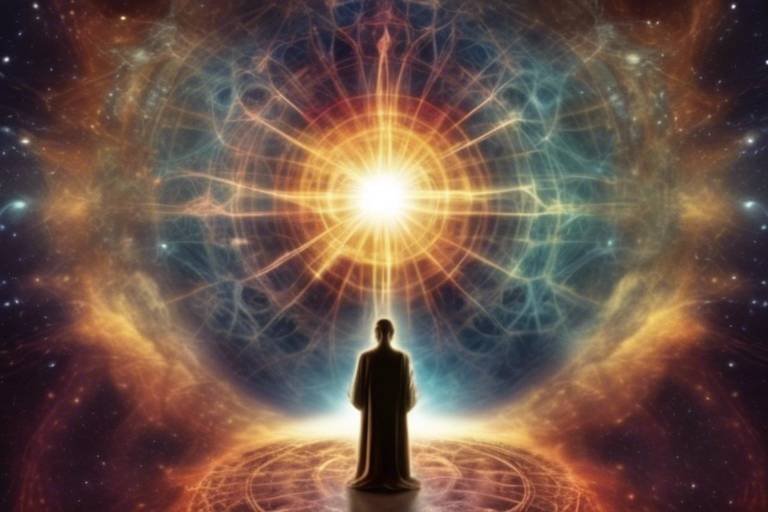
The relationship between metaphysics and spirituality is a captivating topic that invites us to explore the depths of existence and consciousness. You might be wondering, “How do these two seemingly different realms connect?” Well, let’s dive into this intriguing discussion and unravel the threads that bind these concepts together.
At first glance, metaphysics appears to be a dry, abstract field of philosophy concerned with the nature of reality—think of it as the framework that underpins our understanding of existence. It asks profound questions like, “What is the essence of being?” and “What lies beyond the physical world?” In contrast, spirituality often feels more personal and experiential, focusing on individual growth, connection to a higher power, and the quest for meaning in life. But here’s the kicker: both of these fields are ultimately trying to make sense of the same universe we inhabit.
Imagine metaphysics as the blueprint of a house, defining its structure and boundaries, while spirituality is the warmth and life within those walls. They may seem different, but they coexist in a beautiful dance, each enhancing our understanding of the other. Metaphysics provides the principles and theories that can help us comprehend the spiritual experiences we encounter, while spirituality offers a lived experience that can deepen our understanding of metaphysical concepts.
Moreover, both metaphysics and spirituality emphasize the interconnectedness of all things. This principle suggests that everything in the universe is related, forming a vast web of existence. When we recognize this interconnectedness, we begin to see how our thoughts, actions, and beliefs shape our reality. This realization can be both enlightening and liberating, prompting us to consider how we relate to others and the universe at large.
In exploring this connection, we also encounter the role of consciousness. Consciousness is not just a buzzword; it’s the very lens through which we perceive reality. It raises questions about our awareness, our sense of self, and how these concepts relate to the universe. Philosophical perspectives on consciousness provide unique insights, suggesting that our awareness shapes our understanding of reality and our spiritual experiences. It’s like looking at a painting: the colors and strokes may be the same, but the way we interpret it can vary dramatically based on our perspective.
Furthermore, the dialogue between science and spirituality is becoming increasingly relevant. Recent advancements in neuroscience and quantum physics are shedding light on the mysteries of consciousness, providing a scientific backdrop to spiritual experiences. This intersection invites us to consider how scientific discoveries can inform our spiritual beliefs and vice versa, creating a richer understanding of existence.
In conclusion, metaphysics and spirituality are not just interconnected; they are two sides of the same coin. By engaging with both, we can gain a more profound insight into our existence and the universe we inhabit. So, the next time you ponder the nature of reality or your place in it, remember that these fields can offer complementary perspectives that enrich your journey of understanding.
- What is the main difference between metaphysics and spirituality? Metaphysics is a branch of philosophy focused on the nature of reality, while spirituality encompasses personal beliefs and practices aimed at connecting to something greater than oneself.
- How do consciousness and spirituality relate? Consciousness plays a crucial role in spirituality as it shapes our awareness and understanding of our experiences, allowing for personal growth and exploration.
- Can science and spirituality coexist? Yes, many contemporary discussions explore how scientific discoveries, particularly in neuroscience and quantum physics, can complement and enhance spiritual understanding.
Defining Metaphysics
This article explores the relationship between metaphysics and spirituality, delving into their definitions, principles, and how they influence one another in understanding existence and consciousness.
Metaphysics is often regarded as the foundational branch of philosophy that seeks to unravel the mysteries of reality. It is not just about what we can see and touch; rather, it dives deep into the fundamental nature of existence, examining concepts that range from being and existence to the universe itself. Think of metaphysics as the blueprint of reality, where every question about the essence of life and the universe is explored. It asks profound questions like, “What is the nature of reality?” and “What does it mean to exist?”.
At its core, metaphysics can be broken down into several key areas:
- Ontology: This is the study of being and existence. It delves into what entities exist and how they can be categorized.
- Cosmology: This branch investigates the origins and structure of the universe, seeking to understand its fundamental nature.
- Philosophy of Mind: This area explores the nature of consciousness, the mind-body relationship, and how thoughts and feelings relate to our physical existence.
Metaphysics serves as a bridge between the tangible and intangible, helping us to comprehend the invisible forces that shape our reality. It invites us to ponder deeper questions about the universe and our place within it. For instance, when we consider the concept of time, metaphysics challenges us to think beyond the clock and calendar, asking whether time is linear or cyclical.
Moreover, metaphysics is not just an abstract field of study; it has practical implications for our everyday lives. By understanding the principles of metaphysics, individuals can gain insights into their own existence and how they relate to the universe. This exploration can lead to a more profound sense of purpose and connection to the world around us.
In essence, metaphysics is a quest for understanding that transcends the physical realm. It invites us to explore the mysteries of existence and encourages us to ask questions that challenge our perceptions. Whether through philosophical inquiry or spiritual exploration, metaphysics and its principles continue to influence our understanding of reality and consciousness.
Spirituality encompasses a broad range of beliefs and practices that connect individuals to something greater than themselves. It often involves personal growth, exploration of the soul, and the search for meaning in life.
Consciousness plays a crucial role in both metaphysics and spirituality. It raises questions about the nature of awareness, the self, and how these concepts relate to the universe and existence.
Different philosophical perspectives provide unique insights into consciousness. They explore how our awareness shapes our understanding of reality and our spiritual experiences, bridging the gap between metaphysical inquiry and spiritual practice.
Recent scientific approaches to consciousness, including neuroscience and quantum physics, contribute to the dialogue between metaphysics and spirituality. These fields seek to uncover the mysteries of consciousness and its implications for our understanding of existence.
Both metaphysics and spirituality emphasize the interconnectedness of all existence. This principle suggests that everything in the universe is related, influencing how we perceive our place within it and our relationships with others.
Universal laws, such as the law of attraction and the law of cause and effect, are central to both metaphysical and spiritual teachings. Understanding these laws can enhance our awareness of how we interact with the universe.
The law of attraction posits that positive or negative thoughts bring corresponding experiences into our lives. This principle is often discussed in spiritual circles and has roots in metaphysical philosophy.
The law of cause and effect, or karma, illustrates how our actions influence our experiences. This concept is foundational in both metaphysical thought and spiritual practice, highlighting the importance of intention.
- What is the main difference between metaphysics and spirituality?
Metaphysics focuses on the nature of reality and existence, while spirituality is more about personal growth and connecting to a higher power. - How do metaphysics and spirituality influence each other?
Metaphysical principles can provide a framework for spiritual beliefs, while spirituality can offer practical applications of metaphysical concepts. - Can metaphysics be scientifically validated?
While some aspects of metaphysics are philosophical, recent scientific advancements in fields like quantum physics are beginning to explore metaphysical concepts.
Understanding Spirituality
Spirituality is a multifaceted concept that transcends mere religious affiliation. It is a deeply personal journey that allows individuals to connect with something greater than themselves, often leading to profound insights about existence and purpose. Unlike organized religion, which typically follows a set of doctrines, spirituality is more about personal growth, exploration of the soul, and the quest for meaning in life. This quest can take many forms, including meditation, mindfulness, and even nature walks, where one seeks to feel a connection to the universe.
At its core, spirituality often revolves around the idea of self-discovery. Individuals embark on a journey to understand their inner selves, which can lead to a greater understanding of their place in the world. This exploration can be likened to peeling back the layers of an onion; each layer reveals deeper truths about who we are and what we value. Some may find that their spirituality is tied to specific beliefs or practices, while others may embrace a more eclectic approach, drawing from various traditions and philosophies.
Moreover, spirituality is not a one-size-fits-all experience. It can manifest in various ways, including:
- Mindfulness: Being present in the moment and aware of one’s thoughts and feelings.
- Connection to Nature: Finding peace and understanding through the natural world.
- Community: Engaging with like-minded individuals to share experiences and insights.
- Creative Expression: Using art, music, or writing as a means of exploring spiritual themes.
In essence, spirituality encourages individuals to seek their own truth and develop a personal relationship with the universe. This journey often leads to a sense of inner peace and fulfillment, as individuals learn to navigate life’s challenges with a deeper understanding of themselves and their purpose. The beauty of spirituality lies in its diversity; it invites everyone to explore their beliefs and experiences without judgment, fostering a sense of unity and interconnectedness among all beings.
As we delve deeper into spirituality, we often encounter the concept of consciousness. This is where the lines between spirituality and metaphysics begin to blur, as both fields seek to understand the nature of awareness and existence. The exploration of consciousness can lead to transformative experiences that not only deepen one’s spiritual practice but also enhance their understanding of the universe as a whole.
- What is the difference between spirituality and religion? Spirituality is a personal journey that may or may not involve organized religion. It focuses on individual beliefs and experiences, while religion often follows a set doctrine.
- Can spirituality exist without religion? Absolutely! Many people find spiritual fulfillment outside of traditional religious practices, exploring their beliefs through personal experiences and philosophies.
- How can I start my spiritual journey? Start by exploring practices like meditation, journaling, or spending time in nature. Reflect on your beliefs and what brings you a sense of peace and connection.
The Role of Consciousness
Consciousness is a fascinating and complex aspect of both metaphysics and spirituality. It serves as the bridge between our internal experiences and the external world, prompting us to ask profound questions: What does it mean to be aware? How does our perception shape our reality? These inquiries are not merely philosophical musings; they delve deep into our understanding of existence itself.
In metaphysical discussions, consciousness is often viewed as a fundamental quality of the universe. Think of it as the lens through which we perceive reality. Just as a camera captures light to create an image, our consciousness captures experiences, thoughts, and feelings, allowing us to navigate the world. This perspective aligns with the idea that consciousness is not just a byproduct of brain activity but rather an integral part of the fabric of existence.
On the spiritual side, consciousness plays a pivotal role in personal growth and self-discovery. Many spiritual practices, such as meditation and mindfulness, aim to enhance our awareness and deepen our connection to the universe. By quieting the mind and turning inward, individuals often report experiencing moments of clarity and insight that transcend ordinary understanding. This process can lead to a heightened sense of purpose and a profound realization of interconnectedness.
To illustrate the relationship between consciousness, metaphysics, and spirituality, consider the following key points:
- Awareness of Self: Understanding our consciousness allows us to explore our identity, beliefs, and motivations, leading to personal transformation.
- Connection to the Universe: Many spiritual traditions teach that expanding our consciousness enables us to feel a deeper connection to all living beings and the universe as a whole.
- Influence on Reality: Our thoughts and emotions, shaped by our consciousness, can directly impact our experiences and interactions with the world.
Furthermore, various philosophical perspectives contribute to our understanding of consciousness. For instance, some schools of thought propose that consciousness is a fundamental aspect of the universe, akin to space and time. Others argue that it arises from complex interactions within the brain. Regardless of the stance, it is clear that consciousness remains a central theme in both metaphysical inquiry and spiritual practice.
In recent years, scientific approaches have also begun to explore consciousness, merging the worlds of metaphysics and spirituality with empirical research. Neuroscience, for example, investigates the brain’s role in conscious experience, while quantum physics raises intriguing questions about the nature of reality and observation. This intersection of science and spirituality invites us to reconsider our understanding of existence and the mysteries of consciousness.
Ultimately, the role of consciousness is multifaceted and deeply intertwined with our quest for meaning. It encourages us to explore the depths of our being, fostering a sense of connection to something greater than ourselves. As we continue to navigate this journey, we may find that consciousness not only shapes our understanding of reality but also illuminates the path toward spiritual awakening.
- What is consciousness? Consciousness refers to the state of being aware of and able to think about one’s own existence, thoughts, and surroundings.
- How does consciousness relate to spirituality? Consciousness is central to spiritual practices as it allows individuals to connect with their inner selves and the universe.
- Can consciousness influence reality? Yes, many believe that our thoughts and emotions, shaped by our consciousness, can affect our experiences and interactions.
Philosophical Perspectives
When we dive into the realm of , we find ourselves navigating a rich tapestry of ideas that have shaped human thought for centuries. Philosophers have long pondered the nature of reality, consciousness, and existence, each contributing unique insights that resonate with both metaphysics and spirituality. It’s almost like a grand conversation across time, where each voice adds depth and nuance to our understanding.
One of the most intriguing philosophical perspectives comes from idealism, which suggests that reality is fundamentally mental. Think of it this way: if the universe is a vast stage, then our thoughts and consciousness are the actors that shape the play. Idealists argue that the material world is a manifestation of consciousness, meaning that our perceptions and thoughts create the reality we experience. This perspective aligns beautifully with many spiritual teachings that emphasize the power of intention and thought.
On the flip side, we have materialism, which posits that the physical world is the only reality, and everything, including consciousness, can be explained through physical processes. This view can sometimes feel like a cold, hard truth—like trying to warm yourself by a fire that’s gone out. Materialists often seek scientific explanations for phenomena, which can clash with spiritual beliefs that prioritize subjective experience and inner exploration.
Then, there’s existentialism, which places emphasis on individual experience and the inherent meaninglessness of life. Existentialists argue that it’s up to each person to create their own meaning in a universe that doesn’t provide it. This perspective can be liberating, akin to being handed the paintbrush to create your own masterpiece, but it can also lead to feelings of isolation. In the context of spirituality, existentialism invites individuals to explore their inner selves and find personal connections to the universe.
To further illustrate these perspectives, let’s take a look at a simple comparison table:
| Philosophical Perspective | Core Idea | Relation to Spirituality |
|---|---|---|
| Idealism | Reality is fundamentally mental. | Emphasizes the power of thoughts and intentions. |
| Materialism | Only the physical world exists. | Often clashes with spiritual beliefs. |
| Existentialism | Life is inherently meaningless; individuals create their own meaning. | Encourages personal exploration and inner connection. |
Ultimately, these philosophical perspectives serve as lenses through which we can examine the intricate dance between metaphysics and spirituality. Each viewpoint offers valuable insights that can deepen our understanding of consciousness and existence. They challenge us to ask profound questions: What is reality? How do our thoughts shape our experiences? And how can we find meaning in this vast universe?
By engaging with these philosophical ideas, we can enrich our spiritual practices and metaphysical inquiries, creating a holistic approach to understanding our place in the cosmos. So, the next time you find yourself pondering the mysteries of life, remember that you’re part of a long-standing dialogue that transcends time and space.
- What is the relationship between metaphysics and spirituality?
Metaphysics explores the fundamental nature of reality, while spirituality focuses on personal growth and connection to something greater. Together, they help us understand existence and consciousness. - Can philosophical perspectives influence spiritual beliefs?
Absolutely! Different philosophical viewpoints can shape how individuals interpret their spiritual experiences and understand the nature of reality. - How does consciousness relate to metaphysics and spirituality?
Consciousness is central to both fields, raising questions about awareness, the self, and how these concepts connect to our understanding of the universe.
Scientific Approaches
When we dive into the realm of to consciousness, we find ourselves at a fascinating crossroads where metaphysics meets spirituality. Science has long sought to unravel the mysteries of the mind, and as we explore this intersection, we discover how neuroscience and quantum physics provide insights that can enhance our understanding of existence. For instance, consider how neuroscience investigates the brain’s functions, shedding light on how our thoughts and emotions shape our reality.
Neuroscientists have made significant strides in understanding how consciousness arises from the brain’s complex networks. They utilize advanced imaging techniques like fMRI and EEG to observe brain activity in real-time, allowing researchers to map the neural correlates of consciousness. This research not only helps us comprehend the mechanics of thought but also raises profound questions about the nature of self and awareness. Are our perceptions merely electrical impulses, or is there something deeper at play?
On the other hand, quantum physics introduces a layer of mystery that parallels many spiritual teachings. The idea that particles can exist in multiple states until observed, known as quantum superposition, resonates with spiritual concepts of potentiality and the power of intention. This phenomenon suggests that our consciousness might influence reality at a fundamental level, aligning with the principles found in metaphysical thought.
To further illustrate the relationship between these scientific disciplines and their implications for metaphysics and spirituality, let’s take a look at the following table:
| Scientific Approach | Key Concepts | Relation to Metaphysics/Spirituality |
|---|---|---|
| Neuroscience | Brain activity, neural correlates, consciousness mapping | Explores the mechanics of thought and awareness |
| Quantum Physics | Quantum superposition, observer effect | Suggests consciousness may influence reality |
| Cognitive Science | Mind-body connection, perception, cognition | Examines how our perceptions shape our understanding of existence |
As we can see, these scientific approaches not only deepen our understanding of consciousness but also invite us to reflect on our place in the universe. They encourage us to ask questions like: What is the nature of reality? and How does our consciousness interact with the world around us? Such inquiries are at the heart of both metaphysical exploration and spiritual practice, highlighting the profound interconnectedness of all things.
In summary, the dialogue between science and spirituality enriches our understanding of consciousness and existence. By embracing insights from neuroscience and quantum physics, we can better appreciate the intricate tapestry of life and our role within it. So, as we ponder these questions, we might find ourselves not just as passive observers of reality, but as active participants in the grand mystery of existence.
- What is the difference between metaphysics and spirituality? Metaphysics is a branch of philosophy that explores the nature of reality, while spirituality is a personal journey that connects individuals to something greater than themselves.
- How does consciousness relate to metaphysics? Consciousness is a central theme in metaphysics as it raises questions about existence, awareness, and our understanding of reality.
- Can science and spirituality coexist? Yes, many believe that scientific discoveries can complement spiritual insights, offering a more holistic understanding of existence.
Interconnectedness of All Things
The concept of the is a profound idea that resonates deeply within both metaphysics and spirituality. Imagine a vast web, where each thread represents a different aspect of existence—be it a person, an animal, a plant, or even a thought. This web illustrates how everything is linked, forming a complex tapestry of life. When we consider this interconnectedness, it becomes clear that our actions and intentions ripple through the universe, affecting not only ourselves but everyone and everything around us.
In metaphysical terms, this interconnectedness suggests that the boundaries we perceive between ourselves and others are often illusory. We are not isolated entities; rather, we are part of a larger whole. This idea aligns with the spiritual belief that we are all connected to a greater consciousness, which some may refer to as the universal spirit or the collective unconscious. This connection encourages a sense of empathy and compassion, as we begin to understand that hurting another is, in essence, hurting ourselves.
Moreover, the interconnectedness of all things can be seen in various natural phenomena. For instance, consider the ecosystem: every organism, from the tiniest microbe to the largest mammal, plays a vital role in maintaining the balance of life. When one element is disturbed, it can have a cascading effect on the entire system. This principle can also be applied to our social interactions. Just as a butterfly flapping its wings can lead to a distant storm, our thoughts and actions can lead to unforeseen consequences in the lives of others.
To illustrate this further, let’s explore some key aspects of interconnectedness:
- Energy Exchange: Everything in the universe is made up of energy, and this energy is constantly in motion. Our thoughts and emotions emit vibrations that can influence the energy around us.
- Shared Experiences: We often find that our personal experiences resonate with others. This shared understanding fosters a sense of community and belonging.
- Collective Growth: As we evolve individually, we contribute to the collective growth of humanity, demonstrating how personal development can have a broader impact.
In essence, recognizing the interconnectedness of all things can lead to a more fulfilling and harmonious life. It encourages us to act with intention and mindfulness, understanding that our choices matter. By embracing this interconnectedness, we can foster deeper connections with others and cultivate a sense of unity with the world around us.
- What does interconnectedness mean in spirituality?
Interconnectedness in spirituality refers to the belief that all beings and elements of the universe are linked, influencing one another in profound ways. - How can I apply the concept of interconnectedness in my daily life?
You can apply this concept by practicing mindfulness, showing compassion to others, and being aware of how your actions impact the world. - Is there scientific evidence supporting interconnectedness?
Yes, various scientific fields, including ecology and quantum physics, explore the interconnectedness of systems and the influence of energy on matter.
Exploring Universal Laws
The universe operates on a set of principles that govern everything from the tiniest particles to the grandest galaxies. These principles, often referred to as universal laws, are foundational in both metaphysical and spiritual teachings. Understanding these laws can significantly enhance our awareness of how we interact with the universe and influence our lives. Among the most discussed universal laws are the law of attraction and the law of cause and effect, both of which play crucial roles in shaping our experiences and understanding our existence.
The law of attraction posits that our thoughts and feelings act like magnets, attracting similar energies into our lives. Think of it as a cosmic echo; the vibrations we emit resonate with the universe, drawing experiences that match our internal state. For instance, if you focus on positivity and abundance, you are more likely to attract opportunities that reflect those thoughts. Conversely, dwelling on negativity can invite unwanted circumstances. This law isn’t just a feel-good mantra; it has roots in metaphysical philosophy, suggesting that our reality is a reflection of our inner beliefs.
On the other hand, the law of cause and effect, often referred to as karma, illustrates the principle that every action has a corresponding reaction. This law underscores the importance of intention behind our actions. When we act with kindness, we create a ripple effect that can lead to positive outcomes, not just for ourselves but for others as well. In contrast, negative actions can result in unfavorable consequences. This interconnectedness emphasizes that we are not isolated beings; our actions reverberate throughout the fabric of existence.
To better understand these laws, let’s take a closer look at how they manifest in our lives:
| Universal Law | Description | Practical Application |
|---|---|---|
| Law of Attraction | Attracts experiences based on our thoughts and feelings. | Practice positive thinking and visualization to manifest desires. |
| Law of Cause and Effect | Every action has a corresponding reaction. | Be mindful of intentions; act with kindness and awareness. |
By exploring these universal laws, we can begin to see how they intertwine with our spiritual journeys. They offer a framework for understanding not only our individual experiences but also our place in the larger tapestry of existence. The beauty of these laws lies in their simplicity and universality; they apply to everyone, regardless of belief system or background. As we deepen our understanding of these principles, we can cultivate a more intentional and meaningful life, recognizing that we are active participants in the unfolding of our own realities.
- What is the law of attraction? The law of attraction states that like attracts like, meaning that our thoughts and feelings can attract similar experiences into our lives.
- How does the law of cause and effect work? This law indicates that every action we take has consequences, which can be positive or negative, depending on the nature of our actions.
- Can I change my reality using these laws? Yes! By consciously aligning your thoughts and actions with these laws, you can create a more fulfilling and positive reality.
The Law of Attraction
The Law of Attraction is a fascinating concept that suggests our thoughts and emotions are powerful forces that shape our reality. Imagine your mind as a magnet; whatever you focus on, whether it’s positive or negative, you draw into your life. This principle is not just a whimsical idea; it has roots in both metaphysical philosophy and various spiritual teachings. The essence of the Law of Attraction is simple yet profound: like attracts like.
When you cultivate positive thoughts and feelings, you create a vibrational frequency that resonates with positive experiences. Conversely, if you dwell on negativity, you may find yourself attracting unfavorable circumstances. It’s as if the universe is responding to your internal state, reflecting it back to you in the form of your experiences. This idea can be both empowering and daunting—empowering because it places the reins of your life in your hands, and daunting because it challenges you to take responsibility for your thoughts.
To better understand how the Law of Attraction works, consider these key principles:
- Clarity of Intent: Be specific about what you want. Vague desires lead to vague outcomes.
- Emotional Alignment: Your feelings must align with your desires. If you want abundance but feel lack, you’re sending mixed signals to the universe.
- Gratitude: Cultivating a sense of gratitude for what you already have raises your vibrational frequency, making it easier to attract more of what you desire.
Many people have shared their success stories about how the Law of Attraction has transformed their lives. From finding love to achieving career goals, the testimonials are compelling. However, it’s essential to remember that this law doesn’t operate in isolation. It works in tandem with your actions. You can’t simply wish for something without taking steps toward it. Think of it like planting a garden: you can visualize a beautiful flower, but without planting the seed and nurturing it, that flower will never bloom.
Moreover, the Law of Attraction has been popularized in various media, including books and films like “The Secret.” These resources have made the concept accessible to a broader audience, sparking interest in how our thoughts can manifest reality. But with this popularity comes a degree of skepticism. Critics argue that it oversimplifies complex life situations and ignores the role of external factors. While it’s true that not everything is under our control, the Law of Attraction encourages a proactive mindset, promoting the idea that we can influence our circumstances.
In summary, the Law of Attraction is a powerful tool for personal transformation. By focusing on positive thoughts, aligning your emotions with your desires, and taking actionable steps, you can harness this principle to create the life you envision. Remember, it’s not just about wishful thinking; it’s about cultivating a mindset that attracts abundance and joy.
- What is the Law of Attraction? The Law of Attraction is the belief that positive or negative thoughts bring corresponding experiences into a person’s life.
- How can I apply the Law of Attraction in my life? To apply the Law of Attraction, focus on your desires, align your emotions with those desires, and take actionable steps toward achieving them.
- Can the Law of Attraction work for everyone? While many people have found success with the Law of Attraction, results can vary based on individual beliefs, actions, and external circumstances.
The Law of Cause and Effect
The Law of Cause and Effect, often referred to as karma, is a fundamental principle that resonates deeply within both metaphysical and spiritual teachings. At its core, this law asserts that every action has a corresponding reaction; in simpler terms, what you put out into the universe is what you get back. Imagine it as a cosmic boomerang—every thought, word, and deed you send out has the potential to return to you, often in ways you might not expect. This principle serves as a reminder of the power we hold in shaping our realities and influences our interactions with others.
In the realm of spirituality, the Law of Cause and Effect encourages individuals to reflect on their intentions and actions. It prompts us to ask ourselves: Are we acting with love and kindness, or are we sending out negativity and resentment? The answers to these questions can profoundly impact our personal growth and spiritual journey. By understanding that our actions create ripples in the fabric of existence, we can begin to navigate our lives with greater awareness and responsibility.
Furthermore, the Law of Cause and Effect is not just about personal actions; it extends to collective experiences as well. For instance, when communities come together to support one another, the positive energy generated can lead to significant changes in the world around them. This interconnectedness highlights how individual actions contribute to a larger tapestry of existence, reinforcing the idea that we are all part of a greater whole.
To illustrate this concept further, consider the following table that outlines the relationship between different actions and their potential effects:
| Action | Potential Effect |
|---|---|
| Practicing Gratitude | Increased positivity and improved relationships |
| Spreading Negativity | Heightened conflict and emotional distress |
| Helping Others | Strengthened community bonds and personal fulfillment |
| Neglecting Responsibilities | Consequences that may lead to stress or regret |
Ultimately, the Law of Cause and Effect serves as a guiding principle in our lives, urging us to be mindful of our choices. It invites us to consider the long-term implications of our actions, both for ourselves and for the world around us. By embracing this law, we can foster a deeper connection to our spiritual selves and cultivate a life that reflects our highest values and aspirations.
- What is the Law of Cause and Effect? – It is the principle that every action has a corresponding reaction, influencing our experiences and outcomes.
- How does karma relate to the Law of Cause and Effect? – Karma is often viewed as the spiritual aspect of this law, emphasizing how our actions shape our future experiences.
- Can negative actions lead to positive outcomes? – While negative actions can yield immediate effects, they often lead to challenges that can foster growth and learning in the long run.
- How can I apply this law in my daily life? – By being mindful of your thoughts and actions, you can create a more positive and fulfilling life experience.
Frequently Asked Questions
- What is the difference between metaphysics and spirituality?
Metaphysics is primarily a philosophical inquiry into the fundamental nature of reality, while spirituality is more about personal beliefs and practices that connect individuals to something greater. Think of metaphysics as the map that outlines the terrain of existence, whereas spirituality is the journey you take through that terrain.
- How do consciousness and metaphysics relate to each other?
Consciousness is a central theme in both metaphysics and spirituality. It challenges us to ponder who we are and how we perceive reality. In metaphysics, consciousness is examined as a fundamental aspect of existence, while in spirituality, it often serves as the gateway to deeper self-awareness and connection with the universe.
- Can science and spirituality coexist?
Absolutely! Many people find that scientific discoveries, particularly in fields like neuroscience and quantum physics, complement their spiritual beliefs. These scientific insights can enhance our understanding of consciousness and existence, creating a rich dialogue between the two realms.
- What are universal laws in the context of spirituality?
Universal laws, such as the law of attraction and the law of cause and effect, are principles that many spiritual teachings emphasize. They suggest that our thoughts and actions have a direct impact on our experiences. Understanding these laws can empower individuals to navigate their lives more consciously and intentionally.
- How does the law of attraction work?
The law of attraction posits that like attracts like. This means that if you focus on positive thoughts and feelings, you are more likely to attract positive experiences into your life. It’s like tuning into a radio station; the clearer your signal, the better the music you’ll hear!
- What role does intention play in spiritual practices?
Intention is crucial in spiritual practices as it shapes our actions and influences our experiences. When you set a clear intention, it’s like planting a seed in a garden; with care and attention, it can grow into something beautiful and fulfilling.
Metaphysics, Spirituality, Interconnection, Philosophy, Consciousness, Reality, Existence, Belief sistemas, , Metaphysics, Spirituality, Interconnection, Philosophy, Consciousness, Reality, Existence, Belief sistemas,
Share this content:
Leave a Reply