
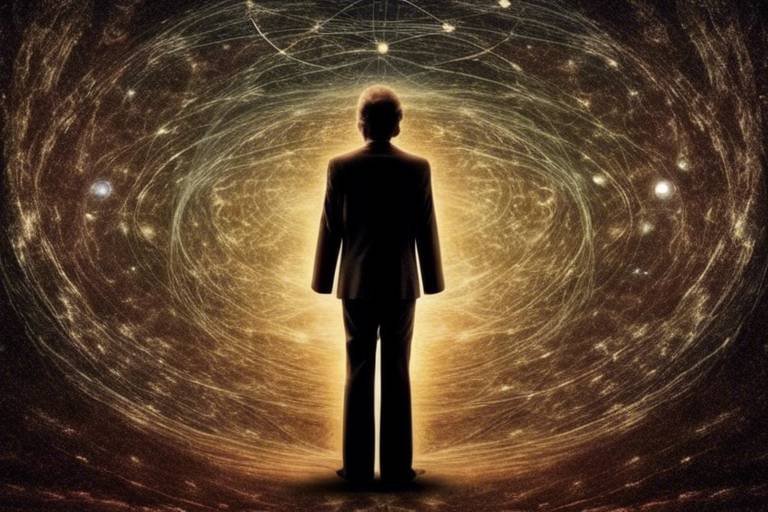
Welcome to the fascinating world of metaphysics, where the most profound questions of existence, reality, and knowledge intertwine. Imagine standing at the edge of a vast ocean, where each wave represents a different inquiry into the nature of our universe. What is the essence of reality? What does it mean to exist? These are not just questions for philosophers; they are inquiries that resonate deeply within each of us. In this article, we will embark on a journey through the intricate landscape of metaphysical thought, exploring how these inquiries shape our understanding of everything from the cosmos to our personal identities.
As we navigate through the realms of metaphysics, we will encounter various schools of thought, each offering unique perspectives on existence and reality. From the ancient philosophers who laid the groundwork for metaphysical exploration to contemporary thinkers who challenge conventional wisdom, the quest for eternal truths is as vibrant as it is complex. Think of metaphysics as a treasure map, leading us to hidden gems of knowledge that have the power to transform our perception of life itself.
At its core, metaphysics seeks to answer questions that go beyond the physical world. While science provides us with empirical evidence and observable phenomena, metaphysics invites us to ponder the underlying principles that govern existence. It’s like looking at a beautiful painting and wondering about the artist’s intention—what lies beneath the surface? This article will delve into various aspects of metaphysics, including the nature of reality, the study of being, the relationship between knowledge and belief, and the implications of time and space. By the end of this exploration, you will not only gain insights into these profound questions but also develop a deeper appreciation for the intricate tapestry of existence that surrounds us.
Examining what constitutes reality is akin to peeling an onion—each layer reveals more complexity and depth. In this section, we will discuss the distinctions between the physical and metaphysical realms, and how these concepts influence our perception of existence. Reality, for many, is what we can see, touch, and measure. However, metaphysics challenges us to consider what lies beyond the tangible. Is there a reality that exists independently of our perceptions? Or is reality merely a construct of our minds? These questions are pivotal in understanding how we define our existence and our place within the universe.
Ontology, the study of being, dives deep into the categories of existence and what it means to be. It’s like exploring a vast library filled with books on every conceivable entity and concept. Each book represents a different theory about existence, ranging from the material to the abstract. In this section, we will explore different theories about what it means to exist and the nature of entities in the universe. What makes something real? Is it its physical presence, or is it the idea of it that holds significance? These inquiries are fundamental in our quest for understanding.
When we talk about substance and essence, we are delving into the fundamental nature of objects and beings. Substance refers to what something is made of, while essence pertains to the intrinsic qualities that define it. Think of it this way: if a tree falls in a forest and no one is around to hear it, does it make a sound? This classic philosophical question challenges us to consider the relationship between existence and perception. In this exploration, we will analyze how these concepts relate to identity and the fundamental nature of reality.
The debate between materialism and idealism is a cornerstone of metaphysical inquiry. Materialism posits that reality is fundamentally physical, while idealism suggests that reality is primarily mental or spiritual in nature. This clash of perspectives raises intriguing questions: Are we merely collections of atoms, or is there something more profound that defines our existence? By examining these opposing viewpoints, we can gain a better understanding of the nature of reality and the implications for our own lives.
Existentialism adds another layer to our understanding of being, emphasizing individual experience and choice. This philosophy encourages us to confront the absurdity of existence and find meaning in our personal journeys. It’s like standing at a crossroads and realizing that the path you choose defines who you are. In this section, we will explore how human existence and individual experience contribute to our understanding of being and reality.
Metaphysical realism posits that a reality exists independent of our perceptions. This viewpoint has profound implications for knowledge and truth. If reality exists beyond our understanding, how do we come to know it? This exploration will challenge us to consider the nature of truth and the extent to which our beliefs shape our understanding of the world.
Epistemology, the study of knowledge, investigates the nature, sources, and limits of what we know. It addresses questions about belief, justification, and truth in the context of metaphysical inquiry. How do we determine what is true? Is it through empirical evidence, or are there other ways of knowing? This section will delve into the intricate relationship between knowledge and metaphysical questions, shedding light on the complexities of human understanding.
The relationship between justification and belief is crucial in our quest for knowledge. Justification refers to the reasons we have for our beliefs, while belief itself is the acceptance that something is true. Understanding how these concepts interact can illuminate the ways we form our perceptions of reality. It’s like building a house: the foundation of justification supports the structure of belief, and together they create a stable understanding of the world around us.
Various theories of truth, including correspondence, coherence, and pragmatic theories, offer different perspectives on how we understand reality. Each theory provides a unique lens through which we can examine metaphysical questions. By exploring these theories, we can gain insights into the nature of truth and its implications for our understanding of existence.
Time and space are fundamental concepts that shape our understanding of reality. They are not merely dimensions in which events occur; they are intricate constructs that influence our perception of existence. In this section, we will delve into the metaphysical implications of time and space, exploring how they interact and shape our understanding of the universe.
The nature of time has puzzled philosophers for centuries. Is time linear, or does it exist in cycles? Does it flow, or is it an illusion? This exploration of philosophical theories regarding time’s flow, direction, and relationship to existence will challenge our preconceived notions and invite us to consider the profound implications of time on our lives.
Space, too, has its own set of properties that influence our understanding of reality. It is not just an empty void; it is a dynamic realm that shapes the interactions of objects within the universe. By analyzing how space influences our perception of existence, we can gain a deeper appreciation for the intricate relationships that define our reality.
The relationship between metaphysics and science is a fascinating interplay of ideas. Scientific discoveries often challenge traditional metaphysical beliefs, while metaphysical inquiry can inform scientific exploration. In this section, we will investigate how these two fields intersect and influence one another, leading us to a more comprehensive understanding of reality.
Hypotheses play a crucial role in both science and metaphysics. They serve as starting points for exploration, guiding our inquiries into the nature of reality. By analyzing how hypotheses contribute to our understanding of existence, we can appreciate the dynamic relationship between these two realms of thought.
Scientific discoveries often come with profound philosophical implications. As we uncover new truths about the universe, we are compelled to reevaluate our metaphysical beliefs. This exploration will examine how advancements in science challenge or reinforce our understanding of existence, ultimately shaping our perception of reality.
- What is metaphysics? Metaphysics is a branch of philosophy that explores the fundamental nature of reality, existence, and the relationships between entities.
- How does metaphysics differ from science? While science focuses on empirical evidence and observable phenomena, metaphysics delves into the underlying principles that govern existence.
- What are some key concepts in metaphysics? Key concepts include ontology (the study of being), epistemology (the study of knowledge), and the nature of time and space.
The Nature of Reality
When we ponder the nature of reality, we often find ourselves standing at the crossroads of the physical and the metaphysical. It’s like trying to decipher a complex puzzle where each piece represents a different aspect of existence. On one hand, we have the tangible world around us—the concrete objects we can see, touch, and measure. On the other hand, there’s the elusive realm of metaphysics, which deals with the fundamental questions that go beyond mere physicality. What is existence? What does it mean to be? These inquiries can feel overwhelming, yet they are essential for understanding our place in the universe.
To grasp the distinctions between these realms, consider the following points:
- Physical Reality: This is the world of matter and energy, governed by the laws of physics. Everything we can observe through our senses falls into this category.
- Metaphysical Reality: This encompasses concepts that are not physically measurable, such as consciousness, emotions, and the essence of being. It raises questions about what lies beyond the physical.
- Perception of Reality: Our understanding of reality is influenced by our perceptions, which can be subjective. Different cultures and individuals may interpret the same reality in vastly different ways.
As we dive deeper, we encounter the idea that reality isn’t just a static entity; it’s a dynamic interplay of various forces. Think of it like a river flowing through a landscape—sometimes calm and serene, other times turbulent and chaotic. This fluidity challenges our understanding and compels us to question the very fabric of existence. Are we merely observers of this river, or do we play an active role in shaping its course?
Moreover, the distinction between the physical and metaphysical realms raises intriguing questions about the nature of existence itself. For instance, are we merely products of our biological makeup, or do we possess a deeper essence that transcends our physical form? This brings us to the philosophical debate surrounding the concept of dualism versus monism. Dualism posits that mind and body are separate entities, while monism suggests they are two aspects of the same reality. This philosophical tug-of-war contributes to our understanding of what it means to truly exist.
In the grand tapestry of reality, we also find that our beliefs and experiences shape our perceptions. Imagine two people standing in front of a beautiful painting; one sees a vibrant landscape, while the other perceives a chaotic swirl of colors. Their interpretations are influenced by their backgrounds, emotions, and even their philosophical beliefs. This subjectivity adds another layer of complexity to our understanding of reality.
Ultimately, the quest to understand the nature of reality is not just an academic exercise; it is a deeply personal journey. Each of us grapples with these profound questions in our own way, seeking answers that resonate with our experiences and beliefs. As we navigate this intricate landscape, we may find that the answers we seek are not always clear-cut, but rather a mosaic of perspectives that enrich our understanding of existence.
- What is the difference between physical and metaphysical reality? Physical reality refers to the tangible world we can observe, while metaphysical reality encompasses concepts beyond physical measurement, such as consciousness and existence.
- How do our perceptions influence our understanding of reality? Our perceptions are shaped by personal experiences, cultural backgrounds, and emotional states, leading to subjective interpretations of the same reality.
- What are dualism and monism? Dualism is the belief that mind and body are separate, while monism argues that they are two aspects of the same reality, both contributing to our understanding of existence.
Ontology: The Study of Being
Ontology, the philosophical study of being and existence, dives deep into the fundamental questions of what it means to be. It’s not just a dry academic pursuit; it’s a vibrant exploration of reality that resonates with our everyday experiences. Imagine standing in front of a vast ocean, pondering not just the water’s physical properties but also what it signifies about existence itself. This is the essence of ontology—it challenges us to consider the very fabric of reality, the categories of being, and the nature of entities that populate our universe.
At the heart of ontology lies the inquiry into categories of existence. What does it mean for something to exist? Are there different kinds of existence, or is it a singular experience? Ontologists often categorize beings into various tiers, such as:
- Concrete entities – Objects that exist in physical space.
- Abstract entities – Concepts or ideas that do not have a physical presence.
- Possible beings – Entities that could exist but do not currently.
This categorization allows us to explore complex questions about identity and existence. For instance, when we talk about a tree, we can describe its physical characteristics (like height and color) but also its essence—what makes it a tree rather than a rock or a cloud. This distinction between substance and essence is crucial in ontology. Substance refers to what something is made of, while essence pertains to its fundamental nature and identity. This duality prompts us to ask: Is the essence of a tree merely its physical attributes, or is there something deeper that defines its ‘treeness’?
Delving into the concepts of substance and essence reveals a fascinating landscape of philosophical thought. The interplay between these two ideas is what shapes our understanding of identity. For example, consider a butterfly. While its substance comprises biological materials like cells and tissues, its essence might include its beauty, the joy it brings, or its role in the ecosystem. This raises further questions: Can an entity change while maintaining its essence? What happens if we alter its substance? These inquiries lead us to ponder the dynamic nature of existence itself.
Another significant debate within ontology is the contrast between materialism and idealism. Materialism asserts that reality is fundamentally physical; everything that exists is made up of matter. In contrast, idealism posits that reality is primarily mental, suggesting that our perceptions shape our existence. Here’s a quick comparison:
| Materialism | Idealism |
|---|---|
| Reality consists of physical matter. | Reality is shaped by mental perceptions. |
| Focuses on tangible entities. | Focuses on ideas and consciousness. |
This dichotomy prompts us to reflect on our own experiences. When we stub our toe, the pain we feel is undeniably real from a materialist perspective. However, our interpretation of that pain—what it means to us, how it affects our mood—leans more toward an idealistic viewpoint. This interplay between material and mental realms enriches the ontological landscape, making it a dynamic field of study.
Moreover, the philosophy of existentialism adds another layer to our understanding of being. Existentialists focus on individual experience and the subjective nature of existence. They argue that existence precedes essence; in other words, we first exist, and then we define ourselves through our choices and actions. This perspective shifts the focus from abstract categories to personal experience, asking us to confront our own existence and the meanings we create in our lives.
In summary, ontology is not just an abstract discipline but a profound inquiry into the nature of being itself. It invites us to question our assumptions and explore the depths of existence, identity, and reality. As we navigate through these philosophical waters, we find that ontology not only shapes our understanding of the universe but also enriches our personal experiences and perspectives on life.
- What is ontology? – Ontology is the philosophical study of being and existence, exploring what it means to exist.
- How does ontology differ from other branches of philosophy? – While ontology focuses specifically on the nature of existence, other branches like epistemology explore knowledge, ethics deals with morality, and aesthetics examines beauty.
- Why is ontology important? – Understanding ontology helps us grasp the fundamental nature of reality, which can influence various fields such as science, religion, and personal belief systems.
Substance and Essence
The concepts of substance and essence are pivotal in metaphysics, serving as the bedrock for understanding identity and the nature of existence. Imagine substance as the foundation of a building; it provides the necessary support and structure, while essence can be likened to the architectural design that defines what the building is meant to be. In simpler terms, substance refers to what something is made of, while essence refers to what it fundamentally is. This distinction raises intriguing questions: What makes a tree a tree? Is it merely the physical matter it comprises, or is there something more profound that defines its ‘tree-ness’?
Philosophers have long debated these notions, with various schools of thought proposing different interpretations. For instance, the Aristotelian view posits that substance is a combination of both matter and form. According to Aristotle, every substance has a specific essence that defines its purpose and identity. On the other hand, Plato’s theory of forms suggests that the essence of an object exists in a realm of ideal forms, separate from the physical world. This leads to the question: can we ever truly grasp the essence of something if it is always beyond our tangible experience?
To further illustrate these ideas, consider the following table that summarizes the differences between substance and essence:
| Aspect | Substance | Essence |
|---|---|---|
| Definition | The material or physical aspect of an entity | The intrinsic nature or indispensable quality of something |
| Example | A tree’s wood, leaves, and roots | The ‘tree-ness’ that makes it recognizable as a tree |
| Philosophical View | Materialism emphasizes substance as primary | Idealism emphasizes essence as primary |
Understanding the relationship between substance and essence is crucial for grappling with broader metaphysical questions. For example, when we consider the identity of an object over time, we might ask: if the substance of a tree changes—say, if it loses its leaves in winter—does it cease to be a tree? Or does its essence persist despite these changes? This interplay between substance and essence invites us to reflect on the nature of change and permanence in our universe.
Furthermore, the implications of these concepts extend beyond mere academic inquiry. They touch on our everyday lives and how we perceive the world around us. When we label something, we often rely on our understanding of its essence, which influences our interactions and relationships. The essence of a person, for instance, encompasses their character, values, and intentions, while their substance might refer to their physical presence. This duality shapes our perceptions and can lead to profound realizations about identity and existence.
In conclusion, the exploration of substance and essence not only enriches our understanding of metaphysics but also prompts us to question the very nature of reality. As we navigate through life, recognizing the interplay between what something is made of and what it fundamentally represents can lead to deeper insights into our existence and the universe at large.
- What is the difference between substance and essence?
Substance refers to the physical matter that constitutes an object, while essence pertains to the intrinsic nature or identity that defines what that object fundamentally is. - Why are substance and essence important in metaphysics?
These concepts help us understand identity, existence, and the nature of reality, prompting deeper philosophical inquiries about change and permanence. - Can something change and still retain its essence?
Yes, many philosophers argue that while the substance of an object may change, its essence can persist, leading to discussions about identity over time.
Materialism vs. Idealism
When diving into the philosophical waters of materialism and idealism, we are faced with two contrasting views that shape our understanding of reality. At its core, materialism asserts that the physical world is the only reality that exists. It posits that everything, including thoughts, emotions, and consciousness, can be explained by physical processes and interactions. Imagine a vast machine where every cog and wheel represents a different aspect of existence, all operating under the laws of physics. This view aligns closely with the scientific method, which relies on observation and empirical evidence to understand the universe.
On the other hand, idealism challenges this notion by claiming that the mind and its ideas are the primary components of reality. In this view, the physical world is either a construct of the mind or, at the very least, dependent on it for existence. Think of it as a dream where everything is shaped by your thoughts and perceptions. Idealists argue that our experiences and consciousness play a crucial role in defining what is real. This perspective invites a more subjective interpretation of existence, suggesting that reality is not merely a collection of physical entities but also a tapestry woven from our thoughts and perceptions.
To better understand these two perspectives, let’s break down some key differences:
| Aspect | Materialism | Idealism |
|---|---|---|
| Definition | Reality is fundamentally physical. | Reality is fundamentally mental or spiritual. |
| Nature of Existence | Existence is independent of perception. | Existence is dependent on perception. |
| Key Proponents | Democritus, Karl Marx, and contemporary scientists. | Plato, George Berkeley, and Immanuel Kant. |
| Implications | Focus on scientific inquiry and material conditions. | Emphasis on consciousness and subjective experience. |
This philosophical tug-of-war has profound implications for how we view existence. For instance, materialism leads us to prioritize scientific advancements and technological progress, as we seek to understand the mechanics of our universe. Conversely, idealism encourages us to explore the depths of human experience, emphasizing the importance of perception, thought, and consciousness in shaping our reality.
Moreover, the debate between materialism and idealism raises intriguing questions: Can we truly separate the mind from the body? Is consciousness merely a byproduct of physical processes, or does it hold a deeper significance? These questions not only challenge our understanding of existence but also invite us to reflect on our own experiences and beliefs.
In essence, the clash between materialism and idealism is not just an academic exercise; it is a fundamental exploration of what it means to be human. As we navigate our lives, we continuously grapple with these ideas, whether we are aware of it or not. So, which side do you lean towards? Are you more inclined to see the world as a complex machine, or do you believe that our thoughts and perceptions shape the very fabric of reality?
- What is materialism? Materialism is the philosophical view that physical matter is the only reality, and everything, including thoughts and consciousness, can be explained by physical processes.
- What is idealism? Idealism is the belief that reality is fundamentally mental or spiritual, suggesting that our perceptions and consciousness play a crucial role in defining what is real.
- How do materialism and idealism differ? Materialism emphasizes the physical world as independent of perception, while idealism argues that reality is dependent on our perceptions and consciousness.
- Can both perspectives coexist? Some philosophers suggest that a synthesis of materialism and idealism can offer a more comprehensive understanding of reality, acknowledging both physical and mental aspects of existence.
Existentialism and Being
Existentialism is a philosophical movement that dives deep into the essence of human existence, asking the tough questions that many of us ponder quietly in our minds. What does it mean to truly exist? How do our choices define us? In a world where we often feel like mere spectators, existentialism invites us to take the stage and embrace the complexity of being. This philosophy is not just an abstract concept; it’s a call to action, urging us to confront our freedom and the weight of our decisions.
At the heart of existentialism lies the idea that existence precedes essence. This means that we are not born with a predetermined purpose; rather, we create our own meaning through our actions and choices. Think about it: every decision you make, no matter how small, contributes to the tapestry of your identity. It’s like being an artist with a blank canvas, where each stroke represents a choice, and the final piece is a unique reflection of your journey. This perspective empowers individuals to recognize their role in shaping their own lives.
One of the most intriguing aspects of existentialism is its emphasis on individual experience. Unlike traditional philosophies that might focus on universal truths, existentialism champions the subjective nature of reality. Each person’s experience is valid and significant, highlighting the beauty in our differences. This perspective can be liberating; it allows us to embrace our quirks and idiosyncrasies, understanding that they contribute to our unique existence. In a world that often pushes conformity, existentialism encourages us to celebrate our individuality.
However, with this freedom comes a profound responsibility. Existentialists argue that we must confront the absurdity of life—the idea that the universe is indifferent to our desires and struggles. This realization can be daunting, leading to feelings of anxiety and despair. Yet, it is precisely within this struggle that we find our strength. By acknowledging that life may lack inherent meaning, we are free to create our own. It’s akin to standing at the edge of a vast ocean: while the waves may crash and the winds may howl, we have the power to navigate our own course.
Moreover, existentialism encourages us to engage with the world authentically. In a society that often promotes superficial connections, existentialists remind us of the importance of genuine relationships. It’s about being present, truly listening, and connecting on a deeper level. When we engage authentically with others, we not only enrich our own lives but also contribute to the collective human experience. This interconnectedness is vital, as it reminds us that while we are individuals, we are also part of a larger tapestry of existence.
In conclusion, existentialism offers a profound lens through which to view our being. It challenges us to embrace our freedom, confront the absurdity of life, and engage authentically with ourselves and others. By recognizing that we are the authors of our own existence, we can create a life filled with purpose and meaning, even amidst the chaos of the universe. So, the next time you find yourself questioning your place in the world, remember: you have the power to define your own reality.
- What is existentialism? Existentialism is a philosophical movement that explores the nature of existence, emphasizing individual experience and the freedom to create meaning in life.
- How does existentialism view the concept of freedom? Existentialism posits that individuals have the freedom to make choices and shape their own identities, but this freedom also comes with the responsibility of those choices.
- What does “existence precedes essence” mean? This phrase suggests that individuals are not born with a predetermined purpose; instead, they create their own meaning through their actions and decisions.
- How can existentialism help in daily life? By encouraging authenticity and personal responsibility, existentialism can lead to a more meaningful and engaged life, helping individuals navigate challenges with a sense of purpose.
Metaphysical Realism
Metaphysical realism is a philosophical stance that asserts the existence of a reality that is independent of our perceptions, beliefs, or interpretations. Imagine standing in front of a vast, unchanging landscape, where the mountains, rivers, and trees exist regardless of whether anyone is there to observe them. This perspective holds that the world operates according to its own rules, and our understanding of it is merely a reflection of that reality. In essence, metaphysical realism posits that the universe is not a mere figment of our imagination; it has a structure and existence that remains constant, irrespective of human thought.
One of the most intriguing implications of metaphysical realism is its relationship with knowledge and truth. If reality exists independently, then our beliefs and perceptions must align with this reality to be considered true. This leads to a crucial question: How can we ascertain that our beliefs accurately reflect the external world? This inquiry brings us to the heart of epistemology, where the nature of knowledge and its justification become paramount. The challenge lies in bridging the gap between subjective experience and objective reality, a task that has perplexed philosophers for centuries.
Moreover, metaphysical realism invites us to explore different theories that seek to explain how we can know anything about the world. For instance, the correspondence theory of truth posits that a statement is true if it corresponds to the way things are in the world. In contrast, coherence theory suggests that truth is determined by the consistency of a set of beliefs. Both theories attempt to provide a framework for understanding how our thoughts relate to an independent reality, yet they also highlight the complexities and nuances involved in the pursuit of knowledge.
To further illustrate the significance of metaphysical realism, consider the following table that summarizes key characteristics and implications:
| Characteristic | Description |
|---|---|
| Independence of Reality | Reality exists outside of human perception. |
| Truth and Knowledge | Truth is determined by how well beliefs align with reality. |
| Philosophical Implications | Challenges the subjective nature of experience. |
| Relation to Science | Scientific discoveries can validate or challenge metaphysical beliefs. |
The debate surrounding metaphysical realism is not without its critics. Some philosophers argue for a more subjective understanding of reality, suggesting that our perceptions shape the world we experience. This brings us to the contrasting viewpoint of anti-realism, which posits that reality is inherently tied to human cognition. This ongoing dialogue between realism and anti-realism illustrates the rich tapestry of philosophical inquiry and the quest for understanding our place in the universe.
In conclusion, metaphysical realism serves as a foundational concept that encourages us to question the nature of existence and the reliability of our knowledge. As we navigate through the complexities of reality, we are reminded that our beliefs, while essential, must strive to align with the independent truths of the universe. By embracing this philosophical perspective, we embark on a journey toward deeper understanding and appreciation of the world around us.
- What is metaphysical realism? Metaphysical realism is the belief that an objective reality exists independently of human perception.
- How does metaphysical realism relate to knowledge? It suggests that our beliefs must correspond to this independent reality to be considered true.
- What are the implications of metaphysical realism? It challenges subjective interpretations of reality and emphasizes the importance of aligning beliefs with objective truths.
- How does metaphysical realism interact with science? Scientific discoveries can either support or challenge the claims of metaphysical realism, leading to a dynamic interplay between the two.
Epistemology: The Nature of Knowledge
Epistemology, the philosophical study of knowledge, is a fascinating field that challenges us to consider what we know, how we know it, and what it means to truly “know” something. It’s like peeling an onion; each layer reveals deeper questions about belief, truth, and justification. Have you ever wondered if what you believe is genuinely true, or if it’s simply a reflection of your perceptions? This section dives into these profound inquiries, unraveling the complexities of knowledge.
At the heart of epistemology lies the relationship between justification and belief. Justification refers to the reasons or evidence that support our beliefs. For instance, if you believe that it will rain tomorrow, your justification might be based on a weather forecast. But, what if that forecast was wrong? This highlights a critical aspect of epistemology: the fragility of our beliefs. Are our beliefs justified simply because we have reasons for them, or is there a deeper truth we must uncover? This question leads us to consider the nature of truth itself, which is a central theme in epistemological discussions.
To better understand these concepts, let’s break down the different types of knowledge:
- Empirical Knowledge: Knowledge gained through experience and observation.
- Rational Knowledge: Knowledge derived from logical reasoning and intellectual deduction.
- Testimonial Knowledge: Knowledge obtained from the reports of others.
This classification helps us grasp the various sources of knowledge we encounter daily. However, the challenge remains: how do we determine which sources are reliable? This brings us to the discussion of truth theories, which attempt to define what truth actually is. For example, the correspondence theory suggests that truth is what corresponds to reality; if a statement accurately reflects the state of the world, it is considered true. On the other hand, the coherence theory posits that truth is about the consistency of a set of beliefs. If your beliefs fit together logically, they are deemed true, regardless of their correspondence to external reality.
Another intriguing aspect of epistemology is the pragmatic theory of truth, which suggests that truth is determined by the practical consequences of a belief. If believing something works for you in a practical sense, then it is considered true. This perspective emphasizes the functional role of knowledge in our lives, prompting us to ask: does the utility of a belief make it true? This question invites a rich dialogue about the nature of reality and our understanding of it.
As we delve deeper into epistemology, we encounter the concept of skepticism, which challenges the very foundations of knowledge. Skeptics argue that we cannot truly know anything with certainty, raising doubts about our beliefs and justifications. This perspective forces us to confront uncomfortable truths about our understanding of the world. Are we merely navigating through a fog of uncertainty, clinging to beliefs that may not hold up under scrutiny? The tension between skepticism and the pursuit of knowledge creates a dynamic interplay that is essential to epistemological inquiry.
In conclusion, epistemology is not just an abstract philosophical exercise; it is a vital exploration of the nature of knowledge that impacts our daily lives. By examining the sources of our beliefs, the justification behind them, and the quest for truth, we engage in a profound dialogue about what it means to know. Whether we are questioning the reliability of our perceptions or contemplating the implications of scientific discoveries, epistemology invites us to think critically and deeply about our understanding of reality.
- What is epistemology? Epistemology is the branch of philosophy concerned with the nature, sources, and limits of knowledge.
- What are the main theories of truth? The main theories of truth include correspondence theory, coherence theory, and pragmatic theory.
- How does skepticism relate to knowledge? Skepticism questions the possibility of certain knowledge, prompting us to critically evaluate our beliefs and justifications.
Justification and Belief
When we dive into the deep waters of epistemology, one of the most intriguing aspects we encounter is the relationship between justification and belief. Imagine you’re standing on the edge of a cliff, peering into the abyss below. You might feel a rush of adrenaline, but would you leap without knowing what lies beneath? This is akin to the way we approach our beliefs. Justification acts as the safety harness, providing us with the necessary support to either take the plunge into belief or hold back. In essence, a belief is a conviction we hold, but justification is what gives that belief its strength and credibility.
To understand this relationship better, we can break it down into a few key components:
- Belief: This is the acceptance that something is true or exists. It can be influenced by personal experiences, cultural context, or even emotional states.
- Justification: This is the reasoning or evidence that supports a belief. It’s the logical framework that allows us to say, “I believe this because…”
- Truth: While belief and justification are essential, they must also align with the concept of truth for them to be considered valid. A justified belief that isn’t true falls short of being knowledge.
Philosophers have long debated the nature of justification. Some argue that it must be based on empirical evidence, while others suggest that rational intuition can also serve as a valid basis. For instance, if you believe that the sun will rise tomorrow, your justification might come from past experiences and scientific understanding of planetary motion. However, if someone believes in a more abstract concept, like the existence of a deity, the justification might be rooted in personal experience or faith, which can vary widely from person to person.
Moreover, the Gettier Problem introduces a fascinating twist to this discussion. It challenges the traditional notion that justified true belief is sufficient for knowledge. In essence, it presents scenarios where individuals have justified beliefs that are true, yet they lack knowledge due to the presence of luck or coincidence. This leads us to ponder: Can we ever truly justify our beliefs beyond a shadow of a doubt? Or are we forever at the mercy of uncertainty?
As we navigate through our beliefs, the interplay of justification becomes crucial. It invites us to ask ourselves critical questions: Are our beliefs well-founded? What evidence do we rely on? And how do we differentiate between a belief that is justified and one that is merely assumed? By examining these questions, we not only enhance our understanding of our own beliefs but also foster a deeper awareness of the beliefs of others.
In conclusion, the intricate dance between justification and belief is essential to our quest for knowledge. It challenges us to seek out evidence, to question our assumptions, and ultimately, to strive for a more profound understanding of the world around us. As we continue to explore the realms of metaphysics and epistemology, let’s remember that our beliefs are not just thoughts—they are gateways to understanding our existence.
- What is the difference between belief and knowledge?
Belief is an acceptance that something is true, while knowledge requires that belief to be justified and true. - Can a belief be justified without evidence?
Yes, some beliefs can be justified through personal experience or intuition, but this can be subjective and vary from person to person. - What is the Gettier Problem?
The Gettier Problem illustrates situations where a justified true belief does not constitute knowledge due to luck or coincidence.
Truth Theories
When we dive into the world of metaphysics, one of the most intriguing aspects we encounter is the concept of truth. What does it mean for something to be true? This question isn’t just an academic exercise; it has real-world implications that affect how we perceive our existence and the universe around us. In metaphysics, several theories attempt to unravel the complexities of truth, each offering a unique lens through which we can examine our beliefs and knowledge. The three most prominent theories are the correspondence theory, the coherence theory, and the pragmatic theory.
The correspondence theory posits that truth is determined by how accurately a statement reflects reality. In simpler terms, a statement is true if it corresponds to the way things actually are in the world. For example, if I say, “The sky is blue,” this statement is considered true if, in fact, the sky is blue at that moment. This theory is intuitive and aligns with our everyday experiences, but it raises questions about how we can know what reality is, especially when our perceptions can be flawed.
On the other hand, the coherence theory suggests that truth is a matter of the coherence of a set of beliefs or propositions. According to this view, a belief is true if it fits well with a larger, consistent system of beliefs. Imagine a puzzle: each piece represents a belief, and the completed puzzle represents a coherent worldview. If a new piece doesn’t fit, it challenges the coherence of the entire picture. This theory emphasizes the interconnectedness of our beliefs, but it can lead to the issue of circular reasoning, where beliefs are justified solely by their relation to other beliefs.
Lastly, we have the pragmatic theory of truth, which asserts that the truth of a statement is determined by its practical consequences. In other words, if believing in a statement yields useful results or helps us navigate the world effectively, then that statement is considered true. This perspective can be particularly appealing because it aligns with our experiences in everyday life, where the utility of a belief often dictates its acceptance. However, it also raises the question: can something be true if it’s only useful in a particular context?
To summarize these theories, let’s take a look at the following table:
| Theory | Definition | Strengths | Weaknesses |
|---|---|---|---|
| Correspondence | Truth corresponds to reality. | Intuitive, aligns with everyday experience. | Relies on the accuracy of perception. |
| Coherence | Truth is based on the coherence of beliefs. | Emphasizes interconnectedness of beliefs. | Can lead to circular reasoning. |
| Pragmatic | Truth is determined by practical consequences. | Useful in real-world applications. | Context-dependent; may overlook objective truths. |
Understanding these different theories of truth not only enriches our philosophical inquiries but also challenges us to reflect on our own beliefs and the frameworks we use to navigate our lives. Are we seeking objective truths, or are our beliefs shaped by the contexts in which we find ourselves? As we delve deeper into the realm of metaphysics, these questions will continue to resonate, prompting us to explore the very foundations of our understanding.
- What is the correspondence theory of truth?
The correspondence theory states that a statement is true if it accurately reflects reality. - How does the coherence theory differ from the correspondence theory?
The coherence theory asserts that truth is determined by the consistency of a set of beliefs rather than direct correspondence to reality. - What is the pragmatic theory of truth?
The pragmatic theory suggests that the truth of a statement is based on its practical effects and usefulness in real-world situations. - Can a belief be true if it is not useful?
According to the pragmatic theory, a belief’s truth might be questioned if it does not yield practical benefits, but other theories might argue for its truth based on different criteria.
Time and Space in Metaphysics
When we dive into the realm of metaphysics, we find ourselves grappling with two of the most profound concepts: time and space. These elements are not just mere measurements; they are the very fabric of our reality. Imagine time as a river, flowing endlessly, while space acts as the vast canvas upon which the universe paints its intricate designs. But what do we really know about these dimensions? How do they shape our understanding of existence?
In metaphysical discussions, time is often perceived in various ways. Some philosophers argue that time is linear, moving in a straight line from past to present to future, much like a train on a track. Others propose that time is cyclical, reminiscent of the seasons or the cycles of life, suggesting that events may repeat in an eternal loop. This raises intriguing questions: Does time have a beginning or an end? Or is it an infinite expanse, where every moment is merely a point on a never-ending continuum?
Similarly, space is not just a void where objects exist; it is a dynamic entity that influences how we perceive the universe. Think of space as a stage where the drama of existence unfolds. It can be described in terms of dimensions—length, width, and height—but it also encompasses the relationships between objects. For instance, consider how the distance between two stars affects our understanding of the universe’s vastness. The properties of space can be categorized into several intriguing aspects:
- Absolute Space: This view posits that space exists independently of the objects within it.
- Relational Space: Here, space is defined by the relationships and distances between objects, suggesting that without objects, space would not exist.
- Curved Space: In modern physics, particularly in the context of general relativity, space is understood as curved by mass and energy, challenging traditional notions of flat, empty space.
The interplay between time and space is equally fascinating. The famous physicist Albert Einstein revolutionized our understanding with his theory of relativity, which posits that time and space are intertwined in a single continuum known as spacetime. This concept suggests that the two are not separate entities but rather part of a unified framework. Imagine spacetime as a fabric that can be warped and stretched by the presence of mass, creating the gravitational forces we experience.
As we ponder these metaphysical dimensions, we must also consider their implications for our existence. How do our perceptions of time and space influence our daily lives? For example, the way we experience time can vary dramatically depending on our circumstances. A thrilling adventure may make time seem to fly, while moments of boredom can stretch it infinitely. Similarly, our understanding of space affects how we relate to our surroundings. A cozy room can feel like a haven, while an expansive field may evoke feelings of freedom and possibility.
In conclusion, the exploration of time and space in metaphysics invites us to question our very understanding of reality. Are these dimensions fixed, or do they shift and change based on our perceptions? As we continue to unravel the mysteries of the universe, time and space will undoubtedly remain at the forefront of our quest for knowledge, challenging us to think beyond the tangible and delve into the profound.
- What is the difference between time and space in metaphysics? Time refers to the progression of events, while space pertains to the area where objects exist and interact.
- How do philosophers view time? Philosophers have various interpretations of time, including linear, cyclical, and even as an illusion.
- What is spacetime? Spacetime is the concept that combines time and space into a single continuum, as proposed by Einstein’s theory of relativity.
- Can time be measured? Yes, time is measured using clocks, but its perception can vary based on individual experiences.
The Nature of Time
Time is one of those elusive concepts that seems straightforward at first glance, yet becomes increasingly complex the deeper we dive into its nature. Just think about it: we all experience time daily, ticking away as seconds turn into minutes and hours into days. But what is time, really? Is it merely a sequence of events, or does it have a more profound significance? Philosophers and scientists have grappled with these questions for centuries, and their explorations reveal a myriad of theories that can be both enlightening and bewildering.
At its core, time can be perceived in two distinct ways: as a linear progression or as a more cyclical phenomenon. The linear perspective suggests that time flows in one direction—from past to present to future—much like a river that continuously moves forward. This view aligns with our everyday experiences, where we remember the past, live in the present, and anticipate the future. However, the cyclical view, often found in various cultural and philosophical traditions, posits that time is not merely a straight line but a repeating cycle, akin to the seasons or the phases of the moon. This perspective invites us to consider whether time is an infinite loop, where past experiences inform future events in a continuous cycle.
Moreover, the relativity of time adds another layer of complexity to our understanding. According to Einstein’s theory of relativity, time is not an absolute entity but is relative to the observer’s speed and gravitational field. For instance, time moves slower for someone traveling at near-light speed compared to someone at rest. This revelation challenges our traditional notions of time and suggests that it is more intertwined with the fabric of space than we previously thought. In this sense, time could be seen as a fourth dimension, where events are not just isolated occurrences but are interconnected in a vast tapestry of existence.
Philosophically, the implications of time are profound. Consider the concept of eternity. If time is linear, does that mean there is a definitive beginning and end? What does that mean for our existence? Are we mere blips in the grand timeline of the universe, or do our actions resonate beyond our temporal confines? These questions not only provoke thought but also challenge us to reflect on our place in the cosmos.
In summary, the nature of time is a rich tapestry woven from the threads of philosophy, science, and human experience. It beckons us to ponder our existence and the universe’s mysteries. As we continue to explore the intricacies of time, we may find that it is not just a measure of moments but a profound aspect of reality that shapes our understanding of everything around us.
- What is the philosophical significance of time?
The philosophical significance of time lies in its ability to shape our understanding of existence, prompting us to question the nature of reality and our place within it. - How does time relate to space?
Time and space are interconnected; in the realm of physics, they are often considered together as spacetime, influencing how we perceive events and their relationships. - Can time be experienced differently?
Yes, time can be experienced differently based on various factors such as speed, gravity, and individual perception, leading to the concept of time dilation.
Space and Its Properties
When we think about space, we often envision the vastness of the universe, filled with stars, planets, and galaxies. But what does it really mean to understand space? Is it merely an empty void, or does it possess intrinsic properties that shape our reality? To delve into this question, we must first recognize that space is not just a backdrop for events; it is a dynamic entity that interacts with matter and energy. This interaction is fundamental to our understanding of the universe.
One of the most fascinating aspects of space is its properties. Space can be described in terms of dimensions, curvature, and the gravitational forces that act upon it. For instance, in our everyday experience, we perceive space as three-dimensional, consisting of length, width, and height. However, in the realm of physics, particularly in Einstein’s theory of general relativity, space is intertwined with time, forming a four-dimensional continuum known as spacetime.
Moreover, space is not uniform; it can be warped and curved by the presence of mass. Think of it like a trampoline: when you place a heavy object in the center, the fabric dips, creating a curve. This analogy helps us visualize how massive objects like planets and stars warp the fabric of space around them, influencing the motion of other objects. This is not just a theoretical concept; it has real-world implications, such as the way satellites orbit Earth or how light bends around massive celestial bodies.
Understanding space also brings us to the concept of vacuum. A vacuum is often thought of as empty space, devoid of matter. However, quantum physics reveals that even in a vacuum, there are fluctuations and virtual particles popping in and out of existence. This challenges our traditional notions of emptiness and suggests that space is teeming with potential energy, waiting to be realized.
To summarize, the properties of space are complex and multifaceted. Here are a few key properties that highlight its significance:
- Dimensionality: Space is generally understood to have three dimensions, but theories such as string theory propose additional dimensions that are not perceptible to us.
- Curvature: The curvature of space is influenced by mass and energy, as described by general relativity, affecting how objects move and interact.
- Vacuum Energy: Even in a vacuum, there exists a form of energy that contributes to the dynamics of the universe, challenging our understanding of “empty” space.
In conclusion, space is not just a passive container for objects; it is an active participant in the cosmic drama. Its properties shape the very fabric of our reality, influencing everything from the orbits of planets to the behavior of light. As we continue to explore the mysteries of the universe, our understanding of space will undoubtedly evolve, revealing new layers of complexity and wonder.
Q: What is the dimensionality of space?
A: Space is typically understood to have three dimensions (length, width, height), but some theories in physics suggest the existence of additional dimensions.
Q: How does mass affect space?
A: Mass warps the fabric of space, creating curvature that affects the motion of objects and the path of light, as described by Einstein’s theory of general relativity.
Q: What is vacuum energy?
A: Vacuum energy refers to the fluctuations of energy that occur even in a vacuum, suggesting that empty space is not truly empty but filled with potential energy.
Metaphysics and Science
When we think about metaphysics and science, it’s like trying to understand the dance between two partners who often step on each other’s toes. Metaphysics, the philosophical inquiry into the nature of reality, existence, and the fundamental structure of the universe, often finds itself at odds with the empirical nature of science, which relies on observation and experimentation. But rather than viewing these fields as adversaries, we can see them as intertwined disciplines that enrich our understanding of the cosmos.
Throughout history, scientific discoveries have often prompted metaphysical questions. For example, the advent of quantum mechanics not only revolutionized physics but also sparked debates about the nature of reality itself. Are particles real if they exist in a state of probability until observed? This question leads us down a rabbit hole of metaphysical inquiry, challenging our notions of existence and the very fabric of reality.
Moreover, metaphysics can guide scientific inquiry by providing a framework for understanding the implications of scientific theories. Take, for instance, the theory of relativity. It reshapes our understanding of time and space, leading to profound questions about their nature. Is time a linear progression, or is it more fluid? Does space exist independently of objects, or is it a relational construct? These questions are not just scientific; they are deeply metaphysical.
To illustrate the relationship between metaphysics and science, consider the following table that outlines key interactions between the two:
| Scientific Discovery | Metaphysical Question |
|---|---|
| Quantum Mechanics | What is the nature of reality when particles exist in superposition? |
| Relativity | How does our understanding of time and space change? |
| Evolutionary Biology | What does it mean to be human in the context of natural selection? |
| Cosmology | What is the nature of the universe and its origins? |
This interplay is not just academic; it has real-world implications. For instance, advancements in neuroscience have raised questions about the nature of consciousness. Are our thoughts merely the byproducts of neurological processes, or is there something more profound at play? These inquiries bridge the gap between science and metaphysics, urging us to reconsider our understanding of the mind and its relationship to the physical body.
Furthermore, the role of hypotheses in both science and metaphysics cannot be overstated. In science, a hypothesis is a proposed explanation for a phenomenon, tested through experiments. In metaphysics, hypotheses about the nature of reality can guide philosophical inquiry. For example, if we hypothesize that reality is fundamentally mental (as idealism suggests), we can explore the implications of this stance on our understanding of existence and knowledge.
As science continues to advance, it challenges or reinforces metaphysical beliefs, leading to a dynamic relationship where both fields evolve together. The philosophical implications of scientific discoveries can lead us to reevaluate long-held beliefs about the universe, existence, and our place within it. In this sense, metaphysics acts as a compass, guiding our exploration of scientific frontiers.
- What is the main difference between metaphysics and science?
Metaphysics deals with questions about existence and reality that may not be empirically tested, while science relies on observation and experimentation to understand the natural world. - How do metaphysical questions influence scientific research?
Metaphysical questions can guide scientific inquiry by framing the implications of scientific theories and prompting new lines of investigation. - Can science answer all metaphysical questions?
While science can address many questions about the physical world, some metaphysical inquiries, such as the nature of consciousness or existence itself, may remain beyond its reach.
The Role of Hypothesis
When we dive into the intricate world of metaphysics, one might wonder what role a hypothesis plays in our understanding of reality. A hypothesis is not just a mere guess; it serves as a crucial stepping stone in the journey of inquiry and discovery. Think of it as the compass guiding a sailor through uncharted waters. Without it, we might be lost, drifting aimlessly without direction or purpose.
In both science and metaphysics, hypotheses allow us to formulate ideas about the nature of existence, reality, and knowledge. They enable us to ask the right questions and seek answers that can either confirm or challenge our beliefs. For instance, consider the hypothesis that reality is fundamentally mental rather than physical. This idea can lead to profound discussions about consciousness, perception, and what it means to truly exist.
Moreover, the role of a hypothesis extends beyond mere speculation. It invites rigorous testing and exploration. In metaphysics, where empirical evidence may be scarce, a well-structured hypothesis can provide a framework for philosophical debate. It encourages thinkers to explore various possibilities and consider different perspectives. This is essential because metaphysics often grapples with abstract concepts that defy straightforward observation.
To illustrate the significance of hypotheses in metaphysical inquiry, let’s look at a few key points:
- Framework for Exploration: A hypothesis lays the groundwork for systematic exploration of metaphysical questions.
- Stimulates Discussion: It encourages dialogue among philosophers, scientists, and thinkers, fostering a rich exchange of ideas.
- Guides Research: In both science and metaphysics, hypotheses guide research directions, helping to focus efforts on specific questions.
- Challenges Assumptions: By proposing alternative viewpoints, hypotheses challenge existing beliefs and assumptions about reality.
Furthermore, the interplay between hypothesis and observation is fascinating. In metaphysics, while we may not always have tangible evidence, the philosophical implications of a hypothesis can lead to new ways of thinking. For example, the hypothesis that time is an illusion invites us to reconsider our understanding of existence and the universe itself. It opens up a Pandora’s box of questions about the nature of time, perception, and reality.
Ultimately, the role of hypothesis in metaphysics is about exploration and understanding. It serves as a bridge between abstract thought and practical inquiry, allowing us to navigate the complexities of existence. By framing our questions and guiding our exploration, hypotheses empower us to delve deeper into the mysteries of the universe. So, the next time you ponder the nature of reality, remember the humble hypothesis—your trusty guide on this philosophical journey.
- What is a hypothesis? A hypothesis is a proposed explanation or educated guess that can be tested through observation and experimentation.
- How does a hypothesis relate to metaphysics? In metaphysics, hypotheses help frame questions and guide philosophical exploration of concepts like existence, reality, and knowledge.
- Can hypotheses be proven in metaphysics? While empirical proof may be challenging in metaphysics, hypotheses can lead to valuable discussions and insights about philosophical concepts.
- Why are hypotheses important in philosophical inquiry? They stimulate discussion, challenge assumptions, and provide a structured approach to exploring complex ideas.
Philosophical Implications of Scientific Discoveries
As we navigate through the vast ocean of knowledge, the waves of scientific discoveries often crash against the shores of metaphysical thought, reshaping our understanding of reality. Each breakthrough in science, whether it’s the discovery of a new particle or the mapping of the human genome, poses profound questions that challenge our existing beliefs about the universe and our place within it. For instance, consider the implications of quantum mechanics, which suggests that at a fundamental level, reality is not as solid as we perceive it. This leads us to ponder: if particles can exist in multiple states simultaneously, what does that say about the nature of existence itself?
Furthermore, the advent of theories such as relativity has compelled us to rethink our understanding of time and space. Einstein’s revelations that time is not a fixed entity but rather fluid and relative forces us to confront uncomfortable questions about our perception of reality. If time can bend and stretch, can our experiences of past and future be as malleable as the fabric of space-time itself? This brings about a philosophical conundrum: how do we reconcile our subjective experiences with a scientific understanding that seems to defy common sense?
Moreover, the exploration of consciousness through neuroscience has sparked debates about the mind-body problem. As scientists delve deeper into the workings of the brain, revealing the neural underpinnings of thoughts and emotions, we are left to question the very essence of what it means to be human. Are we merely the sum of our neural connections, or is there something more profound that transcends physical explanation? This inquiry leads us to the crossroads of science and metaphysics, where the essence of being is scrutinized under the harsh light of empirical evidence.
In contemplating these philosophical implications, we must also recognize the role of hypotheses in shaping our understanding. Hypotheses serve as bridges between scientific inquiry and metaphysical speculation. They allow us to formulate predictions and explore possibilities that extend beyond immediate observation. For example, the hypothesis of a multiverse—suggesting the existence of multiple, perhaps infinite, universes—opens up a Pandora’s box of metaphysical questions about reality, existence, and the nature of choice.
Ultimately, the interplay between scientific discoveries and metaphysical thought is a dynamic dance. Each step forward in science invites us to reconsider our philosophical frameworks, while metaphysical inquiries can inspire scientific exploration. This symbiotic relationship not only enriches our understanding of the universe but also challenges us to embrace a more holistic view of existence, one that acknowledges the complexities and mysteries that lie beyond the veil of empirical observation.
- What is the relationship between science and metaphysics?
Science and metaphysics are intertwined, with scientific discoveries prompting philosophical discussions about the nature of reality, existence, and knowledge. - How do scientific discoveries challenge traditional metaphysical beliefs?
New scientific insights often contradict established metaphysical views, compelling philosophers to reevaluate concepts like time, space, and consciousness. - What role do hypotheses play in the philosophical implications of science?
Hypotheses serve as a crucial link between empirical research and philosophical inquiry, allowing for exploration of ideas that extend beyond observable phenomena. - Can science answer all metaphysical questions?
While science provides valuable insights, it may not fully address all metaphysical questions, especially those concerning the essence of existence and consciousness.
Frequently Asked Questions
- What is metaphysics?
Metaphysics is a branch of philosophy that explores the fundamental nature of reality, existence, and the universe. It seeks to answer questions about what things are, what it means to exist, and the nature of objects and their properties.
- How does metaphysics differ from science?
While science relies on empirical evidence and experimentation to understand the physical world, metaphysics delves into questions that may not be observable or measurable. It addresses the underlying principles and concepts that govern existence, often exploring ideas that science may not yet be able to explain.
- What are some key concepts in metaphysics?
Key concepts in metaphysics include ontology (the study of being), epistemology (the study of knowledge), substance and essence, and the nature of time and space. These concepts help us understand the framework of reality and our place within it.
- What is the difference between materialism and idealism?
Materialism posits that reality is fundamentally physical, meaning that everything can be explained through matter and physical processes. In contrast, idealism suggests that reality is primarily mental or spiritual, emphasizing the importance of the mind and consciousness in shaping our understanding of existence.
- How does one approach existentialism within metaphysics?
Existentialism focuses on individual experience and the meaning of existence. It encourages individuals to explore their own unique perspectives on being, emphasizing personal choice and responsibility in defining one’s reality and purpose.
- What is metaphysical realism?
Metaphysical realism is the belief that a reality exists independently of our perceptions or beliefs. This viewpoint suggests that there are truths about the world that remain constant, regardless of whether we are aware of them or can comprehend them.
- What is the significance of time and space in metaphysics?
Time and space are fundamental concepts in metaphysics as they shape our understanding of reality. Philosophical inquiries into the nature of time explore its flow and direction, while discussions about space examine how it influences the relationships between objects and events in the universe.
- How do scientific discoveries impact metaphysical theories?
Scientific discoveries can challenge or reinforce metaphysical beliefs. As science progresses and uncovers new information about the universe, it may prompt philosophers to reevaluate existing metaphysical frameworks or develop new theories that better align with empirical findings.
Ontology, Reality, Existence, Epistemology, Universals, Consciousness, Causality, Transcendence, , Ontology, Reality, Existence, Epistemology, Universals, Consciousness, Causality, Transcendence,
Share this content:
Leave a Reply