
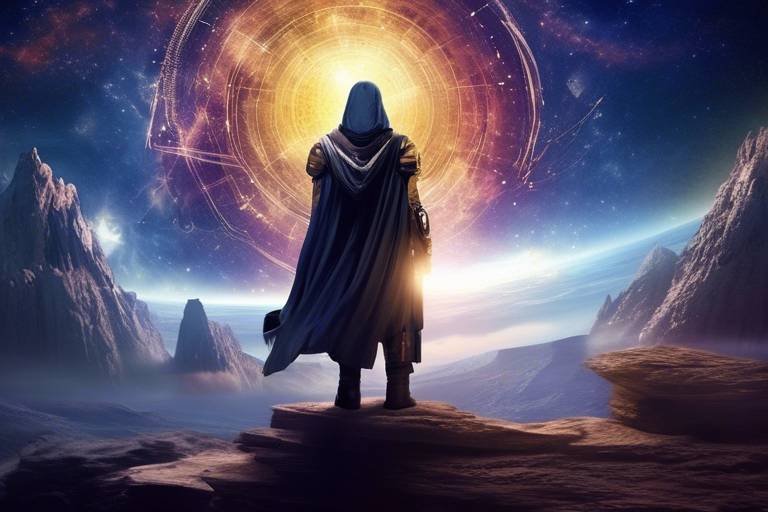
In the grand tapestry of life, the threads of destiny and fate weave intricate patterns that many of us ponder. Are these concepts merely figments of our imagination, or do they hold tangible significance in our lives? As we journey through this exploration, we will delve into the philosophical implications, cultural interpretations, and the profound ways in which destiny and fate influence our decisions and behaviors. Imagine standing at a crossroads, where every choice you make could lead you down a different path—this is where the dance of destiny and fate begins. But what does it all mean? Let’s dive deeper.
To truly understand the significance of destiny and fate, we must first clarify what these terms mean. Destiny often refers to a predetermined course of events that is believed to be set in motion by a higher power or the universe itself. It implies a sense of purpose, as if there is a grand plan for each individual. In contrast, fate is often viewed as a more rigid concept, suggesting that certain events are unavoidable and that we are powerless to alter them. While destiny can be seen as a guiding force, fate feels more like a predetermined outcome that we must accept.
In various philosophical and cultural contexts, these definitions can shift. For instance, in some traditions, destiny is viewed positively, as a path toward self-actualization, while fate can be seen as a burden. To illustrate these differences, consider the following table:
| Concept | Definition | Implications |
|---|---|---|
| Destiny | A predetermined path influenced by personal choices and universal forces. | Empowerment and purpose. |
| Fate | A fixed outcome that cannot be changed. | Acceptance and resignation. |
Throughout history, different cultures have interpreted destiny and fate in unique ways, shaping societal views on human agency. Ancient civilizations often attributed their fortunes to the whims of gods, while others believed in a cosmic order that dictated their lives. This section examines how these historical beliefs influenced the way we view our own lives today.
Philosophers like Plato and Aristotle contributed significantly to our understanding of destiny and fate in Western philosophy. Plato viewed the universe as a realm of forms, where the soul’s journey is predetermined, yet influenced by individual choices. On the other hand, Aristotle emphasized the importance of human agency, suggesting that while certain events may be fated, our choices ultimately shape our destinies. Their debates continue to resonate, prompting us to ask: to what extent do we control our lives?
In contrast, Eastern philosophies such as Hinduism and Buddhism present alternative views on these concepts. In Hinduism, the concept of karma plays a crucial role, suggesting that our actions in this life influence our future destinies. Buddhism, on the other hand, emphasizes the idea of impermanence and the potential for change, highlighting that while fate may present challenges, we possess the power to alter our paths through mindfulness and intention.
Many religions offer their interpretations of destiny and fate. For instance, in Christianity, the notion of divine intervention and predestination suggests that while humans have free will, God has a plan that ultimately guides their lives. This interplay between free will and divine purpose raises questions about how much control we truly have over our destinies.
In contemporary discussions, the modern scientific community often approaches destiny and fate through the lenses of psychology and sociology. These fields explore how our environments, upbringing, and social interactions shape our decision-making processes. By understanding the psychological factors at play, we can begin to see how our choices, rather than a predetermined fate, significantly influence our paths.
At the heart of the debate over destiny and fate lies the concept of free will. This section examines how individual choices impact our understanding of predetermined outcomes. Are we merely puppets in a cosmic play, or do we possess the power to change our scripts?
Philosophers have long debated the existence of free will, with many arguing that humans are capable of shaping their destinies. They posit that our ability to make choices, however small, is a testament to our autonomy. This perspective encourages us to embrace our potential and take responsibility for our actions.
The conflict between determinism and free will raises important questions about our existence. If everything is predetermined, what does that mean for our choices? Conversely, if we have complete free will, how do we reconcile that with the challenges we face that seem beyond our control? This ongoing dialogue invites us to reflect on our beliefs and how they shape our understanding of life.
Literature and art frequently explore themes of destiny and fate, providing a rich tapestry of interpretations. From ancient myths to modern narratives, these concepts are portrayed in ways that resonate with our experiences. This section analyzes how these themes are depicted and their impact on society.
Mythological stories often illustrate the struggle between fate and free will. For example, the tale of Oedipus highlights the tension between attempting to escape fate and ultimately fulfilling it. Such narratives continue to inspire and challenge our perceptions of destiny.
Contemporary narratives frequently grapple with the complexities of destiny and fate. Movies like Groundhog Day and novels such as The Alchemist delve into the idea of personal choice versus predetermined paths, sparking discussions about the relevance of these themes in our lives today.
- What is the difference between destiny and fate? Destiny is often seen as a path influenced by choices, while fate is viewed as a fixed outcome.
- Can we change our fate? Many believe that through choices and actions, we can influence our destinies, even if some aspects seem predetermined.
- How do different cultures view these concepts? Cultural interpretations vary significantly, with some seeing destiny as empowering and others viewing fate as a burden.
The Definitions of Destiny and Fate
When we talk about destiny and fate, it’s crucial to understand that these terms, while often used interchangeably, carry distinct meanings that can shape our perceptions of life and our choices. At its core, destiny refers to a predetermined course of events that is often seen as a result of one’s own actions and choices. It implies that there are certain paths in life that we are meant to follow, shaped by our decisions, experiences, and even our dreams. Think of destiny as a river flowing towards the ocean; while the river has its course, it can meander and change based on the landscape it encounters.
On the other hand, fate is often viewed as a more rigid concept, suggesting that events are fixed and unavoidable, determined by forces beyond our control. Fate is like a train on a set track; no matter how much the passengers wish to change their destination, the train will arrive where it is meant to go. This distinction raises profound questions about the nature of our existence: Are we mere puppets in a grand play, or do we have the power to write our own scripts?
In various philosophical and cultural contexts, these definitions can shift dramatically. For instance, in some traditions, destiny carries a more optimistic connotation, suggesting that we have the ability to forge our own paths through our choices. In contrast, fate is often viewed with a sense of resignation, implying that our lives are governed by external forces like the gods or the universe. This duality can be seen in literature, art, and even daily conversations, where people grapple with the balance between taking charge of their lives and accepting the things they cannot change.
To further clarify these concepts, let’s look at a comparison table:
| Aspect | Destiny | Fate |
|---|---|---|
| Definition | Predetermined path shaped by choices | Fixed outcomes beyond control |
| Control | Individuals have agency | Little to no control |
| Philosophical View | Optimistic, empowering | Pessimistic, resigned |
| Common Expression | “You create your own destiny.” | “It was meant to be.” |
Understanding these definitions not only enhances our grasp of philosophical discussions but also invites us to reflect on our personal beliefs. As we navigate through life’s complexities, recognizing the interplay between destiny and fate can empower us to take responsibility for our choices while also acknowledging the mysteries that lie beyond our understanding. So, as you ponder your own journey, ask yourself: Are you steering your own ship, or is the tide carrying you to your destination?
Historical Perspectives on Destiny and Fate
The concepts of destiny and fate have long been subjects of fascination and debate throughout human history. Different cultures and civilizations have interpreted these terms in unique ways, often reflecting their societal values, religious beliefs, and philosophical inquiries. Understanding these historical perspectives allows us to appreciate how deeply rooted these ideas are in the human experience. For instance, in ancient Greece, the notion of fate was often personified by the Moirae, or the Fates, who were believed to control the thread of life for each individual. This belief implied a predetermined path for every person, where the Fates would spin, measure, and cut the thread of life, symbolizing the inescapable destiny that awaited everyone.
In contrast, the Romans adopted a more nuanced view of fate, intertwining it with the concept of Fortuna, the goddess of luck and fortune. Romans believed that while fate was a powerful force, individuals still had the capacity to influence their outcomes through their actions. This duality reflects a blend of acceptance and agency, suggesting that while certain events may be preordained, how one responds to those events is within their control. Such interpretations highlight the intricate dance between fate and free will, a theme that resonates throughout history.
Moving eastward, ancient Indian texts such as the Vedas and the Upanishads offer profound insights into the concepts of karma and dharma, which play significant roles in shaping one’s destiny. In these traditions, the belief is that one’s actions (karma) directly influence future outcomes, suggesting a more dynamic interplay between free will and predetermined destiny. This perspective emphasizes personal responsibility and moral conduct as essential factors in determining one’s life path.
Furthermore, in the realm of Eastern philosophies, Buddhism presents a unique take on fate and destiny. The concept of dependent origination suggests that all phenomena arise in dependence on conditions and are not fixed or predetermined. This view encourages individuals to recognize their ability to change their circumstances through conscious choices and actions, reinforcing the idea that while certain elements of life may feel fated, there is always room for personal agency.
As we explore these historical perspectives, it becomes evident that the interpretations of destiny and fate are as varied as the cultures themselves. The tension between acceptance and agency continues to shape human thought, leading us to question our roles in the grand tapestry of life. To further illustrate these historical views, the following table summarizes key cultural interpretations of destiny and fate across different civilizations:
| Civilization | Key Concepts | Influential Figures |
|---|---|---|
| Ancient Greece | Moirae (Fates) controlling life’s thread | Hesiod, Homer |
| Ancient Rome | Fortuna as a blend of luck and fate | Virgil, Cicero |
| Hinduism | Karma and Dharma shaping destiny | Vyasa, Adi Shankaracharya |
| Buddhism | Dependent origination and impermanence | Buddha, Nagarjuna |
In conclusion, the historical perspectives on destiny and fate illustrate a rich tapestry of beliefs that have evolved over centuries. Each culture has contributed to the discourse, providing insights that continue to influence our understanding of human agency and the forces that shape our lives. As we navigate our own journeys, these historical interpretations serve as a reminder of the complexity of our existence and the myriad of factors that contribute to our personal destinies.
Ancient Philosophical Theories
When we dive into the rich tapestry of ancient philosophical thought, we encounter profound insights regarding destiny and fate. Two of the most influential thinkers in Western philosophy, Plato and Aristotle, provided foundational perspectives that continue to resonate today. Plato, through his allegories and dialogues, suggested that our lives are guided by a higher realm of forms, where the essence of all things exists beyond our physical world. He believed that our destiny is intertwined with the pursuit of truth and knowledge, implying that our choices, while significant, are ultimately directed towards a greater truth.
On the other hand, Aristotle took a more empirical approach. He introduced the idea of potentiality and actuality, suggesting that while we all possess inherent potential, it is our actions that actualize this potential. In Aristotle’s view, fate can be seen as a set of conditions influenced by our environment and circumstances, but it is our free will that shapes the direction of our lives. This interplay between potential and action highlights the philosophical tension between predetermined outcomes and individual agency.
To better understand their contributions, let’s break down some key concepts:
| Philosopher | Key Concepts | View on Destiny/Fate |
|---|---|---|
| Plato | Realm of Forms, Allegory of the Cave | Destiny is aligned with the pursuit of truth; fate is influenced by higher forms. |
| Aristotle | Potentiality vs. Actuality | Fate is shaped by circumstances, but free will allows for personal agency. |
These philosophical frameworks set the stage for a deeper exploration of human existence. They invite us to ponder: Are we mere puppets in the grand theater of life, or do we hold the strings? This question has sparked countless debates and reflections throughout history. As we continue to explore the interplay between destiny and fate, we must consider how these ancient theories influence our understanding of life today.
Moreover, the ancient Greeks weren’t the only culture wrestling with these concepts. Many civilizations, from the Egyptians to the Chinese, had their interpretations of fate and destiny, often intertwining them with their religious beliefs and societal norms. This cross-cultural exploration enriches our understanding and emphasizes that while the terms may vary, the fundamental questions remain universal.
In conclusion, the ancient philosophical theories of Plato and Aristotle provide a compelling lens through which we can examine the enduring questions of destiny and fate. Their insights remind us that while we may be shaped by forces beyond our control, it is our choices that ultimately define our paths. So, the next time you find yourself at a crossroads, remember: you’re not just a passenger on this journey; you’re the driver.
Eastern Philosophical Views
When we dive into Eastern philosophies, we encounter a rich tapestry of beliefs that offer profound insights into the concepts of destiny and fate. Unlike the often linear interpretations found in Western thought, Eastern traditions embrace a more cyclical understanding of life, where the interplay between karma, free will, and the universe shapes our paths. Take, for instance, the philosophy of Hinduism, which posits that every action (or karma) has consequences that can influence not just this life but future ones as well. This belief creates a fascinating dynamic where individuals are encouraged to act righteously, as their current choices will reverberate through their destinies.
In contrast, Buddhism introduces a different perspective by emphasizing the concept of impermanence. According to Buddhist teachings, everything is in a constant state of flux, and clinging to the notion of a fixed destiny can lead to suffering. Instead, Buddhists advocate for mindfulness and awareness, suggesting that while certain events may seem predetermined, our reactions and choices in the face of these events are entirely within our control. This highlights an important aspect of free will, as individuals are empowered to shape their experiences and outcomes.
Moreover, the ancient texts of Taoism offer a unique viewpoint on fate. The Tao Te Ching, a fundamental text in Taoist philosophy, speaks to the idea of wu wei, or effortless action. This principle encourages individuals to align themselves with the natural flow of the universe rather than resist it. In this light, destiny is not a rigid path but rather a river that one can navigate with grace. The Taoist perspective invites us to trust the process of life, suggesting that while certain aspects may feel fated, we have the power to choose how we respond.
To summarize, Eastern philosophies present a multifaceted view of destiny and fate, intertwining the concepts of karma, impermanence, and natural flow. The table below illustrates how these philosophies compare in their approach to these concepts:
| Philosophy | Key Concepts | View on Destiny/Fate |
|---|---|---|
| Hinduism | Karma, Reincarnation | Actions in this life affect future lives |
| Buddhism | Impermanence, Mindfulness | Destiny is fluid; choices shape experiences |
| Taoism | Wu Wei, Natural Flow | Destiny is a river; align with its flow |
In conclusion, the exploration of destiny and fate within Eastern philosophies reveals a profound understanding of human existence. These traditions encourage individuals to recognize their role in shaping their paths while remaining open to the mysteries of life. By embracing the interplay of free will and the influences of karma, we can better navigate our journeys and find meaning in the seemingly chaotic world around us.
- What is the difference between destiny and fate? Destiny is often seen as a path that can be influenced by our actions, whereas fate is perceived as a predetermined outcome that is beyond our control.
- How do Eastern philosophies view free will? Eastern philosophies typically emphasize the importance of free will, suggesting that while certain aspects of life may be predetermined, individuals still have the power to make choices that shape their experiences.
- Can karma affect my destiny? Yes, according to Hinduism and Buddhism, karma plays a significant role in shaping one’s destiny, as the consequences of our actions can influence future outcomes.
Religious Interpretations
When it comes to the concepts of destiny and fate, religious interpretations add a rich layer of complexity that varies widely across different faiths. These interpretations often intertwine with the beliefs about divine intervention, predestination, and the role of human agency in the grand tapestry of life. For instance, in Christianity, the idea of predestination suggests that God has already determined the fate of individuals, which raises questions about the existence of free will. This belief can be both comforting and unsettling, as it implies that one’s life path is already mapped out by a higher power.
In contrast, Hinduism presents a more intricate view through the concept of karma. Here, destiny is not merely a predetermined path but is shaped by one’s actions in past lives. This cyclical understanding of life emphasizes that while certain events may be fated, individuals have the power to change their destinies through their choices and deeds. The interplay of karma and dharma (one’s duty) creates a dynamic relationship between fate and free will, allowing for personal growth and transformation.
Buddhism, on the other hand, offers a unique perspective by teaching that life is governed by the laws of cause and effect. In this view, while there are elements of life that may seem predetermined, the emphasis is placed on the individual’s ability to cultivate awareness and make conscious choices. This means that even in the face of seemingly unavoidable circumstances, one can find a path to enlightenment through mindful action.
Islam also provides a fascinating interpretation of destiny and fate through the concept of Qadar, which refers to divine decree. Muslims believe that Allah has knowledge of everything that will happen, yet individuals are still held accountable for their choices. This duality creates a balance between accepting what is fated and striving for personal agency in one’s life. The notion of trusting in God while actively engaging in one’s life journey captures the essence of this belief.
To summarize, the religious interpretations of destiny and fate reveal a spectrum of beliefs that range from strict predestination to a more flexible understanding of human agency. Below is a table that outlines how different religions perceive these concepts:
| Religion | Concept of Destiny/Fate | Role of Free Will |
|---|---|---|
| Christianity | Predestination | Limited; God’s plan is paramount |
| Hinduism | Karma and Reincarnation | Significant; actions shape future lives |
| Buddhism | Cause and Effect | Essential; mindfulness leads to liberation |
| Islam | Qadar (Divine Decree) | Balanced; accountability for choices |
These diverse interpretations highlight how religious beliefs can shape our understanding of destiny and fate, influencing not only individual lives but also societal norms and values. Each faith offers its followers a unique lens through which to view their existence, encouraging them to ponder profound questions about the nature of life, the universe, and the divine.
- What is the difference between destiny and fate? Destiny is often seen as a path that can be influenced by choices, while fate is viewed as predetermined and unchangeable.
- How do different religions view free will? Free will is interpreted variably; some religions emphasize it as a crucial element, while others see it as limited by divine will.
- Can understanding destiny and fate change how we live our lives? Yes, many people find that their beliefs about these concepts can significantly impact their decision-making and overall outlook on life.
Modern Scientific Perspectives
In today’s world, the concepts of destiny and fate are often examined through the lens of modern science, particularly in the fields of psychology and sociology. These disciplines provide a fresh perspective on how human behavior and decision-making can be influenced by both internal and external factors. Rather than viewing our lives as strictly predetermined, scientists suggest that our choices, experiences, and environments play a significant role in shaping our paths.
For instance, psychology delves into the intricacies of human behavior, exploring how cognitive processes affect our decisions. Research in this field indicates that while certain events may seem destined, the way we react to them is largely influenced by our personal experiences, upbringing, and even biological factors. This leads to the intriguing notion that while we might encounter fateful moments, our responses can alter the course of our lives.
Sociology, on the other hand, examines the societal structures and cultural norms that impact our choices. It suggests that our environment can create a framework within which we make decisions, often leading to a collective understanding of fate. For example, individuals raised in supportive communities may feel empowered to pursue their dreams, while those in less favorable conditions might perceive their circumstances as predetermined. This interplay between society and individual agency raises essential questions about the extent to which we control our destinies.
Moreover, the advent of neuroscience has introduced fascinating insights into how our brains process choices and decisions. Studies using brain imaging technology have shown that many decisions are made subconsciously, leading to the argument that our sense of free will may be an illusion. This perspective can be unsettling; if our choices are driven by unconscious processes, does that mean we are merely puppets of fate? Yet, it also highlights the importance of awareness and mindfulness in decision-making, suggesting that by understanding our cognitive biases, we can better navigate our lives.
To illustrate the relationship between scientific perspectives and the concepts of destiny and fate, consider the following table that summarizes key points:
| Field | Perspective on Destiny and Fate |
|---|---|
| Psychology | Focuses on individual choices influenced by cognitive processes and personal experiences. |
| Sociology | Examines how societal structures and cultural norms shape perceptions of fate. |
| Neuroscience | Studies subconscious decision-making processes, questioning the nature of free will. |
In conclusion, while the concepts of destiny and fate have deep philosophical and cultural roots, modern science encourages a more dynamic understanding. It suggests that our lives are not merely scripted narratives but are instead influenced by a complex interplay of choices, societal factors, and even biological processes. This perspective not only empowers individuals to take charge of their lives but also invites a deeper exploration of what it means to be human in a world that often feels predetermined.
- What is the difference between destiny and fate? Destiny often refers to a predetermined course of events that can be influenced by individual choices, while fate implies a fixed outcome that cannot be changed.
- Can science prove or disprove the existence of free will? While science can provide insights into decision-making processes, the existence of free will remains a philosophical debate, with evidence supporting both sides.
- How do cultural beliefs influence our understanding of destiny and fate? Cultural narratives shape our perceptions, often dictating how we interpret life’s events and our role in shaping our futures.
The Role of Free Will
When we delve into the intriguing concepts of destiny and fate, it’s impossible to ignore the pivotal role that free will plays in this philosophical debate. Free will is like the wild card in a game of poker; it adds an element of unpredictability and personal agency that can dramatically alter the outcome of our lives. So, can we truly say that our paths are preordained, or do we have the power to shape our destinies through the choices we make?
At its core, free will suggests that individuals possess the ability to make choices independent of external influences. Think of it as being the captain of your ship, navigating through the waters of life. While the ocean may be tumultuous and filled with storms, you still have the helm in your hands. This notion is crucial because it challenges the idea that every event in our lives is predetermined by fate. If we embrace the concept of free will, it implies that we are not mere puppets dancing on the strings of destiny but rather active participants in our life stories.
Philosophers have long engaged in discussions about the existence of free will, with some arguing passionately for its significance. For instance, proponents of free will often emphasize the following points:
- Personal Responsibility: If we have the power to choose, then we are accountable for our actions.
- Ethical Implications: The ability to make choices is fundamental to moral judgment; without free will, concepts of right and wrong lose their meaning.
- Self-Actualization: Free will allows individuals to pursue their passions and goals, leading to a more fulfilling life.
On the flip side, the conflict between determinism and free will raises profound questions about our existence. Determinism posits that every event, including human actions, is determined by preceding events in accordance with the natural laws. Imagine life as a grand chess match where every move is dictated by the previous ones. If everything is predetermined, how do we reconcile our experiences of making choices? This tension between the two perspectives creates a rich tapestry of philosophical inquiry.
To further explore this, let’s consider a table that contrasts the key differences between determinism and free will:
| Aspect | Determinism | Free Will |
|---|---|---|
| Definition | Every event is determined by preceding events. | Individuals can make independent choices. |
| Agency | Limited; actions are preordained. | Full; actions are self-directed. |
| Moral Responsibility | Questionable; blame may not be applicable. | Essential; individuals are accountable. |
As we navigate through life, the interplay of free will and fate can often feel like a dance. Sometimes, we lead, making choices that reflect our desires and aspirations, while at other times, we follow, responding to circumstances beyond our control. This dynamic relationship invites us to reflect on our experiences and the narratives we create. Are we the authors of our stories, or are we simply characters in a script written by fate? Ultimately, the answer may lie in the balance we strike between these two powerful forces.
In conclusion, the role of free will in the discussion of destiny and fate is both complex and essential. It challenges us to consider how our choices shape our lives and the extent to which we can influence our futures. As you ponder your own journey, remember that while the winds of fate may blow, you hold the sails that guide your ship.
- Can free will and determinism coexist? Yes, many believe in a compatibilist view where both can influence human behavior.
- What are some examples of free will in everyday life? Choosing a career, deciding what to eat, and forming relationships are all expressions of free will.
- How does culture influence our understanding of free will? Different cultures have varied beliefs about the extent of individual agency versus social or divine influence.
Philosophical Arguments for Free Will
The question of whether we possess free will has captivated thinkers for centuries. At its core, the debate hinges on whether our choices are genuinely ours or if they are predetermined by external factors. Philosophers who advocate for free will argue that humans have the capacity to make independent choices that shape their destinies. This perspective suggests that we are not merely puppets dancing to the strings of fate, but rather, we are active participants in our lives, capable of influencing the course of events.
One of the most compelling arguments for free will stems from the concept of moral responsibility. If we are to hold individuals accountable for their actions, it presupposes that they have the ability to choose between right and wrong. For instance, imagine a world where every action is dictated by fate; how could we justly punish someone for a crime if they had no control over their actions? This leads to the conclusion that our legal and ethical systems are built on the foundation of free will, reinforcing the idea that we are the architects of our own choices.
Additionally, the experience of choice itself serves as a strong argument for free will. Consider a situation where you are faced with multiple options, such as choosing a career path or deciding what to eat for dinner. In these moments, most people feel a sense of autonomy and control over their decisions. This subjective experience of choice, coupled with the ability to reflect on past decisions, suggests that we possess a degree of free will. The internal dialogue we engage in when weighing our options highlights our capacity for self-determination.
Philosopher Jean-Paul Sartre famously stated, “Existence precedes essence,” emphasizing that individuals create their own values and meanings through their choices. This existentialist viewpoint posits that we are responsible for defining ourselves, and that our choices are what give our lives purpose. Sartre’s ideas resonate with many who believe that the act of choosing is central to the human experience.
Moreover, the argument for free will is bolstered by the notion of personal growth and change. If we were entirely subject to fate, the concept of self-improvement would lose its significance. People often strive to overcome their circumstances, learn from their mistakes, and evolve into better versions of themselves. This transformative journey implies that we possess the power to alter our paths, suggesting that free will plays a crucial role in personal development.
In conclusion, while the debate surrounding free will continues to be a complex and multifaceted issue, philosophical arguments in favor of it highlight the importance of choice, moral responsibility, and personal growth. As we navigate the intricate web of life, it becomes increasingly clear that the ability to make choices not only defines our existence but also empowers us to shape our destinies.
- What is the difference between fate and destiny? Fate is often seen as a predetermined outcome, while destiny is viewed as the potential path that can be influenced by our choices.
- Can free will coexist with determinism? Many philosophers argue that free will can exist within a deterministic framework, suggesting that our choices can still be meaningful even if influenced by prior events.
- How do different cultures view free will? Cultural interpretations of free will vary widely, with some emphasizing individual autonomy and others focusing on collective destiny.
Determinism vs. Free Will
When we dive into the philosophical waters of determinism and free will, we find ourselves navigating a complex landscape filled with questions that have puzzled thinkers for centuries. At its core, determinism posits that every event, including human actions, is determined by preceding events in accordance with the natural laws of the universe. Imagine a grand cosmic clockwork, where every tick is preordained, leaving no room for spontaneity. On the other hand, free will suggests that individuals have the power to make choices independent of any prior state of affairs. It’s like standing at a crossroads, where each path represents a different decision and its subsequent consequences.
The debate between these two concepts is not just an academic exercise; it resonates deeply within our daily lives. For instance, consider a person faced with a crucial decision: should they accept a job offer in a new city or stay in their current role? A determinist might argue that their choice was influenced by a myriad of factors—upbringing, economic conditions, or even the alignment of the stars at their birth. In contrast, a proponent of free will would assert that the individual has the autonomy to choose their path, regardless of external influences.
To further illustrate the nuances of this debate, here’s a breakdown of key differences:
| Aspect | Determinism | Free Will |
|---|---|---|
| Definition | All events are determined by preceding causes. | Individuals can make choices independent of prior events. |
| Philosophical Roots | Often associated with scientific rationalism. | Rooted in existentialist and humanistic philosophies. |
| Implications for Morality | Challenges traditional notions of moral responsibility. | Supports the idea of personal accountability. |
This philosophical tug-of-war raises significant questions about moral responsibility and accountability. If our actions are predetermined, can we truly be held accountable for them? This is where the debate sharpens. Advocates of free will argue that our ability to make choices is what makes us human. They believe that without free will, life would be a monotonous series of events, devoid of meaning or personal significance. It’s akin to reading a book where the ending is already written, leaving no room for suspense or surprise.
Moreover, the implications of this debate extend into various fields such as psychology, law, and even artificial intelligence. For example, in psychology, understanding whether behaviors are a result of free will or deterministic influences can shape therapeutic approaches. In law, the question of culpability hinges on whether individuals are seen as having the capacity for free choice. And as we develop increasingly sophisticated AI, we must ask ourselves: can machines possess free will, or are they merely products of their programming?
As we ponder these profound questions, it becomes clear that the interplay between determinism and free will is not merely theoretical. It influences how we perceive ourselves and the world around us. Are we the architects of our destinies, or are we simply players in a preordained script? The answer may not be as clear-cut as we would like it to be, but the journey of exploration is what enriches our understanding of human existence.
- What is the main difference between determinism and free will?
Determinism asserts that all events, including human actions, are predetermined by preceding events, while free will suggests that individuals can make choices independent of external influences.
- Can we hold people accountable for their actions if determinism is true?
This is a key question in the debate. If our actions are predetermined, it complicates the notion of moral responsibility.
- How does this debate influence modern psychology?
Understanding whether behaviors are determined or chosen can shape therapeutic practices and approaches to mental health.
Cultural Representations in Literature and Art
Literature and art have always been powerful mediums for exploring complex themes, and the concepts of destiny and fate are no exception. These themes resonate deeply within human experience, often reflecting our struggles, hopes, and fears. From ancient myths to contemporary novels, the portrayal of destiny and fate provides insight into how different cultures understand life’s unpredictable twists and turns. The intricate dance between these two forces has inspired countless works, prompting audiences to ponder whether we are merely players in a grand script or the authors of our own stories.
In many cultures, myths serve as the foundation for understanding destiny and fate. For instance, in Greek mythology, the Moirai, or Fates, are depicted as three sisters who control the threads of life. Clotho spins the thread, Lachesis measures it, and Atropos cuts it, symbolizing the inescapable nature of fate. This representation suggests a predetermined path, where human agency seems limited. However, these narratives also often feature heroes who challenge their fates, illustrating the tension between predestination and free will. Such stories resonate with the universal struggle against the constraints of fate, inviting readers to question whether they can alter their destinies.
Modern literature and cinema continue to grapple with these themes, often portraying characters caught in the web of fate while simultaneously seeking to assert their free will. Take, for example, the novel “The Alchemist” by Paulo Coelho, where the protagonist embarks on a journey to discover his personal legend. This narrative emphasizes the idea that while certain events may be predetermined, individuals have the power to pursue their dreams and shape their futures. Similarly, films like “The Matrix” challenge characters to break free from a scripted existence, prompting viewers to reflect on the choices they make in their own lives.
Art, too, captures the essence of destiny and fate through various forms and styles. From the tragic figures in Shakespearean plays to the surreal imagery in Salvador Dalí’s paintings, artists have explored the complexities of human existence. For instance, in his famous work “The Persistence of Memory,” Dalí illustrates the fluidity of time and the inevitability of change, suggesting that while we may strive to control our destinies, the forces of fate are ever-present. This interplay between control and surrender is a recurring theme in art, prompting us to consider our place in the universe.
Moreover, cultural representations of destiny and fate often reflect societal values and beliefs. In some cultures, the notion of fate is intertwined with spirituality, suggesting that a higher power dictates the course of human lives. In contrast, other cultures emphasize individualism and the importance of personal choice. This divergence in perspectives can lead to rich discussions about responsibility, morality, and the essence of being human. Ultimately, literature and art serve as mirrors, reflecting our collective consciousness and encouraging us to explore the profound questions surrounding destiny and fate.
- What is the difference between destiny and fate? Destiny often refers to a predetermined course of events that can be influenced by individual choices, while fate is seen as a fixed outcome that is beyond human control.
- How do different cultures interpret destiny and fate? Various cultures have unique interpretations; for example, Greek mythology emphasizes the role of the Fates, while Eastern philosophies may focus on karma and reincarnation.
- Can literature and art change our perspective on destiny and fate? Yes, they can challenge our understanding and inspire us to reflect on our choices, encouraging a deeper exploration of free will and personal agency.
Mythology and Folklore
Mythology and folklore are rich tapestries woven from the threads of human experience, reflecting our deepest fears, desires, and questions about existence. Across cultures, stories of gods, heroes, and mythical creatures often grapple with the tension between destiny and free will. These narratives serve not only as entertainment but also as profound explorations of the human condition, illustrating how individuals navigate the paths laid out for them by fate while simultaneously asserting their agency.
Take, for instance, the tale of Oedipus from Greek mythology. Oedipus’s story is a classic example of the struggle between destiny and free will. Despite his attempts to avoid the prophecy that he would kill his father and marry his mother, he ultimately fulfills it through a series of choices that seem to be guided by fate. This paradox raises a compelling question: Are we merely puppets in a cosmic play, or do we have the power to change our scripts?
Similarly, in Norse mythology, the concept of Wyrd embodies the idea of fate as an inescapable force. The Norns, who weave the threads of fate for every individual, symbolize how intertwined our lives are with destiny. Yet, Norse heroes often engage in battles against their fates, showcasing a belief that while destiny may be predetermined, the courage to confront it is wholly human. This duality is what captivates audiences and keeps these stories alive through generations.
Folklore across different cultures also echoes these themes. For example, in African folklore, the tale of Anansi the Spider illustrates how cunning and intelligence can alter one’s fate. Anansi, a trickster figure, often finds himself in predicaments that seem predetermined, yet his wit allows him to navigate these challenges creatively. This highlights a crucial aspect of folklore: the belief that while fate may set the stage, it is human ingenuity that can change the outcome.
In addition to these narratives, many cultures have proverbs and sayings that encapsulate the struggle between destiny and human effort. Here are a few notable examples:
- “What is meant to be will find a way.” – This saying reflects the belief that destiny has a way of unfolding, regardless of human intervention.
- “You make your own luck.” – This emphasizes the idea that while fate may play a role, individual actions are crucial in shaping outcomes.
- “The future is not set in stone.” – This suggests that despite the influence of destiny, there remains room for change and choice.
These stories and sayings not only entertain but also provoke thought and reflection on our own lives. They invite us to consider how much control we truly have over our destinies and how much is dictated by the mysterious forces of fate. As we navigate our own paths, perhaps the real lesson lies in understanding that while we may not control every aspect of our lives, our choices, however small, can lead us in unexpected directions.
- What is the difference between destiny and fate? Destiny often refers to a predetermined course of events influenced by individual choices, while fate is seen as an unchangeable outcome set by external forces.
- How do different cultures view destiny and fate? Various cultures interpret these concepts differently, with some emphasizing divine intervention and others focusing on personal agency.
- Can we change our fate? Many believe that while certain aspects of our lives may be predetermined, our choices and actions can alter our paths significantly.
Modern Literature and Cinema
In today’s world, the themes of destiny and fate are more prominent than ever in modern literature and cinema. These narratives often explore the tension between our desires and the forces that seem to control our lives, making us question whether we are truly the architects of our own futures or merely players in a grand cosmic play. The captivating stories we encounter in books and films not only entertain us but also provoke deep reflections on the nature of existence and the choices we make.
Take, for instance, the hit movie Inception, directed by Christopher Nolan. This film dives into the complex layers of dreams and reality, challenging the characters’ perceptions of fate and free will. The protagonist, Dom Cobb, is on a quest to plant an idea in someone’s mind—a process called “inception.” Throughout the film, viewers are left pondering: Are Cobb’s actions truly his own, or are they dictated by the subconscious forces at play? This intricate narrative weaves together the concepts of choice and predestination, leaving audiences questioning the very fabric of their own realities.
Similarly, novels like The Alchemist by Paulo Coelho beautifully encapsulate the journey of self-discovery and the pursuit of one’s personal legend. The protagonist, Santiago, embarks on a quest across the desert, driven by dreams and an unyielding desire to fulfill his destiny. As he encounters various challenges and guides along the way, readers are reminded that while destiny may set the stage, it is our choices that ultimately shape the outcome. This intertwining of fate and free will resonates deeply with readers, as it mirrors the complex choices we face in our own lives.
Moreover, the world of fantasy literature often presents a rich tapestry of characters grappling with their destinies. In J.K. Rowling’s Harry Potter series, the notion of a “chosen one” plays a pivotal role. Harry’s journey is marked by prophecies and expectations, yet he constantly makes choices that defy those predictions, illustrating the idea that while some aspects of fate may be predetermined, the power of choice remains paramount. This duality is what makes these stories so compelling, as they reflect the real-life struggles between accepting fate and exercising free will.
In contrast, some cinematic works take a more nihilistic approach, emphasizing the randomness of life. Films like Cloud Atlas explore the interconnectedness of lives across time and space, suggesting that our actions, however small, can ripple through history in unpredictable ways. This perspective challenges the viewer to consider whether we are merely puppets of fate or if our choices can indeed alter the course of destiny.
Ultimately, modern literature and cinema serve as a mirror to our own existential dilemmas. They invite us to reflect on the power of choice and the role of external forces in shaping our lives. As we engage with these stories, we find ourselves asking critical questions: Are we the authors of our own narratives, or are we bound by the threads of fate? The exploration of these themes not only enriches our understanding of storytelling but also deepens our comprehension of our own lives.
As we continue to explore these questions through the lens of modern narratives, it’s clear that the interplay between destiny and fate remains a captivating subject that resonates with audiences across cultures and generations.
Frequently Asked Questions
- What is the difference between destiny and fate?
Destiny refers to the idea that our lives are guided by a predetermined path that is shaped by our choices, whereas fate implies that events are fixed and inevitable, regardless of our actions. Think of destiny as a map that allows for exploration, while fate is more like a train on a set track, going to a specific destination without deviation.
- How have different cultures interpreted destiny and fate?
Throughout history, cultures have viewed destiny and fate in unique ways. For example, ancient Greek mythology often depicted the Moirai, or Fates, who spun the threads of life for each individual. In contrast, Eastern philosophies like Hinduism emphasize karma, suggesting that our actions influence our future, blending the concepts of free will and destiny.
- Do modern scientists believe in destiny and fate?
Modern scientists typically approach destiny and fate from psychological and sociological perspectives. They often focus on how our environment and experiences shape our choices, suggesting that while certain aspects of life may feel predetermined, our decisions play a crucial role in shaping our paths.
- What role does free will play in the discussion of destiny and fate?
Free will is central to the debate surrounding destiny and fate. Many philosophers argue that our ability to make choices empowers us to shape our destinies, challenging the notion of predetermined outcomes. This ongoing discussion raises questions about personal responsibility and the extent to which we control our lives.
- How are themes of destiny and fate represented in literature and art?
Literature and art often explore the themes of destiny and fate through storytelling and symbolism. From epic myths that illustrate the struggle between free will and fate to modern films that delve into characters’ choices, these narratives reflect society’s ongoing fascination with how much control we truly have over our lives.
- Can we change our destiny?
Many believe that we can change our destiny through our choices and actions. While certain circumstances may seem out of our control, the idea of destiny suggests that we have the power to influence our paths. It’s like steering a ship; while the winds may be strong, the direction we choose to sail is still ours to decide.
Destiny, Fate, Metaphysics, Free Will, Predestination, Universe, Consciousness, Spirituality, , Destiny, Fate, Metaphysics, Free Will, Predestination, Universe, Consciousness, Spirituality,
Share this content:
Leave a Reply