
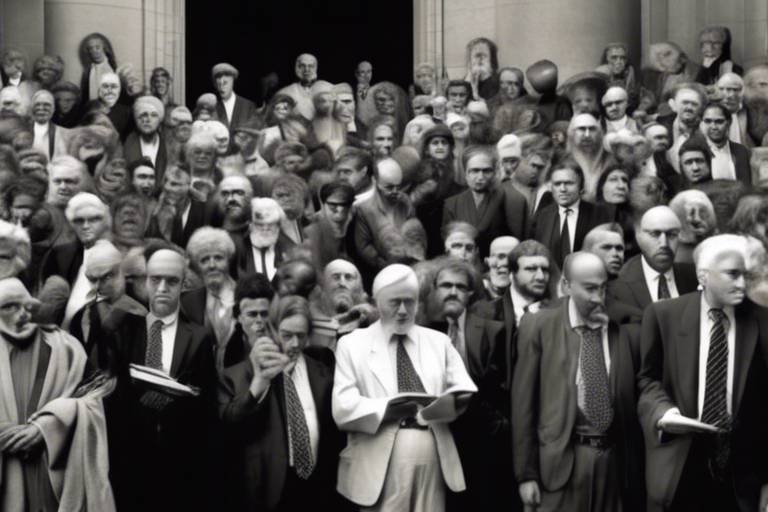
Have you ever wondered how our political systems came to be? What makes a government just or unjust? The intersection of philosophy and political science provides us with the tools to explore these profound questions. Philosophy, at its core, is about the pursuit of wisdom and understanding, while politics deals with the governance of societies. Together, they create a rich tapestry that shapes our understanding of power, justice, and the human condition. In this article, we will delve into how philosophical ideas influence political theories and practices, ultimately impacting governance and society as a whole.
At the heart of political philosophy are the foundational concepts that have been debated for centuries. Thinkers like Plato, Aristotle, and later, Hobbes and Locke, laid the groundwork for how we perceive authority, rights, and the social contract. These ideas didn’t just pop up overnight; they evolved in response to the complexities of human society. For instance, Plato’s vision of a philosopher-king highlights the belief that the most enlightened individuals should govern, while Aristotle’s emphasis on virtue ethics underscores the importance of moral character in political leaders. These early discussions set the stage for modern political thought, showcasing the enduring relevance of philosophical inquiry in understanding political dynamics.
As we move through history, we encounter various political theories that have emerged, each offering distinct perspectives on governance. Liberalism, for instance, champions individual freedoms and rights, while conservatism emphasizes tradition and stability. Socialism, on the other hand, advocates for collective ownership and equality. Each of these theories has philosophical underpinnings that reflect different attitudes toward human nature and the role of the state. For example, the liberal belief in individualism is rooted in the Enlightenment’s focus on reason and autonomy, while socialism’s emphasis on community can be traced back to a more collectivist view of society.
One particularly fascinating aspect of political philosophy is the concept of utilitarianism, introduced by thinkers like Jeremy Bentham and John Stuart Mill. This theory posits that the best action is the one that maximizes overall happiness or utility. Imagine living in a society where every decision is made with the goal of achieving the greatest good for the greatest number of people. It sounds ideal, right? However, this approach also raises ethical dilemmas, especially when individual rights may be sacrificed for the sake of the majority. This tension between collective well-being and individual rights is a recurring theme in political discourse, prompting us to ask: can the ends truly justify the means?
Utilitarianism has its critics, too. Many argue that it overlooks the rights of minorities and can lead to unjust outcomes. For example, if a policy benefits the majority but harms a vulnerable group, should it still be implemented? This critique highlights the importance of justice in political philosophy. Justice is not just about fairness; it encompasses the moral obligations we have toward one another as citizens. It challenges us to create political systems that are not only efficient but also equitable.
As we navigate the complexities of modern governance, the principles of utilitarianism continue to inform policy decisions, particularly in areas like healthcare and education. Policymakers often grapple with the question of how to allocate resources in a way that maximizes benefits for society as a whole. This brings us back to the philosophical roots of these discussions: how do we define the “greater good”? And who gets to decide? These are not just abstract questions; they have real-world implications for governance and the lives of individuals.
Another critical theory in political philosophy is the social contract theory, championed by philosophers such as Hobbes, Locke, and Rousseau. This theory explores the legitimacy of government authority and the implicit agreements that bind individuals to their state. Imagine a world where people live in a state of nature, free yet vulnerable. The social contract proposes that individuals consent to surrender some freedoms in exchange for protection and order. This idea has evolved over time, reflecting changes in societal values and expectations of governance.
In conclusion, the study of philosophy and politics is not just an academic exercise; it is essential for understanding the world we live in. The interplay between philosophical ideas and political practices shapes our societies, influencing everything from laws and policies to our everyday interactions. As we continue to grapple with pressing issues like inequality, governance, and justice, engaging with these philosophical concepts can provide valuable insights into creating a better future for all.
- What is political philosophy? Political philosophy examines fundamental questions about government, justice, rights, and the role of individuals in society.
- How do philosophical ideas influence political systems? Philosophical ideas provide the frameworks and principles that guide political theories and practices, shaping how societies govern themselves.
- What is utilitarianism? Utilitarianism is a moral theory that suggests actions are right if they promote the greatest happiness for the greatest number of people.
- Who are the key figures in social contract theory? Key figures include Thomas Hobbes, John Locke, and Jean-Jacques Rousseau, each offering unique perspectives on the legitimacy of government authority.
The Foundations of Political Philosophy
Political philosophy serves as the bedrock of our understanding of governance and societal structures. It is a field that delves into the fundamental questions of justice, power, and authority, drawing heavily from the insights of ancient thinkers. When we think about the origins of political thought, names like Plato, Aristotle, and later, Hobbes, Locke, and Rousseau, come to mind. Each of these philosophers contributed significantly to how we perceive the relationship between individuals and the state, shaping the very fabric of political theory as we know it today.
To begin with, Plato, in his seminal work “The Republic,” introduced the idea of an ideal state governed by philosopher-kings. He argued that only those who understand the essence of justice should wield power. This notion raises a provocative question: can true justice ever be achieved if those in power lack philosophical insight? Plato’s ideas laid the groundwork for future debates about the qualifications necessary for leadership and the moral responsibilities that come with it.
Aristotle, a student of Plato, took a more pragmatic approach. He analyzed various political systems, emphasizing the importance of virtue and the common good. Aristotle’s classification of governments into monarchies, aristocracies, and democracies provides a framework that still resonates today. His belief that a well-functioning government should promote virtue among its citizens invites us to consider how modern political systems align with this ancient wisdom. Are our leaders fostering the common good, or are they merely pursuing their own interests?
Moving forward in time, the social contract theorists—Thomas Hobbes, John Locke, and Jean-Jacques Rousseau—revolutionized political philosophy by introducing the idea that governments derive their authority from the consent of the governed. Hobbes, in “Leviathan,” posited that in a state of nature, life would be “solitary, poor, nasty, brutish, and short.” Thus, individuals consent to surrender some of their freedoms to a sovereign in exchange for security and order. In stark contrast, Locke argued that the social contract is a mutual agreement that protects individual rights and property. Rousseau took it a step further, suggesting that true freedom is found in the collective will of the people. This evolution of thought highlights the dynamic nature of political philosophy and its relevance to contemporary governance.
In essence, the foundations of political philosophy are not just historical artifacts; they are living ideas that continue to influence our political landscape. As we grapple with modern challenges—be it inequality, governance, or justice—the insights of these early thinkers provide a crucial lens through which we can evaluate our current systems. The intersection of philosophy and politics invites us to engage in a continuous dialogue about the ideals we aspire to and the realities we face.
This exploration of political philosophy is not merely academic; it is a call to action. As citizens, we must reflect on these foundational ideas and consider their implications for our own lives and communities. How do we define justice in our society? What responsibilities do we hold as individuals in a democratic system? These questions echo through the ages, urging us to seek answers that resonate with the wisdom of our philosophical predecessors while addressing the complexities of modern governance.
- What is political philosophy? Political philosophy examines fundamental questions about governance, justice, and the role of individuals in society.
- Who are the key figures in political philosophy? Key figures include Plato, Aristotle, Hobbes, Locke, and Rousseau, each contributing unique perspectives on governance.
- How does political philosophy relate to modern politics? Political philosophy provides a framework for understanding contemporary political issues and challenges.
- Why is the social contract important? The social contract theory explains the legitimacy of government authority and the relationship between individuals and the state.
Key Political Theories
Political theories are the backbone of political science, providing frameworks that help us understand how societies govern themselves. Over the centuries, various theories have emerged, each shaped by the historical context and philosophical ideas of their time. From liberalism to socialism, these theories offer distinct perspectives on governance, power, and the role of individuals within society. Understanding these theories is not just an academic exercise; it’s essential for anyone who wants to grasp the complexities of political systems and the implications of political decisions on everyday life.
One of the most influential theories is liberalism, which emphasizes individual freedoms, democracy, and the protection of human rights. Rooted in the Enlightenment, liberalism advocates for a government that is accountable to the people, promoting a market economy and civil liberties. Think of it as a garden where each flower represents individual rights, thriving best when nurtured by a government that respects personal freedoms. On the other hand, conservatism offers a contrasting view, emphasizing tradition, social stability, and the importance of established institutions. Conservatives often argue that change should be gradual and respect the historical context of society. Imagine a sturdy old tree, its roots deep in the ground, providing shelter and stability amidst the winds of change.
Another significant theory is socialism, which advocates for social ownership and democratic control of the means of production. This theory arose as a response to the inequalities generated by capitalism. Socialists argue that wealth should be distributed more equitably across society, ensuring that everyone has access to essential services like healthcare and education. Picture a community potluck where everyone brings something to share, creating a feast that nourishes all, rather than a banquet where only a few are served lavishly.
Each of these theories has its philosophical underpinnings, often rooted in the works of key thinkers. For instance, the ideas of John Locke heavily influenced liberal thought, particularly his views on natural rights and government by consent. In contrast, Karl Marx’s critiques of capitalism laid the groundwork for socialist theory. These thinkers didn’t just write about politics; they shaped how we think about power, justice, and the role of individuals in society.
To better understand these theories, let’s take a look at a comparative table that highlights their core principles:
| Theory | Core Beliefs | Key Philosophers |
|---|---|---|
| Liberalism | Individual freedom, democracy, human rights | John Locke, John Stuart Mill |
| Conservatism | Tradition, social stability, gradual change | Edmund Burke, Russell Kirk |
| Socialism | Social ownership, equitable wealth distribution | Karl Marx, Friedrich Engels |
As we delve deeper into these theories, it becomes clear that they are not just abstract concepts. They influence real-world policies and the way governments operate. Understanding these political theories allows us to critically analyze current political events and the philosophies that drive them. So, whether you lean towards liberalism, conservatism, or socialism, recognizing the strengths and weaknesses of each theory can enrich your perspective on governance and society.
- What is the main difference between liberalism and conservatism?
Liberalism focuses on individual rights and freedoms, while conservatism emphasizes tradition and social order. - How does socialism address economic inequality?
Socialism advocates for social ownership and equitable distribution of resources to reduce economic disparities. - Who are some key philosophers associated with these political theories?
Key philosophers include John Locke for liberalism, Edmund Burke for conservatism, and Karl Marx for socialism.
Utilitarianism in Politics
Utilitarianism, a philosophical doctrine primarily associated with the works of Jeremy Bentham and John Stuart Mill, posits that the best action is the one that maximizes overall happiness or utility. In the realm of politics, this principle offers a framework for evaluating policies and governance strategies based on their outcomes rather than their intentions. Imagine a government faced with a tough decision: should it allocate funds to build a new highway or to improve public education? A utilitarian approach would analyze which option would yield the greatest benefit to the largest number of people, thereby guiding political leaders to make decisions that enhance societal well-being.
Utilitarianism’s emphasis on the “greatest good for the greatest number” can lead to policies that prioritize collective welfare over individual rights. This can be both a strength and a weakness. On one hand, it encourages policies that aim to reduce suffering and increase happiness for the majority. For example, in healthcare, utilitarian principles might advocate for universal coverage since it maximizes health outcomes for the population. On the other hand, this approach may overlook the needs of minority groups, leading to potential injustices. Imagine a scenario where a policy benefits 90% of the population but severely harms a vulnerable 10%. A strict utilitarian perspective might justify the harm as a necessary sacrifice for the greater good, which raises ethical dilemmas about fairness and justice.
In practice, utilitarianism can be seen in various political decisions and public policies. Governments often employ cost-benefit analyses to assess the potential impacts of legislation, aiming to achieve outcomes that promote welfare. For instance, when considering environmental regulations, a government might weigh the economic costs against the long-term benefits of a healthier ecosystem. This practical application of utilitarianism can lead to more informed and rational decision-making, aligning political actions with the overall happiness of society.
However, the application of utilitarianism in politics is not without challenges. Critics argue that it can lead to a “tyranny of the majority,” where the rights of individuals are sacrificed for the sake of collective happiness. This concern highlights the importance of balancing utilitarian principles with other ethical considerations, such as justice and individual rights. For example, while a policy may increase overall happiness, it must also respect the dignity and rights of all citizens. The challenge lies in finding that delicate balance between maximizing utility and upholding ethical standards.
In conclusion, utilitarianism offers a compelling lens through which to evaluate political decisions and policies. It encourages a focus on outcomes and the well-being of the majority, but it also necessitates a careful consideration of ethical implications. As political landscapes evolve and new challenges arise, the principles of utilitarianism will continue to play a significant role in shaping governance and public policy.
- What is utilitarianism? Utilitarianism is a philosophical theory that suggests actions are right if they promote happiness or pleasure and wrong if they produce the opposite.
- Who are the main philosophers associated with utilitarianism? The main philosophers are Jeremy Bentham and John Stuart Mill.
- How does utilitarianism apply to politics? Utilitarianism applies to politics by guiding policymakers to make decisions that aim to maximize overall societal happiness.
- What are some criticisms of utilitarianism? Critics argue that utilitarianism can lead to injustices, particularly for minority groups, as it may prioritize the majority’s happiness over individual rights.
- Can utilitarianism coexist with other political philosophies? Yes, many political systems incorporate utilitarian principles while also considering justice, rights, and other ethical frameworks.
Critiques of Utilitarianism
Utilitarianism, while celebrated for its straightforward approach to ethics and decision-making, is not without its fair share of critiques. At its core, this philosophy posits that the best action is the one that maximizes overall happiness or utility. However, this seemingly noble goal raises several significant concerns that challenge its applicability and moral soundness in political contexts.
One of the primary critiques of utilitarianism is its potential to justify morally questionable actions. For instance, if sacrificing one innocent person could save a hundred others, a strict utilitarian perspective might endorse such an act. This leads to the uncomfortable conclusion that individual rights can be overridden if doing so results in a greater overall good. Critics argue that this creates a slippery slope where the ends justify the means, undermining the foundational principles of human rights and dignity.
Additionally, critics point out that utilitarianism often struggles with the problem of measurement. How do we quantify happiness? Is it merely a matter of counting lives saved, or does it involve more nuanced considerations of well-being? This challenge is compounded by the fact that happiness is subjective; what makes one person happy might not resonate with another. This subjectivity can lead to inconsistencies in political decision-making, as different stakeholders may have conflicting views on what constitutes the “greatest good.”
Moreover, utilitarianism can be criticized for its short-term focus. In political scenarios, leaders might prioritize immediate outcomes over long-term consequences, leading to policies that provide quick fixes rather than sustainable solutions. For example, a government might implement a policy that boosts economic growth in the short term but causes environmental degradation, ultimately harming future generations. This raises an important question: should we sacrifice the future for present gains?
Another vital critique centers around inequality and injustice. Utilitarianism’s emphasis on aggregate happiness can sometimes overlook the distribution of that happiness. A policy might result in a net increase in happiness while simultaneously exacerbating inequalities. For instance, if a new tax policy benefits the wealthy disproportionately while providing minimal relief to the poor, the overall utility might increase, but societal disparities would widen. Critics argue that a just society should not only focus on maximizing happiness but also ensure that happiness is distributed fairly.
In light of these critiques, it’s essential to consider alternatives or modifications to utilitarian thought. Some philosophers advocate for a rule-utilitarianism approach, which suggests that we should follow rules that generally promote the greatest good rather than focusing on individual acts. This can help mitigate some of the ethical dilemmas posed by act-utilitarianism, as it encourages adherence to principles that protect individual rights and promote fairness.
In conclusion, while utilitarianism offers a compelling framework for evaluating political decisions, its critiques highlight significant ethical dilemmas and practical challenges. As we navigate the complex landscape of governance and societal well-being, it’s crucial to critically assess the implications of utilitarian principles and consider a more nuanced approach to ethics in politics.
- What is utilitarianism? Utilitarianism is an ethical theory that suggests the best action is the one that maximizes overall happiness or utility.
- What are the main critiques of utilitarianism? The main critiques include its potential to justify immoral actions, difficulties in measuring happiness, a focus on short-term outcomes, and issues of inequality and injustice.
- How can utilitarianism be modified to address its critiques? One modification is rule-utilitarianism, which emphasizes following rules that generally promote the greatest good rather than evaluating individual actions.
Utilitarianism in Modern Governance
Utilitarianism, a philosophy that champions the idea of achieving the greatest good for the greatest number, has found its way into the fabric of modern governance. In a world that is increasingly complex, where policy decisions can impact millions, the utilitarian approach serves as a guiding principle for many leaders and policymakers. Imagine a scenario where a government must decide between allocating funds to build a new highway or to improve public healthcare services. A utilitarian perspective would advocate for the option that maximizes overall happiness and welfare, which often translates to investing in healthcare, as it directly affects the quality of life for a larger segment of the population.
This principle is particularly evident in contemporary issues such as healthcare, education, and environmental policy. For instance, when governments evaluate the effectiveness of a healthcare program, they often measure outcomes based on the number of lives saved or the overall improvement in public health metrics. This data-driven approach aligns closely with utilitarian ideals, as it seeks to maximize positive outcomes for the largest number of people.
Moreover, utilitarianism influences policy formulation in the realm of education. Consider the debate over standardized testing. While some argue that these tests measure student achievement effectively, a utilitarian perspective might question whether they truly enhance the educational experience for all students. If the tests disproportionately disadvantage certain groups, the overall happiness of the educational community is compromised. Hence, policymakers might explore alternative assessment methods that foster a more equitable learning environment.
In the context of environmental governance, utilitarianism prompts leaders to consider the long-term impacts of their decisions on future generations. For example, policies aimed at reducing carbon emissions are often justified through their potential to prevent catastrophic climate change, thereby maximizing the welfare of both current and future populations. This forward-thinking approach embodies the utilitarian ethos, as it weighs the benefits of sustainable practices against the immediate costs of implementation.
However, it’s crucial to recognize that applying utilitarianism in governance is not without challenges. The concept of measuring happiness or welfare can be inherently subjective, leading to debates over whose happiness counts the most. Additionally, the potential for the “tyranny of the majority” looms large, where the needs of minority groups may be overlooked in the pursuit of the greater good. Thus, while utilitarianism provides a valuable framework for decision-making, it must be balanced with considerations of justice and equity to ensure that all voices are heard and valued.
In conclusion, utilitarianism continues to play a pivotal role in shaping modern governance. By focusing on outcomes and striving to enhance the collective welfare, policymakers can create strategies that resonate with the needs of the populace. Yet, as we navigate the complexities of governance, it is essential to remain vigilant about the ethical implications of utilitarian principles, ensuring that the quest for the greatest good does not come at the expense of justice and accountability.
- What is utilitarianism? Utilitarianism is a philosophical theory that suggests actions are right if they promote the greatest happiness for the greatest number of people.
- How does utilitarianism apply to modern governance? Utilitarianism influences policy decisions by prioritizing actions that maximize overall welfare and happiness in society.
- What are some criticisms of utilitarianism in governance? Critics argue that utilitarianism can lead to the neglect of minority rights and that measuring happiness can be subjective.
- Can utilitarian principles coexist with other political philosophies? Yes, many political systems integrate utilitarian principles with other ideologies to create more balanced and just governance.
Social Contract Theory
The is a fascinating concept that delves into the legitimacy of government authority and the relationship between individuals and the state. At its core, this theory posits that individuals consent, either explicitly or implicitly, to surrender some of their freedoms and submit to the authority of the government in exchange for protection of their remaining rights. Think of it as a sort of agreement or handshake between the governed and those who govern. This idea has been articulated by several influential philosophers, most notably Thomas Hobbes, John Locke, and Jean-Jacques Rousseau, each bringing their unique perspectives to the table.
Hobbes, in his seminal work Leviathan, portrayed a rather grim view of human nature, suggesting that without a strong central authority, life would be “solitary, poor, nasty, brutish, and short.” He argued for an absolute sovereign who could maintain peace and prevent chaos. On the other hand, Locke took a more optimistic stance, believing that humans are inherently reasonable and capable of self-governance. He emphasized the importance of natural rights—life, liberty, and property—and argued that the government’s role is to protect these rights. Rousseau, however, introduced the idea of the “general will,” suggesting that true freedom is found in the collective decision-making of the populace, rather than in submission to a monarch.
The implications of Social Contract Theory are profound. It raises essential questions about authority and legitimacy. For instance, if the government fails to protect the rights of its citizens, do those citizens have the right to revolt? This question has sparked numerous revolutions throughout history, as people have sought to reclaim their rights when they believe their social contract has been violated. Moreover, the theory invites us to consider the responsibilities of both the government and the governed. While the state is expected to provide safety and security, citizens must also engage in civic duties, such as voting and obeying laws, to uphold the social contract.
In contemporary society, the relevance of Social Contract Theory continues to be debated. Issues such as privacy, surveillance, and the balance of power between government and citizens bring this theory into sharp focus. For example, in an age where data privacy is a growing concern, one might wonder: Are we unwittingly giving up our rights in exchange for convenience? This question reflects the ongoing negotiation inherent in the social contract, as citizens weigh their freedoms against the perceived benefits of government actions.
To summarize, Social Contract Theory serves as a critical lens through which we can examine the dynamics of power and authority in our societies. It challenges us to reflect on our roles as citizens and the obligations of our leaders, reminding us that the essence of governance lies in a delicate balance of rights, responsibilities, and mutual consent.
- What is Social Contract Theory? – It is a philosophical concept that explores the legitimacy of government authority based on an implicit agreement between the governed and the government.
- Who are the key philosophers associated with this theory? – The main figures include Thomas Hobbes, John Locke, and Jean-Jacques Rousseau, each contributing distinct perspectives on the nature of the social contract.
- How does Social Contract Theory apply to modern governance? – It raises questions about citizens’ rights and responsibilities, especially in light of contemporary issues like privacy and government surveillance.
Ethics and Politics
The relationship between ethics and politics is a complex tapestry woven from the threads of morality, governance, and human behavior. At its core, ethics examines what is right and wrong, while politics deals with the structures and processes that govern society. So, how do these two realms intersect? The answer lies in the moral responsibilities of leaders and the ethical obligations of citizens. Political decisions are rarely black and white; they often involve navigating a gray area where ethical principles clash with practical realities.
Consider this: when politicians make decisions, they are not just influencing laws and policies; they are shaping the very fabric of society. This brings us to a crucial question: should political leaders prioritize ethical considerations over pragmatic ones? For instance, a government may face a choice between implementing a policy that maximizes economic growth and one that ensures environmental sustainability. The ethical implications of such decisions can have lasting effects on communities and future generations.
Moreover, the role of justice in politics cannot be overstated. Justice serves as a guiding principle, influencing how laws are created and enforced. Different theories of justice—such as distributive justice, which focuses on the fair allocation of resources, and retributive justice, which emphasizes punishment for wrongdoing—offer various lenses through which we can evaluate political actions. Understanding these theories is essential for creating fair and equitable political systems.
As we delve deeper into the ethical dimensions of politics, we must also consider the implications of political responsibility and accountability. In a democratic society, leaders are not just decision-makers; they are also stewards of public trust. This trust is built on the expectation that leaders will act in the best interest of their constituents. When they fail to do so, the consequences can be dire, leading to public disillusionment and a breakdown of civic engagement.
To illustrate the importance of accountability, let’s take a look at a few key points:
- Transparency: Political leaders must be open about their decisions and the rationale behind them.
- Responsiveness: Leaders should be willing to listen to the concerns of their constituents and adapt their policies accordingly.
- Integrity: Upholding ethical standards is crucial for maintaining public trust and legitimacy.
In conclusion, the interplay between ethics and politics is not just an academic exercise; it is a pressing concern that affects every aspect of our lives. As citizens, we must hold our leaders accountable, demand ethical governance, and engage in the political process with a sense of moral responsibility. After all, a healthy democracy thrives on the active participation of its citizens, who must navigate the often murky waters of political ethics to ensure a just and equitable society.
- What is the role of ethics in political decision-making? Ethics guides political leaders in making choices that align with moral principles, impacting society’s well-being.
- How can citizens hold their leaders accountable? Citizens can engage through voting, advocacy, and public discourse to ensure their leaders act ethically.
- What are the main theories of justice in politics? Theories such as distributive justice, retributive justice, and restorative justice provide frameworks for evaluating fairness in political systems.
The Role of Justice in Politics
When we think about politics, the concept of justice often looms large in the background, shaping the very fabric of our governance. Justice isn’t just a lofty ideal; it’s a fundamental principle that influences how laws are created, enforced, and interpreted. Imagine a society without justice—it would be like a ship without a rudder, aimlessly drifting in a sea of chaos. In political philosophy, justice serves as the guiding star, illuminating the path toward a fair and equitable society.
At its core, justice in politics revolves around the idea of fairness. It challenges us to ask tough questions: Are the rights of all citizens protected? Is the distribution of resources equitable? Are laws applied impartially? These questions are essential in evaluating the effectiveness of any political system. For instance, consider the various theories of justice proposed by philosophers like John Rawls, who argued for the “veil of ignorance” as a method to determine fair principles of justice. This thought experiment encourages decision-makers to set policies without knowing their own social status, thus promoting impartiality.
Moreover, the role of justice extends beyond mere theory; it has practical implications for governance. Political leaders are often held accountable to the standards of justice, which can manifest in various forms, such as social justice, economic justice, and environmental justice. Each type of justice addresses specific societal issues, ensuring that marginalized voices are heard and that equity prevails. For example, social justice focuses on dismantling systemic inequalities, advocating for policies that uplift disadvantaged communities.
In addition, the concept of justice intersects with the law, creating a dynamic relationship that can either support or undermine democratic values. When laws are just, they reflect the collective moral compass of society, fostering trust between the government and its citizens. However, unjust laws can lead to widespread disillusionment and civil unrest. This is where the importance of political accountability comes into play. Leaders must be held responsible for their actions and decisions, ensuring that they adhere to the principles of justice.
To better understand the implications of justice within political frameworks, we can categorize the various theories of justice into a table:
| Theory of Justice | Key Proponent | Core Principle |
|---|---|---|
| Utilitarianism | Jeremy Bentham, John Stuart Mill | Greatest good for the greatest number |
| Distributive Justice | John Rawls | Fair distribution of resources |
| Retributive Justice | Immanuel Kant | Focus on punishment and accountability |
| Restorative Justice | Howard Zehr | Repairing harm and restoring relationships |
Ultimately, the role of justice in politics is not just about maintaining order; it’s about fostering a society where every individual has the opportunity to thrive. It challenges us to engage in meaningful dialogues about our values and priorities as a community. As citizens, we must remain vigilant and advocate for justice in all its forms, ensuring that our political systems reflect the ideals we hold dear.
- What is the importance of justice in politics?
Justice is crucial as it ensures fairness, accountability, and the protection of citizens’ rights within a political system. - How do different theories of justice influence political decisions?
Different theories provide frameworks for understanding fairness in resource distribution, legal accountability, and social equity. - Can justice be achieved in all political systems?
While challenging, striving for justice is essential in all political systems, as it promotes stability and trust between the government and its citizens.
Political Responsibility and Accountability
In the realm of politics, the concepts of responsibility and accountability are not just buzzwords; they are the very foundation of a healthy democracy. Imagine a ship sailing through turbulent waters. The captain must not only navigate the seas but also ensure that every crew member is performing their duties effectively. In the same way, political leaders are tasked with steering the ship of state, making decisions that impact the lives of millions. But what happens when the captain makes a poor choice? Who is held accountable? This is where the essence of political responsibility comes into play.
Political responsibility refers to the duty of elected officials to act in the best interest of their constituents. It is about making choices that reflect the values and needs of the community, not just personal or party interests. When leaders prioritize transparency and ethical behavior, they foster trust among the populace. This trust is crucial; without it, the very fabric of democracy begins to unravel. Think of it as a delicate thread that, when pulled too hard or frayed, can lead to a complete unraveling of societal cohesion.
Accountability, on the other hand, is the mechanism through which leaders are held responsible for their actions. It involves both answerability and enforcement. Elected officials must be prepared to explain their decisions and face consequences if they fail to uphold their responsibilities. This can take many forms, including public scrutiny, legal repercussions, or even the ultimate form of accountability: being voted out of office. Consider this: if a teacher fails to educate their students properly, they may be reassigned or dismissed. Similarly, politicians must face the music when they neglect their duties.
To illustrate the importance of political responsibility and accountability, let’s look at a few key points:
- Transparency: Open communication about decisions and policies helps citizens understand and engage with their government.
- Checks and Balances: Mechanisms such as independent audits and legislative oversight ensure that power is not abused.
- Public Engagement: Encouraging citizen participation in governance fosters a sense of ownership and responsibility among the populace.
In modern governance, the role of social media and technology has revolutionized how accountability is perceived. Citizens can now voice their concerns and hold leaders accountable in real-time. This shift has made it increasingly difficult for politicians to evade responsibility. Just like a spotlight illuminating a dark room, public scrutiny can reveal the truth behind political actions, ensuring that leaders remain vigilant and responsive to the needs of their constituents.
However, the relationship between political responsibility and accountability is not without its challenges. In some cases, leaders may attempt to evade accountability through manipulation or misinformation. This is where the role of a vigilant and informed citizenry becomes paramount. When citizens are engaged and educated, they can challenge unethical behavior and demand accountability. It’s akin to a watchdog keeping an eye on the henhouse; without vigilant oversight, the potential for abuse increases dramatically.
In conclusion, political responsibility and accountability are essential for the health of any democratic system. They ensure that leaders act in the best interests of their constituents and are held to a high standard of conduct. As we move forward in an increasingly complex political landscape, it is crucial for both leaders and citizens to embrace these principles. Only then can we navigate the turbulent waters of governance and steer towards a brighter, more equitable future.
- What is the difference between political responsibility and accountability?
Political responsibility refers to the duty of leaders to act in the best interest of their constituents, while accountability is the mechanism that holds them responsible for their actions. - How can citizens ensure their leaders are held accountable?
By staying informed, engaging in public discourse, and participating in elections, citizens can hold leaders accountable for their actions. - Why is transparency important in politics?
Transparency fosters trust between leaders and constituents, allowing for informed decision-making and public engagement.
Frequently Asked Questions
- What is political philosophy?
Political philosophy is the study of fundamental questions regarding government, justice, rights, and the role of individuals within society. It seeks to understand how philosophical ideas influence political theories and practices, shaping the way we govern and interact with one another.
- Who are the key philosophers in political philosophy?
Some of the most influential philosophers in political philosophy include Plato, Aristotle, Hobbes, Locke, Rousseau, and John Stuart Mill. Each of these thinkers contributed significantly to our understanding of concepts like justice, power, and governance, laying the groundwork for modern political thought.
- What are the major political theories?
Major political theories include liberalism, conservatism, socialism, and utilitarianism. Each theory offers a distinct perspective on governance, emphasizing different values such as individual freedom, tradition, social equality, or the greatest good for the greatest number.
- How does utilitarianism influence politics?
Utilitarianism, championed by philosophers like Jeremy Bentham and John Stuart Mill, suggests that political decisions should aim for the greatest good for the greatest number. This principle can guide policy formulation and decision-making, especially in areas like healthcare and education.
- What are some critiques of utilitarianism?
Utilitarianism faces critiques regarding its potential to justify unethical actions if they result in a perceived greater good. Critics argue that it can overlook individual rights and lead to injustices, raising ethical concerns about its application in political systems.
- What is social contract theory?
Social contract theory posits that individuals consent, either explicitly or implicitly, to form a government that provides order and security in exchange for some of their freedoms. Key figures like Hobbes, Locke, and Rousseau have shaped this concept, which remains relevant in discussions about government legitimacy today.
- How do ethics and politics intersect?
The intersection of ethics and politics is complex, as ethical considerations often influence political actions. Leaders and citizens alike face moral responsibilities that impact governance, highlighting the importance of accountability and ethical decision-making in political contexts.
- What role does justice play in political philosophy?
Justice is a central theme in political philosophy, with various theories exploring its meaning and implications for society. Understanding justice helps in creating fair and equitable political systems, guiding how laws and policies are formulated and implemented.
- Why is political responsibility important?
Political responsibility is crucial for maintaining democratic governance. It ensures that leaders are held accountable for their actions and decisions, reinforcing the ethical obligations they have toward their constituents and the broader society.
Ethics, Governance, Power, Justice, Democracy, Autonomy, Ideology, Citizenship, , Ethics, Governance, Power, Justice, Democracy, Autonomy, Ideology, Citizenship,
Share this content:
Leave a Reply