
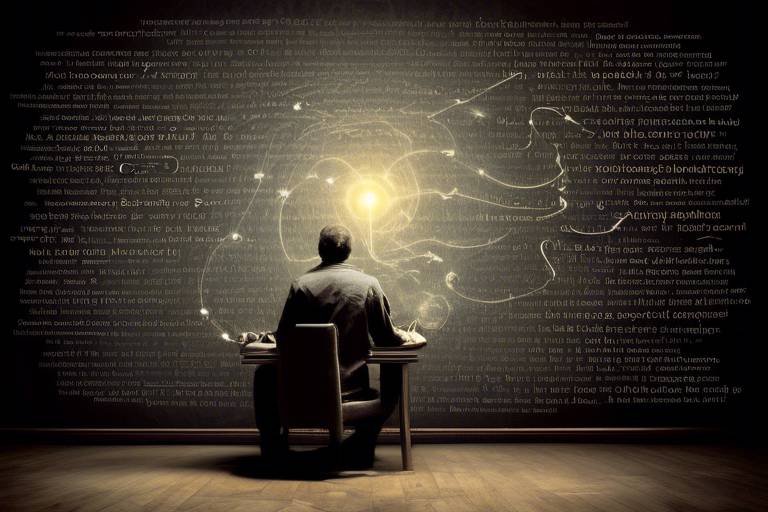
Welcome to the fascinating world of metaphysics, where we dive deep into the **intriguing relationship** between free will and determinism. These two concepts have sparked debates among philosophers, scientists, and thinkers for centuries, challenging our understanding of human behavior and moral responsibility. Imagine standing at a crossroads, contemplating a decision. Do you feel in control of your choice, or do you believe that every path has already been mapped out for you? This article aims to unravel these complex ideas, exploring their implications on our lives and the very fabric of reality.
At its core, free will is the belief that we can make choices that are not entirely dictated by external circumstances. This idea brings a sense of empowerment; it suggests that we are the authors of our own stories. However, the definition of free will can vary widely. Some argue that free will is about **unconstrained choice**, while others propose that it is the ability to act according to one’s desires and intentions, regardless of external pressures. This leads us to ponder: if our choices are influenced by our upbringing, environment, or even biology, can we truly say we are *free*? The implications of free will stretch into our everyday lives, affecting how we perceive responsibility and accountability.
On the flip side, we have determinism, the idea that every event or action is the result of preceding events governed by natural laws. Picture a vast machine where every cog and wheel plays a specific role; this is how determinism views the universe. If every action we take is predetermined, then what does that mean for our sense of agency? Are we merely passengers on a predetermined journey? This perspective raises profound questions about moral responsibility. If our actions are merely the outcomes of prior events, can we hold individuals accountable for their choices? This tension between free will and determinism is at the heart of many philosophical discussions.
Throughout history, thinkers have grappled with the existence and nature of free will. From the ancient Greeks to modern philosophers, the discourse has evolved. Key figures such as Aristotle, Descartes, and Kant have contributed significantly to our understanding. Aristotle argued for a form of free will rooted in rationality, while Descartes emphasized the role of the mind in decision-making. Kant, on the other hand, introduced the idea of moral law, suggesting that true freedom is found in acting according to moral principles. Each of these perspectives has shaped the ongoing debate, providing a rich tapestry of thought for us to explore.
In this philosophical battleground, we encounter libertarianism, which posits that free will exists and is fundamentally incompatible with determinism. Libertarians argue that we possess the ability to make choices independent of prior causes. This view champions the notion of personal responsibility, asserting that individuals should be held accountable for their actions. In contrast, determinists argue that every choice is the product of prior events, challenging the very foundation of moral accountability. This conflict raises essential questions: Can we truly be free if our decisions are the result of a long chain of causation? Or does the existence of free will justify our moral judgments?
Enter compatibilism, a philosophical approach that seeks to reconcile free will and determinism. Compatibilists argue that even in a deterministic universe, we can still possess free will if we act according to our desires and intentions. It’s akin to navigating a river: while the current may guide us, we still have the ability to steer our boat. This perspective offers a middle ground, suggesting that moral responsibility can coexist with a deterministic framework. By understanding our motivations and the context of our decisions, we can find a way to embrace both concepts without dismissing one over the other.
The interplay between free will and morality is crucial in shaping our understanding of ethical responsibility. If we believe in free will, we are more likely to hold individuals accountable for their actions. However, if determinism reigns, our moral judgments may become more lenient, as we recognize the influence of external factors on behavior. This raises a critical question: how should society approach moral accountability? Do we punish individuals for choices made under circumstances beyond their control, or do we strive for a more compassionate understanding of human behavior?
As we venture into contemporary discussions, advancements in psychology and neuroscience have brought fresh insights into the debate surrounding free will. Today, researchers are exploring how our brains make decisions, often revealing that many choices may be influenced by subconscious processes. This revelation can be both enlightening and unsettling. If our decisions are shaped by factors we are unaware of, what does that mean for our sense of control? The implications of these findings challenge traditional philosophical views, prompting us to reconsider the very nature of choice and agency.
Recent studies in neuroscience suggest that the brain often makes decisions before we become consciously aware of them. Imagine a light switch flicking on before you even realize the room is dark. This phenomenon raises questions about the authenticity of our choices. Are we truly in control, or are we simply rationalizing decisions that have already been made at a subconscious level? This intersection of neuroscience and free will invites us to rethink our understanding of human agency and the mechanisms behind decision-making.
The dialogue between neuroscience and philosophy is rich with implications. As we uncover the intricacies of the brain and its processes, we confront profound questions about the nature of consciousness and choice. How do these scientific insights align with our philosophical beliefs about free will? Do we need to revise our understanding of moral responsibility in light of these findings? By engaging with both scientific and philosophical perspectives, we can gain a more comprehensive understanding of free will and determinism.
- What is free will? Free will is the ability to make choices unconstrained by external factors.
- What is determinism? Determinism is the view that every event is the result of preceding events according to natural laws.
- Can free will and determinism coexist? Yes, compatibilism suggests that free will can exist within a deterministic framework.
- How does neuroscience affect our understanding of free will? Neuroscience reveals that many decisions may be influenced by subconscious processes, challenging traditional views of agency.
The Nature of Free Will
Free will is a fundamental concept in philosophy, often defined as the ability to make choices unconstrained by external factors. Imagine being at a crossroads where you can choose your path, each decision leading to a different outcome. This notion of choice is what makes us human, and it plays a crucial role in our understanding of morality and personal responsibility. But what does it really mean to have free will? Is it merely an illusion, or is it something tangible that influences our daily lives?
To delve deeper, we can explore several interpretations of free will. Some philosophers argue that free will is about making choices that are not pre-determined by prior causes, while others believe that our choices are influenced by a combination of internal desires and external circumstances. This brings us to a critical question: are we truly the architects of our decisions, or are we simply puppets dancing to the strings of fate?
One popular view is that free will is an essential aspect of human nature. It allows us to act according to our own reasoning and desires, shaping our identities and destinies. For example, when faced with a moral dilemma, the ability to choose between right and wrong is often cited as a hallmark of our humanity. However, this perspective is not without its challenges. If our choices are influenced by genetics, environment, and societal norms, to what extent can we claim to have true freedom in our decision-making?
Furthermore, the implications of free will extend beyond personal choice. They touch upon the core of our moral framework. If we are responsible for our actions, then we must also be held accountable for the consequences that arise from them. This leads to significant questions about justice and punishment. If someone commits a crime, can we truly blame them if their actions were influenced by factors beyond their control? This debate is ongoing and highlights the complexity of free will in our lives.
In summary, the nature of free will is a rich tapestry woven from threads of philosophy, ethics, and human experience. It challenges us to consider the extent of our autonomy in a world filled with influences and constraints. As we continue to explore this profound topic, we must remain open to the idea that our understanding of free will may evolve, much like our own choices do.
- What is free will? Free will refers to the ability to make choices that are not determined by prior causes or external influences.
- Is free will an illusion? Some philosophers argue that free will may be an illusion, as our choices can be heavily influenced by genetics and environment.
- How does free will relate to morality? Free will is crucial for moral responsibility; if we can choose our actions, we can also be held accountable for them.
- Can free will and determinism coexist? Compatibilism suggests that free will and determinism can coexist, proposing that we can still have free will even in a deterministic universe.
The Deterministic Universe
The concept of a deterministic universe is both fascinating and daunting. It proposes that every event or state of affairs—every choice we make, every action we take—is the inevitable result of preceding events, governed by the unyielding laws of nature. Imagine a massive, intricate clockwork mechanism where every gear and cog is meticulously placed to ensure that the hands of time move in a specific direction. In this analogy, the gears represent the myriad of events that lead to our decisions, suggesting that our choices may be less about personal agency and more about a predetermined path.
At its core, determinism challenges our understanding of human agency. If everything is preordained, can we truly claim to have control over our lives? This question lies at the heart of a broader philosophical discourse that has implications for morality, ethics, and personal responsibility. The idea that our actions are merely the result of prior causes can lead to a sense of fatalism, where individuals feel trapped in a web of causality, unable to break free from the chains of their circumstances.
To delve deeper into this concept, consider the following implications of a deterministic universe:
- Causality: Every action is the result of a preceding cause, leading to a chain reaction that influences future events.
- Predictability: If we can understand the laws governing the universe, theoretically, we could predict human behavior with precision.
- Responsibility: The question arises: if our actions are predetermined, can we be held morally accountable for them?
Philosophers like Baruch Spinoza and David Hume have explored these ideas extensively. Spinoza, for instance, argued that everything in the universe, including human thought and behavior, is part of a grand, deterministic system. He believed that understanding this system could lead to greater freedom—not the freedom to choose, but the freedom that comes from understanding the nature of reality itself. Hume, on the other hand, introduced a more nuanced view, suggesting that while our actions may be influenced by prior events, we still experience a sense of choice and agency.
The deterministic view raises profound questions about the nature of consciousness. Are we merely sophisticated machines responding to stimuli, or is there something inherently unique about human thought that allows for genuine choice? This debate is further complicated by advancements in neuroscience and psychology, which suggest that many of our decisions are influenced by subconscious processes.
Ultimately, the deterministic universe invites us to reconsider our beliefs about free will. Are we the authors of our own stories, or are we simply characters in a narrative dictated by the laws of nature? As we navigate these complex questions, it becomes clear that understanding determinism is not just an academic exercise; it has real-world implications for how we view ourselves and our place in the universe.
- What is determinism? Determinism is the philosophical belief that all events, including human actions, are determined by preceding events in accordance with the laws of nature.
- How does determinism affect free will? Determinism challenges the notion of free will by suggesting that our choices are not truly free, but rather the result of prior causes.
- Can we hold individuals morally accountable in a deterministic universe? This is a contentious issue; some argue that if our actions are predetermined, moral accountability is undermined, while others believe we can still be responsible for our actions.
Historical Perspectives on Free Will
The concept of free will has been a topic of intense debate among philosophers for centuries. From the ancient Greeks to modern thinkers, the discourse surrounding free will has evolved significantly, reflecting changes in societal values, scientific understanding, and philosophical inquiry. One of the earliest proponents of free will was the philosopher Socrates, who emphasized the importance of self-knowledge and rational choice in leading a virtuous life. He believed that understanding oneself was crucial to making choices that aligned with one’s true nature.
Moving forward in time, St. Augustine introduced a theological perspective on free will. He argued that while God grants humans the ability to choose, sin can corrupt this freedom. Augustine’s views laid the groundwork for the Christian understanding of free will, intertwining it with the concepts of morality and divine grace. This theological perspective significantly influenced medieval philosophers, such as Thomas Aquinas, who sought to reconcile faith with reason. Aquinas posited that free will is essential for moral responsibility, suggesting that humans can choose between good and evil.
In contrast to these early views, the Enlightenment brought a wave of skepticism about the notion of free will. Philosophers like David Hume argued for a more deterministic view of human behavior, suggesting that our choices are influenced by prior experiences and external circumstances. Hume’s perspective raised questions about the authenticity of free will, suggesting that what we perceive as free choices may actually be the result of a complex web of causation.
As we delve into the 19th century, the rise of compatibilism emerged as a response to the tension between free will and determinism. Thinkers like Immanuel Kant and later Daniel Dennett argued that free will could exist within a deterministic framework. They proposed that while our actions may be influenced by various factors, individuals still possess the capacity to act according to their desires and rational deliberation. This perspective opened up new avenues for understanding moral responsibility and agency.
In the modern era, the discourse on free will has continued to evolve, particularly with the advent of neuroscience. Researchers like Benjamin Libet have conducted experiments suggesting that brain activity precedes conscious decision-making, challenging traditional notions of free will. These findings have sparked a renewed debate among philosophers, scientists, and ethicists about the implications of such research on our understanding of human agency.
To summarize the key historical perspectives on free will, the following table highlights some of the major thinkers and their contributions:
| Philosopher | Key Ideas |
|---|---|
| Socrates | Emphasized self-knowledge and rational choice. |
| St. Augustine | Introduced a theological perspective linking free will with morality. |
| Thomas Aquinas | Argued that free will is essential for moral responsibility. |
| David Hume | Proposed a deterministic view of human behavior. |
| Immanuel Kant | Supported compatibilism, suggesting free will exists within determinism. |
| Daniel Dennett | Further developed compatibilist theories in light of modern science. |
| Benjamin Libet | Conducted experiments challenging traditional notions of free will. |
As we can see, the historical perspectives on free will are rich and varied, offering insights into how our understanding of choice and agency has developed over time. Each philosopher has contributed to the ongoing conversation, shaping our current views on free will and its implications for morality and responsibility.
- What is free will? Free will is the ability to make choices unconstrained by external factors.
- How does determinism relate to free will? Determinism posits that every event is the result of preceding events, raising questions about human agency.
- What is compatibilism? Compatibilism is the view that free will and determinism can coexist, allowing for moral responsibility.
- How has neuroscience impacted the debate on free will? Neuroscience suggests that unconscious processes may influence our decisions, challenging traditional notions of free will.
Libertarianism vs. Determinism
The philosophical debate between libertarianism and determinism is one of the most captivating discussions in the realm of metaphysics. At its core, libertarianism asserts that individuals possess free will, enabling them to make choices that are not predetermined by prior events or natural laws. This perspective champions the idea that we are the architects of our own destinies, free from the shackles of fate. On the other hand, determinism posits that every decision we make is the inevitable outcome of preceding causes, suggesting that our choices are merely the result of a chain reaction set in motion long before we were even born. Imagine a giant domino effect where each piece falls perfectly in line, leading to the next; that’s determinism in a nutshell.
To further illustrate these contrasting viewpoints, consider the following: libertarians argue that if our choices are determined by external factors, then genuine moral responsibility is undermined. How can we hold someone accountable for their actions if those actions were predestined? In contrast, determinists often respond by emphasizing that understanding the causes of behavior can lead to better social outcomes, such as rehabilitation rather than punishment. They argue that recognizing the factors that influence behavior allows for a more compassionate approach to morality.
In the grand tapestry of human experience, these two philosophies weave a complex narrative. Libertarianism inspires a sense of empowerment and autonomy, while determinism offers a lens of understanding that can foster empathy. This tension between the two schools of thought raises profound questions: Are we truly free to choose, or are we simply playing out a script written by the universe? To navigate this philosophical landscape, it’s essential to explore the implications of both views on moral accountability, social justice, and human behavior.
Ultimately, the clash between libertarianism and determinism is not just an academic exercise; it has real-world implications. For instance, in the legal system, a determinist might advocate for a justice model that focuses on rehabilitation based on an understanding of behavioral influences, while a libertarian might argue for a system that emphasizes individual responsibility and punishment for wrongdoing. This debate shapes not only our philosophical understanding but also the very fabric of our societal structures.
As we delve deeper into this philosophical conundrum, we must ask ourselves: Can we find a middle ground? Perhaps the answer lies in the emerging field of compatibilism, which seeks to reconcile these two seemingly opposing views. By understanding the nuances of both libertarianism and determinism, we can better appreciate the complexities of human choice and the nature of our existence.
Compatibilism: Bridging the Gap
Compatibilism presents a fascinating perspective in the ongoing debate between free will and determinism. At its core, compatibilism argues that these two concepts are not mutually exclusive. Imagine a world where you can choose your path while still being influenced by the laws of nature—this is the essence of compatibilism. It suggests that even in a deterministic universe, individuals can still possess a form of free will that is meaningful and significant.
The compatibilist view posits that free will is defined not by the absence of constraints but by the ability to act according to one’s desires and motivations. In this light, free will becomes a matter of being able to make choices that align with our internal states, rather than being entirely free from external influences. For example, if you decide to eat an apple because you are hungry, your choice is still considered free even if your hunger is a product of biological processes.
One of the key figures in the development of compatibilism is the philosopher David Hume. He argued that true freedom is not about escaping causality but rather acting in accordance with one’s will. Hume’s perspective emphasizes that understanding our motivations can lead to a richer appreciation of our choices. This view raises intriguing questions about moral responsibility: if our actions are influenced by prior causes, can we still be held accountable for them?
To further illustrate compatibilism, consider the following table that compares compatibilism with libertarianism and hard determinism:
| Concept | Definition | Moral Responsibility |
|---|---|---|
| Compatibilism | Free will exists within a deterministic framework. | Individuals can be held morally responsible for their actions. |
| Libertarianism | Free will is incompatible with determinism; individuals have ultimate control over their choices. | Individuals are fully responsible for their actions. |
| Hard Determinism | All events, including human actions, are determined by preceding events; free will is an illusion. | Moral responsibility is undermined; individuals cannot be held accountable. |
As we delve deeper into compatibilism, it becomes evident that this perspective offers a nuanced understanding of human behavior. It acknowledges the influence of external factors while still granting individuals the agency to make choices. This balance is crucial when considering ethical implications; if we accept that people can still act freely within a deterministic framework, we can hold them accountable for their decisions without dismissing the complexities of their circumstances.
In conclusion, compatibilism acts as a bridge between the seemingly opposing ideas of free will and determinism. By redefining free will in a way that accommodates the deterministic nature of the universe, compatibilism provides a framework for understanding human agency that is both practical and philosophically rich. This perspective invites us to reflect on our choices and responsibilities, ultimately enriching our understanding of what it means to be human.
- What is compatibilism? Compatibilism is the philosophical view that free will and determinism can coexist, allowing individuals to have meaningful choices within a deterministic framework.
- How does compatibilism differ from libertarianism? While libertarianism asserts that free will is incompatible with determinism, compatibilism argues that free will can exist even if our choices are influenced by prior events.
- Can individuals be morally responsible in a deterministic universe? Yes, compatibilism maintains that individuals can still be held accountable for their actions, as long as they act according to their desires and motivations.
- Who are some key philosophers associated with compatibilism? Notable philosophers include David Hume, who emphasized acting according to one’s will, and more contemporary thinkers who explore the implications of free will in light of neuroscience.
Implications for Morality
The relationship between free will and morality is a profound and intricate one, shedding light on how we perceive ethical responsibility in our actions. When we consider the concept of free will, we often think about our ability to make choices that are not predetermined by external influences. This notion of choice is crucial when we evaluate moral accountability. If individuals possess free will, they can be held responsible for their actions, as they had the power to choose differently. However, if determinism holds true, the very foundation of moral responsibility becomes shaky, leading to significant philosophical implications.
Imagine a world where every decision you make is merely the result of a long chain of prior events, much like a row of falling dominoes. In such a deterministic universe, the question arises: Can we truly blame someone for their actions if they were destined to act that way? This dilemma creates a ripple effect on our legal systems, societal norms, and personal relationships. If we accept that people are not entirely in control of their decisions, we might lean towards a more compassionate understanding of wrongdoing, focusing on rehabilitation rather than punishment.
To further explore this, consider the following scenarios:
- Scenario 1: A person commits a crime due to overwhelming external pressures, such as poverty or addiction.
- Scenario 2: A person acts out of pure malice, with no external factors influencing their decision.
In the first scenario, if we view the individual as a product of their environment, it raises the question of whether they should be punished in the same way as someone who consciously chose to do harm. This perspective encourages us to consider the context of actions and the factors that lead to them, potentially reshaping our legal and moral frameworks.
Moreover, the implications for morality extend beyond the legal system. They seep into our everyday interactions and relationships. If we believe in free will, we might hold friends and loved ones accountable for their choices, expecting them to act in ways that align with our moral standards. On the other hand, if we lean towards a deterministic view, we might cultivate more understanding and empathy, recognizing that everyone is influenced by a myriad of factors beyond their control.
Ultimately, the discourse surrounding free will and morality invites us to reflect on our own beliefs and biases. It challenges us to ask: How do our views on free will shape our understanding of justice, accountability, and compassion? The answers are not simple, but they are essential for fostering a more nuanced approach to ethics in our increasingly complex world.
- What is the difference between free will and determinism?
Free will refers to the ability to make choices unconstrained by external factors, while determinism suggests that every event is the result of preceding events according to natural laws. - Can morality exist without free will?
This is a hotly debated topic. Some argue that moral responsibility requires free will, while others believe that ethical standards can still apply in a deterministic framework. - How does neuroscience impact our understanding of free will?
Recent studies suggest that many of our decisions are influenced by subconscious processes, which raises questions about the extent of our conscious control over choices.
Modern Perspectives on Free Will
In today’s rapidly evolving world, the discussion surrounding free will has taken on new dimensions, especially with the advent of modern science. As we delve into the realms of psychology and neuroscience, we begin to uncover layers of complexity that challenge our traditional views on decision-making. Have you ever wondered if your choices are truly your own, or if they are influenced by factors beyond your conscious awareness? This is where the exciting intersection of science and philosophy comes into play.
Recent advancements in neuroscience have sparked fascinating debates about the nature of free will. Studies suggest that many of our decisions may be influenced by subconscious processes, raising questions about how much control we really have over our actions. For instance, researchers have found that brain activity indicating a decision can occur several seconds before a person becomes consciously aware of their choice. This phenomenon can feel like a double-edged sword: on one hand, it challenges the notion of free will as an autonomous force, while on the other, it invites a deeper exploration into what it means to be human.
To illustrate this point, consider the following table that summarizes key findings from neuroscience research related to decision-making:
| Study | Key Finding |
|---|---|
| Libet’s Experiment | Brain activity precedes conscious decision by up to 10 seconds. |
| fMRI Studies | Specific brain patterns can predict decisions before they are made. |
| Neuroscience of Impulse Control | Subconscious factors significantly influence impulsive decisions. |
This new understanding of the decision-making process leads us to ponder the implications for our sense of agency. If our choices are shaped by neurological processes we cannot control, can we still be held morally accountable for our actions? This question is at the heart of modern philosophical discussions. Some argue that acknowledging these influences allows for a more compassionate view of human behavior, while others fear it may undermine the foundations of moral responsibility.
Moreover, the rise of psychological studies that explore behavioral economics and cognitive biases adds another layer to this conversation. These fields reveal that our decisions are often swayed by irrational factors, such as emotions, social pressures, and cognitive shortcuts. For instance, have you ever made a purchase simply because it was on sale, even if you didn’t need it? This kind of behavior illustrates how external factors can manipulate our decision-making processes, further complicating our understanding of free will.
Ultimately, as we navigate through these modern perspectives, it becomes clear that the dialogue surrounding free will is far from settled. Philosophers and scientists alike are grappling with the implications of these findings, leading to a rich tapestry of ideas that challenge our preconceived notions. The question remains: can we reconcile the scientific understanding of our minds with the philosophical concept of free will? Perhaps the answer lies in embracing the complexity of human experience, recognizing that our decisions are influenced by a myriad of factors, both conscious and subconscious.
- What is free will? Free will is the ability to make choices that are not determined by prior causes or external factors.
- How does neuroscience affect our understanding of free will? Neuroscience suggests that many decisions are influenced by subconscious processes, challenging the idea of complete autonomy in decision-making.
- Can free will and determinism coexist? Yes, some philosophers argue for compatibilism, which suggests that free will can exist within a deterministic framework.
- What are the moral implications of free will? The relationship between free will and morality is crucial, as it influences how we perceive accountability and ethical responsibility.
Neuroscience and Decision-Making
When we think about decision-making, it often feels like a conscious process where we weigh our options, consider the consequences, and ultimately make a choice. However, neuroscience is beginning to unravel a more complex picture of how our brains operate during these critical moments. Recent studies have shown that many of our decisions are influenced by subconscious processes that occur long before we consciously recognize them. This revelation can be quite startling—if our brain is making decisions before we are even aware of them, what does that mean for our sense of free will?
Imagine driving a car: you don’t consciously think about every action, like pressing the brake or turning the wheel. Instead, your brain processes these actions automatically, allowing you to focus on the road ahead. This analogy illustrates how much of our decision-making is governed by subconscious mechanisms. Researchers have utilized advanced imaging techniques, such as functional magnetic resonance imaging (fMRI), to observe brain activity during decision-making tasks. They discovered that certain brain regions activate before participants are even aware of their choices, suggesting that our brains may be operating on a timeline that is entirely separate from our conscious experience.
So, what does this mean for the concept of free will? If our decisions are being made subconsciously, can we truly claim responsibility for them? This question is at the heart of the ongoing debate between free will advocates and determinists. To illustrate this, let’s take a look at some key findings from neuroscience:
| Study | Findings |
|---|---|
| Libet’s Experiment | Participants showed brain activity related to decision-making up to 10 seconds before they consciously reported making a choice. |
| Haynes et al. (2007) | Researchers were able to predict the choices of participants based on brain activity patterns before they were aware of their decisions. |
| Rao et al. (2014) | Found that neural signals could indicate a decision up to 7 seconds prior to conscious awareness, challenging traditional notions of free will. |
These findings raise profound questions about the nature of consciousness and the extent of our control over our actions. If our brains are essentially “deciding” for us before we even realize it, how do we reconcile this with our everyday experiences of choice? This is where the philosophical implications of neuroscience become fascinating. They suggest that while we may feel like we are in control, there are deeper processes at play that might undermine that sense of autonomy.
Moreover, the implications extend beyond the realm of philosophy and seep into areas such as psychology and law. If our decisions are influenced by subconscious processes, what does that mean for moral accountability? Can we hold individuals responsible for actions they took without full conscious awareness? These questions are not just academic; they have real-world consequences for how we understand behavior, responsibility, and even the justice system.
In conclusion, the intersection of neuroscience and decision-making provides a rich landscape for exploring the nuances of free will and determinism. As we continue to uncover the complexities of how our brains function, we may need to rethink our traditional beliefs about choice and agency. The journey into understanding our minds is just beginning, and it promises to challenge everything we thought we knew about what it means to be human.
- What is the significance of neuroscience in understanding free will? Neuroscience provides insights into how subconscious processes influence our decisions, potentially challenging traditional notions of free will.
- Can we hold individuals accountable for decisions made subconsciously? This is a complex question that intersects with ethics and law, as it raises issues about moral responsibility.
- How do brain imaging studies impact our understanding of choice? Brain imaging studies reveal that decisions may be made unconsciously, suggesting that our sense of agency may be more limited than we think.
Philosophical Implications of Neuroscience
Neuroscience has rapidly advanced our understanding of the brain, shedding light on how we make decisions, feel emotions, and ultimately, how we perceive our own free will. The implications of these findings are profound and multifaceted, raising questions that challenge long-held philosophical beliefs. For instance, if our decisions are influenced by neural processes that occur before we even become consciously aware of them, what does that mean for our understanding of agency and responsibility? Are we merely puppets of our brain activity, or is there still room for genuine choice?
One of the most striking revelations from neuroscience is the discovery of the Readiness Potential, a brain signal that occurs before a conscious decision is made. This phenomenon suggests that our brains may initiate actions before we are consciously aware of our intention to act. Imagine standing at a crossroads, contemplating whether to turn left or right. Neuroscientific studies indicate that your brain might have already decided to turn left seconds before you consciously realize it. This blurs the line between conscious choice and automatic response, igniting a debate that philosophers have pondered for centuries.
Furthermore, the implications extend beyond individual decision-making to broader questions about moral accountability. If our decisions are heavily influenced by subconscious processes, can we still hold individuals morally responsible for their actions? This question is particularly pressing in contexts such as criminal justice, where understanding the motivations behind behavior is crucial. If a person’s actions are determined by brain chemistry or genetic predispositions, it challenges the very foundation of how we assign blame and praise.
To delve deeper into this intersection of neuroscience and philosophy, consider the following implications:
- Redefining Free Will: Neuroscience may require us to redefine what we mean by free will. Rather than viewing it as an absolute ability to choose, we might see it as a spectrum influenced by various factors, including biology and environment.
- Ethical Considerations: As we learn more about the brain’s role in decision-making, ethical frameworks may need to adapt. For instance, should we treat individuals differently based on their neurological predispositions?
- Interdisciplinary Dialogue: The convergence of neuroscience and philosophy calls for ongoing dialogue between these fields. Philosophers must engage with scientific findings to refine their theories, while neuroscientists should consider the philosophical implications of their research.
In summary, the philosophical implications of neuroscience are profound and demand a reevaluation of our understanding of free will and moral responsibility. As we continue to unravel the complexities of the human brain, we must also grapple with the ethical and philosophical questions that arise from these discoveries. The dialogue between neuroscience and philosophy is not just academic; it shapes our societal norms and values, influencing how we perceive ourselves and each other in a world where the line between choice and determinism becomes increasingly blurred.
- What is the Readiness Potential? The Readiness Potential is a brain signal indicating that the brain is preparing to initiate an action before the individual is consciously aware of the decision.
- Can neuroscience disprove free will? While neuroscience challenges traditional notions of free will, it does not necessarily disprove it. Instead, it may require a redefinition of what free will means.
- How does neuroscience affect moral responsibility? If decisions are influenced by subconscious processes, it raises questions about how we assign moral accountability for actions.
Frequently Asked Questions
- What is free will?
Free will is the ability to make choices that are not determined by prior events or external circumstances. It suggests that individuals have control over their actions and decisions, allowing them to act according to their own desires and intentions.
- How does determinism differ from free will?
Determinism is the philosophical view that every event, including human actions, is determined by preceding events in accordance with natural laws. In contrast, free will posits that individuals can make choices independent of these predetermined factors. This creates a tension between the two concepts, especially regarding moral responsibility.
- What are the historical perspectives on free will?
Throughout history, many philosophers have debated the existence and nature of free will. Thinkers like Aristotle, Descartes, and Kant have contributed significantly to this discourse, each offering unique insights that have shaped our understanding of free will over time.
- What is libertarianism in the context of free will?
Libertarianism is a philosophical stance that argues for the existence of free will and asserts that it is incompatible with determinism. Libertarians believe that individuals have the power to make choices that are not predetermined, thus holding them morally accountable for their actions.
- Can free will and determinism coexist?
Compatibilism is the view that free will and determinism can coexist. Compatibilists argue that even if our choices are influenced by prior events, we can still be considered free as long as we act according to our desires and intentions. This perspective seeks to bridge the gap between the two opposing views.
- How does the relationship between free will and morality affect ethical responsibility?
The relationship between free will and morality is crucial because it influences how we judge actions and assign blame. If free will exists, individuals can be held accountable for their actions. However, if determinism is true, it raises questions about moral responsibility and the fairness of punishment.
- What role does neuroscience play in the discussion of free will?
Recent advancements in neuroscience suggest that many of our decisions are influenced by subconscious processes, challenging traditional notions of free will. These findings prompt a reevaluation of how we understand human agency and the extent to which we control our actions.
- What philosophical implications arise from neuroscience findings?
The intersection of neuroscience and philosophy raises questions about consciousness, choice, and the nature of decision-making. As we learn more about how the brain functions, it challenges our understanding of free will and determinism, leading to new discussions about human behavior and morality.
Metaphysics, Free Will, Determinism, Autonomy, Causation, Moral Responsibility, Agency, Philosophy, , Metaphysics, Free Will, Determinism, Autonomy, Causation, Moral Responsibility, Agency, Philosophy,
Share this content:
Leave a Reply