
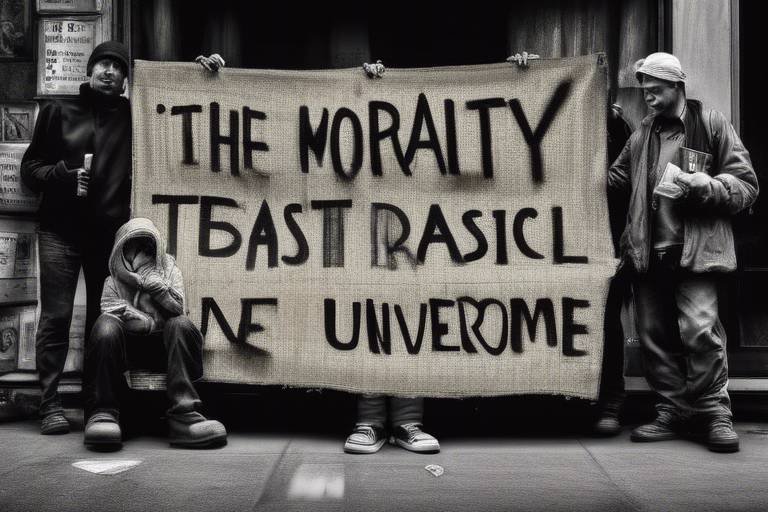
Universal Basic Income (UBI) has emerged as a hot topic in discussions around economic reform and social justice. But what exactly does it mean, and why is it stirring such passionate debates? At its core, UBI proposes that every citizen receives a fixed amount of money regularly, regardless of their circumstances. This concept is not just about financial support; it embodies a profound moral question: Should society ensure that all its members have access to basic financial security? This article delves into the ethical implications of UBI, exploring its potential benefits, challenges, and moral considerations in our quest for a fair and equitable society.
To grasp the essence of UBI, we need to look at its foundational principles. Imagine a world where everyone, regardless of their job status or income level, receives a monthly stipend. This isn’t just a fantasy; it’s the vision behind UBI. The idea is rooted in the belief that financial security is a fundamental human right. By providing a basic income, we can help alleviate the stress of living paycheck to paycheck, allowing individuals to pursue education, entrepreneurship, or simply enjoy life without the constant worry of financial instability. UBI aims to create a safety net that empowers people rather than shackles them to a system of poverty.
Now, let’s dive into the economic implications of UBI. The potential impacts on poverty reduction are significant. With a guaranteed income, individuals can afford basic necessities, leading to a decrease in poverty rates. But what about consumer spending? When people have more disposable income, they’re likely to spend it, which can stimulate economic growth. However, there are concerns about how we fund such a program. Can we sustain it long-term? This brings us to the heart of the debate: the balance between providing for our citizens and ensuring the economic viability of the system.
One of the most compelling arguments for UBI is its potential to serve as a powerful tool for poverty alleviation. Consider this: in a society where a significant portion of the population struggles to make ends meet, UBI can act as a safety net for vulnerable groups. It addresses income inequality by redistributing wealth and providing everyone with a basic standard of living. Imagine the ripple effects of such a change—improved health outcomes, better educational opportunities, and a reduction in crime rates. By tackling poverty head-on, UBI could pave the way for a more just and equitable society.
But what about employment? There’s a common fear that UBI might disincentivize work. However, evidence from various trials suggests otherwise. Instead of making people lazy, UBI can actually encourage entrepreneurship. With a financial cushion, individuals may feel more secure in pursuing their passions or starting businesses. It’s like giving someone a safety net before they leap off the diving board. They can take risks without the fear of losing everything. This shift in mindset could lead to a more innovative and dynamic workforce.
Now, let’s talk about the elephant in the room: funding. How do we pay for UBI? There are several models proposed, including taxation, wealth redistribution, and innovative financing strategies. For instance, some suggest implementing a progressive tax system where the wealthy contribute more. Others advocate for reallocating funds from existing welfare programs. The key is finding a sustainable model that can support UBI without burdening the economy. It’s a complex puzzle, but one worth solving for the sake of social equity.
When we examine UBI through the lens of social justice, the moral arguments become even clearer. UBI has the potential to promote equality by addressing systemic injustices that have persisted for generations. It levels the playing field, giving everyone a fair shot at success. In a world where wealth is often concentrated in the hands of a few, UBI serves as a counterbalance, ensuring that basic needs are met for all. It’s about creating a society where opportunities are not dictated by one’s birth circumstances.
Looking globally, we see various implementations of UBI trials that provide valuable insights. Countries like Finland, Canada, and Kenya have experimented with UBI in different forms, each yielding unique results. These trials demonstrate that while UBI can be effective, the cultural and economic context plays a crucial role in its success. By analyzing these diverse experiences, we can learn what works and what doesn’t, paving the way for a more informed approach to UBI.
Findings from UBI pilot programs worldwide reveal some fascinating outcomes. Participants often reported improved mental health and increased well-being. They felt empowered to make better life choices, whether that meant investing in education or starting a business. The insights gained from these initiatives are invaluable, suggesting that UBI could indeed be a feasible and effective approach to enhancing the quality of life for individuals and communities alike.
Finally, it’s essential to contrast UBI with existing welfare programs. While traditional welfare often comes with stipulations and bureaucratic hurdles, UBI offers a straightforward solution. It eliminates the stigma associated with receiving aid and simplifies the process. However, it’s not without its disadvantages; critics argue that UBI could lead to a reduction in existing welfare services. The challenge lies in finding a balance that provides adequate support while promoting personal responsibility and economic growth.
- What is Universal Basic Income? UBI is a financial program where all citizens receive a regular, unconditional sum of money from the government.
- How is UBI funded? UBI can be funded through various means, including taxation, wealth redistribution, and reallocating funds from existing welfare programs.
- Does UBI disincentivize work? Evidence from trials suggests that UBI may encourage entrepreneurship and risk-taking, rather than disincentivizing work.
- What are the benefits of UBI? UBI can reduce poverty, promote economic stability, and enhance social justice by providing financial security for all citizens.
The Concept of Universal Basic Income
Universal Basic Income (UBI) is a revolutionary concept that has sparked debates across the globe. At its core, UBI is a financial model that proposes providing all citizens with a regular, unconditional sum of money, regardless of their circumstances or employment status. Imagine a world where everyone receives a monthly paycheck simply for being a member of society. Sounds intriguing, right? This model aims to ensure that everyone has a basic level of financial security, allowing them to meet their essential needs—think food, shelter, and healthcare—without the constant stress of making ends meet.
The foundational principles behind UBI are rooted in the belief that financial stability is a human right. Advocates argue that by guaranteeing a minimum income, society can alleviate poverty, reduce income inequality, and empower individuals to pursue education, entrepreneurship, or simply to take care of their families without the looming fear of financial ruin. The idea is not just about giving money away; it’s about creating a safety net that fosters a more equitable society.
One of the most compelling aspects of UBI is its potential to transform the way we think about work and contribution. Traditional employment models often tie our self-worth and social status to our jobs, but UBI encourages a broader definition of productivity. People could engage in caregiving, volunteer work, or artistic pursuits—activities that enrich society but are often undervalued in the current economic framework.
However, implementing UBI is not without its challenges. Critics raise questions about its feasibility and sustainability. How would this program be funded? Would it lead to inflation? Would people still be motivated to work? These are valid concerns that require careful consideration and robust economic planning.
In essence, the concept of Universal Basic Income is a bold step toward reimagining our social safety nets. It asks us to consider what it means to live in a fair and just society. As we explore the implications of UBI further, we must weigh its potential benefits against the challenges it presents, ultimately striving for a system that promotes both individual freedom and collective responsibility.
Universal Basic Income (UBI) is not just a theoretical concept; it has the potential to reshape the very fabric of our economy. Imagine a world where every citizen receives a guaranteed income, irrespective of their employment status. This idea can lead to profound economic changes, impacting everything from poverty rates to consumer behavior. But what does this mean in practical terms? Let’s dive into the potential economic implications of UBI.
First and foremost, one of the most significant impacts of UBI could be its role in poverty reduction. By providing a financial safety net, UBI can lift individuals and families out of the clutches of poverty, allowing them to meet their basic needs without the constant stress of financial insecurity. Studies have shown that when people have a stable income, they are more likely to invest in education, health, and other areas that contribute to long-term economic growth. As they spend their UBI on goods and services, this can stimulate local economies and create a ripple effect that benefits businesses and communities alike.
Moreover, UBI could lead to an increase in consumer spending. With more disposable income, people may feel empowered to purchase goods and services that they previously could not afford. This boost in spending can drive economic growth, leading to job creation and increased demand for products. A thriving economy is often one where consumers feel confident in their financial stability, and UBI could play a pivotal role in fostering that confidence.
However, the conversation around UBI is not without its challenges. One of the primary concerns is the sustainability of such a program. How do we fund UBI without placing an undue burden on taxpayers or cutting essential services? Various funding models have been proposed, from implementing higher taxes on the wealthy to reallocating funds from existing welfare programs. Each model presents its own set of challenges and requires careful consideration of the economic landscape.
Additionally, critics argue that UBI could potentially lead to a decrease in labor force participation. This concern stems from the fear that if individuals receive a guaranteed income, they may be less motivated to seek employment. However, research suggests that UBI might actually encourage entrepreneurship. With a safety net in place, people may be more willing to take risks and start their own businesses, knowing they have financial support to fall back on. It’s a fine balance between providing security and ensuring that the workforce remains active and engaged.
To further illustrate the economic implications of UBI, consider the following table that summarizes potential benefits and challenges:
| Benefits | Challenges |
|---|---|
| Poverty Reduction | Funding Sustainability |
| Increased Consumer Spending | Potential Decrease in Labor Participation |
| Boost in Entrepreneurship | Inflation Concerns |
| Improved Mental Health | Political Feasibility |
In conclusion, while the economic implications of UBI are vast and varied, the potential benefits could outweigh the challenges if implemented thoughtfully. As we move forward, it is crucial to engage in open discussions about UBI, its funding, and its broader impact on society. The journey toward a more equitable economic system may very well hinge on how effectively we can integrate UBI into our existing structures.
- What is Universal Basic Income? UBI is a model of social security in which all citizens receive a regular, unconditional sum of money from the government, regardless of other income.
- How would UBI affect the economy? UBI could stimulate economic growth by increasing consumer spending, reducing poverty, and encouraging entrepreneurship.
- What are the main concerns regarding UBI? Key concerns include funding sustainability, potential disincentives to work, and the overall economic implications.
- Are there any countries that have implemented UBI? Yes, several countries have conducted UBI trials, including Finland, Canada, and various U.S. cities, with varying results.
Universal Basic Income (UBI) has emerged as a compelling solution to address the pervasive issue of poverty in modern society. Imagine waking up every day knowing that you have a guaranteed income, regardless of your employment status. This sense of financial security could fundamentally transform lives, particularly for those who are most vulnerable. UBI aims to create a safety net that allows individuals to meet their basic needs without the constant stress of financial instability.
One of the most significant benefits of UBI is its potential to reduce poverty levels significantly. By providing everyone with a basic income, we can ensure that no one falls below the poverty line. This financial cushion can help individuals afford essentials like food, housing, and healthcare. In many cases, it can also empower people to invest in their education or start their own businesses, breaking the cycle of poverty that has trapped generations.
Consider this: when people have access to a stable income, they are more likely to invest in their futures. They can afford to pursue higher education, which can lead to better job opportunities. Additionally, UBI can help alleviate the burden on social welfare systems, as it provides a direct financial resource to those in need. In essence, UBI acts as a bridge, connecting individuals to opportunities that can lead them out of poverty.
However, it’s essential to recognize that UBI alone may not be a panacea for poverty alleviation. While it provides a foundation, it must be part of a broader strategy that includes access to quality education, healthcare, and job training programs. The effectiveness of UBI in reducing poverty can vary depending on how it is implemented and the specific context of each community.
Research from various UBI pilot programs has shown promising results. For example, in Finland’s UBI experiment, participants reported improved well-being and mental health, indicating that financial security can lead to a more fulfilling life. Similarly, studies in Canada and the United States have demonstrated that UBI can significantly reduce poverty rates and improve overall quality of life.
In summary, UBI has the potential to be a powerful tool for poverty alleviation. By providing a basic income to all citizens, we can create a more equitable society where everyone has the opportunity to thrive. However, it is crucial to approach UBI as part of a comprehensive strategy to address the multifaceted nature of poverty. Only then can we hope to see lasting change and a significant reduction in poverty levels across the globe.
The introduction of Universal Basic Income (UBI) into the economic landscape raises a plethora of questions surrounding its impact on employment. Will it serve as a safety net that empowers individuals to pursue their passions, or will it create a disincentive for work? These are not just theoretical musings; they are crucial inquiries that society must address as we consider UBI’s implementation. One of the most compelling arguments in favor of UBI is its potential to foster a culture of entrepreneurship. Imagine a world where individuals are not shackled by the fear of financial ruin if they decide to start a business or pursue creative endeavors. With a guaranteed income, people could take risks they might otherwise avoid, leading to a surge in innovation and new business ventures.
On the flip side, critics argue that UBI might reduce the incentive to work, particularly for low-wage jobs. They worry that if people receive a basic income without the need to work, some may choose to opt out of the labor market altogether. However, research from various UBI pilot programs suggests that this fear may be overstated. Instead of opting out, many participants in these programs reported feeling more motivated to seek employment, as the financial cushion allowed them to pursue jobs that were more aligned with their skills and interests. In fact, a study in Finland found that UBI recipients were more likely to engage in part-time work compared to those without such support.
Moreover, the impact of UBI on employment could vary significantly across different demographics. For instance, individuals in precarious job situations—like gig workers or those in seasonal employment—might find UBI particularly liberating. It could provide them with the financial stability needed to navigate the uncertainties of their work lives. In contrast, those in stable, well-paying jobs might not experience the same shift in motivation. This nuanced perspective highlights the importance of considering various factors, such as age, industry, and personal circumstances, when assessing UBI’s overall impact on employment.
To better understand these dynamics, let’s look at some key findings from UBI trials:
| Study Location | Participants | Impact on Employment |
|---|---|---|
| Finland | 2,000 unemployed individuals | Increased part-time work engagement |
| Ontario, Canada | 4,000 low-income residents | Improved job search efforts |
| Stockholm, Sweden | 1,000 families | Higher entrepreneurial activity |
In summary, the impact of UBI on employment is complex and multifaceted. While concerns about disincentivizing work are valid, evidence suggests that UBI may actually encourage individuals to pursue more fulfilling employment opportunities. By providing a financial safety net, UBI could empower people to take risks, innovate, and ultimately contribute to a more dynamic economy. As we continue to explore this revolutionary concept, it’s crucial to keep these discussions alive and grounded in real-world experiences.
- What is Universal Basic Income (UBI)?
UBI is a financial program that provides all citizens with a regular, unconditional sum of money, regardless of other income. - How does UBI affect employment?
While some fear it may disincentivize work, evidence from trials suggests it can boost job motivation and entrepreneurship. - What are the funding models for UBI?
Funding can come from various sources, including taxation, wealth redistribution, and innovative financing strategies. - Are there any countries that have implemented UBI?
Yes, several countries have conducted UBI trials, including Finland, Canada, and Brazil, each with varying outcomes.
When it comes to implementing Universal Basic Income (UBI), one of the most pressing questions is: how do we pay for it? The financial sustainability of UBI is crucial for its success, and various funding models have been proposed to support this ambitious initiative. Each model comes with its own set of challenges and benefits, but they all aim to create a system where everyone receives a basic income without compromising the overall economy.
One of the most discussed models is the progressive taxation system. This approach involves taxing higher income earners at a greater rate, redistributing wealth to those who need it most. The idea here is simple: the wealthier individuals contribute more, allowing for a safety net that can uplift the less fortunate. Imagine a seesaw where the heavier side lifts the lighter one—this is how progressive taxation functions in society.
Another potential funding model is the carbon tax. As we grapple with climate change, imposing a tax on carbon emissions could serve a dual purpose: incentivizing companies to reduce their carbon footprint while generating revenue for UBI. It’s a win-win situation, where we tackle environmental issues and simultaneously provide financial support to citizens. Picture a world where every time a company pollutes, they contribute to a fund that helps everyone breathe a little easier—both literally and financially.
Additionally, there’s the concept of wealth taxes, which target the ultra-wealthy. By taxing assets rather than income, we can create a more equitable system that ensures those with significant wealth pay their fair share. This model could potentially generate substantial revenue, which could then be funneled into UBI programs. It’s akin to asking those who have more to help lift those who have less, fostering a sense of community and shared responsibility.
Some proponents also suggest using dividends from public resources as a funding source. For example, if a government owns natural resources like oil or minerals, the profits generated from these resources could be distributed as a basic income to all citizens. This model emphasizes the idea that resources belong to everyone, and thus, everyone should benefit from them. It’s like sharing the fruits of a communal garden—everyone gets a share of the bounty.
However, implementing these funding models is not without challenges. Critics argue that high taxation could discourage investment and economic growth, while others worry about the feasibility of managing complex tax systems. To address these concerns, a combination of funding models might be necessary to create a balanced approach that ensures the longevity and effectiveness of UBI.
In conclusion, the funding of UBI is a multifaceted issue that requires careful consideration and planning. By exploring various models—such as progressive taxation, carbon taxes, wealth taxes, and dividends from public resources—we can begin to envision a sustainable financial framework that supports a basic income for all citizens. As we navigate this complex landscape, the ultimate goal remains clear: to create a fair and equitable society where everyone has the opportunity to thrive.
- What is Universal Basic Income? UBI is a financial program that provides all citizens with a regular, unconditional sum of money, regardless of their circumstances.
- How does UBI help poverty? UBI acts as a safety net, providing financial security to vulnerable populations and reducing income inequality.
- What are the potential drawbacks of UBI? Critics argue that it may disincentivize work and could be costly to implement sustainably.
- How can UBI be funded? Funding can come from progressive taxation, carbon taxes, wealth taxes, and profits from public resources.
The conversation around Universal Basic Income (UBI) is not just about economics; it delves deep into the realm of social justice. At its core, UBI is designed to address the fundamental inequalities that exist within our societies. Imagine a world where every individual has the financial means to meet their basic needs—this is the vision that UBI aims to create. By providing a guaranteed income to all citizens, UBI seeks to level the playing field, ensuring that everyone, regardless of their background, has access to the resources necessary for a dignified life.
One of the most compelling arguments in favor of UBI is its potential to dismantle systemic barriers that perpetuate poverty and inequality. Consider this: in many societies, marginalized groups often face additional challenges that hinder their economic mobility. UBI can serve as a powerful tool to address these disparities by providing a safety net that empowers individuals to pursue education, start businesses, or simply take time to care for their families without the constant stress of financial instability.
Moreover, UBI can foster a sense of community and solidarity. When everyone receives a basic income, it creates a shared experience that can help bridge the divides of race, class, and gender. This collective upliftment can promote social cohesion, reducing the stigma often associated with welfare programs. Instead of viewing financial support as a handout, society can begin to see it as a right—an acknowledgment that every person deserves to thrive.
However, the implementation of UBI is not without its challenges. Critics argue that it could lead to complacency or a decrease in the motivation to work. Yet, studies have shown that when people are financially secure, they are more likely to engage in meaningful work, whether that be in traditional employment or entrepreneurial ventures. This sense of security can ignite creativity and innovation, ultimately benefiting society as a whole.
To illustrate the potential impact of UBI on social justice, consider the following table that summarizes key benefits:
| Benefit | Description |
|---|---|
| Reduction in Poverty | Provides a financial cushion for low-income families, reducing poverty rates. |
| Increased Equality | Levels the economic playing field, ensuring everyone has access to basic needs. |
| Empowerment | Enables individuals to make choices that improve their quality of life. |
| Social Cohesion | Fosters a sense of belonging and community among citizens. |
In conclusion, the moral implications of UBI in the context of social justice are profound. By addressing the root causes of inequality and providing a safety net for all, UBI can help create a more equitable society. It challenges us to rethink our values and priorities, pushing us toward a future where every individual has the opportunity to succeed. As we continue to explore the potential of UBI, it is essential to engage in these conversations, recognizing that the fight for social justice is a collective endeavor that benefits us all.
- What is Universal Basic Income (UBI)? UBI is a financial program that provides all citizens with a regular, unconditional sum of money, regardless of their circumstances.
- How does UBI promote social justice? UBI aims to reduce poverty and inequality, providing everyone with the financial resources necessary to live a dignified life.
- Are there any downsides to UBI? Critics argue it may reduce the motivation to work, but studies suggest it can actually encourage entrepreneurship and creativity.
- How can UBI be funded? Funding models vary and can include taxation, wealth redistribution, and innovative financing strategies.
Universal Basic Income (UBI) has emerged as a topic of intense debate and experimentation across the globe. Various countries have undertaken pilot programs and full-scale implementations, each with unique cultural and economic contexts. These trials provide invaluable insights into the viability of UBI as a sustainable solution for poverty and inequality. Let’s take a closer look at some of these initiatives and the lessons learned from them.
One of the most notable examples comes from Finland, which conducted a two-year UBI trial from 2017 to 2018. In this program, 2,000 unemployed individuals received a monthly payment of €560, with no strings attached. The results showed that while the income did not significantly increase employment rates, participants reported higher levels of well-being and life satisfaction. This indicates that UBI can potentially serve as a buffer against economic uncertainty, even if it does not directly lead to job creation.
Another interesting case is found in Canada, where the province of Ontario launched a basic income pilot in 2017, which was unfortunately canceled in 2018. Participants received up to CAD 17,000 annually for individuals and CAD 24,000 for couples. Early reports indicated improvements in mental health, housing stability, and job prospects, showcasing the potential benefits of UBI in enhancing quality of life, even if the program was short-lived.
Moving to the southern hemisphere, Brazil has been making strides with its own version of UBI known as the Bolsa Família program. While not a traditional UBI, it provides financial aid to low-income families, aiming to alleviate poverty and promote education. This program has significantly reduced poverty rates in Brazil, demonstrating that even targeted assistance can have a profound impact on society.
In contrast, Alaska has implemented a form of UBI through its Permanent Fund Dividend program, which distributes a share of the state’s oil revenues to all residents. This program has been in place since 1982 and provides an annual dividend that varies based on oil prices and state revenues. Alaskans have enjoyed a financial cushion that has helped many families, illustrating how resource-based income can function as a basic income model.
Despite these promising examples, challenges remain. Funding sustainability is a significant concern that many countries face when considering UBI. For instance, in Spain, the government has introduced a minimum income scheme aimed at reducing poverty, but funding it sustainably remains a challenge. Policymakers must navigate the delicate balance between providing financial support and ensuring economic viability.
In summary, the exploration of UBI across different countries reveals a tapestry of experiences that highlight both the potential benefits and the complexities involved in its implementation. Each trial offers unique lessons that can inform future policies and adaptations of UBI, paving the way for a more equitable society.
- What is Universal Basic Income? – UBI is a model of social security in which all citizens receive a regular, unconditional sum of money from the government, regardless of their circumstances.
- Which countries have implemented UBI? – Countries like Finland, Canada, Brazil, and the United States (Alaska) have conducted trials or have ongoing programs resembling UBI.
- What are the main benefits of UBI? – UBI aims to reduce poverty, provide financial security, enhance mental well-being, and promote economic stability.
- What challenges does UBI face? – Key challenges include funding sustainability, potential disincentives to work, and political opposition.
As we dive into the world of Universal Basic Income (UBI) pilot programs, it’s essential to recognize that these experiments offer a treasure trove of insights, revealing both the potential and the pitfalls of implementing such a transformative policy. Across various countries, from Finland to Canada, and even in the United States, these trials have provided valuable lessons that can guide future implementations of UBI. One of the most striking findings is how UBI can fundamentally alter not just economic conditions, but also social dynamics.
Take the Finnish UBI trial, for example. Launched in 2017, it provided a monthly stipend to 2,000 unemployed individuals, aiming to see if a guaranteed income would bolster employment rates and improve overall well-being. The results were fascinating: while employment rates did not significantly increase, participants reported higher levels of happiness and reduced stress. This raises a compelling question: could the psychological benefits of financial security outweigh the immediate economic outcomes? The Finnish experiment suggests that UBI can enhance individual well-being, fostering a sense of dignity and purpose, which are often overlooked in traditional welfare systems.
Another noteworthy program took place in Ontario, Canada, where a pilot aimed to test the effects of UBI on low-income households. Participants received up to $17,000 annually, allowing them to cover basic needs without the constant anxiety of financial instability. Preliminary findings indicated that many participants used the funds to pursue education and training, leading to better job prospects. This highlights a crucial lesson: UBI doesn’t just provide a safety net; it can also empower individuals to invest in their futures. By alleviating the immediate financial burden, UBI encourages people to take risks that they might otherwise avoid, such as starting a business or going back to school.
However, it’s not all sunshine and rainbows. The pilot programs also revealed challenges that must be addressed. For instance, in the U.S. city of Stockton, California, where a UBI trial provided $500 monthly to selected residents, the program faced scrutiny regarding its sustainability. Critics raised concerns about how such initiatives could be funded long-term without placing an undue burden on taxpayers. This brings us to the importance of funding models and the necessity for clear, transparent mechanisms to support UBI programs. Without a solid financial foundation, even the most promising UBI initiatives may falter.
Moreover, these pilot programs have sparked discussions about the broader implications of UBI on societal structures. For instance, by reducing poverty and income inequality, UBI has the potential to transform communities. Participants often reported feeling more connected to their neighborhoods, as financial stability allowed them to engage in local activities and support local businesses. This leads us to consider how UBI could foster a sense of community and collective responsibility, redefining our understanding of social welfare.
In summary, the lessons gleaned from UBI pilot programs are multifaceted. They reveal not only the economic impacts but also the profound social changes that can occur when individuals are given the freedom to thrive without the shackles of financial insecurity. As we look to the future, it’s vital to learn from these experiments, embracing both their successes and challenges to create a UBI model that is sustainable, equitable, and transformative.
- What is Universal Basic Income? UBI is a financial policy that provides all citizens with a regular, unconditional sum of money, regardless of other income.
- How do pilot programs work? Pilot programs test UBI in specific regions or populations to measure its impacts on employment, health, and overall quality of life.
- What have we learned from UBI trials? Trials have shown that while UBI can improve mental health and encourage education, funding and sustainability remain significant challenges.
- Can UBI reduce poverty? Yes, UBI has the potential to alleviate poverty by providing a financial safety net, thus allowing individuals to meet their basic needs.
When we dive into the world of social welfare, it’s impossible to ignore the multitude of programs designed to support those in need. Universal Basic Income (UBI) stands out as a revolutionary concept, but how does it stack up against traditional welfare programs? Let’s break it down.
First off, traditional welfare programs often come with a myriad of restrictions and qualifications. For instance, food stamps, housing assistance, and unemployment benefits usually require applicants to meet specific criteria, which can create a maze of red tape. UBI, on the other hand, offers a blanket approach—every citizen receives a set amount of money, no questions asked. This simplicity can be a game-changer, eliminating the stigma often associated with welfare. Imagine not having to jump through hoops just to receive the support you need!
Another significant difference lies in the flexibility of funds. With traditional welfare programs, benefits are often earmarked for specific needs, such as food or housing. While this can be beneficial for targeting immediate needs, it doesn’t account for the diverse challenges individuals face. UBI empowers recipients to make their own choices, whether they need to pay rent, buy groceries, or invest in education. It’s akin to giving someone a toolbox rather than just a hammer—allowing for a more holistic approach to personal finance.
However, critics of UBI often point to the potential for abuse. They argue that without restrictions, some individuals might misuse the funds. While this concern is valid, it’s essential to recognize that traditional welfare programs are not immune to misuse either. A study conducted in various states showed that a significant percentage of welfare recipients were able to navigate the system in ways that weren’t always ethical. So, does that mean we should abandon the idea of support altogether? Absolutely not! Instead, we should focus on creating systems that enhance accountability while promoting dignity.
Let’s also consider the economic implications of both approaches. Traditional welfare programs can sometimes create a dependency cycle, where recipients feel trapped in a system that discourages them from seeking employment. UBI, in contrast, has the potential to foster independence by providing a safety net that encourages people to pursue entrepreneurial ventures or further their education without the constant fear of financial ruin. It’s like giving someone a parachute; they can take risks without the fear of crashing to the ground.
To illustrate these differences, here’s a quick comparison table:
| Aspect | Universal Basic Income | Traditional Welfare Programs |
|---|---|---|
| Eligibility | All citizens receive funds | Means-tested; specific criteria required |
| Flexibility | Funds can be used as needed | Funds allocated for specific needs |
| Dependency | Encourages independence | Risk of creating dependency |
| Stigma | Less stigma attached | Often carries a stigma |
In conclusion, while both UBI and traditional welfare programs aim to support the vulnerable, they do so in markedly different ways. UBI offers a fresh perspective that prioritizes dignity and choice, while traditional programs often come with strings attached. As we move forward in the conversation about social safety nets, it’s crucial to weigh these options carefully. After all, the goal is to create a society where everyone has the opportunity to thrive, not just survive.
- What is Universal Basic Income? UBI is a model of social security in which all citizens receive a regular, unconditional sum of money from the government.
- How does UBI differ from traditional welfare? UBI provides unconditional payments to all citizens, while traditional welfare programs often have specific eligibility requirements and restrictions.
- Can UBI reduce poverty? Many proponents believe that UBI can help alleviate poverty by providing a financial safety net that allows individuals to make better economic choices.
- What are the funding options for UBI? Funding for UBI can come from various sources, including taxation, redistribution of wealth, and innovative financing strategies.
Frequently Asked Questions
- What is Universal Basic Income (UBI)?
Universal Basic Income (UBI) is a financial program that provides all citizens with a regular, unconditional sum of money, regardless of their circumstances. The idea is to ensure that everyone has a basic level of financial security to cover essential needs, thus promoting economic stability and reducing poverty.
- How does UBI impact poverty levels?
UBI has the potential to significantly reduce poverty by providing a safety net for vulnerable populations. By giving individuals a guaranteed income, it can help alleviate financial stress, allowing people to invest in education, healthcare, and other necessities that contribute to a better quality of life.
- Will UBI discourage people from working?
This is a common concern, but evidence from UBI pilot programs suggests that it may actually encourage people to pursue jobs they are passionate about or start their own businesses. With a basic income to fall back on, individuals may feel more empowered to take risks in their careers.
- How is UBI funded?
Funding for UBI can come from various sources, including tax reforms, redistribution of wealth, and innovative financing strategies. Some proposals suggest implementing a progressive tax system or utilizing revenue from natural resources to sustain the program long-term.
- What are the moral arguments for UBI?
Proponents argue that UBI promotes social justice by addressing income inequality and providing a fair safety net for all individuals. It challenges systemic injustices and aims to create a more equitable society where everyone has the opportunity to thrive.
- Are there any successful examples of UBI in practice?
Yes, several countries have conducted UBI trials with positive outcomes. For instance, Finland’s UBI experiment showed improvements in mental well-being among participants, while other trials in places like Canada and the U.S. have provided valuable insights into its feasibility and effectiveness.
- How does UBI compare to traditional welfare programs?
Unlike traditional welfare programs that often come with strict eligibility requirements and conditions, UBI offers unconditional support to everyone. This simplicity can reduce bureaucracy and stigma, making it a more efficient way to address social welfare and economic security.
Universal Basic Income, Morality, Social Justice, Economic Equality, Poverty Alleviation, Empowerment, Human Dignity, Ethical Framework, , Universal Basic Income, Morality, Social Justice, Economic Equality, Poverty Alleviation, Empowerment, Human Dignity, Ethical Framework,
Share this content:
Leave a Reply