
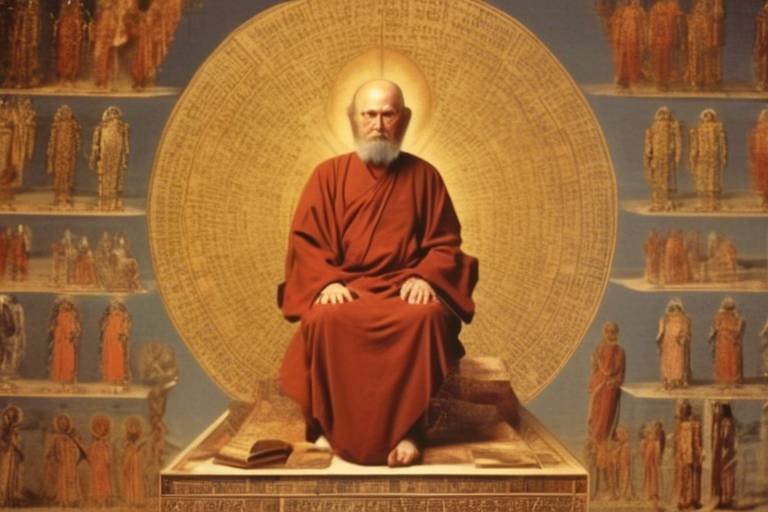
Metaphysics, the branch of philosophy that delves into the fundamental nature of reality, existence, and the universe, plays a crucial role in shaping the philosophical landscapes of both Eastern and Western thought. While these two traditions may seem worlds apart, they share a profound quest for understanding the essence of being and the universe. Just imagine standing at a crossroads, where one path leads to the rich tapestry of Eastern philosophies like Hinduism and Buddhism, and the other to the structured, analytical frameworks of Western thinkers like Plato and Descartes. Each path offers unique insights, yet they converge on the fundamental questions of existence, reality, and the self.
In Eastern metaphysics, concepts such as karma and dharma illuminate the interconnectedness of life and the moral dimensions of existence. These ideas suggest that our actions have consequences that ripple through time and space, shaping not just our lives but the fabric of reality itself. Conversely, Western metaphysical thought, with its focus on substance and causality, emphasizes a more analytical approach to understanding existence. Think of it as two different lenses through which we can view the same magnificent painting of reality—one offering a holistic view, while the other provides a detailed examination of the brushstrokes.
The interplay between these traditions enriches our understanding of metaphysics. For instance, the Eastern perspective invites us to contemplate the nature of self and reality as fluid and interdependent, while the Western viewpoint often seeks to establish a more static understanding of being. This divergence is not merely academic; it influences how individuals perceive their place in the universe and interact with the world around them. As we delve deeper into the key concepts and thinkers from both traditions, we begin to see how metaphysics serves as a bridge connecting diverse cultures and philosophies, ultimately enriching our collective quest for knowledge.
The history of metaphysical thought is as rich as it is complex, tracing its origins back to ancient civilizations. The earliest metaphysical inquiries can be found in the philosophical musings of the ancient Greeks, who sought to understand the nature of reality and existence through reason and observation. Thinkers like Thales and Heraclitus laid the groundwork for subsequent philosophical exploration, introducing ideas that would resonate through the ages.
As we move through history, we see metaphysics evolve in various cultural contexts. In Eastern traditions, the metaphysical frameworks established by sages in ancient India and China emphasized the cyclical nature of existence, where life, death, and rebirth are intertwined. This contrasts sharply with the more linear perspectives found in Western thought, which often posits a beginning and an end to existence. The Renaissance marked a significant turning point in Western metaphysics, as thinkers like Descartes and Spinoza began to explore the nature of existence through a more scientific lens, paving the way for modern philosophical inquiry.
Today, metaphysical questions continue to intrigue philosophers, scientists, and thinkers across the globe. The dialogue between Eastern and Western metaphysical traditions not only enriches our understanding of existence but also fosters a deeper appreciation for the diverse ways in which human beings seek to comprehend their place in the universe. As we explore the key concepts in Eastern and Western metaphysics, we uncover the profound connections that bind these traditions together, revealing a shared human experience that transcends cultural boundaries.
- What is metaphysics? Metaphysics is a branch of philosophy that explores the fundamental nature of reality, existence, and the universe.
- How do Eastern and Western metaphysics differ? Eastern metaphysics often emphasizes interconnectedness and cyclical existence, while Western metaphysics focuses on substance and causality.
- Why is metaphysics important? Metaphysics helps us understand profound questions about existence, reality, and our place in the universe, influencing various fields of thought.
Historical Background of Metaphysics
Metaphysics, often regarded as the foundation of philosophical inquiry, has a rich and intricate history that spans thousands of years. Its origins can be traced back to ancient civilizations, where early thinkers began to grapple with profound questions about existence, reality, and the nature of the universe. In many ways, metaphysics serves as the bridge linking the tangible world we inhabit with the abstract concepts that govern our understanding of it. From the mystical musings of ancient sages to the rigorous analyses of modern philosophers, the evolution of metaphysical thought reflects humanity’s quest to make sense of its place in the cosmos.
In the ancient world, metaphysical ideas were predominantly intertwined with religious and spiritual beliefs. For instance, in **Ancient Egypt**, the concept of **Ma’at** represented truth, balance, and cosmic order, while in **Ancient Greece**, philosophers like **Thales** and **Heraclitus** began to shift the focus from mythology to rational inquiry. This transition marked a pivotal moment in metaphysical thought, as it laid the groundwork for more systematic approaches to understanding existence.
As we move through history, we see metaphysics branching out into various philosophical traditions. The **Classical Period** saw the emergence of prominent figures such as **Plato** and **Aristotle**, whose contributions would shape Western metaphysical discourse for centuries. Plato’s **Theory of Forms** introduced the idea that beyond our physical reality exists a realm of perfect, immutable ideals, while Aristotle emphasized the importance of substance and causality in understanding the natural world.
In contrast, Eastern metaphysical traditions developed along different lines. In **Hinduism**, the concepts of **Brahman** (the ultimate reality) and **Atman** (the individual soul) created a framework for understanding existence that diverged significantly from Western thought. Similarly, **Buddhism** introduced notions like **emptiness** and **interdependence**, challenging the very fabric of individual identity and reality itself.
The Middle Ages marked another significant turning point in metaphysical thought, particularly in Europe, where the integration of religious doctrine with philosophical inquiry led to the rise of **Scholasticism**. Thinkers like **Thomas Aquinas** sought to reconcile faith with reason, establishing metaphysical frameworks that would dominate the landscape of Western philosophy until the Enlightenment.
As we entered the **Modern Era**, metaphysics faced new challenges and transformations. The works of philosophers such as **René Descartes** and **Immanuel Kant** questioned the very premises of metaphysical inquiry, leading to a re-evaluation of the nature of existence and knowledge. Descartes’ famous assertion, **Cogito, ergo sum** (“I think, therefore I am”), emphasized the role of human consciousness in understanding reality, while Kant’s critiques introduced a new perspective on the limits of metaphysical speculation.
Today, metaphysics continues to evolve, engaging with contemporary issues in philosophy, science, and even technology. The dialogue between metaphysical inquiry and scientific understanding remains complex, as each domain challenges and informs the other. Whether through the lens of quantum physics or the exploration of consciousness, the questions that metaphysics seeks to answer are as relevant now as they were in ancient times.
In summary, the historical background of metaphysics is a tapestry woven from diverse threads of thought, each contributing to our understanding of existence. From ancient civilizations to modern philosophical debates, metaphysics has continually evolved, reflecting humanity’s enduring quest for meaning and understanding in an ever-changing world.
Key Concepts in Eastern Metaphysics
When we dive into the rich tapestry of Eastern metaphysics, we uncover a world of profound ideas that shape the way millions perceive existence, reality, and the self. Unlike Western metaphysical traditions that often emphasize the individual and the material world, Eastern philosophies tend to focus on interconnectedness and the cyclical nature of life. This section will explore some of the most significant concepts that define Eastern metaphysical thought, including karma, dharma, and the nature of reality.
One of the foundational ideas in Eastern metaphysics is karma. Often simplified as the notion of “what goes around comes around,” karma is much more nuanced. It refers to the law of moral causation, where every action has consequences that influence future experiences. This belief is not just about punishment or reward; it encompasses the idea that our current circumstances are shaped by our past actions, creating a continuous cycle of cause and effect that transcends individual lifetimes. Imagine a vast web where every thread represents a choice made, intricately connecting to others, forming a pattern that defines our existence.
Another pivotal concept is dharma, which can be understood as one’s duty or the moral law that governs individual conduct. In Hinduism, dharma varies according to one’s age, caste, and gender, emphasizing the importance of fulfilling one’s role in society. In Buddhism, however, the concept shifts towards understanding the nature of existence and the path to enlightenment. Both interpretations highlight the significance of living in harmony with the universe and fulfilling one’s responsibilities. It’s akin to a dance where every participant must know their steps to create a beautiful performance.
Furthermore, the nature of reality in Eastern metaphysics often challenges our conventional understanding. In Hindu philosophy, the ultimate reality is described as Brahman, an infinite and unchanging source of all existence, while the individual soul or Atman is seen as a fragment of this divine essence. This perspective fosters a sense of unity with the cosmos, suggesting that our true self is not separate but rather an integral part of a larger whole. On the other hand, Buddhism introduces the concept of emptiness, which posits that all phenomena are devoid of intrinsic existence. This radical idea encourages a shift in perception, urging individuals to see beyond the illusion of a permanent self and recognize the transient nature of reality.
To better illustrate these concepts, consider the following table that summarizes key ideas in Eastern metaphysics:
| Concept | Description |
|---|---|
| Karma | The law of moral causation; actions influence future experiences. |
| Dharma | Moral duty and the path of righteousness; varies by individual context. |
| Brahman | The ultimate reality; the unchanging source of all existence. |
| Atman | The individual soul; a reflection of Brahman. |
| Emptiness | The idea that all phenomena lack intrinsic existence. |
These concepts are just the tip of the iceberg when it comes to understanding Eastern metaphysics. They invite us to explore deeper questions about our existence and the nature of reality. By engaging with these ideas, we can cultivate a more profound awareness of ourselves and our place within the universe. So, how do these ancient philosophies resonate with our modern lives? Are we merely products of our past actions, or do we have the power to shape our futures? These questions keep the dialogue alive, bridging the gap between ancient wisdom and contemporary thought.
- What is the main difference between Eastern and Western metaphysics? Eastern metaphysics often emphasizes interconnectedness and the cyclical nature of life, while Western metaphysics tends to focus on individualism and material reality.
- How does karma influence our lives? Karma suggests that our past actions shape our current circumstances, creating a cycle of cause and effect that can extend beyond a single lifetime.
- What role does dharma play in Eastern thought? Dharma relates to one’s moral duty and responsibilities, differing by individual context, and emphasizing harmony with the universe.
- Can Eastern metaphysical concepts be applied to modern life? Absolutely! Many of these ideas encourage self-reflection, mindfulness, and a deeper understanding of our interconnectedness with others.
Hindu Metaphysical Framework
The Hindu metaphysical framework is a profound and intricate system that delves into the nature of existence, consciousness, and the universe. At its core, it revolves around two pivotal concepts: Brahman and Atman. Brahman represents the ultimate reality, the unchanging, infinite source of all that exists. It is often described as the cosmic spirit or the absolute truth that transcends the physical world. On the other hand, Atman refers to the individual soul or self, which is considered a fragment of Brahman. This duality highlights a fundamental belief in the interconnectedness of all beings and the universe itself.
In Hindu philosophy, understanding the relationship between Brahman and Atman is crucial. The idea is that while Atman appears to be distinct and individual, it is ultimately one with Brahman. This realization leads to a profound understanding of existence and consciousness, suggesting that the journey of life is essentially a quest to recognize this unity. The famous saying “Tat Tvam Asi,” meaning “That Thou Art,” encapsulates this idea, emphasizing the realization that the individual self is not separate from the universal spirit.
Another significant aspect of Hindu metaphysics is the concept of karma, which refers to the law of cause and effect. Every action, whether good or bad, has consequences that influence one’s future experiences and reincarnations. This cyclical understanding of life and death is closely tied to the belief in dharma, which signifies the moral and ethical duties that each individual must fulfill according to their role in society. Together, karma and dharma create a framework that encourages individuals to live a life of righteousness, understanding that their actions resonate beyond their immediate circumstances.
Furthermore, Hindu metaphysics explores the nature of reality through the lens of maya, which refers to the illusion or the deceptive nature of the physical world. According to this view, the material world is transient and ever-changing, while the ultimate reality, Brahman, remains constant and eternal. This philosophical stance invites individuals to look beyond the surface of existence and seek a deeper understanding of their true nature and the universe.
To summarize, the Hindu metaphysical framework presents a rich tapestry of concepts that interweave existence, consciousness, and morality. By contemplating the relationship between Brahman and Atman, the implications of karma and dharma, and the nature of reality as expressed through maya, individuals are encouraged to embark on a transformative journey of self-discovery and enlightenment. This journey not only deepens one’s understanding of life but also fosters a sense of unity with the cosmos, reminding us that we are all part of a greater whole.
- What is the main difference between Brahman and Atman?
Brahman is the ultimate reality, while Atman is the individual soul that is a part of Brahman. - How do karma and dharma influence one’s life?
Karma refers to the consequences of one’s actions, while dharma represents the moral duties one must fulfill, guiding individuals in their decision-making. - What does maya mean in Hindu philosophy?
Maya refers to the illusion of the material world, which is transient and deceptive, encouraging individuals to seek a deeper understanding of reality.
Buddhist Perspectives on Reality
Buddhism offers a profound and intricate view of reality that invites us to question our conventional understandings of existence. At the heart of Buddhist metaphysics lies the concept of emptiness (śūnyatā), which suggests that all phenomena are devoid of intrinsic, independent essence. This is not merely a philosophical abstraction; it serves as a foundation for understanding the interconnectedness of all things. Imagine a web where each thread is connected to others, forming a complex network. In this analogy, the threads represent individual entities, while the web symbolizes the larger reality that encompasses everything. This perspective encourages practitioners to see beyond the illusion of a permanent self and recognize the fluidity of existence.
Another pivotal concept in Buddhist thought is interdependence (pratītyasamutpāda). This principle posits that all phenomena arise in dependence upon multiple causes and conditions. To illustrate, think of a flower blooming in a field. Its existence depends on sunlight, soil, water, and countless other factors. Without these conditions, the flower cannot thrive. Similarly, our own lives are shaped by a myriad of influences, reminding us that nothing exists in isolation. This understanding fosters a sense of compassion, as we come to realize that our actions and experiences are intricately linked to those of others.
Buddhism also challenges the notion of a permanent self. The doctrine of anatta (non-self) asserts that what we consider the ‘self’ is merely a collection of changing elements—thoughts, feelings, and physical sensations. This idea can be unsettling, as it contradicts our instinctive belief in a stable identity. However, it liberates us from the burdens of ego and attachment. By letting go of the illusion of a fixed self, we open ourselves to a more profound experience of reality, one that is dynamic and ever-changing.
In addition, Buddhist teachings emphasize the importance of mindfulness and awareness in perceiving reality. Through practices such as meditation, individuals cultivate a heightened state of consciousness that allows them to observe their thoughts and experiences without judgment. This practice enables them to see the transient nature of all things, leading to a deeper understanding of the impermanence that characterizes existence. As the Buddha famously stated, “All conditioned things are impermanent.” This insight is not meant to evoke despair but rather to inspire a sense of urgency in our practice and a deeper appreciation for the present moment.
To summarize, the Buddhist perspective on reality invites us to embrace the concepts of emptiness, interdependence, and non-self. These principles challenge our conventional views and encourage us to explore the nature of existence more deeply. By recognizing the interconnectedness of all things and the impermanence of our experiences, we can cultivate a more compassionate and mindful approach to life. This journey into the depths of reality is not just an intellectual exercise; it is a transformative process that can lead to profound insights and liberation from suffering.
- What is the main idea of emptiness in Buddhism? Emptiness refers to the lack of inherent existence in all phenomena, emphasizing that everything is interconnected and dependent on various conditions.
- How does interdependence influence our understanding of reality? Interdependence teaches us that nothing exists in isolation; our experiences and actions are shaped by a multitude of factors, fostering compassion and understanding.
- What does the doctrine of anatta mean? Anatta, or non-self, asserts that there is no permanent, unchanging self; rather, what we perceive as ‘self’ is a collection of transient elements.
- How can mindfulness help in understanding reality? Mindfulness cultivates awareness of the present moment, allowing us to observe the impermanent nature of our thoughts and experiences, leading to deeper insights.
Key Concepts in Western Metaphysics
Western metaphysics has a rich tapestry woven from various philosophical threads, each contributing to our understanding of existence, reality, and the essence of being. At its core, Western metaphysics seeks to answer some of the most profound questions that humanity has pondered for centuries. What is the nature of reality? What does it mean to exist? How do we understand the relationship between mind and matter? These questions are not just academic; they resonate deeply with our everyday experiences and shape our worldview.
One of the foundational concepts in Western metaphysics is the idea of substance. Substance refers to what something fundamentally is, serving as the underlying reality that supports all properties and changes. Think of it as the “stuff” that makes up everything around us. For instance, when we consider a tree, we might think about its physical attributes—its bark, leaves, and roots. However, the substance of the tree encompasses more than just its physical form; it includes its essence, its role in the ecosystem, and its relationship to other entities. This notion of substance has evolved through the ages, influenced by thinkers like Aristotle, who categorized substances into categories and emphasized their importance in understanding the natural world.
Another critical theme in Western metaphysics is causality. This concept revolves around the idea that every effect has a cause. It raises questions about the nature of time, change, and the interconnectedness of events. Imagine throwing a stone into a pond; the splash is the effect, and your throw is the cause. This straightforward example illustrates a fundamental aspect of reality: nothing happens in isolation. Philosophers like David Hume challenged traditional notions of causality, arguing that our understanding of cause and effect is based on habit and experience rather than logical certainty. This debate continues to influence contemporary discussions in both philosophy and science, as we seek to understand the underlying mechanisms of the universe.
The nature of being itself is another pivotal concept in Western metaphysics. What does it mean to be? This question has perplexed philosophers from the ancient Greeks to modern existentialists. The existentialist movement, in particular, emphasizes individual existence, freedom, and choice, arguing that existence precedes essence. In simpler terms, we are not defined by any predetermined nature; rather, we create our essence through our actions and decisions. This perspective invites a more personal exploration of identity and existence, challenging us to take responsibility for who we are and what we become.
To illustrate these concepts further, let’s consider a table that summarizes some of the key figures and their contributions to Western metaphysics:
| Philosopher | Key Concept | Contribution |
|---|---|---|
| Plato | Theory of Forms | Introduced the idea of dual realities: the material and the ideal. |
| Aristotle | Substance and Essence | Developed a systematic approach to categorizing substances and their properties. |
| Descartes | Cogito, ergo sum | Established a foundation for modern philosophy centered on doubt and certainty. |
| Hume | Causality | Challenged traditional views of causation, emphasizing human perception and experience. |
In conclusion, the key concepts in Western metaphysics—substance, causality, and the nature of being—offer profound insights into the fabric of reality. They invite us to explore not just the world around us but also our place within it. As we navigate through these philosophical waters, we discover that these ideas are not merely abstract; they have real implications for how we live our lives, make decisions, and understand our existence. So, what do you think? How do these concepts resonate with your own experiences?
- What is metaphysics? Metaphysics is a branch of philosophy that explores the fundamental nature of reality, including concepts such as being, existence, and the universe.
- How does Western metaphysics differ from Eastern metaphysics? While Western metaphysics often emphasizes substance and causality, Eastern metaphysics tends to focus on concepts like interdependence and the nature of consciousness.
- Why is metaphysics important? Metaphysics provides a framework for understanding the deeper questions of existence, helping us to navigate our beliefs, values, and perceptions of reality.
Plato and the Theory of Forms
When we dive into the philosophical ocean that is Plato’s thought, we encounter the profound and often perplexing Theory of Forms. This theory serves as a cornerstone of his metaphysical framework, suggesting that beyond our tangible world lies a realm of perfect, abstract entities known as Forms or Ideas. Imagine walking through a gallery of perfect versions of everything—beauty, justice, or even a perfect apple. According to Plato, these Forms are the true essence of all things, while the objects we perceive in our everyday lives are merely shadows or imperfect copies of these ideal Forms.
Plato’s journey into the world of Forms begins with his belief that our sensory experiences are deceptive. He argues that what we see, touch, and taste are not the ultimate realities; instead, they are mere reflections of a higher truth. For instance, when we see a beautiful painting, we appreciate its beauty, but Plato would ask us to consider the Form of Beauty itself—an abstract concept that transcends any single beautiful object. This notion leads to a fascinating question: if we can recognize beauty in various forms, is there not a perfect, unchanging standard of beauty that exists beyond our physical world?
To illustrate this theory, Plato uses the allegory of the Cave in his work, “The Republic.” In this allegory, prisoners are chained inside a cave, facing a blank wall. The only reality they know is the shadows cast by objects behind them, illuminated by a fire. When one prisoner escapes and discovers the outside world, he realizes that the shadows are mere reflections of real objects and that there exists a brighter, truer reality. This journey from darkness to light symbolizes the philosopher’s ascent to understanding the Forms, as they move from the world of appearances to the world of true knowledge.
Plato’s Theory of Forms has had a lasting impact on Western philosophy, influencing countless thinkers throughout history. It raises significant questions about the nature of reality and existence. For instance, consider the implications of this theory on ethics. If there exists a Form of Goodness, what does that mean for our understanding of morality? Are moral truths objective, existing independently of human opinion, or are they merely subjective constructs? These questions continue to fuel philosophical debates today.
In summary, Plato’s Theory of Forms challenges us to think beyond the surface of our experiences. It invites us to explore the deeper meanings and truths that govern our reality. By contemplating the existence of these ideal Forms, we not only gain insight into Plato’s metaphysical views but also engage with fundamental questions about knowledge, existence, and the nature of reality itself.
- What are Plato’s Forms?
Plato’s Forms are abstract, perfect ideals that exist in a realm beyond our physical reality. They represent the true essence of all things. - How does the Theory of Forms relate to our everyday experiences?
According to Plato, our everyday experiences are mere shadows or imitations of these ideal Forms, which are the true realities. - What is the significance of the Allegory of the Cave?
The Allegory of the Cave illustrates the philosopher’s journey from ignorance to knowledge, emphasizing the difference between the world of appearances and the world of Forms. - How has the Theory of Forms influenced modern philosophy?
Plato’s ideas continue to shape discussions on the nature of reality, ethics, and knowledge, prompting debates about the existence of objective truths.
Descartes and the Nature of Existence
René Descartes, often hailed as the father of modern philosophy, profoundly influenced our understanding of existence through his groundbreaking ideas. His famous statement, Cogito, ergo sum, which translates to “I think, therefore I am,” encapsulates his approach to metaphysics and existence. Descartes sought to establish a foundation for knowledge that was indubitable, and in doing so, he embarked on a journey to dissect the very essence of being.
At the heart of Descartes’ philosophy is a method of doubt. He believed that to arrive at certain knowledge, one must first question everything that can be doubted. This led him to the conclusion that while he could doubt the existence of the physical world, he could not doubt the existence of his own thoughts. This realization became the cornerstone of his metaphysical framework, suggesting that the act of thinking is proof of existence itself. It’s like peeling an onion; as you remove the layers of doubt, you eventually reach the core truth of your own consciousness.
Descartes also introduced the concept of dualism, which posits a distinction between the mind and the body. He argued that the mind (or soul) is a non-material entity that interacts with the physical body, leading to a rich discussion about the nature of reality. This dualistic approach raises intriguing questions: Are we merely physical beings, or is there a deeper, immaterial aspect to our existence? This perspective has sparked endless debates in both philosophical and scientific circles.
To further illustrate Descartes’ impact on metaphysics, consider the following key points:
- Method of Doubt: Descartes’ systematic skepticism paved the way for modern scientific inquiry.
- Cogito, ergo sum: This principle asserts that self-awareness is the foundation of existence.
- Mind-Body Dualism: The separation of mental and physical realms has influenced various fields, including psychology and neuroscience.
Descartes’ exploration of existence is not just an academic exercise; it resonates with our everyday experiences. When faced with uncertainty, we often find ourselves questioning our own thoughts and feelings, echoing Descartes’ philosophical inquiries. His work invites us to reflect on our own existence, encouraging us to seek understanding beyond the surface level of reality.
In summary, Descartes’ contributions to metaphysics have left an indelible mark on philosophy. His inquiries into the nature of existence challenge us to consider the relationship between thought and being, prompting us to explore the depths of our own consciousness. As we navigate the complexities of existence, Descartes’ legacy serves as a guiding light, reminding us that the act of questioning is, in itself, a fundamental aspect of being.
Cogito, ergo sum,
This article explores the significance of metaphysics in shaping philosophical traditions across Eastern and Western cultures, highlighting key concepts, thinkers, and the interconnections between these diverse systems of thought.
An overview of the evolution of metaphysical thought, tracing its origins from ancient civilizations to the present, and examining how it has influenced various philosophical movements.
This section delves into fundamental ideas in Eastern metaphysical traditions, such as karma, dharma, and the nature of reality, revealing how they differ from Western perspectives.
Exploring the core tenets of Hindu philosophy, including the concepts of Brahman and Atman, and how they shape the understanding of existence and consciousness.
A look into Buddhist metaphysics, focusing on concepts like emptiness and interdependence, which challenge conventional notions of self and reality.
An examination of essential themes in Western metaphysical thought, such as substance, causality, and the nature of being, and their implications for understanding existence.
Discussing Plato’s Theory of Forms, which posits a dual reality of the material and the ideal, influencing subsequent Western philosophical thought.
Analyzing Descartes’ contributions to metaphysics, particularly his famous dictum Cogito, ergo sum, and its impact on modern philosophy.
René Descartes, a pivotal figure in Western philosophy, introduced the phrase Cogito, ergo sum, which translates to “I think, therefore I am.” This profound assertion serves as a cornerstone of his metaphysical framework, encapsulating the essence of human existence and self-awareness. In a world rife with uncertainty, Descartes sought a foundation of knowledge that could withstand skepticism. His exploration began with doubt, questioning everything he had previously accepted as true. The result? The realization that the very act of thinking was irrefutable proof of his existence. If he is capable of doubt, he must exist to doubt.
But why is this idea so revolutionary? Think of it this way: imagine you’re in a dream, where everything feels real, yet you’re aware that it might just be a figment of your imagination. Descartes’ insight cuts through this illusion, asserting that the very act of questioning reality confirms your existence. This simple yet powerful statement not only laid the groundwork for modern philosophy but also shifted the focus of metaphysics from external reality to the internal certainty of the self.
Descartes further expanded on this concept by differentiating between the mind and body, famously known as dualism. He posited that the mind, a non-material entity, is distinct from the physical body. This separation sparked extensive debates regarding the nature of consciousness and the relationship between mind and matter, influencing countless philosophers and scientists. His thoughts have echoed through the ages, prompting inquiries into the nature of existence, identity, and consciousness.
In the realm of modern philosophy, Descartes’ Cogito, ergo sum continues to resonate. It challenges us to reflect on our own existence and the nature of our thoughts. Are we merely products of our environment, or do we possess an inherent self that thinks and feels independently? This question remains at the heart of metaphysical discourse, inviting individuals to explore the depths of their consciousness and the essence of being.
A comparative exploration of how Eastern and Western metaphysical systems address similar questions about existence, reality, and the self, highlighting both divergences and convergences.
This section discusses how metaphysical ideas continue to shape contemporary philosophical debates and the relevance of ancient concepts in modern contexts.
An exploration of the interplay between metaphysical inquiry and scientific understanding, examining how each domain informs and challenges the other in the pursuit of knowledge.
- What is metaphysics? Metaphysics is a branch of philosophy that explores the fundamental nature of reality, existence, and the relationships between things.
- How does Eastern metaphysics differ from Western metaphysics? Eastern metaphysics often emphasizes concepts like interdependence and the cyclical nature of existence, while Western metaphysics typically focuses on substance and causality.
- Why is Descartes’ “Cogito, ergo sum” significant? This statement is crucial because it establishes self-awareness and thought as the foundation of existence, influencing modern philosophical thought.
and its impact on modern philosophy.
This article explores the significance of metaphysics in shaping philosophical traditions across Eastern and Western cultures, highlighting key concepts, thinkers, and the interconnections between these diverse systems of thought.
An overview of the evolution of metaphysical thought, tracing its origins from ancient civilizations to the present, and examining how it has influenced various philosophical movements.
This section delves into fundamental ideas in Eastern metaphysical traditions, such as karma, dharma, and the nature of reality, revealing how they differ from Western perspectives.
Exploring the core tenets of Hindu philosophy, including the concepts of Brahman and Atman, and how they shape the understanding of existence and consciousness.
A look into Buddhist metaphysics, focusing on concepts like emptiness and interdependence, which challenge conventional notions of self and reality.
An examination of essential themes in Western metaphysical thought, such as substance, causality, and the nature of being, and their implications for understanding existence.
Discussing Plato’s Theory of Forms, which posits a dual reality of the material and the ideal, influencing subsequent Western philosophical thought.
Analyzing Descartes’ contributions to metaphysics, particularly his famous dictum Cogito, ergo sum, and its impact on modern philosophy.
A comparative exploration of how Eastern and Western metaphysical systems address similar questions about existence, reality, and the self, highlighting both divergences and convergences.
Metaphysical thought has profoundly influenced modern philosophy, acting as a foundational pillar that supports various contemporary debates. The questions that metaphysics seeks to answer—such as What is reality?, What is the nature of existence?, and What does it mean to be?—continue to resonate in current philosophical discourse. For instance, the existential inquiries posed by thinkers like Jean-Paul Sartre and Martin Heidegger can be traced back to the metaphysical discussions initiated by their predecessors.
Moreover, metaphysical concepts have shaped ethical frameworks and theories of knowledge, influencing fields such as epistemology and ethics. The debates around free will, determinism, and the nature of the self are deeply rooted in metaphysical inquiry. This interplay between metaphysics and modern philosophical thought is not merely academic; it has real-world implications that affect how we perceive morality, identity, and our place in the universe.
In the realm of science, metaphysical questions challenge empirical findings and encourage scientists to consider the broader implications of their discoveries. For example, the nature of consciousness and the mind-body problem remain hot topics that bridge metaphysics and cognitive science, prompting inquiries into the essence of human experience and existence.
Ultimately, the legacy of metaphysical thought is evident in the ongoing dialogues across various disciplines, reminding us that the quest for understanding is as relevant today as it was in ancient times. As we navigate the complexities of modern life, the insights gained from metaphysical exploration continue to illuminate our path, bridging the gaps between ancient wisdom and contemporary understanding.
An exploration of the interplay between metaphysical inquiry and scientific understanding, examining how each domain informs and challenges the other in the pursuit of knowledge.
- What is metaphysics? Metaphysics is a branch of philosophy that deals with the fundamental nature of reality, including concepts such as being, existence, and the universe.
- How does metaphysics differ between Eastern and Western thought? Eastern metaphysics often emphasizes interconnectedness and the cyclical nature of existence, while Western metaphysics tends to focus on individualism and the dualism of mind and body.
- Why is metaphysics important in modern philosophy? Metaphysics addresses foundational questions that influence ethics, epistemology, and our understanding of science, making it crucial for contemporary philosophical discussions.
Comparative Analysis of Eastern and Western Metaphysics
When we dive into the rich tapestry of metaphysical thought, a fascinating comparison emerges between Eastern and Western traditions. At first glance, these two systems may seem worlds apart, yet they grapple with similar fundamental questions about existence, reality, and the self. Think of it as two different paths leading to the same mountain peak; both offer unique views and insights, but the destination remains intriguingly similar.
In Eastern metaphysics, particularly within Hinduism and Buddhism, the concepts of interdependence and impermanence take center stage. For instance, the Buddhist notion of emptiness challenges the idea of a permanent self, suggesting that all things are interconnected and transient. This perspective compels individuals to reconsider their understanding of identity and existence, highlighting that nothing exists in isolation. Conversely, in Western metaphysics, thinkers like Plato and Descartes emphasize a more substantial view of reality. Plato’s Theory of Forms introduces a duality between the material and the ideal, suggesting that true knowledge lies in understanding these eternal Forms, while Descartes famously declared, “Cogito, ergo sum,” asserting that the very act of thinking is proof of one’s existence.
Despite these differences, both traditions engage in profound inquiries into the nature of reality. For example, consider the following comparative points:
| Aspect | Eastern Metaphysics | Western Metaphysics |
|---|---|---|
| Nature of Reality | Interdependent and impermanent | Dualistic and substantial |
| Self | Illusion of a permanent self | Existence of a distinct self |
| Knowledge | Intuitive understanding through experience | Rational deduction and empirical evidence |
This table illustrates the contrasting yet complementary views that each tradition offers. While the Eastern approach emphasizes a fluid understanding of reality, the Western perspective seeks to define and categorize it. This divergence can lead to enriching dialogues between the two, allowing for a more comprehensive grasp of complex metaphysical questions.
Moreover, the implications of these metaphysical frameworks extend beyond philosophical discourse. They influence ethical considerations, societal norms, and even personal behaviors. For instance, the Eastern focus on karma and dharma fosters a sense of responsibility and interconnectedness, urging individuals to consider the broader impact of their actions. In contrast, Western metaphysics often emphasizes individualism, leading to a more self-centric approach to ethics and morality.
In conclusion, the comparative analysis of Eastern and Western metaphysics reveals a rich interplay of ideas that not only enhances our understanding of existence but also encourages a more holistic view of the world. By appreciating the strengths and insights of both traditions, we can cultivate a deeper awareness of ourselves and our place within the universe.
- What is metaphysics? Metaphysics is a branch of philosophy that explores the fundamental nature of reality, existence, and the relationship between mind and matter.
- How do Eastern and Western metaphysics differ? Eastern metaphysics often emphasizes interdependence and the impermanence of self, while Western metaphysics tends to focus on duality and the substance of reality.
- Why is the comparison between Eastern and Western metaphysics important? Understanding the differences and similarities can lead to a more holistic view of philosophy and enrich our understanding of existence.
Influence of Metaphysical Thought on Modern Philosophy
Metaphysics, often considered the backbone of philosophy, has profoundly influenced modern philosophical thought. At its core, metaphysical inquiry seeks to answer the fundamental questions about existence, reality, and the nature of being. These inquiries have not only shaped the frameworks of ancient philosophies but have also paved the way for contemporary philosophical debates. The echoes of metaphysical thought can be found in various modern disciplines, from ethics to epistemology, and even in the realms of science and technology.
One of the most significant ways metaphysical thought influences modern philosophy is through the ongoing exploration of existential questions. Thinkers like Jean-Paul Sartre and Martin Heidegger have built upon metaphysical foundations to address the complexities of human existence. Sartre’s existentialism, for instance, emphasizes the idea of existence preceding essence, a concept that challenges traditional metaphysical notions of predetermined nature. This shift reflects a broader trend in modern philosophy, where the focus is often on individual experience rather than abstract universal truths.
Moreover, metaphysics has also played a crucial role in shaping the discourse around consciousness and identity. The mind-body problem, a central theme in metaphysical discussions, continues to be a hot topic in contemporary philosophy. Philosophers like Daniel Dennett and David Chalmers engage with these metaphysical questions, attempting to reconcile the complexities of consciousness with scientific understanding. Their debates illustrate how metaphysical inquiries remain relevant, as they grapple with the implications of consciousness on personal identity and reality itself.
In addition, the intersection of metaphysics with scientific inquiry has led to fascinating developments in modern philosophy. The advent of quantum mechanics and theories of relativity has prompted philosophers to reconsider traditional metaphysical assumptions about causality and the nature of reality. For instance, the concept of non-locality in quantum physics challenges our understanding of space and time, leading to philosophical discussions that blur the lines between metaphysical speculation and scientific theory. This interplay highlights the dynamic relationship between metaphysics and science, where each domain informs and challenges the other.
Furthermore, the influence of metaphysical thought can be observed in the realm of ethics and morality. Many ethical theories are underpinned by metaphysical assumptions about human nature and the universe. For example, utilitarianism and deontological ethics both rely on metaphysical concepts of good, evil, and moral obligation. As modern philosophers strive to develop ethical frameworks that resonate with contemporary values, they often revisit these metaphysical foundations, questioning their validity and applicability in today’s world.
In conclusion, the influence of metaphysical thought on modern philosophy is both profound and multifaceted. From existential inquiries to the exploration of consciousness, and from the implications of scientific advancements to ethical considerations, metaphysics continues to shape our understanding of the world. As we delve deeper into the complexities of existence, it becomes increasingly clear that the questions posed by metaphysical thought are not merely relics of the past but are integral to the ongoing philosophical discourse. The challenge for modern philosophers is to navigate these age-old questions while remaining relevant in an ever-evolving intellectual landscape.
- What is metaphysics? Metaphysics is a branch of philosophy that explores the fundamental nature of reality, existence, and the relationship between mind and matter.
- How does metaphysics influence modern philosophy? Metaphysics influences modern philosophy by shaping discussions on existence, consciousness, ethics, and the relationship between science and philosophy.
- Are metaphysical questions still relevant today? Yes, metaphysical questions remain highly relevant as they address enduring issues about reality, identity, and the nature of knowledge.
- Can metaphysics and science coexist? Absolutely! Metaphysics and science often inform and challenge each other, leading to a richer understanding of complex concepts.
Metaphysics and Science: A Complex Relationship
The relationship between metaphysics and science is often viewed as a complex tapestry woven from threads of inquiry, speculation, and discovery. At first glance, these two domains may seem to operate in entirely different realms—metaphysics delving into the abstract questions of existence and reality, while science focuses on empirical observation and experimentation. However, upon closer examination, one can see that metaphysical assumptions underpin many scientific theories, and the questions raised by science often lead to profound metaphysical inquiries.
To understand this intricate relationship, it’s essential to recognize that both metaphysics and science seek to answer fundamental questions about our universe. For instance, consider the following questions that straddle both fields:
- What is the nature of reality?
- What constitutes existence?
- Is there a fundamental substance that underlies all things?
- How do we understand causality?
These questions highlight the overlap between metaphysical thought and scientific inquiry. For instance, when scientists explore the nature of quantum mechanics, they often encounter phenomena that challenge our traditional notions of reality. Concepts such as superposition and entanglement not only push the boundaries of scientific understanding but also provoke metaphysical questions about the nature of existence itself. Are particles real, or are they merely mathematical constructs? This inquiry leads us to the heart of metaphysical speculation, where the boundaries of science begin to blur.
Historically, many prominent scientists have also been metaphysicians, reflecting the intertwined nature of these disciplines. For example, Albert Einstein famously grappled with metaphysical implications of his theories, often pondering the nature of time and space. His famous quote, “God does not play dice with the universe,” underscores his belief in an underlying order to the cosmos, which is a deeply metaphysical stance.
Conversely, metaphysical ideas can also challenge scientific paradigms. Take the concept of determinism, which posits that every event is determined by preceding events and laws of nature. This idea raises questions about free will and consciousness, challenging scientists to consider whether our understanding of the universe is complete or if there are dimensions of reality that elude empirical investigation.
Moreover, the advent of new scientific discoveries often necessitates a reevaluation of established metaphysical beliefs. For instance, the discovery of dark matter and dark energy has led to new metaphysical discussions about the nature of the universe, suggesting that much of reality remains unseen and perhaps unknowable. This interplay signifies that while science may provide answers, it also opens the door to new questions and metaphysical explorations.
In conclusion, the relationship between metaphysics and science is not merely one of conflict but rather a dynamic dialogue. Each domain informs and challenges the other, creating a rich landscape of thought that encourages deeper understanding. As we continue to explore the universe through scientific inquiry, we must also remain open to the metaphysical implications of our findings, recognizing that the quest for knowledge is often as much about the questions we ask as the answers we find.
- What is metaphysics? Metaphysics is a branch of philosophy that explores the fundamental nature of reality, existence, and the relationship between mind and matter.
- How does metaphysics relate to science? Metaphysics provides the foundational assumptions and questions that often guide scientific inquiry, while scientific discoveries can challenge and reshape metaphysical beliefs.
- Can science answer all metaphysical questions? While science excels at answering empirical questions, many metaphysical inquiries may remain unanswered due to their abstract nature.
- Are there any scientists who also engage in metaphysical thought? Yes, many scientists, including figures like Albert Einstein and Niels Bohr, have explored metaphysical implications of their work.
Frequently Asked Questions
- What is metaphysics?
Metaphysics is a branch of philosophy that explores the fundamental nature of reality, existence, and the relationship between mind and matter. It addresses questions like: What is being? What is the nature of the universe? It delves into concepts that go beyond the physical sciences, seeking to understand the underlying principles that govern our existence.
- How does Eastern metaphysics differ from Western metaphysics?
Eastern metaphysics often emphasizes concepts like interdependence and the cyclical nature of existence, as seen in traditions like Hinduism and Buddhism. In contrast, Western metaphysics traditionally focuses on ideas such as substance, causality, and the nature of being, often influenced by thinkers like Plato and Descartes. This divergence reflects broader cultural perspectives on reality and existence.
- What are some key concepts in Hindu metaphysics?
In Hindu metaphysics, two pivotal concepts are Brahman (the ultimate reality) and Atman (the individual soul). The relationship between these two is central to understanding existence and consciousness in Hindu philosophy, suggesting that the individual self is ultimately connected to the universal essence.
- What is the Theory of Forms proposed by Plato?
Plato’s Theory of Forms posits that beyond our physical world, there exists a realm of ideal forms or templates that represent the true essence of all things. For instance, while we see many different chairs, the Form of a “chair” represents the perfect idea of a chair, which all physical chairs aspire to embody.
- How does metaphysics influence modern philosophy?
Metaphysical ideas continue to influence modern philosophical debates by providing foundational concepts that shape discussions on existence, reality, and consciousness. Many contemporary philosophers grapple with ancient metaphysical questions, adapting them to address modern concerns about identity, reality, and the nature of knowledge.
- Is there a relationship between metaphysics and science?
Yes, the relationship between metaphysics and science is complex and often intertwined. While science focuses on empirical evidence and observable phenomena, metaphysics seeks to understand the principles that underlie these observations. Each domain can inform and challenge the other, leading to deeper insights into the nature of reality.
Metaphysics, Eastern philosophy, Western philosophy, ontology, cosmology, metaphysical synthesis, reality, transcendence, , Metaphysics, Eastern philosophy, Western philosophy, ontology, cosmology, metaphysical synthesis, reality, transcendence,
Share this content:
Leave a Reply