
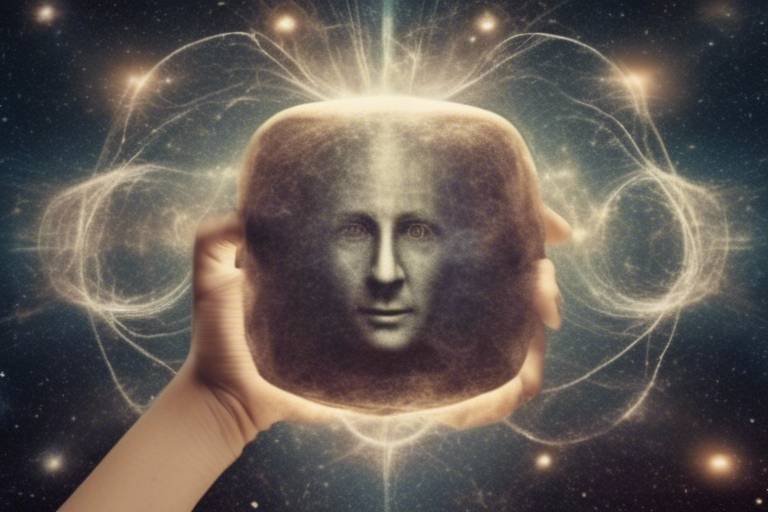
Metaphysics is a fascinating field that dives deep into the fundamental questions of existence and reality. Have you ever pondered what it truly means to exist? Or considered whether the universe is merely a figment of our imagination? These are the types of questions that metaphysics seeks to unravel. It’s not just about abstract concepts; it’s about understanding our place in the cosmos and the nature of everything around us. Think of it as the ultimate philosophical treasure hunt, where each question leads to more profound mysteries and insights.
At its core, metaphysics challenges us to look beyond the surface of our everyday experiences. It invites us to ask, “What is real?” and “What lies beyond what we can see and touch?” The answers are not always straightforward, and that’s what makes this exploration so intriguing. Philosophers from Aristotle to Kant have contributed to this discourse, each offering unique perspectives that enrich our understanding of reality. By examining their theories, we can begin to piece together a more comprehensive view of existence and its myriad complexities.
Metaphysics also delves into the nature of being, which is an essential aspect of understanding ourselves and the world we inhabit. When we question our own existence, we tap into a rich vein of philosophical inquiry. What does it mean to “be”? Is our existence tied to our physical form, or is there something more ethereal at play? These questions lead us into the realm of ontology, the study of being, where we explore various theories about what constitutes existence and how entities relate to one another.
As we navigate through the philosophical landscape of metaphysics, we encounter concepts like substance and attribute. Understanding the distinction between these two is crucial. Substances are the fundamental things that exist independently, while attributes are the properties that describe them. For instance, consider a tree: the tree itself is a substance, while its height, color, and age are its attributes. This differentiation helps us grasp the complexities of reality and how we perceive the world around us.
Another captivating aspect of metaphysics is the debate between metaphysical realism and anti-realism. Realists assert that reality exists independently of our perceptions, while anti-realists argue that our understanding of reality is shaped by our conceptual frameworks. This philosophical tug-of-war raises important questions about the nature of truth and how we come to know what we know. It’s like trying to solve a puzzle where the pieces keep changing shape, challenging us to rethink our assumptions and beliefs.
As we journey further into the heart of metaphysics, we encounter inquiries about the universe and its origins. How did everything begin? Is there a creator, or did the universe emerge from a cosmic explosion? Theories like the Big Bang have transformed our understanding of the universe’s beginnings, yet they also prompt philosophical reflections on causality and time. What came first, the cause or the effect? And how does time influence our understanding of existence? These questions highlight the intricate relationship between metaphysics and the physical world, urging us to consider the deeper implications of our findings.
Moreover, the nature of space itself presents another layer of complexity. Is space an absolute entity that exists on its own, or is it merely a relational property that emerges from the interactions of objects? This inquiry is not just academic; it has profound implications for how we perceive reality. Imagine space as a vast canvas where the universe paints its story. Understanding this canvas helps us appreciate the intricate details of existence.
Finally, we must address the relationship between mind and consciousness. This is a pivotal topic in metaphysics, as it explores what it means to be aware and to think. Theories of mind, such as dualism and physicalism, offer different perspectives on consciousness and its role in human existence. Are our thoughts and feelings merely products of physical processes, or is there a non-material aspect to our being? This question invites us to reflect on our own experiences, encouraging a deeper understanding of what it means to be alive.
- What is metaphysics? Metaphysics is a branch of philosophy that explores the fundamental nature of reality, existence, and the universe.
- Why is metaphysics important? It helps us understand the deeper questions of life, existence, and the nature of the universe.
- What are the main topics in metaphysics? Key topics include the nature of reality, existence and being, causality, time, space, and the relationship between mind and consciousness.
- How does metaphysics relate to science? While metaphysics addresses philosophical questions, it often intersects with scientific inquiry, particularly in areas like cosmology and consciousness studies.
The Nature of Reality
Understanding the essence of reality is crucial in metaphysics. It’s like peeling back the layers of an onion; each layer reveals deeper insights into what we perceive as real. Philosophers have long debated whether reality exists independently of our perceptions or if it is merely a construct of our minds. This question can feel overwhelming, but let’s break it down.
At its core, the nature of reality can be viewed through different lenses. The philosophical interpretations often fall into two main categories: realism and idealism. Realism posits that the world exists independently of our thoughts and beliefs. Imagine standing in front of a mountain; whether you believe it exists or not, that mountain is there, solid and unyielding. On the flip side, idealism suggests that reality is mentally constructed. In this view, the mountain only exists because we perceive it. This brings us to an intriguing question: if we all perceive reality differently, can we ever truly agree on what is real?
Additionally, the concept of perception plays a significant role in how we understand reality. Our senses—sight, sound, touch—filter the information we receive from the world around us. But what happens when our senses deceive us? Optical illusions, for instance, can trick our minds into seeing something that isn’t there. This leads us to ponder: if our senses can mislead us, how can we trust our perception of reality?
Philosophers like Immanuel Kant have proposed that our understanding of reality is shaped by both our sensory experiences and our innate cognitive structures. Kant argued that while we can know phenomena (the world as we perceive it), the noumena (the world as it is in itself) remains beyond our grasp. This distinction is vital because it suggests that there may be aspects of reality that are fundamentally unknowable to us.
Furthermore, the advancement of science has added another layer to our understanding of reality. Theories in physics, such as quantum mechanics, challenge traditional notions of reality. For instance, the idea that particles can exist in multiple states until observed raises questions about the role of the observer in shaping reality. Is it possible that our very act of observing alters the reality we perceive? This is where metaphysics and science intersect, creating a rich field of inquiry.
To summarize, the nature of reality is a complex tapestry woven from various philosophical threads. It encompasses our perceptions, the interplay between mind and matter, and the ongoing dialogue between science and philosophy. As we continue to explore these questions, we find ourselves at the crossroads of understanding, where every answer leads to new inquiries.
In the quest for understanding reality, we must remain open to the myriad possibilities that exist. Reality may not be as straightforward as it seems, and that’s what makes it all the more fascinating. Are we merely observers in a grand cosmic play, or do we have a hand in shaping the narrative? The answers may not be clear, but the journey to uncover them is where the true adventure lies.
- What is metaphysics? Metaphysics is a branch of philosophy that explores the fundamental nature of reality, existence, and the universe.
- How does perception affect our understanding of reality? Our senses filter information about the world, which can lead to different interpretations of reality.
- Can science and metaphysics coexist? Yes, they can intersect and inform each other, especially in areas like quantum mechanics.
- What is the difference between realism and idealism? Realism asserts that reality exists independently of our perceptions, while idealism suggests that reality is mentally constructed.
Existence and Being
When we dive into the philosophical waters of existence and being, we find ourselves navigating through a sea of questions that have puzzled thinkers for centuries. What does it truly mean to exist? Is existence merely a state of being, or is it something deeper, something that transcends our everyday understanding? These questions are not just academic musings; they strike at the very core of our human experience. Imagine standing at the edge of a vast ocean, gazing into the depths, pondering the myriad of life forms beneath the surface. In many ways, our quest for understanding existence is similar—there’s so much more than meets the eye.
At its essence, existence refers to the state of being real or living. However, the nuances of this concept are where things get fascinating. Philosophers like René Descartes famously declared, “I think, therefore I am,” suggesting that the very act of thought is proof of existence. In contrast, Martin Heidegger explored existence through the lens of being, emphasizing that our being is intertwined with our experience of the world around us. This raises an intriguing point: are we defined by our thoughts, our actions, or our relationships with others?
To further understand existence, we can categorize it into various philosophical perspectives. For instance, some thinkers advocate for a more materialistic view, suggesting that only physical entities exist, while others argue for a dualistic approach, where both mind and body hold significance. The implications of these views are profound, as they shape our understanding of reality itself. Consider this: if only the physical world exists, what happens to our emotions, thoughts, and dreams? Are they mere byproducts of our biological processes, or do they hold a deeper significance?
Another key aspect of existence is the concept of being. This idea encompasses not just the state of existing, but also the qualities and essence that define an entity. The distinction between existence and being can be likened to a tree: the trunk represents existence, while the branches, leaves, and fruits symbolize being. Each aspect contributes to the overall identity of the tree, just as our experiences, thoughts, and feelings contribute to our sense of self.
In the realm of metaphysics, the study of existence and being often leads us to the domain of ontology, which is the investigation into what entities exist and how they can be categorized. Ontology seeks to answer questions like, “What is a thing?” and “How do different entities relate to one another?” For example, consider the following table that illustrates various ontological categories:
| Category | Description |
|---|---|
| Concrete Entities | Physical objects that exist in space and time, such as trees, animals, and humans. |
| Abstract Entities | Concepts or ideas that do not have physical form, like numbers, theories, and emotions. |
| Universals | Traits or qualities that can be shared by multiple entities, such as “redness” or “beauty.” |
As we ponder existence and being, we also confront the idea of identity. How do we maintain our identity through change? This question can feel like trying to hold onto water in your hands—no matter how hard you try, some will inevitably slip away. Philosophers like Heraclitus argue that change is the only constant, suggesting that our identities are fluid rather than fixed. On the other hand, thinkers such as John Locke propose that memory plays a crucial role in maintaining personal identity over time. So, which perspective resonates more with you? Are you more aligned with the idea of a constant self, or do you embrace the notion of evolving identity?
Ultimately, the exploration of existence and being invites us to reflect on our own lives and the world around us. It challenges us to consider not just what it means to exist, but how we can engage with that existence in meaningful ways. As we grapple with these profound questions, we may find that the journey of understanding is just as important as the answers we seek.
- What is the difference between existence and being? Existence refers to the state of being real or alive, while being encompasses the qualities and essence that define an entity.
- Why is ontology important in metaphysics? Ontology helps categorize entities and explore their relationships, providing a framework for understanding existence and being.
- How do identity and change relate to existence? Identity is often seen as fluid, with some philosophers arguing that our sense of self evolves over time, influenced by our experiences and memories.
Ontology: The Study of Being
Ontology, at its core, is the philosophical study of being and existence. It poses fundamental questions about what it means to exist and how different entities relate to one another within the vast tapestry of reality. Imagine ontology as a grand map of existence, where each entity is a landmark, and the relationships between them form the pathways that connect our understanding of the universe.
One of the primary concerns of ontology is the categorization of entities. Philosophers have long debated the nature of these entities, leading to various ontological theories. For instance, some argue that there are only physical objects, while others suggest the existence of abstract entities like numbers or concepts. This brings us to the distinction between substance and attribute, two fundamental components in the study of being.
Substances are often viewed as the primary entities that exist independently. Think of them as the building blocks of reality—like Lego bricks that can stand alone. In contrast, attributes are the properties or qualities that these substances possess, such as color, shape, or size. Without substances, attributes would have no foundation; they need something to describe. This relationship is crucial for understanding how we perceive and categorize the world around us.
Moreover, ontology delves into the concept of identity and change. How do we maintain the identity of an object over time, especially when it undergoes changes? For example, consider a tree: it grows, sheds leaves, and might even be struck by lightning, yet we still recognize it as the same tree. This leads to profound philosophical questions about persistence and the nature of objects. Are we merely observing a series of changes, or is there an underlying essence that remains constant?
In exploring these ideas, ontology also confronts the dichotomy between metaphysical realism and anti-realism. Metaphysical realism posits that entities exist independently of our perception, while anti-realism suggests that our understanding of reality is shaped by our conceptual frameworks. This debate is not merely academic; it has far-reaching implications for how we interpret our experiences and the nature of truth itself.
In summary, ontology is a rich and complex field that seeks to unravel the mysteries of being. It invites us to ponder not just what exists, but also the very nature of existence itself. As we navigate through the intricate web of entities and their relations, we gain deeper insights into the fundamental structure of reality.
- What is ontology? Ontology is the branch of philosophy concerned with the nature of being, existence, and the categorization of entities.
- What is the difference between substance and attribute? Substance refers to entities that exist independently, while attributes are the properties of those substances.
- How does ontology relate to identity? Ontology examines how objects maintain their identity through change and what it means for something to persist over time.
- What are metaphysical realism and anti-realism? Metaphysical realism asserts that entities exist independently of our perception, while anti-realism argues that reality is shaped by our conceptual frameworks.
Substance vs. Attribute
When diving into the depths of metaphysics, one cannot overlook the essential distinction between substance and attribute. This differentiation is not merely academic; it forms the backbone of our understanding of reality itself. In simple terms, a substance can be thought of as the core essence of a thing—what it is at its most fundamental level—while attributes are the characteristics or properties that describe or modify that substance.
To illustrate this concept, consider a classic example: a tree. The tree itself, with its trunk, branches, and roots, represents the substance. It exists independently, regardless of our perception of it. On the other hand, attributes such as its height, color of leaves, or the texture of its bark are the qualities that help us understand and describe the tree. Without these attributes, we would struggle to communicate what makes this tree unique.
This distinction raises fascinating questions in metaphysics. For instance, if we were to strip away all the attributes of an object, would the substance still remain? Or would it dissolve into nothingness? These inquiries lead us to ponder the nature of existence itself. Are substances merely collections of attributes, or do they possess an inherent identity that transcends their qualities?
Philosophers have long debated the implications of this distinction. In the realm of ontology, which is the study of being, understanding the relationship between substance and attribute is crucial. Some argue that attributes are dependent on substances; without a substance, attributes cannot exist. Others propose that attributes are equally fundamental, shaping our understanding of what substances are and how they interact with the world.
To further explore this topic, let’s consider a table that summarizes the key differences between substance and attribute:
| Aspect | Substance | Attribute |
|---|---|---|
| Definition | The core essence or being of an object | The properties or characteristics that describe the object |
| Existence | Exists independently | Dependent on the substance for existence |
| Examples | A tree, a rock, a person | Color, height, texture |
| Philosophical Implications | Questions of identity and persistence | Influences our understanding of reality |
In conclusion, the interplay between substance and attribute is a fundamental aspect of metaphysical inquiry. It challenges us to rethink our assumptions about existence and encourages a deeper exploration of what it means to be. As we continue to question and analyze these concepts, we not only enrich our philosophical understanding but also enhance our appreciation for the complexities of the world around us.
- What is the difference between substance and attribute?
Substance refers to the core essence of an object, while attributes are the properties that describe that object. - Can attributes exist without substances?
No, attributes are dependent on substances for their existence; without a substance, attributes cannot be defined. - Why is the distinction between substance and attribute important?
This distinction is crucial in metaphysics as it shapes our understanding of reality, identity, and existence.
Identity and Change
When we think about identity, we often picture something static, like a photograph frozen in time. However, the reality is much more dynamic. Identity is not just about what something is at a single moment; it’s about how it evolves and adapts over time. This concept of identity is tightly intertwined with the philosophical notion of change. Have you ever wondered how a tree can be the same tree even after it sheds its leaves every autumn? Or how a person can grow and change yet still be recognized as the same individual? These questions lead us into the fascinating world of metaphysics, where we explore how identity persists amidst change.
At the heart of this discussion is the idea of persistence. Philosophers have long debated what it means for something to persist through various changes. One of the most prominent theories is the four-dimensionalist view, which posits that objects are extended in time as well as in space. Imagine a film reel: each frame represents a moment in time, and together they create a continuous narrative. In this analogy, our identity is like the film reel, comprising various ‘frames’ of our existence. Each frame shows different attributes and experiences, yet they all contribute to the larger story of who we are.
On the flip side, we have the three-dimensionalist perspective, which argues that objects are wholly present at each moment in time. This view suggests that identity is tied to specific attributes that can change without altering the essence of the object itself. For example, consider a person who dyes their hair or changes their style. While their appearance may shift dramatically, their core identity—who they are as a person—remains intact.
To better illustrate these concepts, let’s break down some key points:
- Identity and Continuity: The idea that an entity remains the same despite changes over time.
- Change and Transformation: The process through which an entity undergoes modifications, yet can still be recognized as the same entity.
- Philosophical Theories: Different theories, such as four-dimensionalism and three-dimensionalism, offer varying perspectives on how identity is maintained through change.
One of the most intriguing aspects of this discussion is the role of memory and experience in shaping our identity. Our past experiences contribute to our present selves, and yet, we change constantly. This leads to the question: if our memories and experiences evolve, does that mean our identity is also fluid? Some philosophers argue that our identity is a tapestry woven from threads of memory, experience, and change, creating a rich and complex picture of who we are.
Ultimately, the interplay between identity and change invites us to reflect on our own lives. Are we the same people we were five years ago? Ten years ago? The answer is both yes and no. We carry our past with us, but we also grow, learn, and adapt. This constant evolution makes life both challenging and beautiful, as we navigate our identities amidst the waves of change.
- What is the difference between identity and persistence? Identity refers to the qualities that make an entity what it is, while persistence is about how that identity remains the same despite changes over time.
- Can identity change completely? While some aspects of identity can change, many philosophers argue that there is always a core essence that remains, even if it evolves.
- How do memory and experience affect identity? Memory and experience shape our understanding of ourselves and contribute to our ongoing identity formation.
Metaphysical Realism vs. Anti-Realism
When we dive into the depths of metaphysical inquiry, one of the most captivating debates arises between metaphysical realism and anti-realism. At its core, metaphysical realism posits that reality exists independently of our perceptions, beliefs, or conceptual frameworks. Imagine a vast library filled with countless books, each representing a part of reality. Metaphysical realists argue that these books exist whether or not anyone is around to read them. On the flip side, anti-realists contend that reality is not just a collection of independent entities but is instead shaped by our perceptions and social constructs. For them, the library is only meaningful when someone is there to interpret and engage with the texts.
The implications of these two perspectives are profound and far-reaching. For instance, in the realm of science, a realist might argue that the discoveries made in physics or biology reveal truths about the universe that are objective and unchanging. In contrast, an anti-realist might suggest that these scientific truths are merely constructs that reflect our current understanding and could change as our perspectives evolve. This raises a tantalizing question: if our understanding of reality is ever-changing, can we ever truly know anything?
To illustrate the differences further, consider the following table that summarizes key distinctions between metaphysical realism and anti-realism:
| Aspect | Metaphysical Realism | Anti-Realism |
|---|---|---|
| Nature of Reality | Exists independently of our perceptions | Dependent on our perceptions and conceptual frameworks |
| Scientific Truths | Objective and unchanging | Subjective and potentially changeable |
| Philosophical Implications | Supports the idea of an absolute reality | Encourages skepticism about objective truths |
One of the most compelling aspects of this debate is how it influences our understanding of knowledge itself. If reality is independent, then knowledge can be viewed as a process of uncovering truths that already exist. However, if reality is contingent upon our perceptions, then knowledge becomes a more fluid and dynamic process, constantly evolving as we interact with the world around us. This raises another intriguing question: how do we reconcile our experiences with the idea of an objective reality?
Philosophers have long grappled with these questions, and the discourse continues to evolve. Some propose a middle ground, suggesting that while certain aspects of reality may be independent, our understanding and interpretation of those aspects are inherently subjective. This perspective allows for a more nuanced view of existence, where both realism and anti-realism can coexist, giving room for both objective truths and subjective interpretations.
In conclusion, the debate between metaphysical realism and anti-realism invites us to reflect on the very nature of reality. It challenges us to consider how our perceptions shape our understanding and what it truly means to ‘know’ something. As we continue to explore these profound questions, we find ourselves on a journey that not only seeks answers but also deepens our appreciation for the complexity of existence itself.
- What is metaphysical realism? Metaphysical realism is the philosophical view that reality exists independently of our perceptions and beliefs.
- What is anti-realism? Anti-realism posits that reality is shaped by our perceptions and conceptual frameworks, suggesting that knowledge is subjective.
- How do these concepts affect our understanding of science? Realism suggests scientific truths are objective, while anti-realism implies they are subject to change based on our understanding.
- Can realism and anti-realism coexist? Some philosophers argue for a middle ground, where aspects of reality are independent, but our understanding of them is subjective.
The Universe and Its Origins
When we look up at the night sky, filled with countless stars and galaxies, it’s hard not to wonder about the origins of the universe. How did everything come into existence? What lies beyond the vastness of space? These questions have intrigued humanity for centuries, sparking philosophical debates and scientific inquiries alike. From ancient creation myths to modern cosmological theories, the quest to understand our universe is a journey that combines science, philosophy, and a touch of imagination.
One of the most widely accepted scientific theories regarding the origins of the universe is the Big Bang Theory. This theory suggests that the universe began as an incredibly hot and dense point approximately 13.8 billion years ago. It then rapidly expanded, cooling down and allowing matter to form. This expansion continues to this day, and it is fascinating to think that every star, planet, and galaxy we see is a product of this monumental event. But what does this mean for our understanding of existence?
In contrast to the Big Bang Theory, there are various philosophical perspectives, such as creationism. This viewpoint posits that a divine being or force created the universe intentionally. It raises profound questions about the nature of existence itself. If the universe was created by a higher power, what does that imply about our purpose and place within it? Are we merely the result of random cosmic events, or do we have a greater significance?
To better understand these theories, let’s break down some key concepts:
| Theory | Description | Philosophical Implications |
|---|---|---|
| Big Bang Theory | Universe began from a singularity and has been expanding ever since. | Challenges the notion of a static universe and raises questions about the nature of time. |
| Creationism | The universe was created by a divine being. | Implies a purpose and design behind existence, often leading to discussions on morality and ethics. |
| Steady State Theory | The universe is eternal and unchanging, with matter being continuously created. | Questions the nature of time and the beginnings of existence. |
As we delve deeper into the origins of the universe, we cannot overlook the concept of causality. This principle suggests that every event has a cause, leading us to ponder the question: what caused the Big Bang? Was there something before it, or did time itself begin with this monumental explosion? These inquiries bridge the gap between science and philosophy, inviting us to explore the very fabric of reality.
Another intriguing aspect of the universe’s origins is the notion of time. Philosophers and scientists alike grapple with the question of whether time is a linear progression or if it exists outside of our understanding. If time began with the universe, what does that mean for our perception of past, present, and future? Are we merely observers in a cosmic play, or do we have the ability to influence the unfolding of events?
Ultimately, exploring the universe and its origins is not just about understanding the cosmos; it’s also about understanding ourselves. As we seek answers to these profound questions, we engage in a dialogue that transcends the boundaries of science and philosophy. We are reminded that the universe is not just a collection of stars and planets; it is a vast, interconnected web of existence that invites us to ponder our place within it.
- What is the Big Bang Theory? The Big Bang Theory suggests that the universe began from a singular point and has been expanding ever since.
- What are the implications of creationism? Creationism implies that a divine being intentionally created the universe, raising questions about purpose and existence.
- Can we know what caused the Big Bang? The cause of the Big Bang remains one of the greatest mysteries in cosmology, with various theories but no definitive answers.
Causality and Time
Causality and time are two of the most intriguing concepts in metaphysics, and their interplay shapes our understanding of the universe. When we think about causality, we often ponder the age-old question: What comes first, the cause or the effect? This relationship is pivotal because it not only dictates how we perceive events but also how we interpret the very fabric of reality. Imagine a row of dominoes; when you push the first one, it falls and triggers a chain reaction. This simple act encapsulates the essence of causality—one event leading to another. But what if we take a step back and ask ourselves, Is time merely a sequence of events, or does it have a nature of its own?
Philosophers have grappled with these questions for centuries, leading to various interpretations of causality and its relationship with time. Some argue that causality is a fundamental aspect of the universe, while others suggest that it is merely a construct of human perception. For instance, the classical view posits that every effect has a cause, forming a linear pathway through time. However, the advent of modern physics, particularly quantum mechanics, has introduced complexities that challenge this notion. In the quantum realm, events can appear to occur without a clear cause, leading some to speculate about the nature of time itself. Is time a flowing river, or is it a static landscape where all events coexist simultaneously?
To further explore this relationship, let’s consider the following key points:
- Linear Time vs. Cyclical Time: In many cultures, time is perceived linearly—events unfold from past to present to future. Conversely, some philosophies view time as cyclical, suggesting that events repeat in an endless loop.
- Temporal Order: The order of events is crucial in establishing causality. If we witness a glass shattering after being struck, we naturally infer that the strike caused the shattering. But what happens when events seem to defy this order?
- Time Dilation: According to Einstein’s theory of relativity, time is not a constant. It can stretch and compress based on speed and gravitational forces, challenging our intuitive understanding of causality.
As we delve deeper into these concepts, we realize that causality and time are not just abstract ideas; they have profound implications for our understanding of existence. The way we perceive time influences our decisions, our memories, and even our hopes for the future. If time is merely a series of moments strung together, then are we simply products of our past experiences? Or is there a greater force at play, guiding the course of our lives?
Moreover, the implications of causality extend beyond the physical realm into the metaphysical. When we ponder the origins of the universe, we must ask ourselves: What caused the Big Bang? What existed before time began? These questions lead us into the realm of speculation and philosophical inquiry, where answers are often elusive. The relationship between causality and time invites us to explore the very nature of reality, urging us to consider whether our understanding is merely a reflection of our perceptions or if there exists a deeper, underlying truth.
In conclusion, the exploration of causality and time is not just an academic exercise; it is a journey into the heart of existence itself. As we continue to seek answers to these profound questions, we may find that the pursuit of knowledge is as significant as the answers we uncover.
- What is causality? Causality is the relationship between cause and effect, where one event (the cause) leads to another event (the effect).
- How does time relate to causality? Time is often viewed as the framework within which causality operates, determining the sequence in which events occur.
- Can events occur without a cause? In classical physics, every effect has a cause, but modern physics, particularly quantum mechanics, challenges this notion.
- Is time linear or cyclical? Different cultures and philosophies perceive time in various ways, with some viewing it as linear and others as cyclical.
Space and Its Nature
When we think about space, we often picture the vast, empty void between celestial bodies—the stars, planets, and galaxies that dot our universe. But what if I told you that space is far more complex than just a backdrop for these magnificent entities? In metaphysics, space is not merely an absence; it’s a profound concept that raises questions about its very existence. Is space something tangible, or is it merely a relational property that emerges from the interactions of objects? This debate has puzzled philosophers for centuries, and it continues to spark lively discussions in contemporary metaphysical circles.
To dive deeper, we can explore two major perspectives on the nature of space: the absolute theory and the relational theory. The absolute theory posits that space exists independently of the objects within it. Imagine it as a vast canvas, existing whether or not we place a painting upon it. In this view, space has its own properties and dimensions, independent of the matter that occupies it. This perspective aligns closely with the ideas of Sir Isaac Newton, who famously described space as a “container” for objects.
On the other hand, the relational theory argues that space is not an entity in itself but rather a network of relationships between objects. Think of it like a web: the connections between the points (or objects) define the structure of the web. This view was notably championed by philosopher Gottfried Wilhelm Leibniz, who believed that without objects to relate to one another, the concept of space loses its meaning. According to this perspective, space is not a separate entity but a product of the interactions and distances between things.
This brings us to the implications of these theories. If space is absolute, it suggests a universe that is structured and immutable, with a fixed backdrop against which events unfold. Conversely, if space is relational, it implies a dynamic and interconnected universe where the very nature of space can change based on the relationships between objects. This leads us to ponder: can space itself be influenced by the presence or absence of matter? And if so, how does that affect our understanding of reality?
Moreover, we cannot discuss the nature of space without touching on the concept of time. Often intertwined with our understanding of space, time adds another layer of complexity to this metaphysical inquiry. The famous physicist Albert Einstein revolutionized our understanding of space and time by merging them into a single continuum known as spacetime. In this framework, the fabric of the universe is interwoven, suggesting that the position of an object in space is inherently linked to its position in time. This raises intriguing questions: Is time as absolute as space, or is it also relational? How do our perceptions of space and time shape our understanding of existence?
In summary, the nature of space is a multifaceted topic that invites us to challenge our assumptions and explore the depths of reality. Whether we view space as an independent entity or as a relational construct, it undeniably plays a crucial role in shaping our understanding of the universe. As we continue to investigate these profound questions, we may find that the answers lie not just in the cosmos above us but also within the very fabric of our existence.
- What is the difference between absolute space and relational space? Absolute space is viewed as an independent entity that exists on its own, while relational space is defined by the relationships between objects.
- How does the concept of spacetime change our understanding of space? Spacetime merges space and time into a single continuum, suggesting that the two are interconnected and influence one another.
- Can space exist without matter? This is a debated question; proponents of absolute space argue that it can, while relational theorists believe space is dependent on the existence of objects.
Mind and Consciousness
The relationship between mind and consciousness has puzzled philosophers, scientists, and thinkers for centuries. What exactly is consciousness? Is it merely a byproduct of brain activity, or does it exist independently? These questions form the crux of metaphysical discussions surrounding the nature of human existence. At its core, consciousness is the state of being aware of and able to think about one’s own existence, thoughts, and surroundings. It’s like being the director of a movie where you not only play a role but also have the power to edit the script as you see fit.
To dive deeper, we can explore several prominent theories of mind that attempt to explain this intricate relationship. Dualism, for instance, posits that the mind and body are two distinct entities. This perspective suggests that our mental states are not reducible to physical states. Imagine a computer: the hardware (the body) is separate from the software (the mind). In contrast, physicalism argues that everything about the mind can be explained through physical processes. From this viewpoint, consciousness arises from complex interactions within the brain, much like how a symphony emerges from the notes played by individual instruments.
Then there’s functionalism, which takes a different approach. It focuses on the roles that mental states play rather than their composition. Think of it like a car: it doesn’t matter whether it runs on gasoline or electricity; what’s important is that it gets you from point A to point B. In this sense, consciousness is viewed through the lens of its functions and effects rather than its underlying substance.
These theories lead us to ponder significant implications for our understanding of human existence. For instance, if consciousness is entirely dependent on physical processes, what happens to our sense of self when the brain ceases to function? On the other hand, if the mind exists independently, does that imply a form of existence beyond our physical life? These questions are not just abstract musings; they challenge our understanding of morality, free will, and the essence of what it means to be human.
To illustrate the complexities of these theories, let’s consider a comparison table that highlights the key differences:
| Theory | Definition | Key Proponents |
|---|---|---|
| Dualism | The mind and body are distinct entities. | René Descartes, Plato |
| Physicalism | Everything about the mind can be explained through physical processes. | David Armstrong, Daniel Dennett |
| Functionalism | Mental states are defined by their functional roles. | Hilary Putnam, Jerry Fodor |
In conclusion, the exploration of mind and consciousness is not merely an academic exercise; it is a journey into understanding the very fabric of our existence. As we navigate through these philosophical waters, we are compelled to ask ourselves: What does it mean to be conscious? How does our understanding of consciousness shape our perceptions of reality? As we seek answers, we may find that the journey itself is as enlightening as the conclusions we draw.
- What is consciousness? Consciousness is the state of being aware of one’s own existence, thoughts, and surroundings.
- What is dualism? Dualism is the belief that the mind and body are separate entities.
- How does physicalism explain consciousness? Physicalism posits that consciousness arises from physical processes in the brain.
- What role does functionalism play in understanding the mind? Functionalism focuses on the roles that mental states play rather than their composition.
Frequently Asked Questions
- What is metaphysics?
Metaphysics is a branch of philosophy that explores the fundamental nature of reality, existence, and the universe. It seeks to answer profound questions about what is real and how we understand the world around us.
- What are the main topics covered in metaphysics?
Metaphysics covers a wide range of topics, including the nature of reality, existence and being, ontology, causality, time, space, and the relationship between mind and consciousness. Each of these areas delves into deep philosophical questions that challenge our understanding of life.
- What is the difference between substance and attribute?
In metaphysics, a substance refers to entities that exist independently, while attributes are properties or characteristics of those substances. Understanding this distinction helps clarify how we categorize and relate different aspects of reality.
- What is ontology?
Ontology is a core aspect of metaphysics that focuses on the study of being and existence. It categorizes different entities and examines their relationships, helping us understand what it means to exist and how entities interact in the broader framework of reality.
- What is the debate between metaphysical realism and anti-realism?
Metaphysical realism posits that reality exists independently of our perceptions, while anti-realism argues that reality is shaped by our conceptual frameworks. This debate is crucial for understanding how we interpret the world and what we consider to be true.
- How does metaphysics address the origins of the universe?
Metaphysics explores various theories regarding the origins of the universe, including creationism and the Big Bang theory. Each perspective has philosophical implications that challenge our understanding of existence and the nature of reality.
- What role does causality play in metaphysical discussions?
Causality is central to metaphysics as it examines the relationship between cause and effect. Understanding how events are interconnected helps us grasp the nature of time and existence, leading to deeper insights into the universe.
- What are the main theories of mind in metaphysics?
In metaphysics, two prominent theories of mind are dualism, which posits that mind and body are distinct entities, and physicalism, which argues that everything about the mind can be explained in terms of physical processes. These theories have significant implications for our understanding of human consciousness and existence.
existence, reality, consciousness, being, knowledge, causality, purpose, transcendence, , existence, reality, consciousness, being, knowledge, causality, purpose, transcendence,
Share this content:
Leave a Reply